

On the evening of March 29th, at the Ho Guom Theatre in Hanoi , the contemporary ballet "Do" will return, offering an emotionally rich performance space, built upon Antonio Vivaldi's "Four Seasons" suite.
The performance was created by Thanh Productions, in collaboration with the European Union Delegation and the Vietnam National Opera and Ballet Theatre.
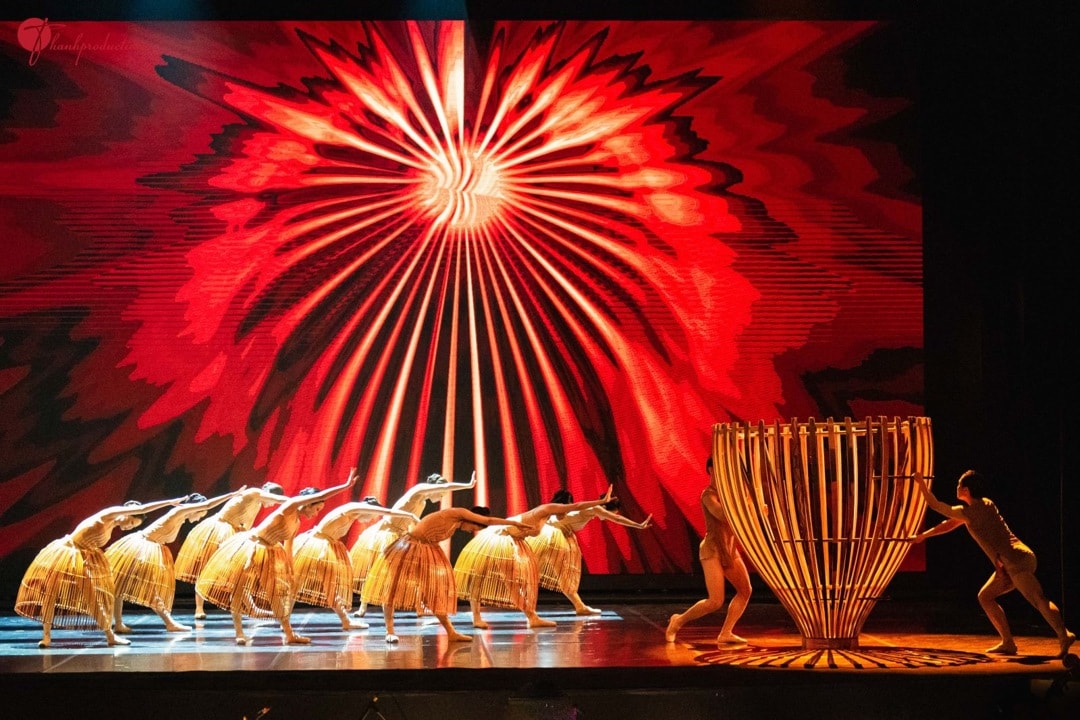
What is noteworthy is not the familiar East-West fusion in contemporary art, but rather the way the performance "reverses" the aesthetic system of ballet.
Inspired by Vietnamese folk materials such as fishing baskets, paper fans, floral mats, and dó paper, the work goes beyond simply "bringing culture to the stage": transforming these very materials into the movement structures of the body.
While classical European ballet aims for upward, gravity-defying movements, in "Dó," the body is pulled closer to the ground.
The lowered center of gravity and the twisting, rolling, and sliding movements become the dominant language, evoking the rhythmic labor of agricultural communities in rice-growing civilizations rather than the idealized leaps of the academic stage.
It is precisely in this "ground-based" approach that a different aesthetic identity is formed. Ballet is no longer the art of the sky, but becomes the art of memory - cultural memory preserved within the very body of the performer.
The work's structure doesn't follow the typical Western dramatic narrative with clear personal conflicts, but instead presents a cyclical movement. Humans don't oppose each other but exist in a reciprocal relationship with their environment and community.
The music in "Dó" uses an arrangement of Antonio Vivaldi's "Four Seasons" suite performed by Max Richter, opening up a cinematic emotional space that is rich in depth and close to contemporary sensibilities.
This particular arrangement demonstrates a clear artistic vision: not to use classical music as an "immobile legacy," but as a living medium that can be reinterpreted, restructured, and placed in new cultural contexts.
When placed within the context of "Dó," Vivaldi's music is no longer purely "European"; his music is "re-heard" through an Eastern rhythm: cyclical, gentle, and deeply moving.
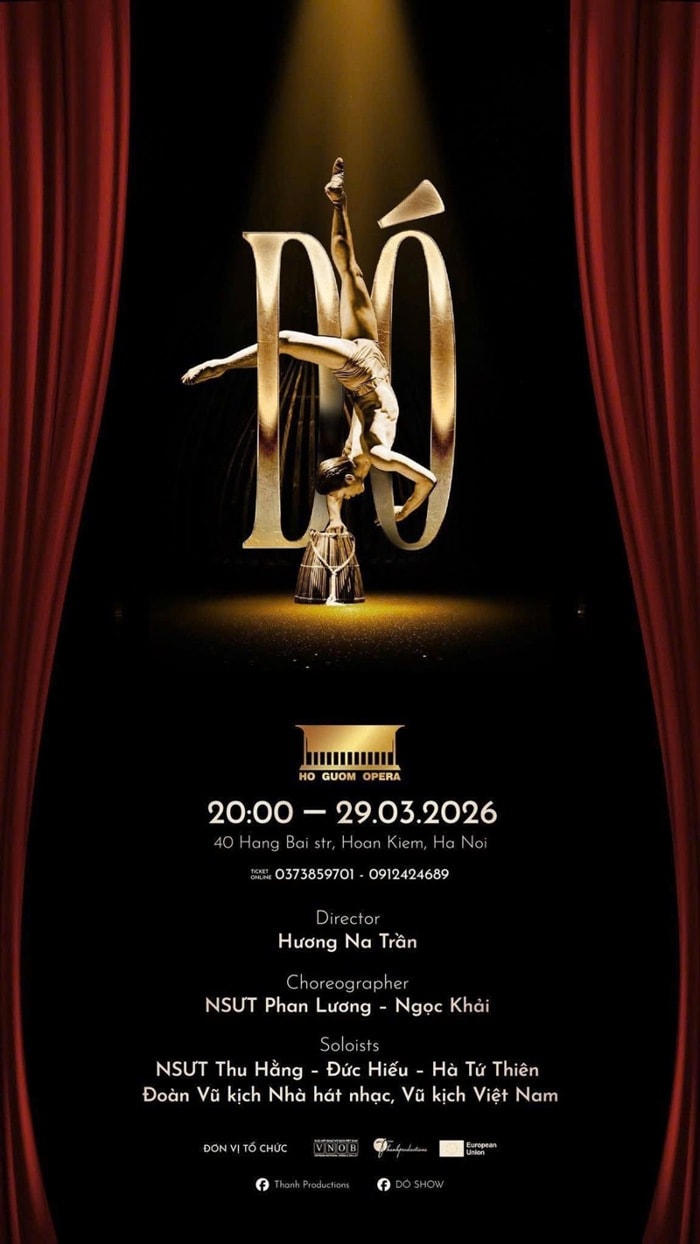
Under the direction of general director Huong Na Tran and choreographers Meritorious Artist Phan Luong and artist Vu Ngoc Khai, the performance unfolds like a multi-sensory symphony, where body movements no longer illustrate the story, but the story itself.
The play "Dó" demonstrates a remarkable direction: starting from cultural heritage, transforming tradition into a creative driving force, thereby forming artistic products bearing the imprint of Vietnam in the era of globalization.
Source: https://congluan.vn/vo-dien-do-dao-chieu-he-tham-my-cua-ballet-10334944.html



















































































Comment (0)