

In the digital age, the concept of "digital citizen" is no longer unfamiliar. It's not just about using smartphones or the internet, but about being able to access, utilize, and use digital technology proactively, safely, and effectively in daily life.
From handling administrative procedures and electronic payments to healthcare, education, and online business, all aspects of society are gradually shifting to digital platforms. This requires citizens to possess basic digital skills to adapt to the new environment.
This is also the core objective of the "Digital Literacy Movement": to popularize digital knowledge among the entire population, giving everyone the opportunity to access technology and become digital citizens in the new era.
The movement is being implemented in the spirit of Resolution No. 57-NQ/TW of the Politburo on breakthroughs in the development of science, technology, innovation, and national digital transformation. One of the important orientations of the resolution is to put the people at the center of digital transformation, while building a digital learning society and digital citizens nationwide.
Notably, the "Digital Literacy Campaign" is not only aimed at young workers or the technology sector, but extends to all segments of the population: students, farmers, workers, the elderly, etc., with the spirit of "leaving no one behind".

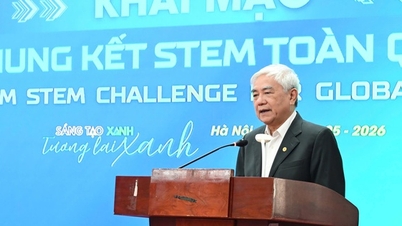
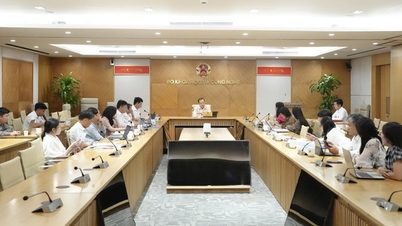
General Secretary To Lam delivered a keynote address at the thematic conference "Digital Popular Education - Digital National Assembly ".
In many localities, the reality shows that technology is gradually becoming more accessible through very specific actions.
In Cua Nam ward (Hanoi), community digital technology groups organize many training sessions for the elderly on using smartphones, scanning QR codes, looking up administrative procedures, and using online public services. Many officials and youth union members directly provide hands-on guidance, helping people overcome their apprehension about technology.
In Hung Yen province, many communes are implementing the "Digital Literacy for the People" model for women's association members and farmers. Many small traders at local markets are using QR code transfers instead of cash for the first time; elderly people are being assisted in installing VNeID and making electronic payments directly on their personal phones.
Meanwhile, in Thai Nguyen, many localities are organizing community digital skills classes linked to guiding people in selling online, promoting agricultural products on digital platforms, and accessing e-commerce. Many households that previously only sold directly now know how to livestream, take product photos, and reach customers through social media.
In Ho Chi Minh City, many neighborhoods have implemented a "mobile digital technology team" model, assisting residents in registering for personal digital signatures, installing digital banking applications, and guiding them on online payments for hospital fees and tuition. Many ordinary workers are accessing digital utilities for the first time to support their work and daily lives.
In Bac Giang, agricultural cooperatives are being trained in e-commerce sales skills, using QR codes for traceability, and promoting products through livestreaming. As a result, many local agricultural products have gained access to a wider market instead of relying on traditional traders.
In Da Nang, basic AI training courses for students and young workers are being offered free of charge at many community centers. Learners are guided on how to use AI tools in their studies, work, information searching, and improving their personal digital skills.
Another notable example is the rollout of free AI and digital skills courses on the "Popular Digital Education" platform. Citizens can learn how to use AI tools, identify cyber fraud, protect personal data, or access basic digital skills right on their smartphones.
In addition to learning how to use technology, people are also equipped with skills to protect personal data, identify risks in cyberspace, and access digital tools for learning, working, and production.
In the context of rapidly developing artificial intelligence (AI), the formation of digital citizens is becoming increasingly urgent. AI is not only changing production methods but also transforming how people learn, work, and interact with society. Without digital skills, the technology gap will quickly become a development gap.
One of the key requirements is to foster a lifelong learning mindset in the digital environment. Because technology changes daily, updating digital knowledge should become a constant need for every individual.
From the spirit of "eradicating illiteracy" in the past to the journey of building digital citizens today, "Digital Literacy for the People" is not just a technological movement, but is gradually creating the human foundation for the national digital transformation process.
Source: https://mst.gov.vn/xay-dung-cong-dan-so-tu-phong-trao-binh-dan-hoc-vu-so-197260510083245061.htm

























































































Comment (0)