

It can be said that political culture, with the Party's culture at its core, plays a leading and guiding role. Practical experience shows that the decline in political ideology always begins with the degradation of morality and lifestyle. Therefore, building the Party culturally, in accordance with Resolution 80-NQ/TW on the development of Vietnamese culture, is not only a self-imposed requirement for our Party to truly be moral and civilized, but also contributes to strengthening the people's trust and shattering all distorted narratives of hostile forces.
Political culture - a "measure" of character.
Resolution 80-NQ/TW of the Politburo emphasizes the institutionalization of revolutionary ethical standards into concrete cultural values in action. Culture within the Party is no longer an abstract concept, but is concretized through the culture of exemplary conduct, the culture of integrity, and the culture of public service.
Analyzing the historical shift in the Party's thinking towards elevating its cultural level, Dr. Nguyen Viet Hung, former Head of the Party Building Department at the Ho Chi Minh City Cadre Academy, argues that the Party's resolute handling and strict punishment of manifestations of degradation and corruption is proof of the strength of revolutionary culture. Just as rice farmers not only plant rice but also weed and eliminate pests so that the rice plants can grow tall and bear abundant grain, revolution is not only about creating something new, but also about eradicating the bad and the anti-cultural to open up space for progress and development.
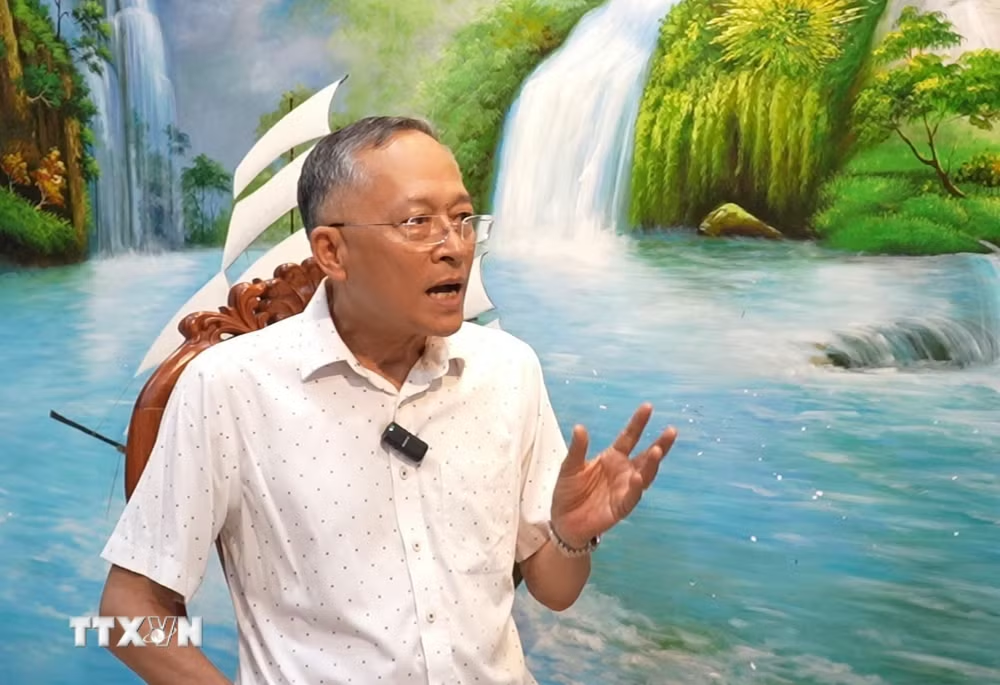
In particular, in response to false claims such as "only communists are corrupt," Dr. Nguyen Viet Hung frankly pointed out that corruption is a common "disease" of power in all regimes, not just communist ones. The difference is that our Party dares to look directly at the truth to "cleanse" itself.
He noted that, in addition to "combating" negative influences, building Party culture must be fundamentally and sustainably based on "construction." We don't need "superheroes" like in Hollywood movies, but ordinary people of flesh and blood, decent in their everyday actions and behavior. It is these humble communist role models who will form the most convincing chain of values to protect the Party's ideals.
Dr. Vu Ngoc Hoa, Deputy Director of the Ho Chi Minh City Branch of the Academy of Public Administration and Management, believes that building a "culture of respect for intellectuals" and a "culture of integrity" is of decisive importance. If "respect for intellectuals" means protecting the Party through intellect and respect for talented and virtuous individuals, then "integrity" means protecting the Party through prestige and morality. Building a team of honest and people-oriented officials is the most effective way to protect the ideological foundation.
In reality, hostile forces often do not directly attack Marxist-Leninist theory because it is difficult to sway people's hearts. Instead, they exploit cases of corrupt and degenerate officials to incriminate the regime's nature. Therefore, when each official and Party member upholds a culture of integrity, they are building a "wall" to prevent the destructive influence of divisive rhetoric against the Party.
Dr. Dinh Thi Thanh Nga, Head of the Department of Administrative and Criminal Law, Faculty of Law, Saigon University, believes that the cultural behavior of officials and Party members is the measure of national governance capacity. People don't just look at GDP growth or numbers representing development, but also at the attitude of service. Exemplary cultural behavior of officials and Party members will strengthen social trust more firmly than any flowery words.
"Wiping out" individualism
Individualism is an "internal enemy," the most dangerous cultural "virus" that erodes ideological foundations from within. Once officials fall into a pragmatic, self-serving lifestyle, they will easily be drawn in by reactionary forces or fall into the orbit of "peaceful evolution."
Resolution 80-NQ/TW stipulates that building a cultural environment within Party organs must begin with tightening discipline coupled with cultivating self-respect. Studying and following Ho Chi Minh's ideology, ethics, and style should not be limited to speeches, but must become a daily cultural way of life.
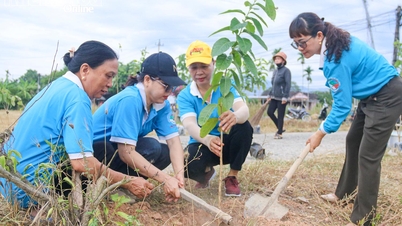
The experience in Ho Chi Minh City shows that building a culture within the Party means building a close, blood-and-flesh relationship with the people through concrete actions at the grassroots level.
Mr. Le Van Minh, Secretary of the Dien Hong Ward Party Committee, emphasized that to consolidate the people's trust, it is essential to resolutely eliminate individualism, the root of all decay. Building a culture within the Party is essentially a revolution aimed at eliminating selfish and pragmatic lifestyles. There is no more effective remedy than effectively implementing the principle of "being close to the people and understanding their needs." Only when cadres set aside their personal egos to stay close to the grassroots, listen to and promptly address the people's concerns with a spirit of service, can we build a solid "fortress" in the hearts of the people.
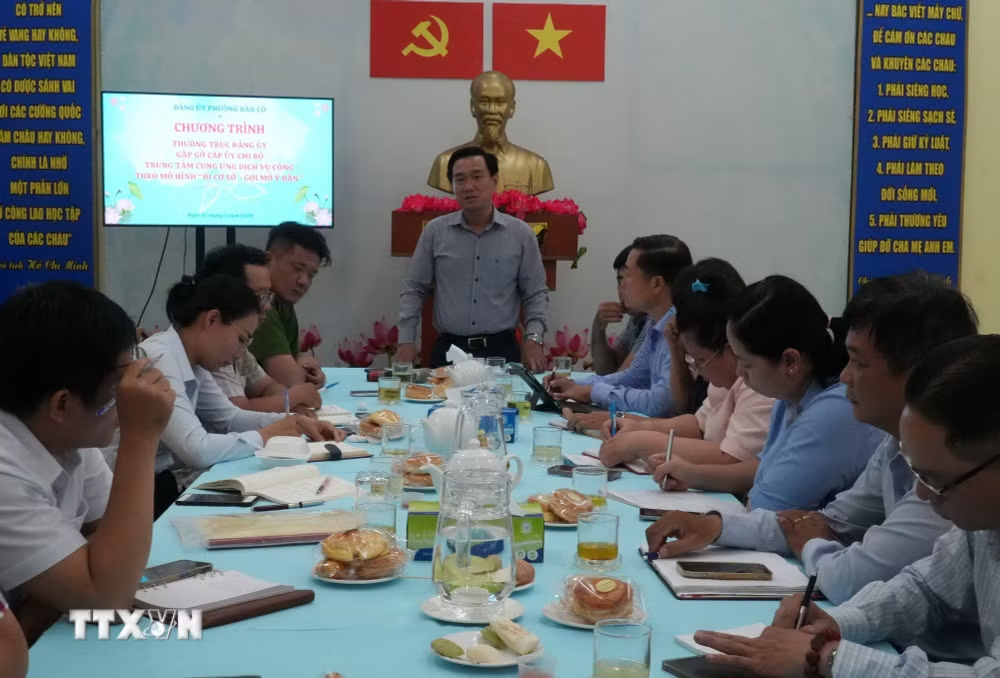
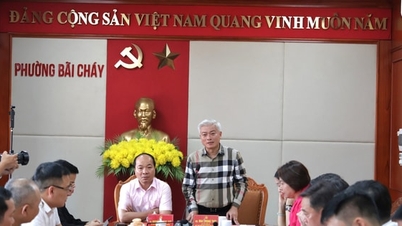
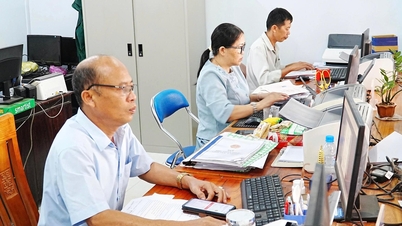
Similarly, in Ban Co ward, the Party's culture has deeply permeated the thinking and actions of the cadres and civil servants through a series of models for serving the people.
Mr. Huynh Gia Giang, Deputy Secretary of the Party Committee and Chairman of the People's Committee of Ban Co Ward (Ho Chi Minh City), emphasized that Party culture must be reflected in the spirit of service and integrity. Individualism often arises when officials distance themselves from the masses. Therefore, the local cultural environment must be a place that promotes democracy, respects the people, and is close to the people. Building Party culture in Ban Co Ward is not something abstract or lofty, but rather the attitude of officials when interacting with the people. Every official and Party member must set aside their ego and power, replacing it with a culture of service.
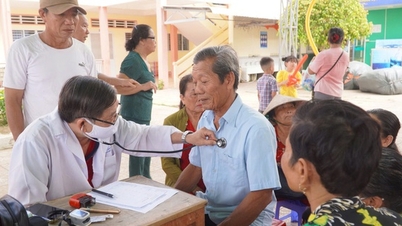
From the perspective of a beneficiary, Mr. Tran Van Truong (residing in Ban Co ward) shared: "In the past, when dealing with paperwork, the biggest worry was the arrogant attitude or the practice of giving bribes to officials – that was the root of personal gain. Now, it's completely different. The government apparatus is truly a service agency. The image of officials going to people's homes to deliver the results of administrative procedures to the elderly or vulnerable shows that self-serving individualism no longer has a place."
Cultivating a culture of setting a good example.
In Eastern and Vietnamese culture, "setting an example" is more persuasive than a thousand words. Superiors setting a good example for subordinates to follow, or "Party members lead the way, the people follow," are profound political and cultural philosophies.
Inheriting that tradition, Resolution 80-NQ/TW clearly defines that the higher the position of an official, the more stringent the requirements for exemplary conduct must be. Culture here is not just about communication and behavior, but about sacrificing personal interests for the common good, and remaining steadfast in the face of material temptations.
Chairman of the People's Committee of Ban Co Ward, Huynh Gia Giang, believes that setting a good example must be practiced at all levels, from the highest-ranking leaders to retired party members.
He pointed out that citizens and subordinates look at the behavior of leaders not to see abstract ideals, but to see approachability and a dedicated work style. A culture of setting a good example must begin with the smallest daily things, such as arriving at meetings on time, maintaining proper conduct, and communicating appropriately in the workplace… These good daily habits will crystallize into the cultural identity of the official, earning the trust and confidence of the people.
Dr. Nguyen Viet Hung, former Head of the Party Building Department at the Ho Chi Minh City Cadre Academy, also stated that the implementation of Resolution 80 must aim at the core objective: every cadre and Party member must first and foremost be a cultured person, and Party leaders must be cultured individuals. The cultural essence of communists from previous generations, such as President Ho Chi Minh, comrades Truong Chinh, Pham Van Dong, etc., has always been simple, natural, and deeply imbued with intellectual qualities. We need cadres who speak to the people, who act convincingly through their own cultural character.
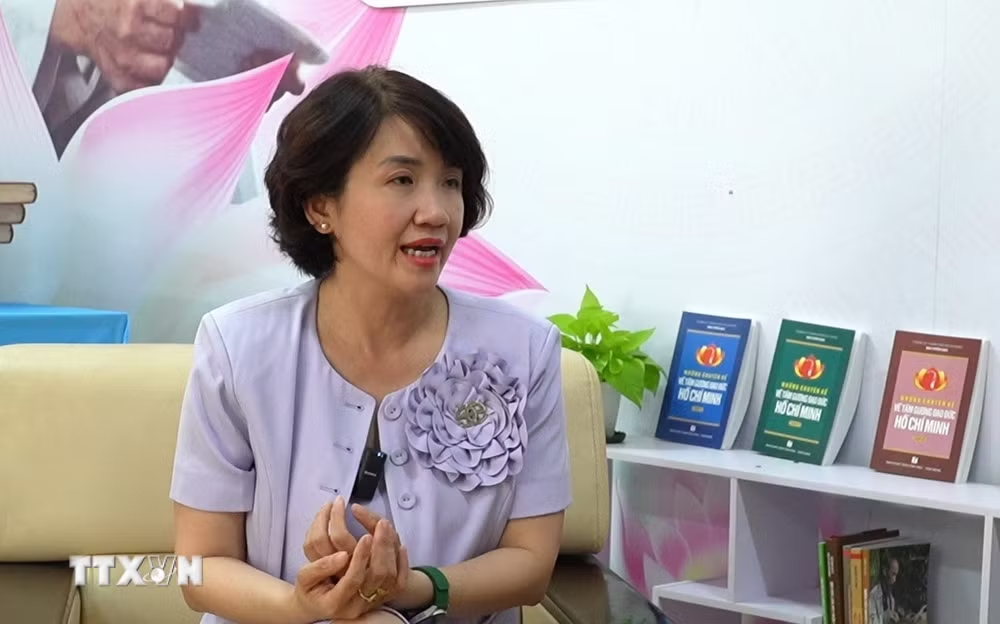
Dr. Dinh Thi Thanh Nga, Head of the Department of Administrative and Criminal Law, Faculty of Law, Saigon University, believes that to truly foster a culture of exemplary conduct within the government at all levels in Ho Chi Minh City, each official and Party member must consider their daily behavior as a measure. When citizens see the integrity, proactive attitude, and exemplary conduct of officials, from the workplace to social media, that is when the culture of exemplary conduct becomes the most vibrant intrinsic strength protecting the Party's ideological foundation.
Professor, Dr. Vo Van Sen, former Rector of the University of Social Sciences and Humanities - Vietnam National University Ho Chi Minh City, shared that forming a culture of exemplary conduct within the government system requires leaders to have the courage to master the ideological battlefield, including in cyberspace. Exemplary conduct is not only about maintaining one's own integrity, but also about pioneering the dissemination of positive elements and traditional moral values of the nation to counteract harmful and toxic information flows.
The culture of exemplary conduct within the government apparatus needs to be realized by each official and Party member being a skilled cultural warrior, using the power of beauty and truth to push back against falsehood and negativity. Only when exemplary conduct becomes a cultural norm and serves as a guiding principle will all levels of government truly become symbols of civilization, modernity, and compassion.
Read the series of articles here:
Source: https://www.vietnamplus.vn/xay-dung-gia-tri-cot-loi-cua-niem-tin-post1110523.vnp
















































































Comment (0)