

The transformation from construction site to factory.
As a company operating in the field of foundation and underground construction, FECON Joint Stock Company (headquartered in Tu Liem Ward, Hanoi ) is applying the international standard ISO 45001:2018 - Occupational Safety and Health Management System; and the international standard ISO 14001:2015 - Environmental Management System to ensure occupational safety.
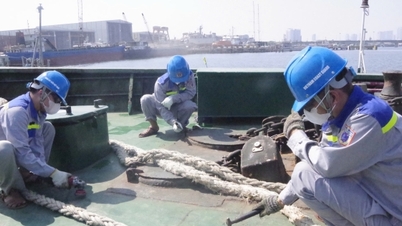
At construction sites, engineers and workers of FECON Joint Stock Company must strictly adhere to the principle of "safety first - no safety, no work." This principle is concretized by strict requirements such as: providing occupational safety training to workers before starting work; using all necessary personal protective equipment; checking the safety of machinery and equipment before operation; and organizing "toolbox talks" (morning-shift meetings) to disseminate potential hazards and safety measures for each job position during the day. The company places particular emphasis on electrical safety at underground and foundation construction sites.
According to Nguyen Van Hao, Head of Occupational Safety at FECON Joint Stock Company, with the philosophy that "safety is culture," the company has concretized this into core values such as professionalism, responsibility, and considering "people as FECON's most valuable asset"... This is demonstrated through building a transparent working environment, caring for the health of employees, and ensuring absolute safety at all projects.
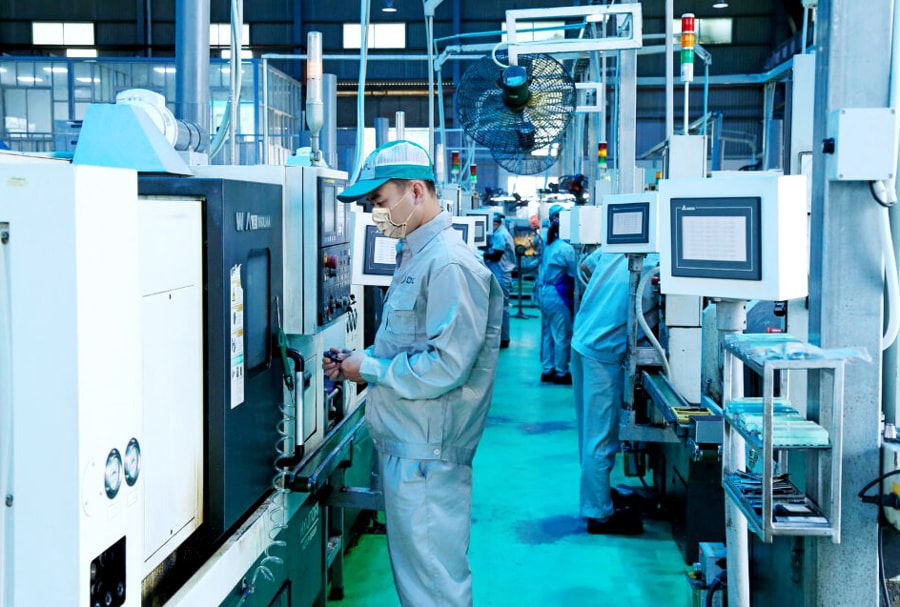
Not only in the construction sector, many manufacturing businesses are also accelerating digital transformation to improve management efficiency and ensure workplace safety. Nguyen Minh Tuan, Head of Production at Dong Anh Chain and Sprocket Joint Stock Company, said: “The company has installed a system to monitor equipment, quality, and productivity so that all staff and workers can track them. Digitalization helps managers closely monitor processes, detect safety risks early, and significantly reduce direct labor in strenuous tasks.”
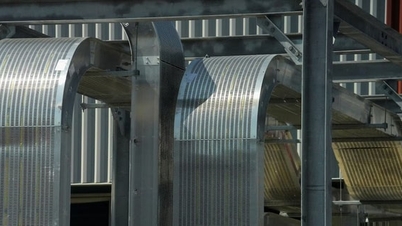
Workplace safety is also reflected in the awareness of many people. Mr. Nguyen Thanh Hai (Co Dien village, Vinh Thanh commune) said: “My family is building a 4-story house. From the beginning, I requested the construction unit to erect a solid corrugated iron fence, cover it with tarpaulin to prevent dust, and install protective netting around it to prevent materials from falling and affecting the surroundings. Workers working on the upper floors are required to wear safety harnesses.”
Inspections conducted in the early months of the year have shown that major construction projects in Hanoi generally comply with labor safety regulations. However, in some residential construction sites, the practice of workers working at heights without safety harnesses, the use of makeshift scaffolding, and the disarray of construction materials remains quite common.
According to Nguyen Tay Nam, Deputy Director of the Hanoi Department of Internal Affairs: “Construction remains the industry with the highest potential for safety hazards due to the nature of working at heights, using many mechanical devices, and employing seasonal workers. Especially at small-scale construction sites, awareness of and compliance with labor safety regulations is uneven. Many contractors still underestimate the importance of providing protective equipment for workers; they do not adhere to technical procedures, lack safety training, and use uninspected equipment.”
To make safety a constant priority.
Hanoi is entering a period of rapid urbanization with numerous projects already underway, in the near future, and planned. According to Nguyen Manh Toan, Deputy Head of the Employment and Labor Safety Department (Hanoi Department of Internal Affairs): “Currently, technology is becoming a new ‘shield’ in ensuring labor safety. The application of robots, artificial intelligence (AI), and remote monitoring systems helps businesses improve their risk control capabilities, especially in environments with high temperatures, dust, toxic gases, or confined spaces. Businesses proactively applying technology not only increases productivity but also significantly reduces the risk of accidents for workers.”
To ensure workplace safety at construction sites, especially high-risk projects, local authorities at the commune and ward levels are required to review and inspect residential construction projects; and enhance the responsibility of investors and contractors in complying with safety regulations.
Dr. Trinh Hoang Phuong, a lecturer in human resource management (Institute of Business Administration, School of Economics , Vietnam National University, Hanoi), stated: "Employers must consider investment in safety protection and training as mandatory, not only contributing to protecting the lives of workers but also helping businesses achieve sustainable development."
Along with strengthening inspections and handling violations, workers and employers need to build awareness of risk prevention early on, making compliance with safety procedures a habit, a responsibility, and a voluntary action. Only when a workplace safety culture is formed and spread widely can the capital city develop rapidly and sustainably.
Source: https://hanoimoi.vn/xay-dung-van-hoa-an-toan-lao-dong-749821.html




























































































Comment (0)