

However, behind the doors of many families, there still exists silent pain called violence - a major challenge to the sustainable development of the community and civilized society. Ending domestic violence, therefore, cannot be just a theoretical goal but must become a specific commitment, strong and humane action, implemented synchronously from policy to practice.
Worrying situation
In practice, domestic violence cases show that the majority of cases are caused by men, accounting for 83%. Between mid-2023 and mid-2025, hundreds of thousands of divorces were recorded, of which 92.7% were caused by domestic violence.
These figures are not only a loss of spirit, a breakdown of social “cells”, but also a warning bell about the current state of society. It is estimated that domestic violence causes a loss of up to 1.8% of GDP each year - not to mention many invisible, immeasurable, long-term losses.
Worryingly, in modern society, there are still women with high educational levels who can still become victims of violence, and there are also women who accept it, do not speak up, and do not fight against violence for many reasons.
According to a study conducted by the Vietnam Women's Museum, 85% of abused women have college, university, or master's degrees. Domestic violence in intellectual families often occurs silently and is cleverly hidden, making it difficult to detect. The results of the 2020 National Survey on Violence Against Women also showed that 63% of Vietnamese women have experienced violence from their husbands, 80% did not fight back, and nearly half of them have never shared it with anyone.
Viewing domestic violence as a "private matter" has become the biggest barrier over the years, creating silence around the victims, making them struggle alone and finding it difficult to find timely help.
When the abuse escalates, from harsh words to physical assault, the first essential need of the victim is a safe haven, an emergency "stop" where they and their children can escape immediate danger. This is when the community needs to reach out and provide a "landing place" for the souls tossed about in the midst of family storms.
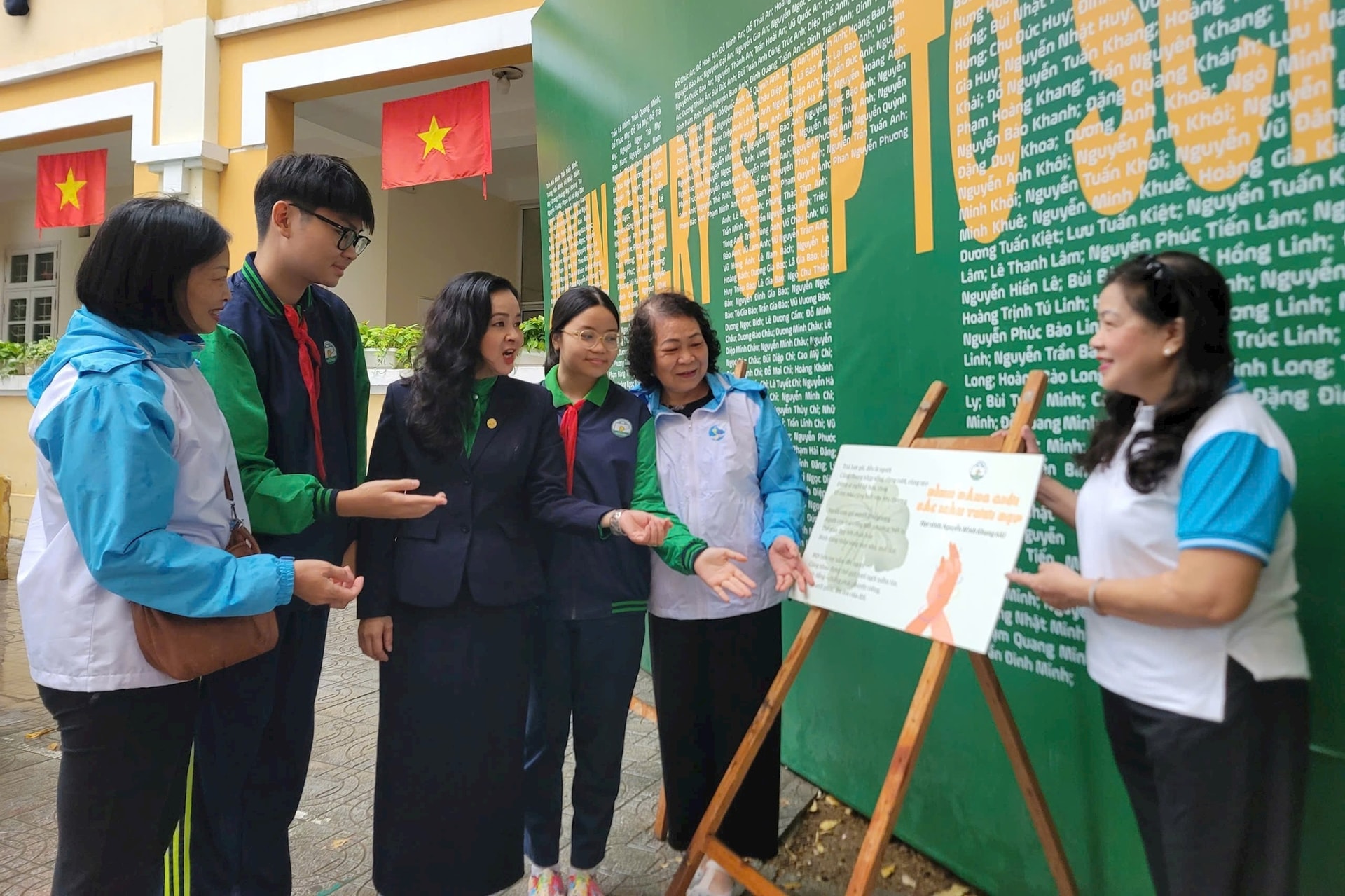
Speaking at the “Safe House” seminar organized by the Gender-Based Violence Prevention Network (GBVNET) on the morning of December 3, Ms. Hoang Tu Anh - Director of the Center for Creative Initiatives in Health and Population (CCIHP) emphasized that in Vietnam, up to 63% of divorced women said they had been subjected to violence, but currently there is still no complete and official data on the group of women who died due to violence.
However, through surveys and press monitoring in the past 5 years, the research team recorded more than 300 cases of serious violence, but this number is only the tip of the iceberg, because many cases have never been reported.
One of the reasons why women cannot escape violence is the lack of timely support from protection services and safe shelter systems. Currently, the country has only about 106 shelter beds for women who have suffered violence, and “this is a number that is too low compared to the actual need”.
Citing figures, Ms. Hoang Tu Anh compared: The Netherlands, with a population of only 15 million people, currently has more than 1,000 shelter beds and continues to call for an increase of 800 more beds to ensure that women can be received immediately when needed. Meanwhile, in Vietnam, some shelters are actually not used for their intended purpose, with some places only being used as nap rooms for officials, making the role of protecting women and children obscured.
This reflects a very thoughtful reality when we not only lack the quantity, but also do not ensure the quality of shelters - this is a "gap" that needs to be seriously considered in order to have a more effective solution to the current domestic violence.
Need to fill the “gap”
According to Ms. Hoang Tu Anh, women and children are two vulnerable groups, but are also very diverse in age, disability, living conditions... Therefore, shelters need to be designed to meet the diverse and specific needs of each target group.
Regarding this issue, Ms. Bui Lan Anh - Deputy Director of the Center for Women and Development (CWD) said: Peace House is the first shelter model for women and children who are victims of violence in Vietnam. The model was built with technical and procedural support from international organizations, with a design suitable to the culture and conditions in the country, ensuring comprehensive, urgent and systematic support for victims.
Peace House provides 8 free support services including: Providing safe accommodation, medical care, psychological support consultation, legal support consultation, life skills support, childcare education support, and economic connection support for community reintegration. In more than 10 years of operation, the model has received and supported nearly 1,900 victims from 34 provinces and cities across the country.
The severe shortage of shelters is haunting, pushing many victims into a corner, forcing them to return to a violent environment because they do not have any other options to ensure physical and mental safety.
Therefore, the construction and consolidation of temporary shelters is not only a temporary solution, but must be considered an important pillar in the strategy of preventing and combating violence. These facilities need to be invested not only in the number of beds but also become multi-dimensional support centers, from providing temporary accommodation and food, to arranging experts to provide psychological counseling, helping victims overcome trauma; providing legal support so that they can understand their rights and carry out necessary procedures such as divorce or reporting acts of violence; supporting their livelihoods so that they can confidently reintegrate and build an independent life...
To realize this, it requires the decisive participation of all levels of management, from the central to local levels, considering this a social development indicator that needs to be prioritized. There needs to be a mechanism to encourage social organizations and private units to participate in the operation and management of these centers, applying effective models that have been internationally and domestically proven. Especially in large cities like Hanoi , where there is a high population density and diverse support needs, there needs to be flexible models that are easy to access and ensure absolute confidentiality for those seeking help.
However, solving the problem of domestic violence does not stop at setting up relief facilities. The root of the problem lies in awareness and culture and the role of the law. There needs to be a strong shift from individual thinking to community responsibility. Social organizations, the Fatherland Front and unions need to promote a proactive role in educating and promoting gender equality and non-violent conflict resolution skills, starting from the grassroots level, residential areas...
The severity of the law is also key. Having sanctions that are sufficiently deterrent, and that are strictly enforced, sends a strong signal that society does not tolerate any violence. When victims are protected by the law, they feel confident in justice and support systems. Authorities need to work closely to ensure that cases of violence are dealt with promptly, openly to the extent possible, and that victim protection measures (such as restraining orders) are effectively applied.
To create a sustainable safety net, it is necessary to strengthen the role of local authorities and functional agencies in monitoring and mediation. When each grassroots cadre and each member of the residential group is equipped with knowledge and empathy, they will become effective "extensions" in detecting, promptly intervening and connecting victims with support services. This "safety net" needs to be woven with close attention from cadres, listening from people around and the readiness to act of the entire system.
Only when we build a society where everyone is aware of their responsibility to protect each other, can we turn the slogan "End domestic violence" into reality, bringing true peace, happiness and humanity to every Vietnamese home.
The month of action for gender equality and prevention and response to gender-based violence is held from November 15 to December 15 every year.
Orange was chosen as the color of the Global Campaign to End Gender-Based Violence. The orange heart logo of the Month of Action and the widely used orange communication products have created the recognition of the Month of Action as well as created a strong impression of joining hands to prevent and respond to violence against women, and to achieve gender equality.
Source: https://hanoimoi.vn/xay-mang-luoi-an-toan-de-bao-luc-gia-dinh-khong-con-la-goc-khuat-726199.html



![[Photo] Urgently help people soon have a place to live and stabilize their lives](/_next/image?url=https%3A%2F%2Fvphoto.vietnam.vn%2Fthumb%2F1200x675%2Fvietnam%2Fresource%2FIMAGE%2F2025%2F12%2F09%2F1765248230297_c-jpg.webp&w=3840&q=75)































































![[Photo] General Secretary To Lam works with the Standing Committees of the 14th Party Congress Subcommittees](https://vphoto.vietnam.vn/thumb/402x226/vietnam/resource/IMAGE/2025/12/09/1765265023554_image.jpeg)

























Comment (0)