

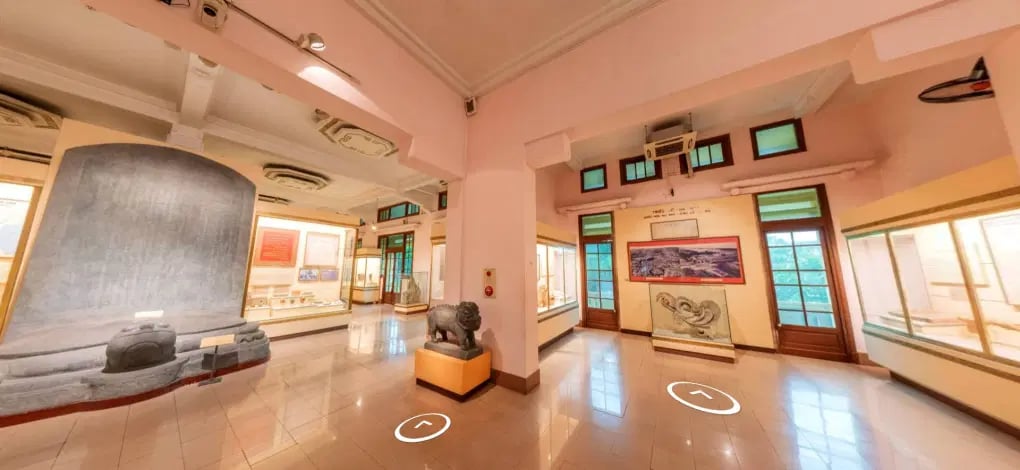
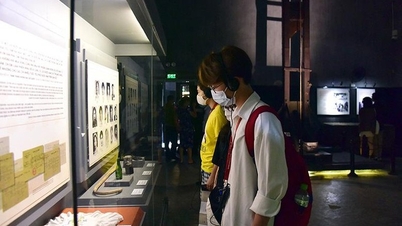
3D exhibition of the National History Museum. Photo: SCS.
Media trends of museums around the world
In today’s world, museums are not only places to preserve and display historical artifacts, but also important educational and cultural centers, connecting the past with the present and the future. With the continuous development of technology and communication, museums around the world have been applying new communication trends to attract the public, raise awareness of cultural heritage and create unique experiences for visitors.
In order to attract more new generation audiences, museums currently have 3 main communication trends:
First , increase the application of digital technology in exhibitions and communications.
In the new context, in general, museums around the world have to change their operating model, shifting from collection-centric to customer-centric. Digital technology has become an important factor to promote user experience; an important tool for museums to access, disseminate and protect cultural values through communication strategies. The development of technology applications, VR/AR technology is utilized as a form to meet the great market demand. These technologies are deployed creatively, using the potential of digital technology to provide virtual works on online platforms, distribute information instantly and create personalized search functions - one of the key factors in applying digital technology.
The Louvre Museum in Paris (France) has developed an impressive online tour system to meet the growing demand for digital cultural experiences, allowing viewers from all over the world to explore its rich collection without having to be in Paris with 360-degree technology and zoom in on details. The Louvre Museum has also launched an application called "En tête-à-tête avec La Joconde" (face to face with Mona Lisa), which offers a virtual reality experience of the famous painting as well as information about its history. Instagram is also an effective digital media tool in attracting the public to online exhibitions, also known as "Virtual Louvre", with more than 4 million followers. The National Museum of Singapore has launched a smart guide app called “Gallery Explorer”, which allows visitors to scan QR codes placed next to artifacts to access multimedia details, including text, high-resolution images, videos and explanatory audio.
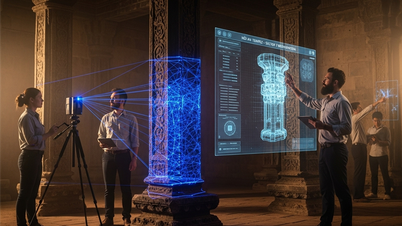
In addition, the app offers self-guided tours, interactive features such as quizzes and mini-games, multi-language support and interactive maps to help navigate the museum. With regular updates on new exhibitions and social media integration, “Gallery Explorer” has helped the National Museum of Singapore engage young audiences, create better interactive experiences, and collect valuable data on visitor behavior and preferences, thereby continuously improving and optimizing future displays and information. The Smithsonian Museum (USA) has implemented the 3D Digitization project, which aims to create detailed 3D models of important historical artifacts. The project has digitized a variety of artifacts, from high-tech objects such as the Apollo spacecraft to ancient relics such as Egyptian mummies. By using advanced 3D scanning technology, the Smithsonian has created accurate digital copies of the artifacts down to the last detail. 3D models not only help preserve detailed information about precious artifacts, but also open up unprecedented access to the public and researchers around the world. Users can explore artifacts from every angle through the museum's online platform.
Second, focus on short-term vision and communication strategy.
In studies from 2013 on communication trends of museums around the world, the results showed that: in general, museums tend to focus on short-term communication strategies instead of long-term.
Nowadays, museum communication strategies are often approached mainly from a marketing perspective. Most of the research for strategies is often done from the aspect of managing the heritage on display and cultural services, how to promote and attract more visitors. In addition, museum communication strategies also tend to lean towards tourism marketing. Therefore, strategic communication and public relations are often considered as a purely complementary promotional tool, only serving to disseminate more information about the heritage on display and cultural services to achieve the goal. These activities are often carried out according to a certain pattern, using many direct and indirect communication tools to attract visitors.
Third , take advantage of social media and multimedia.
This is a highly appreciated trend of museums in their communication activities. Taking advantage of social media channels and diverse media is a form of indirect message transmission, creating a new experience for visitors.
In essence, the main purpose of a museum is for the public to participate in artistic activities; through social media, museum activities are spread more widely, creating coverage and realization on many platforms. Social media allows communication to take place with many audiences; it is a turning point for museums to implement communication strategies with larger reach at lower costs.
According to the annual report “Global digital 2020-April” by “We are Social” and “Hootsuite”, digital technology has become a powerful management tool in communicating about museums, their missions, characteristics, building stories and private spaces. By managing communication messages and online interactions from target audiences, museums can affirm their role as a place to provide knowledge and create opportunities for social interactions. Combining these two elements, museums will develop and utilize social media in managing, promoting and attracting visitors.
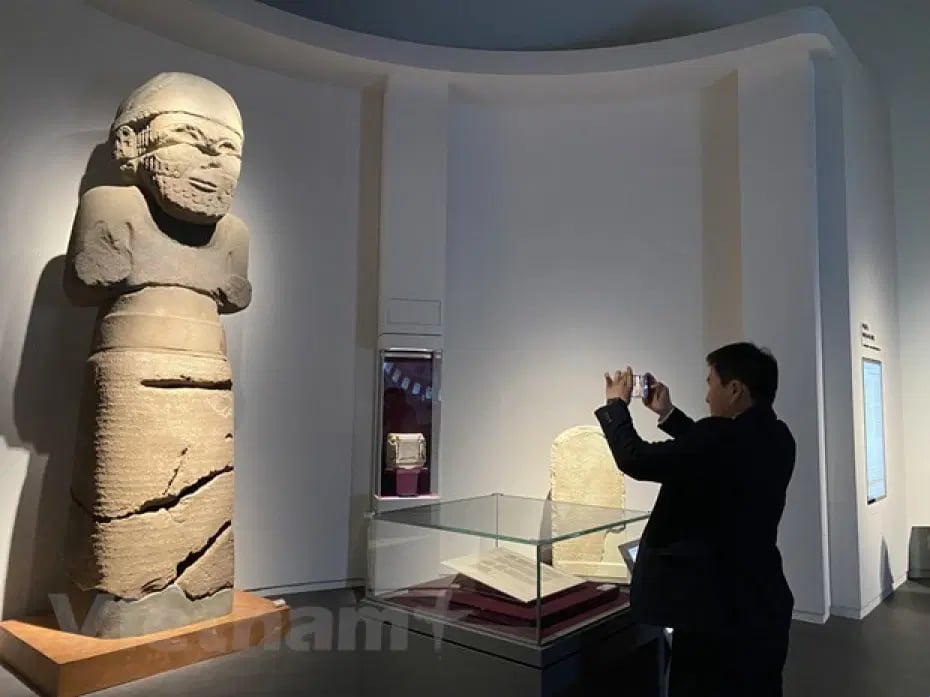
The museum is expected to raise people's awareness of the diversity of cultures around the world. (Photo: Vietnam+)
Media trends of museums in Vietnam
On December 2, 2021, the Government approved Decision No. 2026/QD-TTg on the "Program to digitize Vietnam's cultural heritage for the period 2021-2030" with the goal of digitizing all of Vietnam's cultural heritage to build a digital database system on cultural heritage nationwide. Accordingly, museums have actively applied many advanced technologies to promotion work such as virtual reality experiences; online tours and exhibitions; 3D lighting... Currently, Vietnamese museums have the following communication trends:
First , increase the application of digital technology in museum promotion communication.
Museums have gradually digitized documents and exhibits to adapt and transform in the new context. At the same time, they focus on building brands through experiences, services, people,...
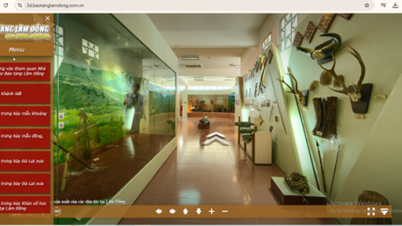
Recently, a number of museums have introduced integrated solutions, applying technology to optimize the visitor experience. In 2021, the Ho Chi Minh City Museum of History piloted the "3D/360 Smart Interactive Museum" project to serve visitors from afar. In 2022, the Sanbot Robot model applying artificial intelligence (AI) with features such as image projection, videos introducing the museum, artifacts, galleries... to guide visitors was put into trial. The National Museum of History has researched and launched a series of 3D online exhibition topics. Notably, the 3D Virtual Museum with the topic "National Treasures", integrated on the museum's website. Visitors are selected to learn and interact with 20 national treasures, admiring each exhibit in multidimensional detail. Important information is numbered right on the 3D model. In particular, heritage information is classified at each level from basic to advanced to flexibly meet the public's learning needs.
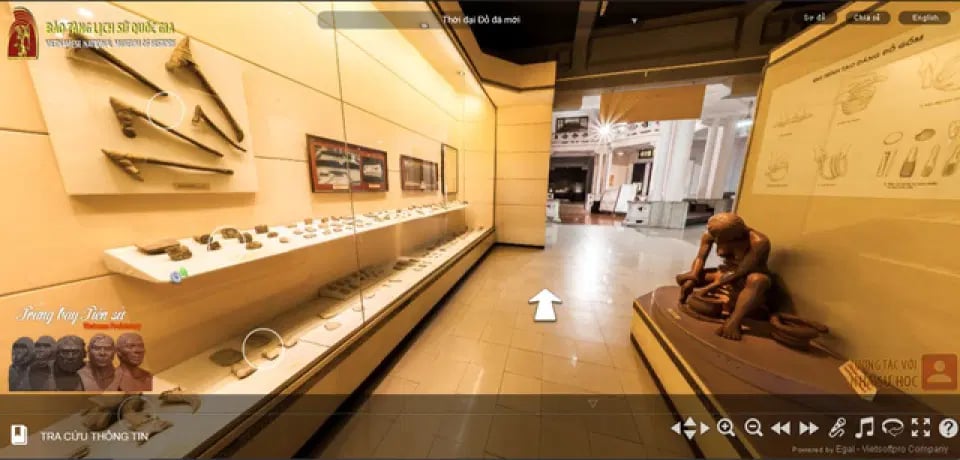
3D online exhibition images of the Vietnam National Museum of History
Several other museums in Vietnam have also created 3D tours on their websites, organized online performances and provided audio guides for visitors. The Dien Bien Phu Historical Victory Museum has been digitizing its collections to reach a wider audience; gradually building a database of artifacts and interactive programs for domestic and foreign tourists.
At the Southern Women's Museum, the Hologram machine has been integrated and tested in the exhibition space. In it, images of artifacts and historical figures are presented in 3D, combined with interactive software and virtual reality (VR) technology to help visitors feel the artifacts as real space with many different angles.
The War Remnants Museum also recreates 5 major prisons in South Vietnam during the resistance war in a simulated outdoor container. The museum applies 3D technology, combined with sound, light, temperature,... to clearly show the authenticity and brutality of the old prison.
To date, about 200 museums in Vietnam are gradually moving towards digitalization. Not only central museums but also provincial and private museums have changed their thinking about the importance of digitalization; applying digital technology to optimize visitor experience, thereby providing knowledge about cultural heritage for domestic and international visitors.
Second , applying multimedia communication types in developing communication at museums.
Visual communication and multimedia communication have also been a focus in the communication activities of museums in Vietnam in recent times. Museums have proactively built and developed short video clips on diverse topics, produced high-quality videos introducing national treasures, displaying and promoting products, taking photos of artifacts, activities... to promote the image and enhance the recognition of the museum. Currently, to optimize digital communication, most museums use Facebook, TikTok, Youtube, websites... as social media communication tools. Each platform is used for different purposes. Clearly defining the characteristics of social networks requires updating, eye-catching, regular and timely posts on museum fanpages, with attractive and engaging images and videos. In particular, the content of articles is concise, concise, using appropriate writing style, contributing to building a friendly image of the museum to the public, especially the young public. Clearly defining the purpose and direction of building different communication channels helps to build a clear, detailed development plan that does not overlap or dilute information from many sources.
The Vietnam Fine Arts Museum launched the iMuseum VFA multimedia presentation application in April 2021. Online exhibitions were also built and launched recently. These technology products have been especially valuable during the COVID-19 pandemic outbreak. In the context of the global tourism industry being stagnant for a long time, the application of this technology has helped the Vietnam Fine Arts Museum maintain regular interaction with visitors, supporting visitors to learn about the museum's artifacts. Along with displaying artifacts directly, the Vietnam Fine Arts Museum has also built and launched 3D virtual reality tours, contributing to maintaining interaction and supporting visitors to learn about artifacts.
In 2024, the Hoa Lo Prison Relics media team received the Inspirational Character Award at the WeChoice Awards 2023 for their contributions in making historical content more popular on social networks. With a new and trendy way of promotion, Hoa Lo Prison has attracted a large following among the youth community on Facebook and Instagram.
In general, social media platforms have wide reach and high interactivity. Of which, Facebook, Instagram and Tiktok are currently the three most popular platforms. Creating unique content with diverse forms (videos, images, livestreams, etc.) on social media has provided knowledge about heritage in an attractive way. At the same time, it creates opportunities for two-way interaction, promotes and enhances the understanding of domestic and international audiences, making an important contribution to improving the quality and effectiveness of preserving, promoting and spreading cultural and heritage values.
Currently, many museums and heritage sites have promoted their images on social networking platforms, attracting positive interactions such as: Hoa Lo Prison Relics, Thang Long Imperial Citadel Relics, Temple of Literature - Quoc Tu Giam, Vietnam Fine Arts Museum, Museum of Ethnology, Museum of Oceanography...
Third , regularly organize and research heritage education programs and integrated tours.
Recently, many museums in Vietnam have paid attention to organizing art performances as well as educational activities in which artists play a decisive role in education and cultural heritage preservation.
Hanoi Museum regularly invites artisans who are the subjects of heritage to directly participate in introducing and demonstrating traditional crafts (making Tò he, conical hats, Mễ Trì green rice flakes, Bat Trang pottery village...) or social customs and beliefs, art performances such as Đào Thục water puppetry, ca trù, hát xam... and many other meaningful educational activities.
The Vietnam Women's Museum has organized a cultural experience program on Mother Goddess Worship: "Heart - Beauty - Joy", to honor the beauty of Mother Goddess Worship, promote the traditional culture of the nation to the public at home and abroad; along with diversifying activities, it has attracted more tourists to the museum with attractive experiences.
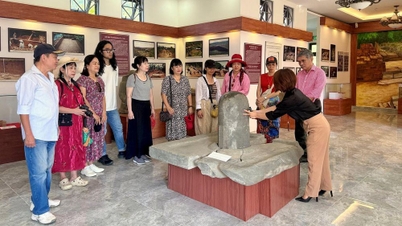
The National History Museum also focuses on organizing integrated tours. Not only stopping at simply visiting and learning about information, historical stories, and culture of heritage, visitors can also directly participate in experiential activities associated with learning content such as archaeology, solving puzzles, pottery painting, etc. This form of integrated tour is of interest and investment to the National History Museum, gradually becoming a special "symbol" of the unit. From 2020 to now, on average, each year there are from 200 to 300 heritage education programs organized at the museum in both online and in-person forms.
In addition to performing arts programs, museums also cooperate with educational institutions to organize extracurricular activities and experiences for students; create opportunities to access and understand cultural heritage, and develop a group of young potential audiences. Some museums connect with young audiences who love to travel and learn about culture, invite them to visit and experience, and write and post reviews on social networking platforms, contributing to creating a ripple effect and attracting public attention.
In addition, some museums have maintained cooperation with many press agencies. In addition to providing diverse, widespread and timely information about museum events to a wide audience at home and abroad, the press is also an important tool that actively supports the provision of official statements from museums to the public as quickly as possible, in the face of events that are likely to cause controversy and affect the image and reputation of the museum.
Some issues raised
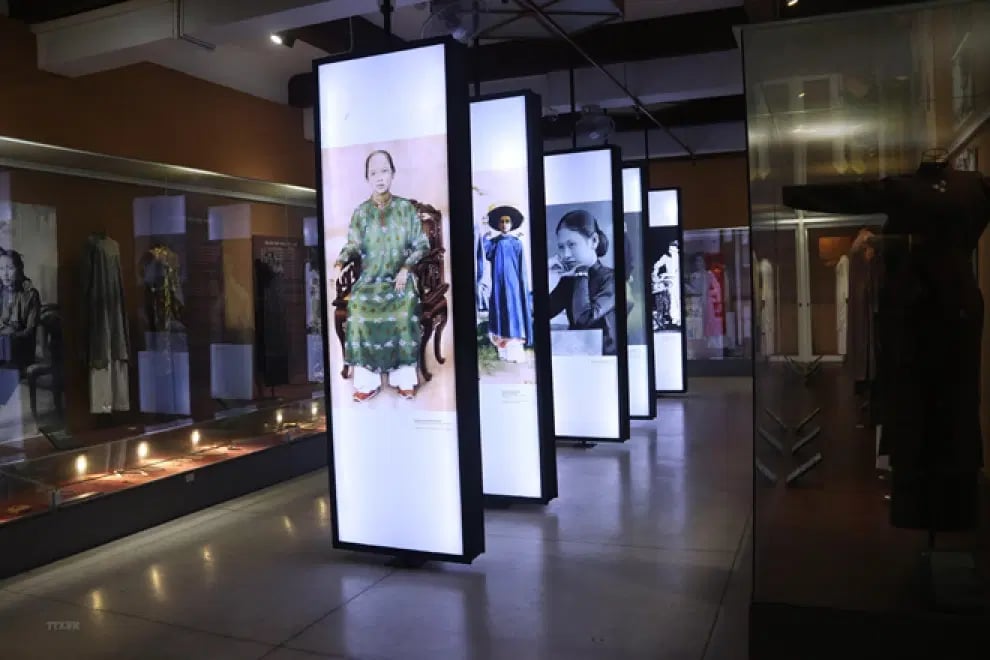
The Ao Dai display area of the Southern Women's Museum is designed in a traditional style interspersed with modernity. (Photo: VNA)
Firstly , the communication activities of many museums are not professional, regular, or systematic; there is no clear strategy for each specific stage and they have not received proper attention from managers.
In Vietnam, for a long time, museums have been a “strange dish” to many people, especially the younger generation. One of the main causes of the problem is communication work. Of the 154 museums in Vietnam today, only a few focus on marketing, marketing the museum’s “brand” (specifically, promoting exhibitions, exchanges, performances, etc.) to attract visitors and increase the prestige of the unit.
Most museums still lack appropriate marketing strategies, have not diversified and expanded thematic exhibition spaces, and lack attractive exhibitions and exhibitions based on public demand. Promotional publications are still monotonous, and there are no typical souvenirs and souvenir stalls suitable to the characteristics of the museum.
Second , in many museums, the most difficult problem is the lack of professional, high-quality communication staff. The communication staff of many museums are on-site specialists, lacking experience and comprehensive communication knowledge, especially digital communication campaigns to connect the public with the museum. Lack of trained human resources with full expertise to develop in the direction of "Digital Museum" is also a challenge for many museums today.
Third , many units are still slow in applying digital technology in managing artifacts, supporting exhibition tours, providing automatic explanations to serve visitors and providing services to meet the needs of learning, sightseeing and cultural enjoyment of the public. According to the UNESCO Assessment Report, in more than two years of the COVID-19 pandemic, the number of visitors to museums has decreased by 70% and museum revenue has decreased by up to 60% compared to before the pandemic. Many museums in Vietnam are in a state of limited budget, outdated equipment systems, shortages and facing many challenges from the digital transformation wave of other forms of entertainment.
In the new context, to develop strongly, museums need to become a prominent and top heritage destination when the public wants to experience knowledge and entertainment. Each museum needs to take advantage of opportunities, build a long-term, systematic marketing strategy, have a team of professional communications staff to meet the requirements; need to closely connect with travel agencies to promptly grasp the needs of tourists, develop strategies to build and promote the brand more widely and effectively to gradually turn the museum into an attractive tourist destination, especially cultural tourism.
Currently, the “Program to digitize Vietnam’s cultural heritage for the period 2021-2030” has been creating favorable conditions for museums and museum management units to deploy advanced technology applications in promotion work. Accordingly, museums need to pay more attention to developing appropriate policies to improve the effectiveness of communication, promotion, and exploit the opportunities of new trends.
In the coming time, in order to improve communication effectiveness for Vietnamese museums, it is necessary to pay attention to the following solutions:
Investing in digital technology and human resource training
One of the major difficulties of many museums today is the lack of trained human resources with adequate expertise to develop in the direction of "digitalization". The story is not just about posting information on a few websites, having a few auxiliary technology devices, but how to increase the attractiveness in the visitor experience, from the cognitive step to the final step. Accordingly, museums need to gradually focus on investing in virtual reality (VR) and augmented reality (AR) technology. Along with that, it is important to organize in-depth training courses on digital and communication skills for staff. In addition, it is possible to consider seeking consultants and cooperating with foreign partners to learn and accelerate the digital transformation process.
Build a multi-channel communication strategy.
Along with taking advantage of the strengths of the press and media network in updating, transmitting and covering information to the public, museums need to focus on developing online communication channels through social networks and websites to optimize access sources for target groups.
On the digital side, museums can initially focus on three platforms: Facebook, Youtube and Website. Each platform needs to have a specific purpose to ensure that information reaches each target group appropriately. Facebook will be the main information channel to reach the general public, especially young people, with regular, concise, and concise news updates, focusing on visual and linguistic elements; Youtube and Website will be more specialized, focusing on official information and images of more official events.
Museums also need to focus on developing visual and multimedia communication to create content and maintain a regular presence on these platforms. It is necessary to proactively diversify communication content such as videos, podcasts, in-depth articles, infographics, and entertainment content with a variety of topics related to the activities, events, heritage, and stories of the museum. Along with that, combine implementation on coordinated social networking platforms such as KOCs/KOLs channels in the field of culture and arts: invite experiences and share feelings through social networks where they have influence, thereby increasing public interest or using email marketing with visitors who have visited and have data to maintain the level of "loyalty" to the museum.
Lay the foundation for a long-term communication strategy.
First of all, it is necessary to clearly identify the target audience and the segment the museum is aiming at, what their demographics are and what their behavior and psychology are. Through this, we can have a more specific picture of the strategies that need to be implemented, aiming at this behavior and psychology of the public.
Then, build a brand identity from language to images, marketing tools to position the museum's value clearly and consistently. One of the mandatory tasks is to develop a new brand identity, based on the existing museum platform, including all the elements: main color, mascot, logo, commonly used font, tone... A brand identity is built synonymously with the core values and personality of the museum being reflected through all the information that the museum wants to convey. These contents represent the museum, or in other words, are what the public remembers when mentioning and distinguishing museums from each other. The brand identity should be applied synchronously to any communication activity, from social media channels to publications, posted content... Combined with that is setting up a system to measure, analyze communication effectiveness and develop a plan to use the platforms according to each time frame to suit the long-term vision. Additionally, it would be better if museums trained a crisis communications team and had a clear process in place for this.
Finally, an effective communication strategy cannot lack feedback from the public. Therefore, museums need to take steps to collect feedback from the public to increasingly improve the quality of communication and the experience of visitors. It is necessary to implement public relations plans at home and abroad to develop both press and professional communication. Having a wide network will help information related to new exhibitions, events and activities to be disseminated to the public faster. In addition, it is possible to combine diverse cooperation with international partners such as embassies, cultural centers of countries... to implement exchange activities, tours, bilateral projects with diverse content and methods./.
Dr. Vu Tuan Anh
Diplomatic Academy
According to the Journal of Political Theory and Communication
Source: https://baotanghochiminh.vn/xu-huong-truyen-thong-cua-cac-bao-tang-tren-the-gioi-va-nhung-goi-mo-doi-voi-viet-nam.htm


![[Photo] National Assembly Chairman Tran Thanh Man receives First Vice Chairman of the Federation Council of the Federal Assembly of the Russian Federation](/_next/image?url=https%3A%2F%2Fvphoto.vietnam.vn%2Fthumb%2F1200x675%2Fvietnam%2Fresource%2FIMAGE%2F2025%2F12%2F02%2F1764648408509_ndo_br_bnd-8452-jpg.webp&w=3840&q=75)

















































Comment (0)