

The current pivotal stage requires businesses to shift strongly from selling low-cost goods to creating value, innovating supply chains and building national brands.
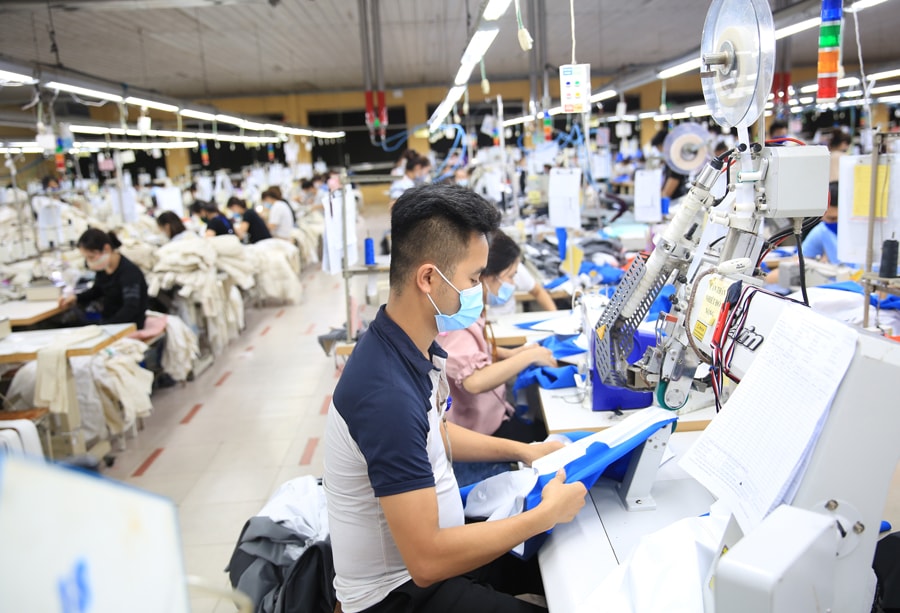
There are still many challenges.
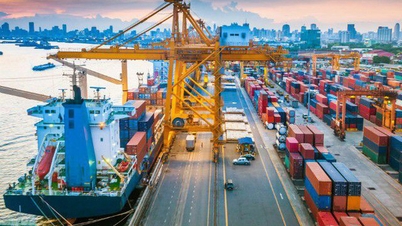
According to the Ministry of Industry and Trade , as of mid-November 2025, Vietnam's import and export turnover reached 800 billion USD. With the current growth momentum, total international trade turnover this year is expected to set a record of over 900 billion USD. This figure shows that exports continue to play an important role as a driving force of the economy.
However, in addition to these positive results, there are many major challenges. Dr. Vo Tri Thanh, Director of the Institute for Brand Strategy and Competitiveness, analyzed that although the scale of trade is increasing rapidly, the domestic added value is still low, and most of the profits in the export chain still fall into the foreign investment (FDI) sector. This reflects the limitations in the ability of domestic enterprises to participate in high value-creating stages such as design, technology, logistics and distribution.
In addition, the connection between FDI enterprises and Vietnamese enterprises is still weak, not creating the expected spillover effect on technology and management. Along with that, the market structure is unbalanced when nearly 45% of total turnover is concentrated in two large markets, the United States and China. This dependence makes Vietnamese goods strongly affected by policy fluctuations or changes in consumer tastes in these two markets.
Another major bottleneck is the limited ability to take advantage of incentives from free trade agreements (FTAs). Although Vietnam has signed more than 17 FTAs, according to the Ministry of Industry and Trade, the rate of utilizing Certificates of Origin to enjoy tariff incentives (preferential C/O) is only 32-33% on average. The main reasons come from limited market information, small-scale production capacity, outdated technology, high costs of compliance with standards and risk management capacity that does not meet the requirements of international partners.
The challenge becomes more complicated as the global economy shifts strongly to a green-digital model. Major markets such as the European Union, the United States, Japan, etc. tighten standards on the environment, labor, traceability, etc. This puts great pressure on Vietnamese businesses, especially small and medium-sized enterprises.
Director of the Trade Promotion Agency (Ministry of Industry and Trade) Vu Ba Phu commented that global trade is strongly differentiated, with the trend of shifting supply chains, increasing technical barriers, low-carbon logistics and the explosion of cross-border e-commerce. These factors put considerable pressure on domestic enterprises but at the same time open up opportunities for our country's goods to penetrate deeper into high-value markets, if enterprises adapt promptly.
In reality, many domestic enterprises still struggle with requirements on rules of origin, quality control or supply chain transparency. Some enterprises have export orders but have to refuse because they do not meet the standards of import partners.
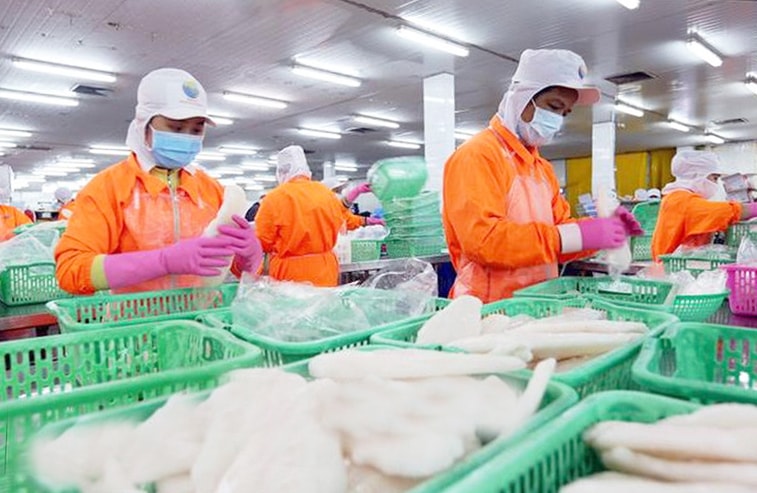
Creating new momentum for exports
In the context of rapidly changing global trade, Vietnam is facing an urgent need to create a “new momentum” for exports, both at the policy and business capacity levels.
From a market perspective, Deputy Director of the Import-Export Department (Ministry of Industry and Trade) Tran Thanh Hai emphasized the need to improve quality standards and build brands, considering this a prerequisite to maintain prestige with traditional customers and penetrate new markets.
Meanwhile, Dr. Vo Tri Thanh commented that the world is shifting to a development model based on three pillars: Sustainable - inclusive - creative. Therefore, Vietnam cannot continue to sell cheap goods based on low cost advantages but must shift to value creation and national brand building.
In that context, the ability to comply with international standards has become a “mandatory passport”. Enterprises that have prepared early have initially reaped results. Vinamilk’s Research and Development Director Nguyen Quoc Khanh said that three units of the enterprise have achieved carbon neutrality according to PAS 2060:2014 standards, and set a Net Zero target before 2050. Green transformation is not only a cost, but also an investment for the future. If they can pass the environmental standards and regulations, also known as “green fences” of Europe, Korea or Japan, Vietnamese products will enter higher value segments.
Director of the Trade Promotion Agency (Ministry of Industry and Trade) Vu Ba Phu emphasized that export activities have entered a "pivotal phase", requiring all parties, especially businesses, to renew their thinking, upgrade their market approach methods and adapt to the increasingly high demands of developed markets. Promoting businesses to step out into the world is not only about expanding the market, but also about increasing their ability to master the rules of the game and participate deeply in the global value chain.
On the policy front, the Ministry of Industry and Trade is developing the “Reaching the International Market Program for the 2026-2035 period” to support businesses in expanding their markets in a sustainable manner, making the most of new-generation FTAs, upgrading green standards and enhancing digital applications in trade promotion. The program is expected to create a solid foundation for businesses to improve their comprehensive competitiveness from production, logistics to digital trade.
If implemented synchronously, these steps will become pillars to help Vietnamese goods improve their position, expand market share and penetrate high-value segments in the coming decade.
Source: https://hanoimoi.vn/xuat-khau-viet-nam-co-hoi-vuon-tam-o-giai-doan-ban-le-725357.html


![[Photo] Prime Minister Pham Minh Chinh receives President of Cuba's Latin American News Agency](/_next/image?url=https%3A%2F%2Fvphoto.vietnam.vn%2Fthumb%2F1200x675%2Fvietnam%2Fresource%2FIMAGE%2F2025%2F12%2F01%2F1764569497815_dsc-2890-jpg.webp&w=3840&q=75)


























































































Comment (0)