1. The benefits of bloodwort leaves
- 1. The benefits of bloodwort leaves
- 2. How to use bloodwort leaves
- 2.1 Bloodroot leaves treat menorrhagia and postpartum hemorrhage.
- 2.2 Bloodwort leaves for treating bloody stools
- 2.3 Bloodroot leaves treat coughing up blood and nosebleeds.
- 2.4 Bloodwort leaves treat bone and joint pain, and bruises from falls.
- 2.5 Bloodwort leaves for treating blood in urine
In Traditional Chinese Medicine, the plant known as *Dracaena sanderiana* is called *Dracaena fragrans*, and its leaves are the part commonly used to prevent and treat various diseases. *Dracaena sanderiana* leaves have a sweet, mild, slightly bitter taste, are neutral in nature, and act on the liver and kidney meridians.
Bloodroot is red in color and enters the liver meridian, the organ responsible for storing blood in Traditional Chinese Medicine. Therefore, this herb is famous for its blood-cooling and hemostatic effects, including cooling the blood and dispersing blood stasis, relieving heat in the blood, and breaking up stagnant blood; stopping bleeding in cases of hemorrhage; and relieving pain caused by injury or poor blood circulation.
In Traditional Chinese Medicine, the leaves of the bloodwort plant are commonly used to prevent and treat various diseases related to blood heat imbalances, such as hemoptysis, pulmonary tuberculosis, nosebleeds; bloody dysentery, bloody diarrhea, bleeding hemorrhoids; menorrhagia, postpartum hemorrhage, excessive menstruation, menstrual cramps due to blood stasis; hematuria; and bruising and swelling caused by impact.
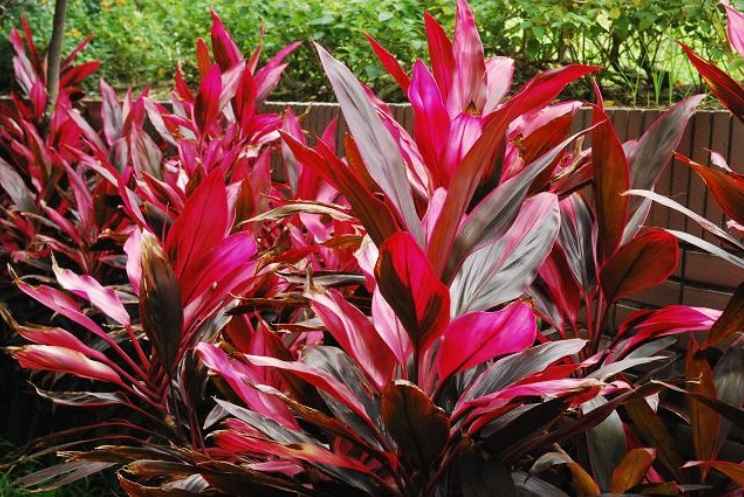
The leaves of the bloodwort plant are well-known for their blood-cooling and hemostatic properties.
Modern studies have also found many chemical components in the leaves of the bloodwort plant that have beneficial effects on health, such as phenolic compounds, flavonoids, saponins, anthocyanins, amino acids, sugars, tannins, phytosterols, and a small amount of alkaloids.
Through experimental studies, the leaves of the bloodwort plant have demonstrated many outstanding biological activities such as antibacterial and antifungal properties, effects on the uterus to promote strong uterine contraction, antioxidant and anti-inflammatory properties, support in the treatment of some types of cancer such as stomach cancer, lymphoma, colon cancer, lowering blood lipids, and protecting the liver.
2. How to use bloodwort leaves
2.1 Bloodroot leaves treat menorrhagia and postpartum hemorrhage.
Ingredients: 20g fresh bloodwort leaves, 10g cogon grass roots, 10g loofah flower calyx, 8g ginger roots.
Instructions: Wash the herbs thoroughly, chop them finely, put them in a pot with 500ml of water, simmer until only 200ml remains, and drink twice a day. This is the most common application of bloodwort leaves in gynecology, helping to clear heat, cool the blood, contract the uterus, and stop bleeding quickly.

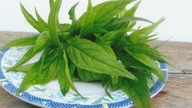

Note: This is for use only in cases of menorrhagia caused by heat; not for use by pregnant women.

2.2 Bloodwort leaves for treating bloody stools
Ingredients: 20g fresh bloodwort leaves, 12g knotgrass, 20g fresh centella asiatica.
Instructions: Wash and crush the ingredients, then add cooled boiled water, strain to extract the juice and drink, or decoct if you cannot consume it raw. Huyết dụ (Sanguisorba officinalis) is neutral in nature and mild in taste, helping to clear heat and detoxify, dispel wind, stop bleeding, and support the treatment of bacillary dysentery and hemorrhoids.
2.3 Bloodroot leaves treat coughing up blood and nosebleeds.
Ingredients: 30g fresh bloodwort leaves, 20g charred cypress leaves, 20g knotgrass.
Instructions: Boil with 600ml of water until only about 200ml remains. Divide into 2-3 doses and drink warm throughout the day. This is a combination of cooling herbs to soothe the respiratory mucosa, while also helping to cool the blood, moisten the lungs, and stop bleeding in the upper respiratory tract (nose and mouth).
2.4 Bloodwort leaves treat bone and joint pain, and bruises from falls.
Ingredients: 30g of fresh leaves, roots, and stems of the bloodwort plant, 15g of dragon's blood resin.
Instructions: Boil with 600ml of water until only about 200ml remains, divide into two portions.
Bloodroot not only stops bleeding but also disperses blood stasis, promotes blood circulation, reduces swelling, and relieves pain caused by stagnant blood or surgical trauma.



2.5 Bloodwort leaves for treating blood in urine
Ingredients: 20g fresh bloodwort leaves, 20g cogon grass roots, 10g goat's blood leaves.
Instructions: Wash thoroughly, then boil with water and drink throughout the day.
This method helps to clear heat and dampness, clear heat in the bladder, and stop bleeding in the urinary tract. If hematuria is due to kidney stones, additional herbs that promote qi circulation and expel stones, such as Desmodium gyrans and Gallus gallus domesticus, should be combined.
Source: https://suckhoedoisong.vn/5-bai-thuoc-tri-benh-tu-la-huyet-du-16926031313095312.htm




































































































![[Infographic] Which types of behaviors are strictly prohibited in digital transformation from July 1, 2026?](https://vphoto.vietnam.vn/thumb/402x226/vietnam/resource/IMAGE/2026/07/02/1783004068098_thumb_5_hanh_vi_nghiem_cam_20260702184923.jpeg)