|
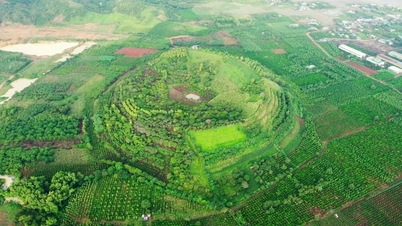
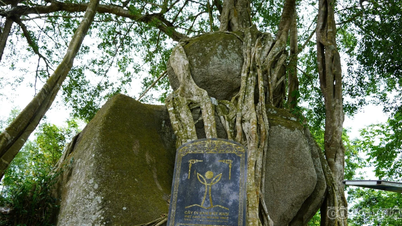
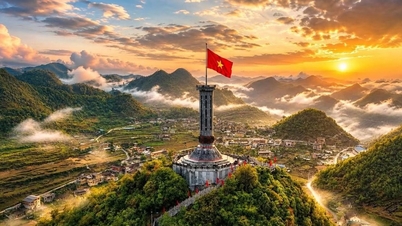
| Today, A Bia Hill has become a popular tourist destination in A Luoi. |
The brutal battlefield and the resilience of Vietnam.
Historical evidence confirms that A Lưới was one of the areas subjected to the most intense bombing during the war. On strategic high points such as 937 - A Bia, 935 - Ripcord, and Cốc Bai, the enemy mobilized heavy firepower, combining air force, artillery, and infantry to control the Trường Sơn corridor.
It was in these places considered "impregnable fortresses" that our army and people demonstrated unwavering courage, creativity in tactics, and a will to fight to the end. The battle at A Bia Hill – which the enemy had to acknowledge as "Hamburger Hill" – became a prime example of the failure of military strategies based on overwhelming firepower.
Similarly, at Hill 935 - Ripcord, our armed forces persistently held their ground, wearing down the enemy's strength and thwarting their attempts to control the area. At Coc Bai, the protracted battles clearly demonstrated the art of people's warfare: using weakness to overcome strength, using few against many, relying on the terrain and the people's support to create a combined force. These victories not only had military value but also affirmed a truth: the decisive strength of the Vietnam War lay not in weapons, but in the people and the values they carried.
From the harsh realities of that battlefield, A Lưới has produced many Heroes of the People's Armed Forces - individuals who exemplify Vietnamese revolutionary heroism, such as Hồ Đức Vai, Kăn Lịch, Kăn Đơm, A Nun, Hồ Giuc, Ku Tríp, A Vầu… These individuals have affirmed that heroism is not a random product of war, but the crystallization of a system of values formed and developed in the practical struggle.
 |
| Hero Ho Duc Vai with a precious photograph taken with President Ho Chi Minh. (Archival photo) |
Heroism - from the battlefield to peaceful life
The experience in A Lưới demonstrates a systematic transformation: from the battlefield to peaceful life, heroism continues to be expressed in new forms.

The post-war heroes did not dwell on past glory, but continued to live simple lives, remaining close to the people and contributing to the community. After retiring from his position as military commander, Ho Duc Vai continued to shoulder the important responsibility of Chairman of the Veterans Association of A Luoi District, earning the trust and respect of his comrades and fellow citizens. Kan Lich always brings the qualities of a soldier of Uncle Ho to the people and villages in their daily lives, working to improve their income and living standards. Kan Dom is down-to-earth, simple, and deeply affectionate within his large family and vibrant, united, and friendly community.
Ho Duc Vai is a prime example of the transformation from hardship to resilience. From an orphaned child in a remote village, he grew up amidst the flames of war, becoming a seasoned soldier and earning the title of hero. His achievements not only demonstrated his flexible combat skills but also reflected the depth of his political acumen. After the war, he continued to affirm his qualities through a simple life, closely connected to the people, and actively contributing to the community. He became a "living landmark" of morality and spirit in social life.
Kan Lich – the first female hero of the Pa Ko ethnic group – is a symbol of the combination of military intelligence and self-discipline. With dozens of battles and the elimination of many enemy forces, she affirmed her outstanding combat capabilities. However, her greatest value lies not in her military achievements but in her continued preservation and development of her qualities after the war. Her life is a vivid testament to a standard: the title of hero is not the destination, but the beginning of a greater responsibility.
Kăn Đơm represents the depth of people's war. From her combat experience, she demonstrated creativity in her fighting methods, staying close to her assigned territory and maintaining strong ties with the people. After the war, despite facing many losses and difficulties, she remained steadfast and resilient. This is a typical example of a "silent hero"—a type of value with special significance in maintaining the moral foundation of society.
These specific individuals affirmed that revolutionary heroism in A Lưới is not an abstract concept, but a vibrant system of values capable of reproduction in various historical circumstances. From this, a definitive understanding was established: the title of hero is a historical recognition, but the value of heroism is the decisive factor in the vitality of individuals and society.
Of the eight Heroes of the People's Armed Forces from A Lưới, only two remain as living witnesses: Kăn Lịch and Kăn Đơm, but they are both advanced in age. The passing of historical witnesses is an inevitable process, but it also highlights the urgent need to preserve and promote their historical value.
For the younger generation, these memories not only help them understand the past but also guide their actions in the present: maintaining their stance amidst changing information, enhancing their competitiveness, and building social responsibility. Therefore, preserving, digitizing, and incorporating stories about A Lưới into education and mainstream media carries long-term strategic significance.
 |
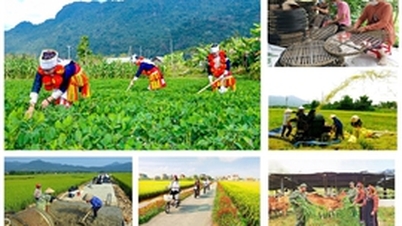
| A traditional educational activity for children in A Luoi 4 commune. |
Show your gratitude through concrete actions.
The realities of life for heroes and their families today demand that gratitude be expressed through concrete policies and actions. Medical care, social security, the attention of all levels of government, and the participation of the entire society are not only moral obligations but also political responsibilities. Gratitude is a way to strengthen the foundation of societal values, enhance trust, and foster connections between generations. Our Party and State have been doing this well, but it needs to be implemented more comprehensively, decisively, and thoroughly.


From A Lưới, it can be clearly affirmed that Vietnamese revolutionary heroism is a combination of political ideals, the strength of the people, and moral depth. The battles at A Bia, Ripcord, and Cốc Bai; and individuals like Hồ Đức Vai, Kăn Lịch, and Kăn Đơm… have created a system of values capable of spreading beyond historical space and time.
In the current era, as the country continues to integrate and develop, these very values are the foundation for building a modern Vietnamese person – one who is both courageous, intelligent, and responsible to the community.
Therefore, commemorating April 30th is not just about recalling the victory, but about affirming a truth: peace opens a new era, where heroism is measured by the quality of contributions in building and defending the Fatherland. And from A Lưới – a land that was once a "hotbed of fire" – a powerful message continues to spread: the value of Vietnamese revolutionary heroism does not belong only to the past, but is present in the present and shaping the future of the Vietnamese nation.
Deputy Head of the National Assembly Delegation of Hue City
Source: https://huengaynay.vn/chinh-polit-xa-hoi/a-luoi-kien-cuong-165208.html
![[Image] National conference summarizing one year of operation of the overall organizational model of the political system, the three-tiered government model.](https://vphoto.vietnam.vn/thumb/1200x675/vietnam/resource/IMAGE/2026/07/01/1782882811691_ndo_br_1-jpg.webp)