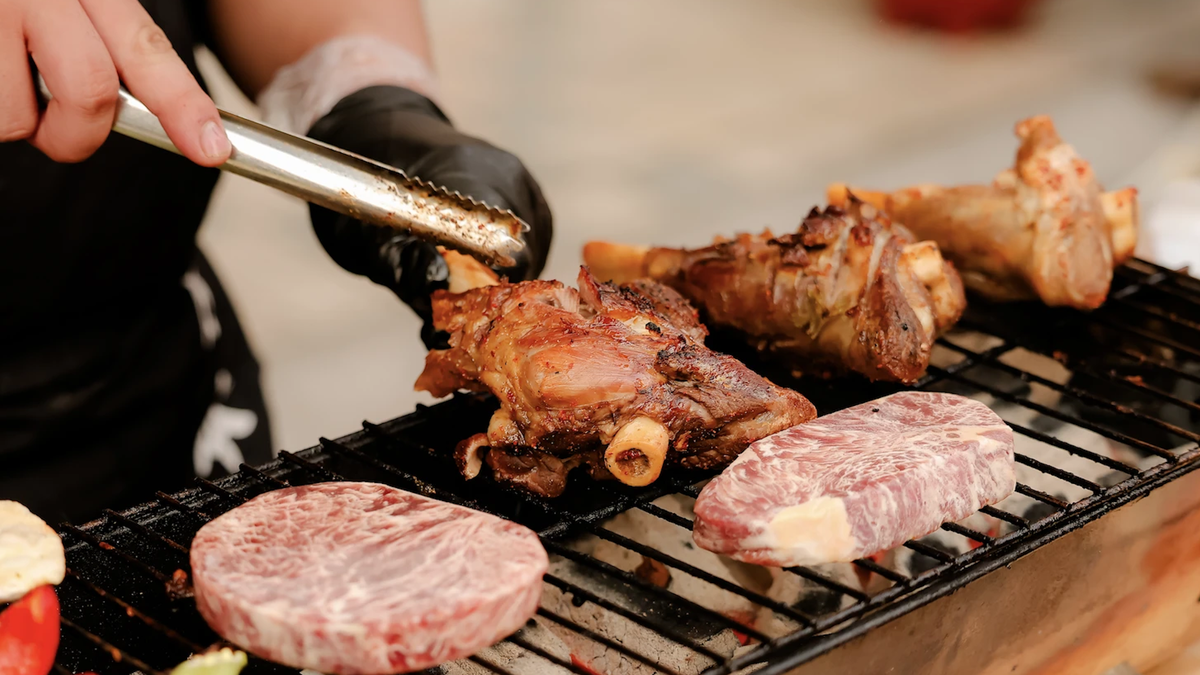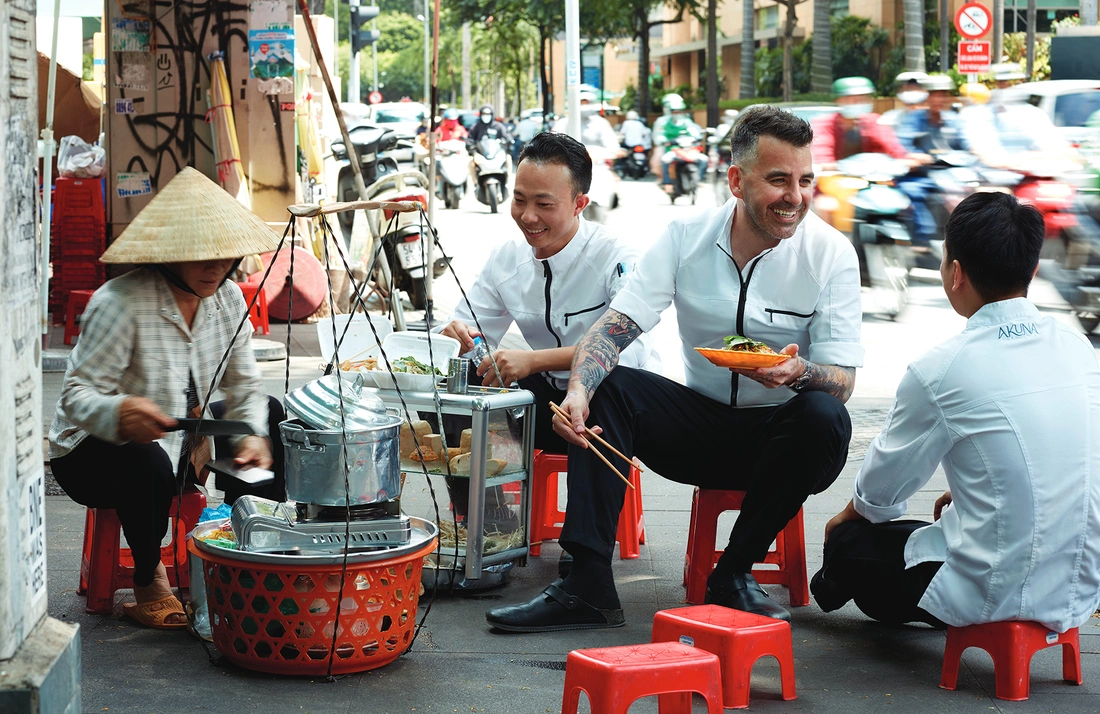
Sam Aisbett is a big fan of Vietnamese street food - Photo: THANH HIEP
In recent years, this appeal has been further confirmed as numerous international rankings have consistently honored Vietnamese street food, along with the presence of the Michelin Guide for the past three years, contributing to the promotion of Vietnamese cuisine, from casual to high-end, globally.
The appeal of Vietnamese cuisine is also a hotly debated topic, with key elements such as its rich flavors, diverse cooking methods, delicate balance, healthiness, and high-quality ingredients.
Tuổi Trẻ newspaper invited Sam Aisbett and Chad Kubanoff – two experienced chefs who share a passion for Vietnamese street food – to participate in a conversation, discussing at length what factors define Vietnamese cuisine in the eyes of international diners.

Chad Kubanoff - Photo: THANH HIEP
I love shrimp paste and fish sauce.
* How have your views on Vietnamese cuisine changed before and after coming to Vietnam?
- Sam: There are many Vietnamese restaurants in Australia, but when you go there, you only see pho and banh mi. Before coming to Vietnam, I thought Vietnamese cuisine was just like that. But when I actually set foot here, "Oh my God! There's so much more, all kinds of dishes, flavors, sauces, seafood..."
The more I travel, the more I see the differences. Even bread tastes different from bread in different places. Because bread and pho are so famous worldwide , people think Vietnamese cuisine is limited to just those, but in reality, it's much more diverse.
- Chad: Vietnamese cuisine has many dishes with a chewy texture. I used to think that delicious food had to be soft, but that's not always the case. Sometimes you need a chewy texture, sometimes you need a bitter taste, sometimes you need a strong aroma, and chili peppers are also very important.
My palate has broadened considerably, and I'm more receptive to "unusual" flavors than before. I no longer find fish sauce to be pungent; instead, I see it as a harmonious and delicious condiment. I think Vietnamese fish sauce is the most refined. In my opinion, it's the cleanest and tastiest, while others are quite strong and harsh.

The dish, made from grilled broomstick urchin meat (raised on a farm in Bien Hoa), is served with Australian winter truffles, celery, crispy yeast crumbs, and sea vegetables at Akuna. Photo: Akuna
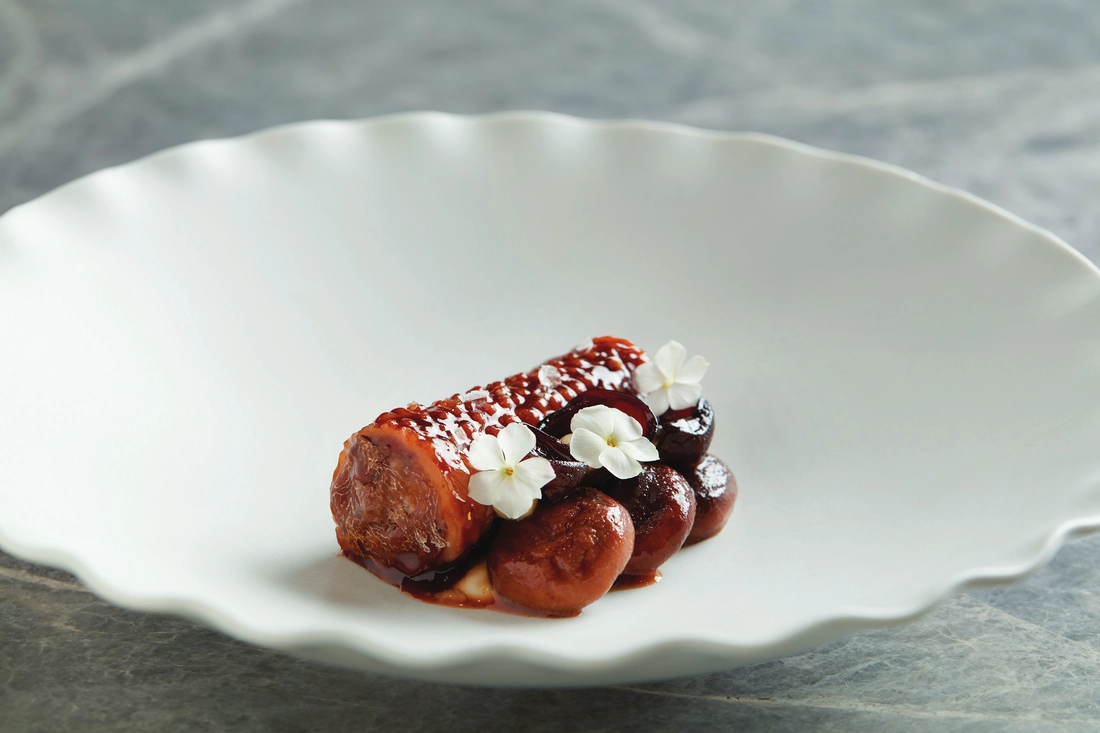
Dishes made from Dong Tao chicken feet at Akuna - Photo: Akuna
* If you had to choose one Vietnamese street food dish that you love the most and one dish that you created using Vietnamese ingredients that you are most proud of, what would it be?
- Chad: It's hard to choose because it's always changing. But right now, my favorite is snakehead fish noodle soup, and in the long term, my top choice will still be Hue beef noodle soup.
One homemade dish I'm quite proud of is meatloaf with shrimp paste. I've always loved braised pork with shrimp paste because of its unique flavor, and meatloaf is a simple, inexpensive, and easy-to-eat American dish.
Shrimp paste is an ingredient that's not easily accessible to foreigners' palates. I tried making a barbecue sauce from shrimp paste, then mixed pork with breadcrumbs and eggs, and added the shrimp paste sauce.
- Sam: Lately, I've been craving sticky rice with chicken; I eat it almost every other day. Besides that, there's also bread, which everyone knows. Sometimes when I crave it, I buy a loaf of bread and walk to work.
Chad asked Sam: " Have you ever tried crispy rice? The kind of rice pressed on a large pan, grilled until crispy, and then dipped in a sweet and salty fish sauce. You break off a piece of crispy rice, dip it in the sauce, and eat it with vegetables."
- Sam: Yes, I've eaten. I loved it!
- Chad: I think many chefs would also enjoy this dish because the flavor of the braised pork belly is very impressive, and the texture of the crispy rice is also very interesting. In addition, vermicelli with fermented fish sauce is also a dish I think many chefs should try. These are all flavors that many Western chefs have never experienced before.
- Sam: Yes, that's exactly why we're here (in Vietnam). Interestingly, I'm using a lot of fish sauce in my menu, in many different ways.
I used to use Japanese-style white soy sauce, but now I've almost completely switched to fish sauce. Fish sauce creates a very strong, deep umami flavor. As a result, my dishes are constantly changing, but using fish sauce in my menus now is something I'm quite proud of.
You may also like

The Moroccan son-in-law is passionate about Vietnamese cuisine.Hamza Smahi's (29 years old, from Morocco) home-cooked videos have gained popularity on social media. What many find appealing is not only the fact that a foreigner can skillfully cook familiar Vietnamese dishes, but also the story behind his small kitchen. Truong Tien bread in Hue - Photo: NGOC DONG
Street food is at the core.
* From the perspective of a foreigner with a solid culinary background, what do you think makes Vietnamese cuisine appealing to international diners? And which element stands out more: street food or fine dining?
- Sam: I think the first thing most tourists look for when they come to Vietnam is street food, because that's what Vietnam is best known for. So, probably, when they arrive, they'll rush to the street food stalls first.
Later, they began exploring fine dining to discover a different expression of Vietnamese cuisine or new cooking styles. So it's quite difficult to say which one stands out more. For me, it's both.
However, nowadays, many restaurants and chefs, especially Vietnamese chefs, are doing very interesting things and gradually attracting attention. I recently attended the 50 Best event in Hong Kong and could see that Vietnam is gradually being recognized as a high-class culinary destination, not just limited to street food.
- Chad: For me, it's definitely 100% Vietnamese street food. Fine dining is already a rather niche segment, and when it comes to Vietnamese fine dining, it's even more niche.
Most people only know about banh mi and pho. They are not familiar with the more upscale versions of these dishes. Therefore, when they come to Vietnam, they want to try "authentic," original, and flavorful banh mi and pho. That's why street food is the clearest representation of these dishes.
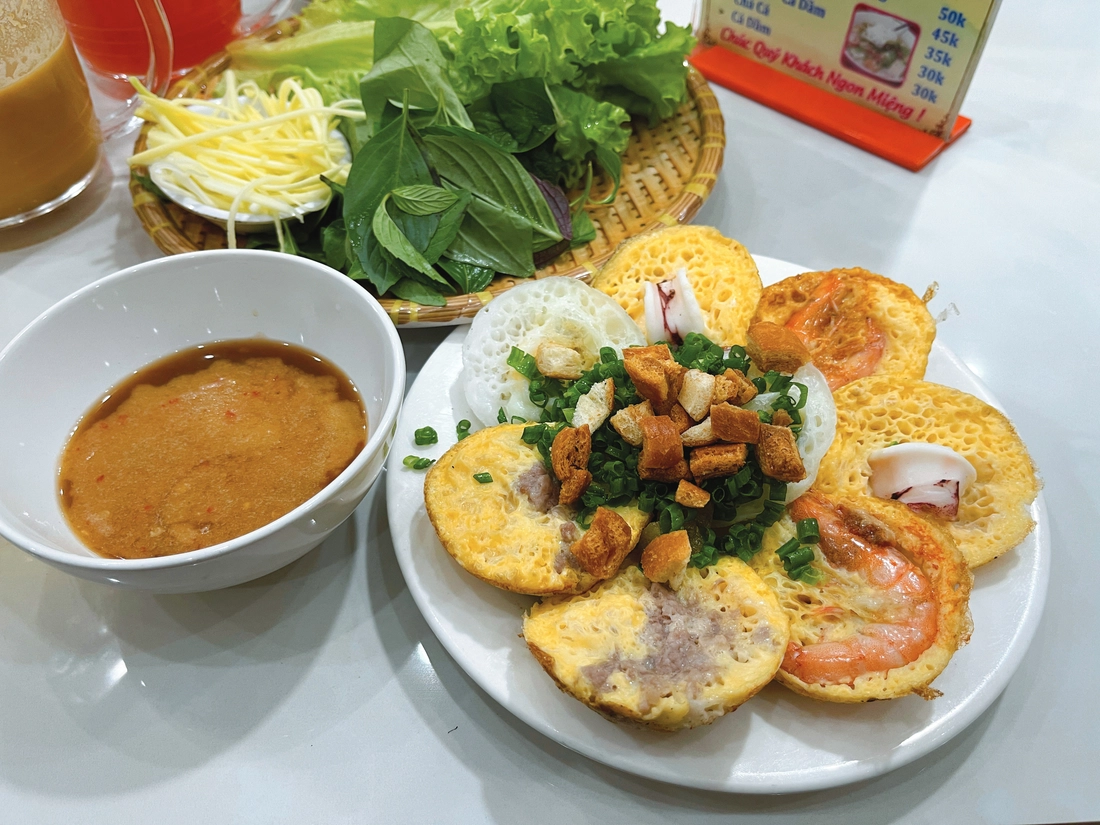
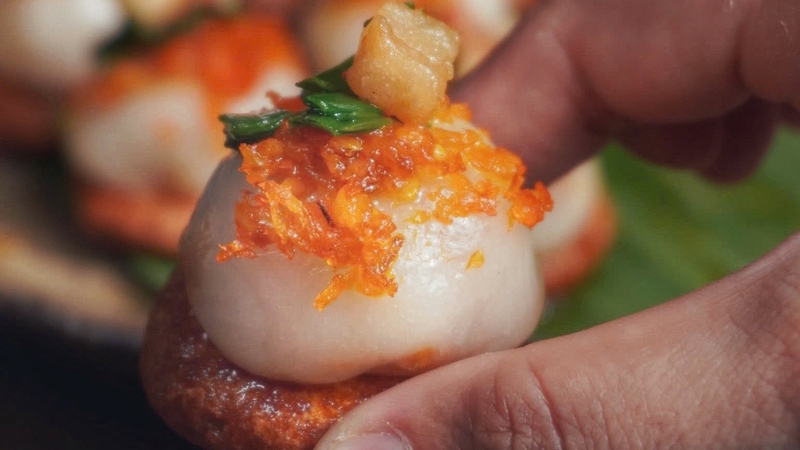
Phan Rang-style rice pancakes in Saigon - Photo: NGOC DONG
* Asian countries all have very interesting street food cultures. So, in your opinion, what makes Vietnamese street food so popular?
- Chad: First of all, it's the taste, simply delicious. The food here is tasty, healthy, and fresh. The cuisine itself is appealing, and street food is even more "fun."
Sitting on plastic chairs, in an everyday atmosphere. For those who aren't too fussy, they'll think, "Wow, this is fun, this is a great experience." And Vietnam is also very lucky to have suitable weather to maintain this type of dining year-round.
- Sam: I think the highlight is the freshness; the dishes always come with a whole platter of fresh vegetables. When my friends come here to eat and see a large plate full of different kinds of vegetables, they are always very surprised. Dishes with broth have a very rich flavor. Vietnamese cuisine has a very unique character.
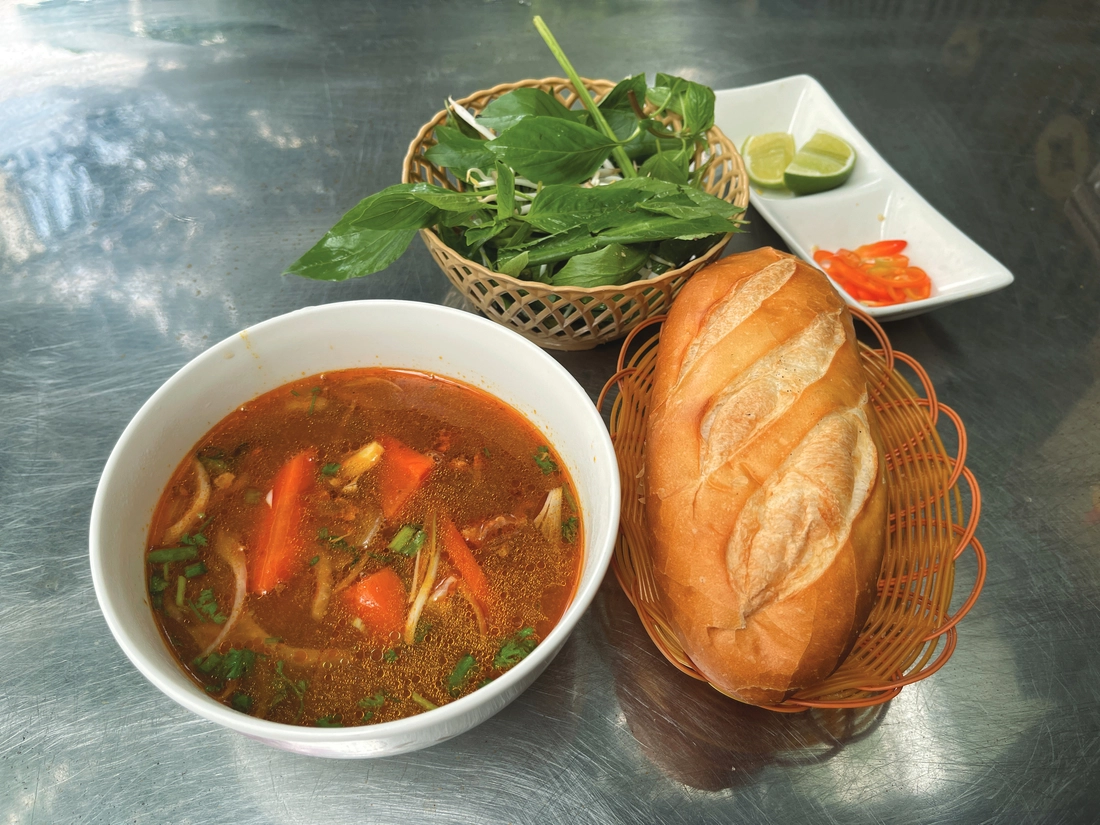
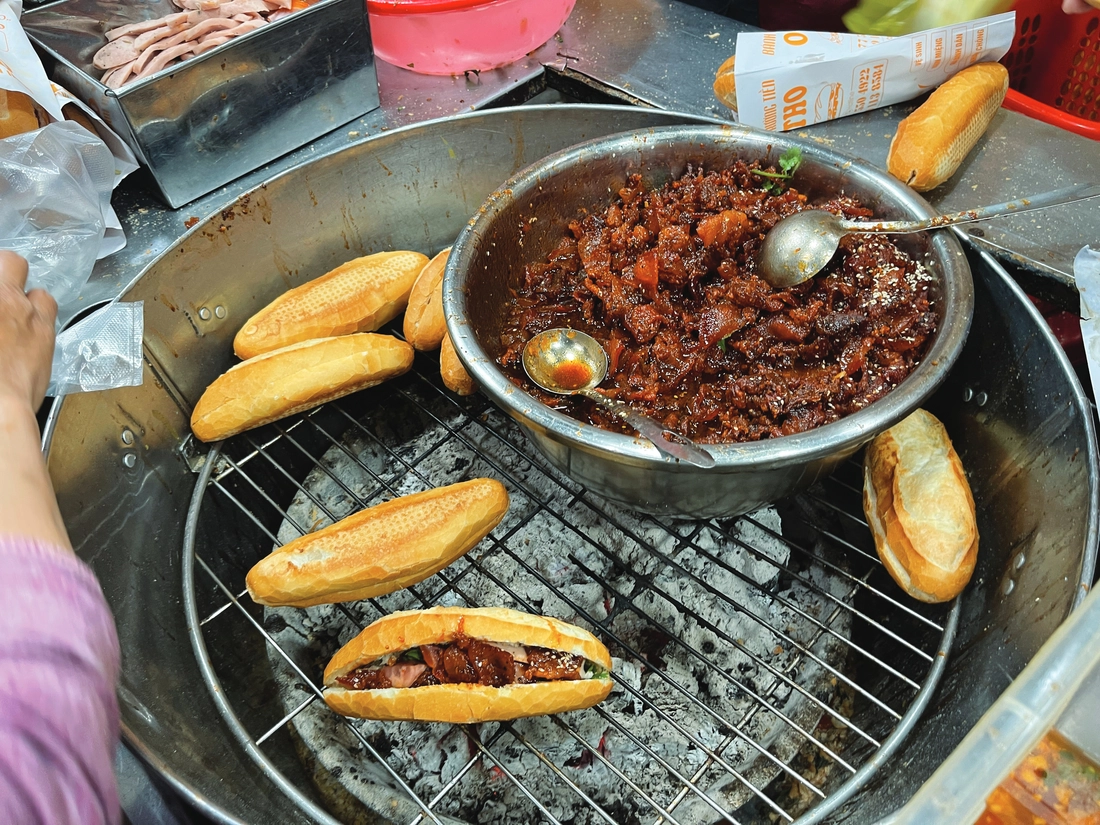
Beef stew sandwich - Photo: NGOC DONG
"The most exciting culinary life in the world"
* If you were to introduce Vietnamese cuisine to someone who had never been here, especially if you wanted to attract them to Vietnam, how would you describe it?
- Chad: I would say this is the place with the most exciting food scene in the world: incredibly energetic, constantly changing, evolving, traditional yet unconventional, full of contradictions.
Thanks to street food with its countless small stalls, things change incredibly quickly. A new dish can appear, spread throughout the city in a short time, and then fade away. Things flare up and then cool down, repeating in short cycles.
- Sam: Whenever friends come here, I always try to take them to the most local places possible, letting them sit on plastic chairs and drink coffee on the sidewalk. Someone told me that Vietnam is probably just like Thailand. I immediately said, "Not at all, you have to come here and experience it for yourself!"
As a chef, I've traveled extensively, across Asia, and thought I was quite familiar with the region's produce, thinking there was nothing I didn't know, given my long career. Then, in Vietnam, I realized there were vegetables I didn't recognize. The seafood was endless; going to the market felt like finding two billion different types of shellfish I'd never seen before. For a chef, that's incredibly appealing because it offers something new to discover, something to experiment with unfamiliar ingredients.
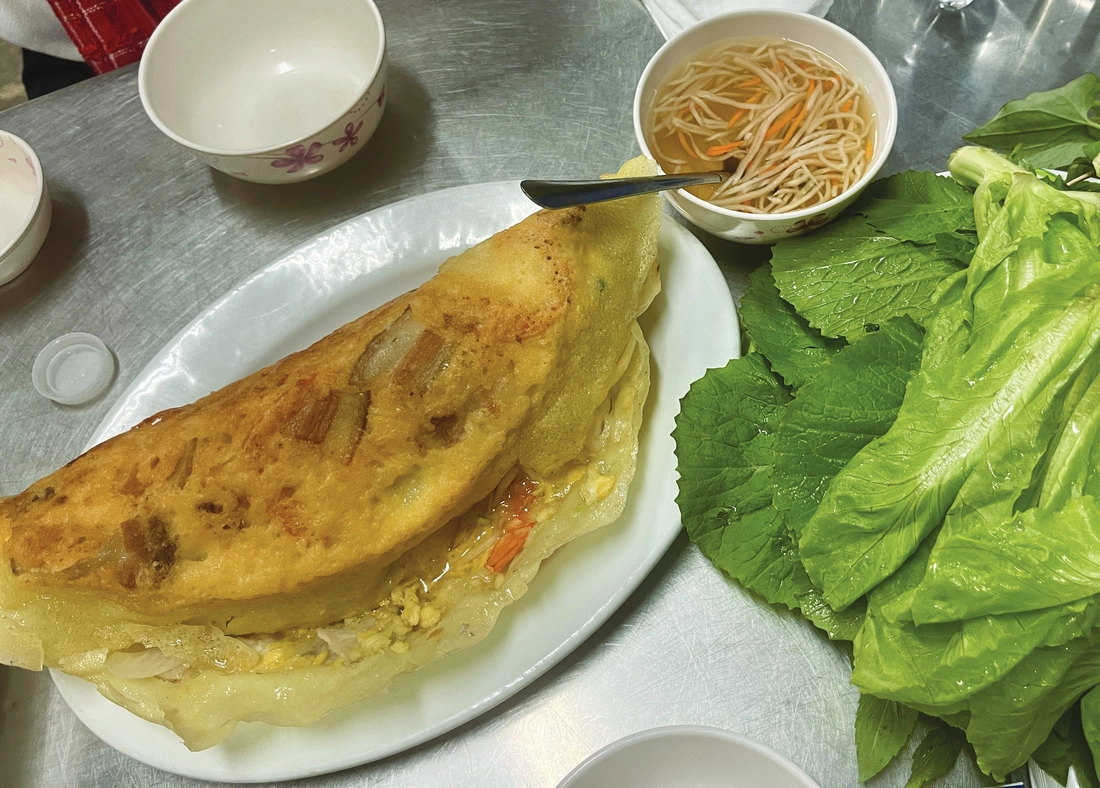
Banh xeo (Vietnamese savory pancake) - a Vietnamese dish known to many foreigners. Photo: NGOC DONG
The story of premium Vietnamese ingredients
* There's one thing I've always wanted to ask chefs, and that's about Vietnamese ingredients. When it comes to fine dining, people often think of using imported ingredients. But a generation of young Vietnamese chefs is trying to promote local ingredients in their fine dining creations. What are your thoughts on that?
- Chad: Besides the mindset that imported goods are better, customers also have the mindset that since they are spending more money on fine dining, they often want beef, truffles, caviar, etc. This is very difficult to change.
Another issue is the supply chain. There are good ingredients, but the transportation and storage aren't good enough to maintain quality from the moment of harvest. This is where fine dining can help, because restaurants like Sam's can pay higher prices to farmers and fishermen for better products. When people pay a fair price, producers are motivated to be more meticulous.

Vietnam encourages US businesses to expand investment in high technology.On the morning of June 26th, at the Government Headquarters, Deputy Prime Minister Ho Quoc Dung received Mr. Jeff Place, Supply Chain Director of Coherent Group (USA). During the meeting, the Deputy Prime Minister affirmed that Vietnam encourages US businesses to expand investment, especially in high-tech, innovation, and semiconductor industries. Personally, I want to promote local ingredients, things that Vietnam does well. But if we don't have beef as good as other countries, then let's skip that and focus on the good things we have.
- Sam: When I first came here, I didn't know how to source seafood, so I just imported from Japan because it was easier and I was familiar with the source, the quality was guaranteed, and I didn't have to worry. But as I became more familiar, I started sourcing in Vietnam, working directly with fishermen, and even asking them to go fishing for me.
Vietnam has excellent ingredients. The challenge is how to get more restaurants to include it on their menus, get more people to talk about it, and eat it more often so that the world sees that not only Japan but also Vietnam has seafood of the same caliber.

Fish sauce is an indispensable condiment in Vietnamese cuisine, and nowadays many Western chefs also like to use it in their cooking - Photo by NGOC DONG
* If you were to choose one element to build a brand for Vietnamese cuisine, what would it be?
- Sam: Vietnam has potential in unique and high-quality ingredients; it just needs more people to tell that story, introduce it to the world, and gradually build a reputation.
- Chad: If we look at it on a global scale, when promoting Vietnamese cuisine, I would choose to follow a "healthy" approach: good for health. Vietnam has a delicious yet light cuisine: low in oil, low in fat, low in fried foods, low in gluten; overall, it's a healthy cuisine, rich in vegetables and nutrients. That's a huge advantage.
In terms of tourism in general, I think one of the largest groups of visitors to Vietnam is "foodies": people passionate about food. For example, I often think about opening a "food camp," about two hours from the city. Guests would stay for 3-4 days and experience the cuisine in depth. I believe such models would be very effective.
- Sam Aisbett is the chef at Akuna , one of the five Michelin-starred restaurants in Ho Chi Minh City. This Australian chef has over 20 years of experience, having previously worked at the renowned Quay restaurant in Sydney.
He also founded the Whitegrass restaurant in Singapore, which has earned one Michelin star. Since 2020, he has been in Vietnam and associated with Akuna, where he and his colleagues freely create high-end dishes from unique local ingredients such as porcupine, sea worm, and Dong Tao chicken feet…
- American chef Chad Kubanoff is formally trained in French and Vietnamese cuisine. He worked at several restaurants in the US before opening Same Same in Philadelphia, showcasing Vietnamese street food.
For over 10 years, Chad has pursued and innovated with Vietnamese cuisine, traveling throughout Vietnam, from north to south, exploring every nook and cranny to discover Vietnamese dishes. Chad has attracted a large following on social media through his journey of discovering and adapting Vietnamese dishes, with over 724,000 followers on TikTok, 142,000 on YouTube, and 147,000 on Instagram.
NGOC DONG
Source: https://tuoitre.vn/am-thuc-viet-hap-dan-bac-nhat-the-gioi-20260426150140865.htm





![[Photo] Thousands of people participate in a run to show their support for the campaign "Sharing a common determination to build drug-free communes, wards, and special zones".](https://vphoto.vietnam.vn/thumb/1200x675/vietnam/resource/IMAGE/2026/06/27/1782554475933_0673e2a3df7b5e25076a-8283-jpg.webp)
![[Photo] A phone-free summer afternoon at the village library](https://vphoto.vietnam.vn/thumb/1200x675/vietnam/resource/IMAGE/2026/06/27/1782551770949_anh-1-jpg.webp)






![[Photo] Thousands of people participate in a run to show their support for the campaign "Sharing a common determination to build drug-free communes, wards, and special zones".](https://vphoto.vietnam.vn/thumb/402x226/vietnam/resource/IMAGE/2026/06/27/1782554475933_0673e2a3df7b5e25076a-8283-jpg.webp)


![[Photo] A phone-free summer afternoon at the village library](https://vphoto.vietnam.vn/thumb/402x226/vietnam/resource/IMAGE/2026/06/27/1782551770949_anh-1-jpg.webp)