When pomelo blossoms reach their peak bloom, many orchards proactively implement artificial pollination techniques to improve fruit set rates. This seemingly simple task requires meticulous attention to detail, absolute precision, and must be performed at the "golden time." This is the key factor determining yield and bringing high economic efficiency to farmers.
Báo Lào Cai•22/03/2026
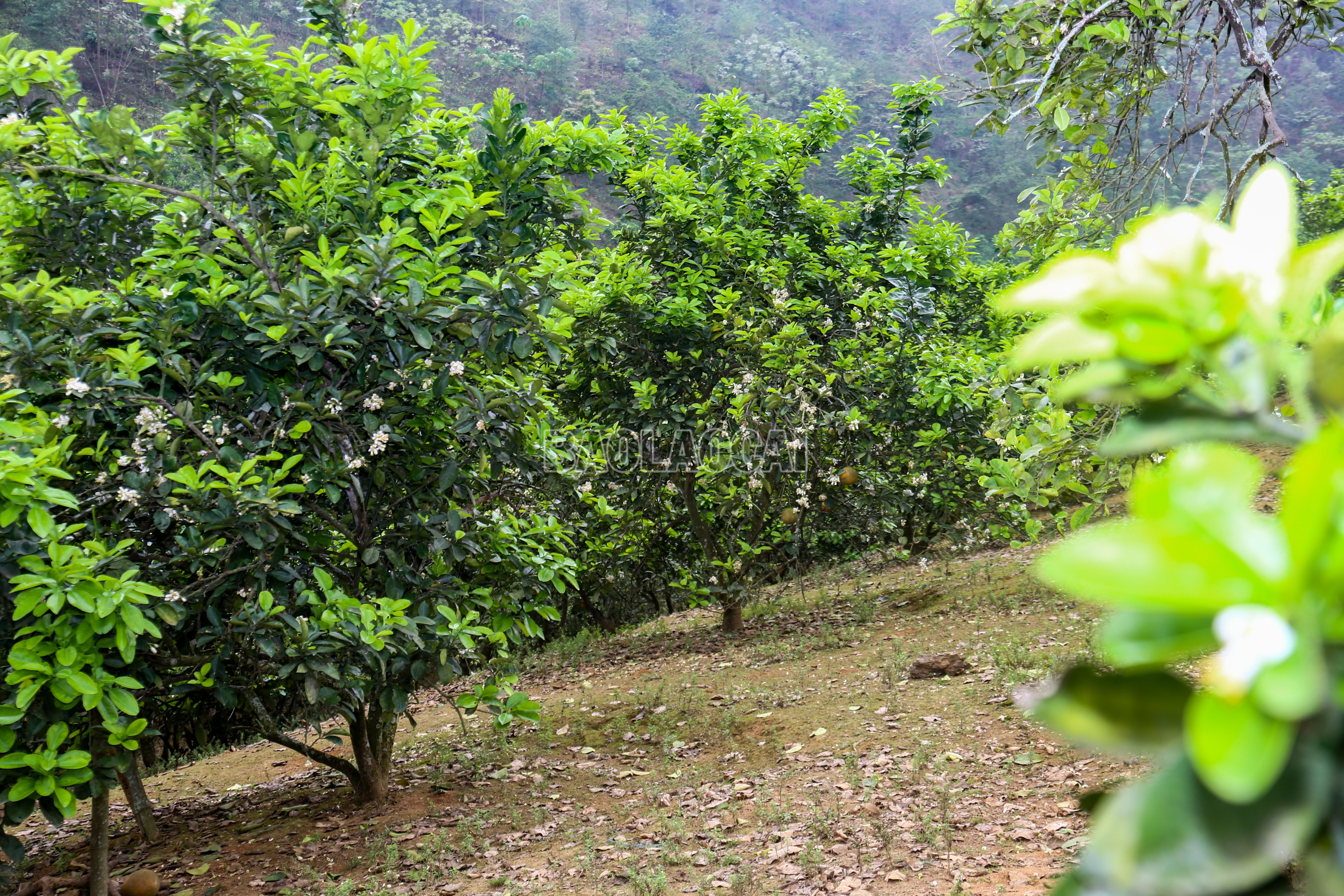
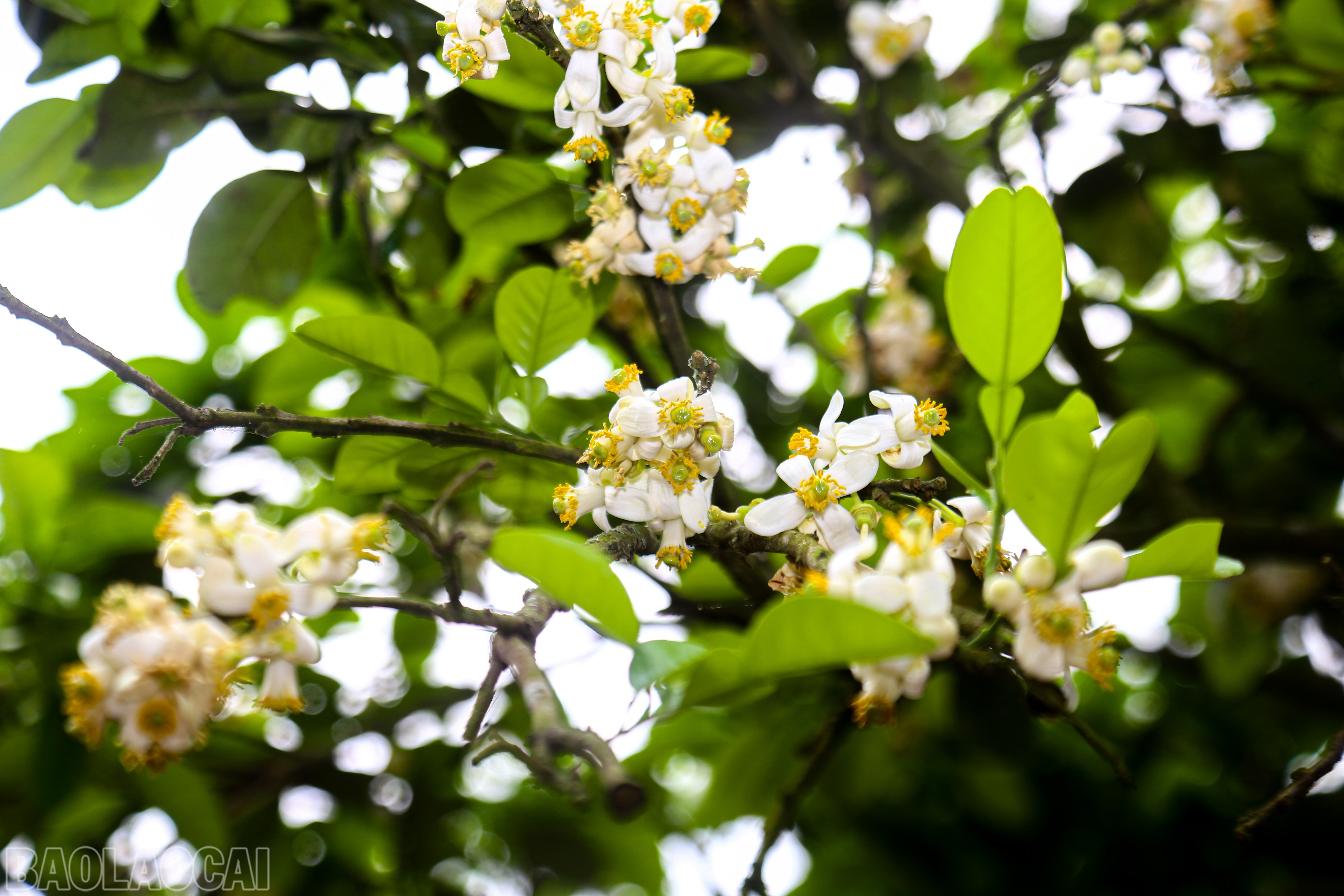
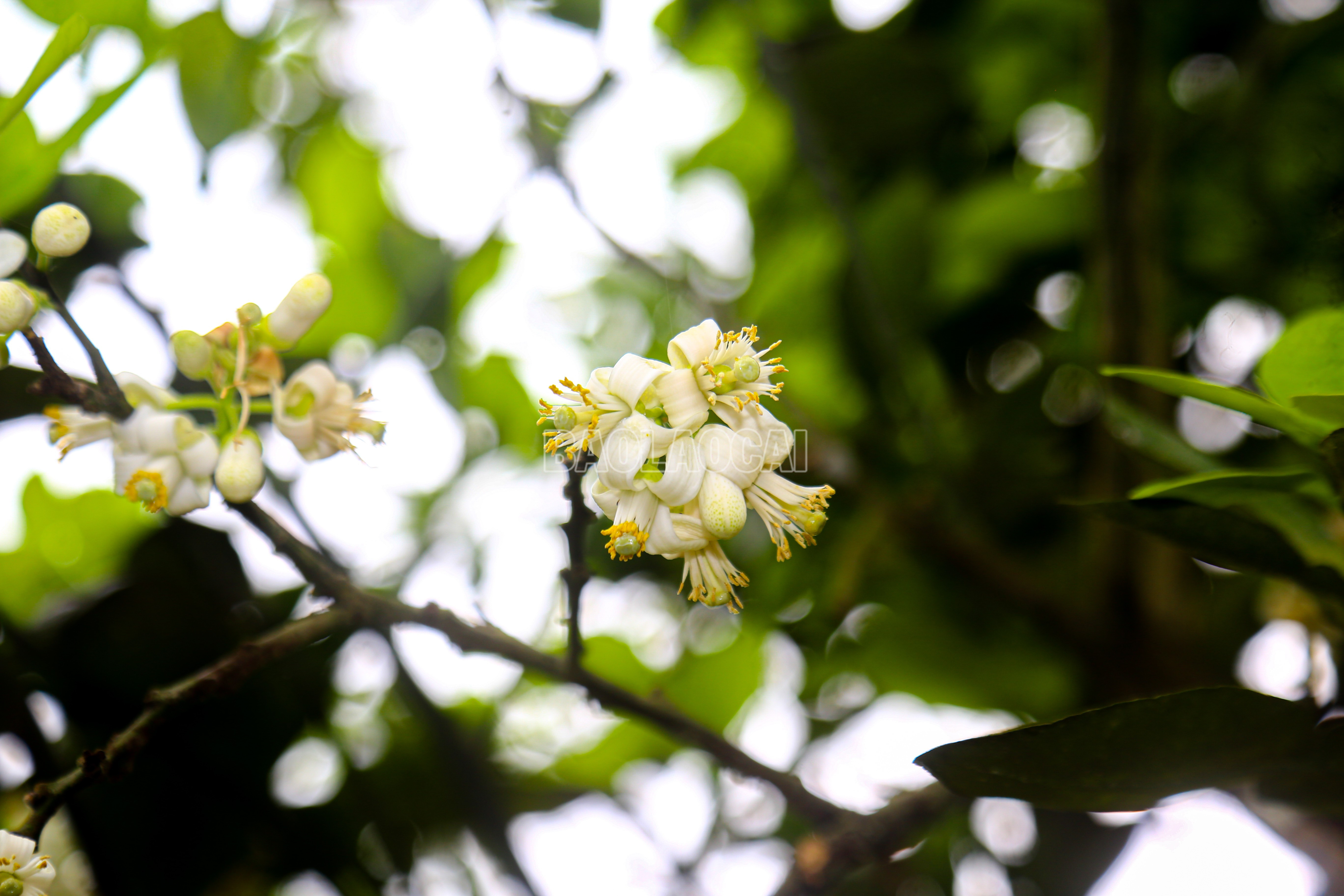
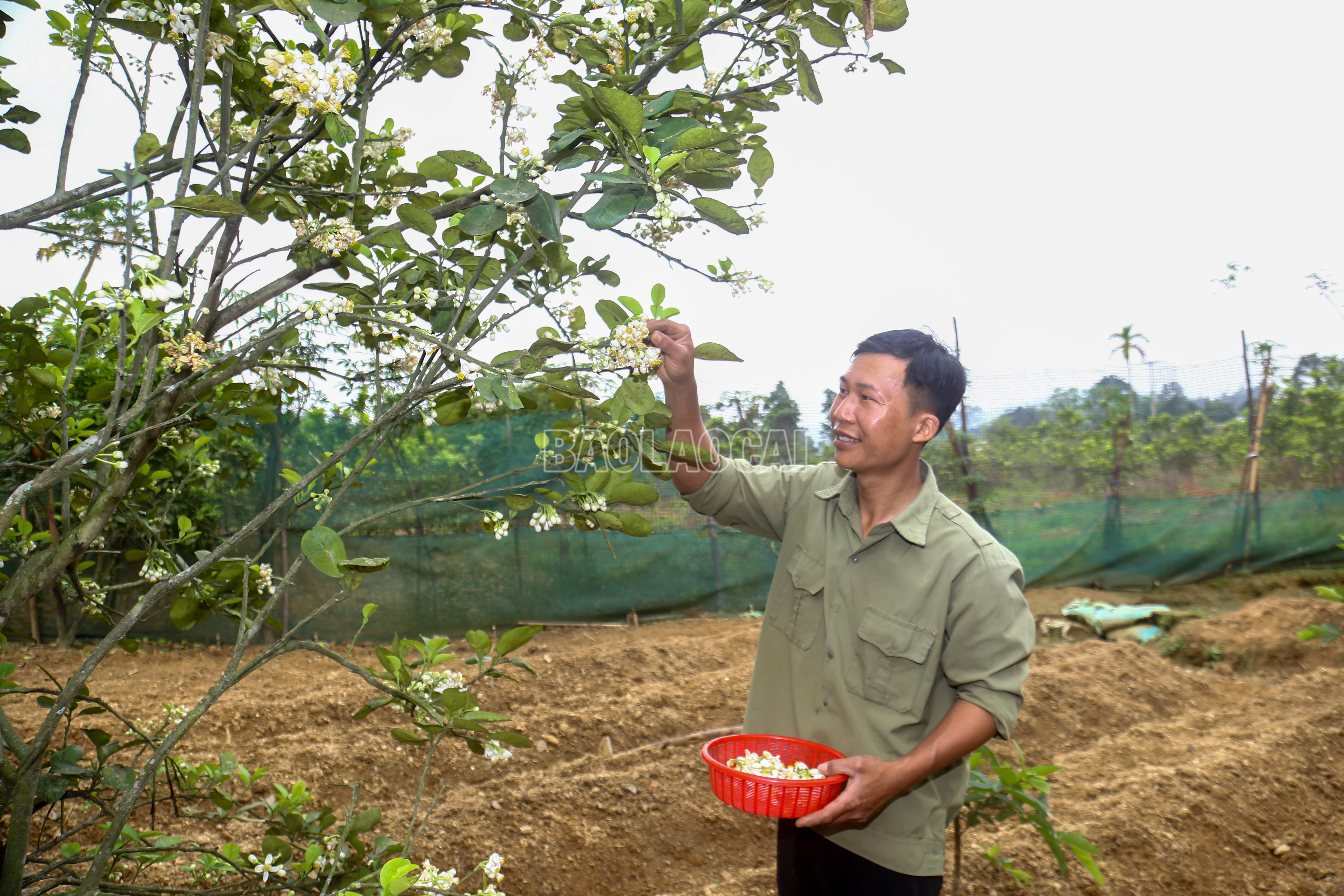
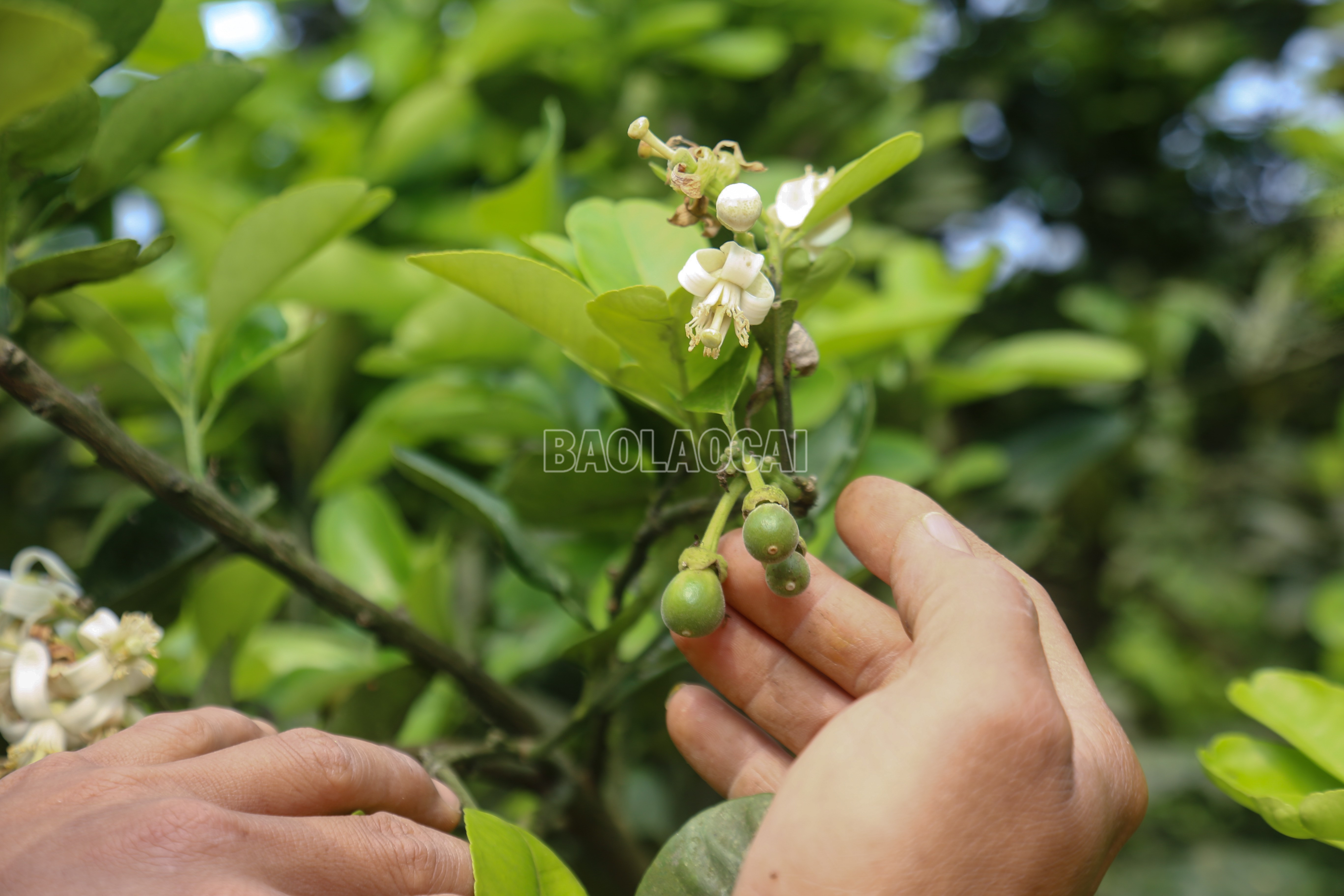
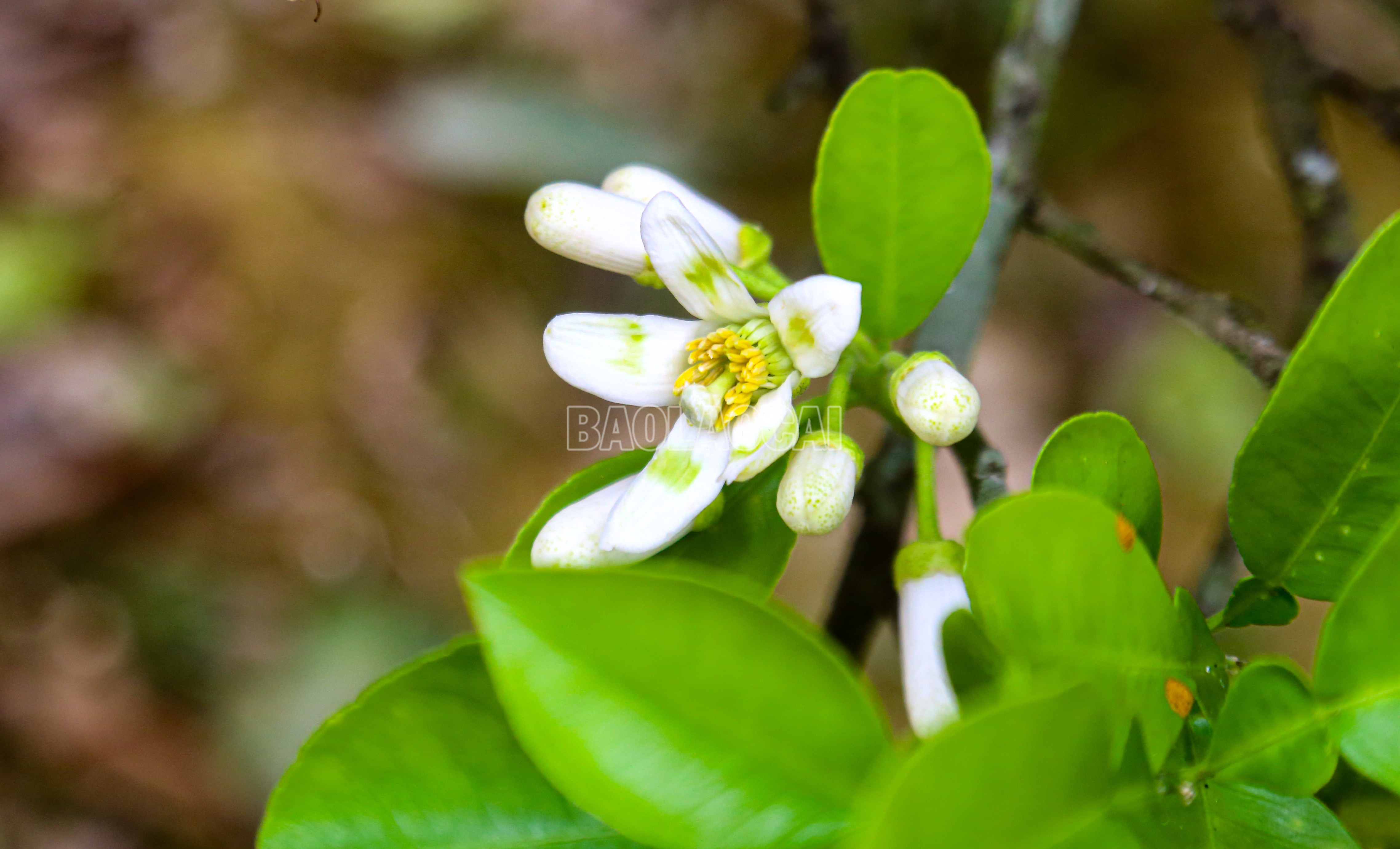
From the end of January (lunar calendar), grapefruit orchards in Lao Cai province bloom with pure white flowers, and the delicate fragrance of grapefruit lingers in the air. The flowering period of grapefruit trees lasts for about one month. This is also the time when people are busy with supplementary pollination of the flowers, helping the pomelo trees increase their fruit set rate. Many people jokingly say that this is the season when they "arrange marriages" for grapefruit blossoms. Instead of relying entirely on natural pollination by bees and butterflies as before, proactive technical intervention helps farmers better control fruit set rates and overcome the problem of fluctuating yields.
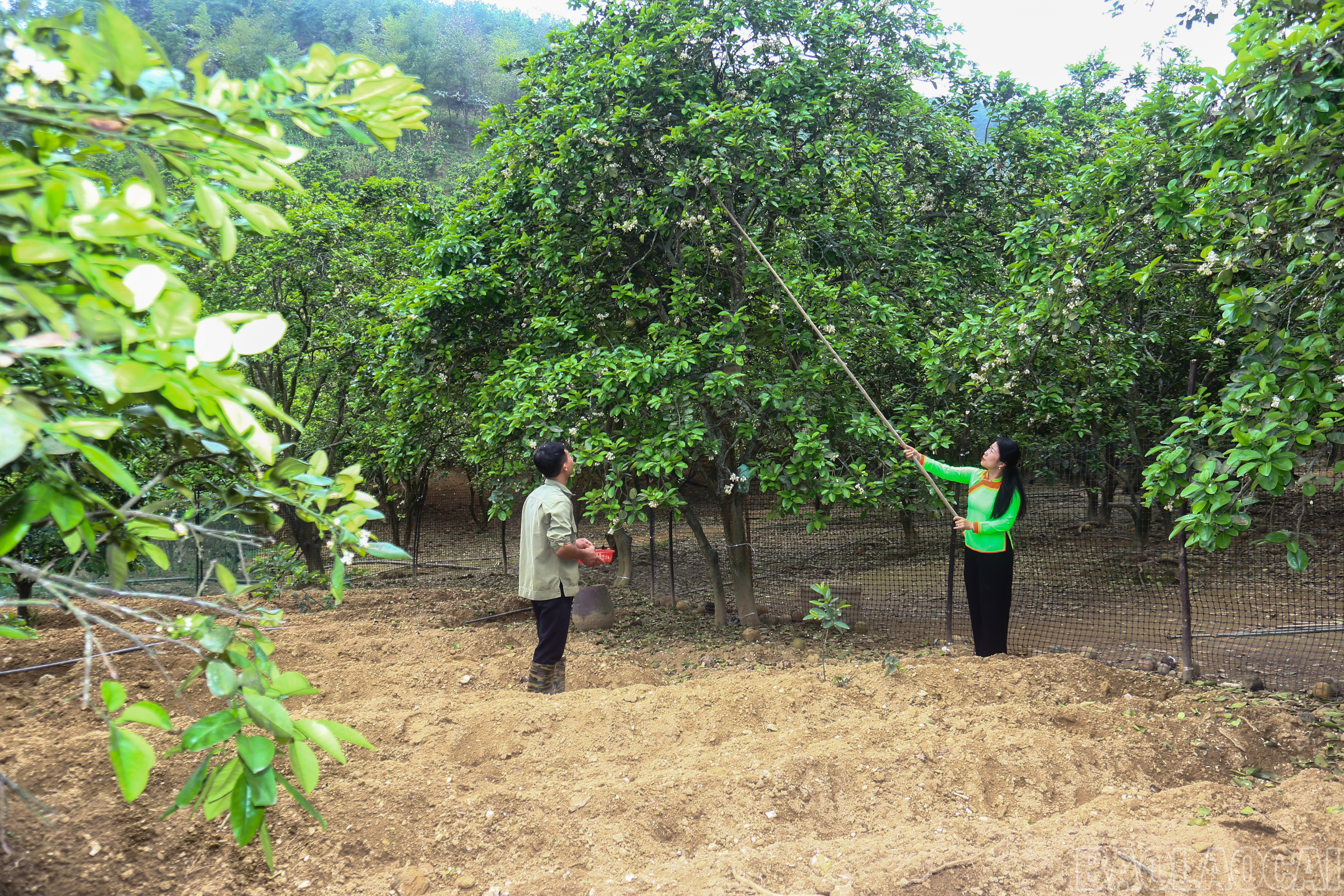
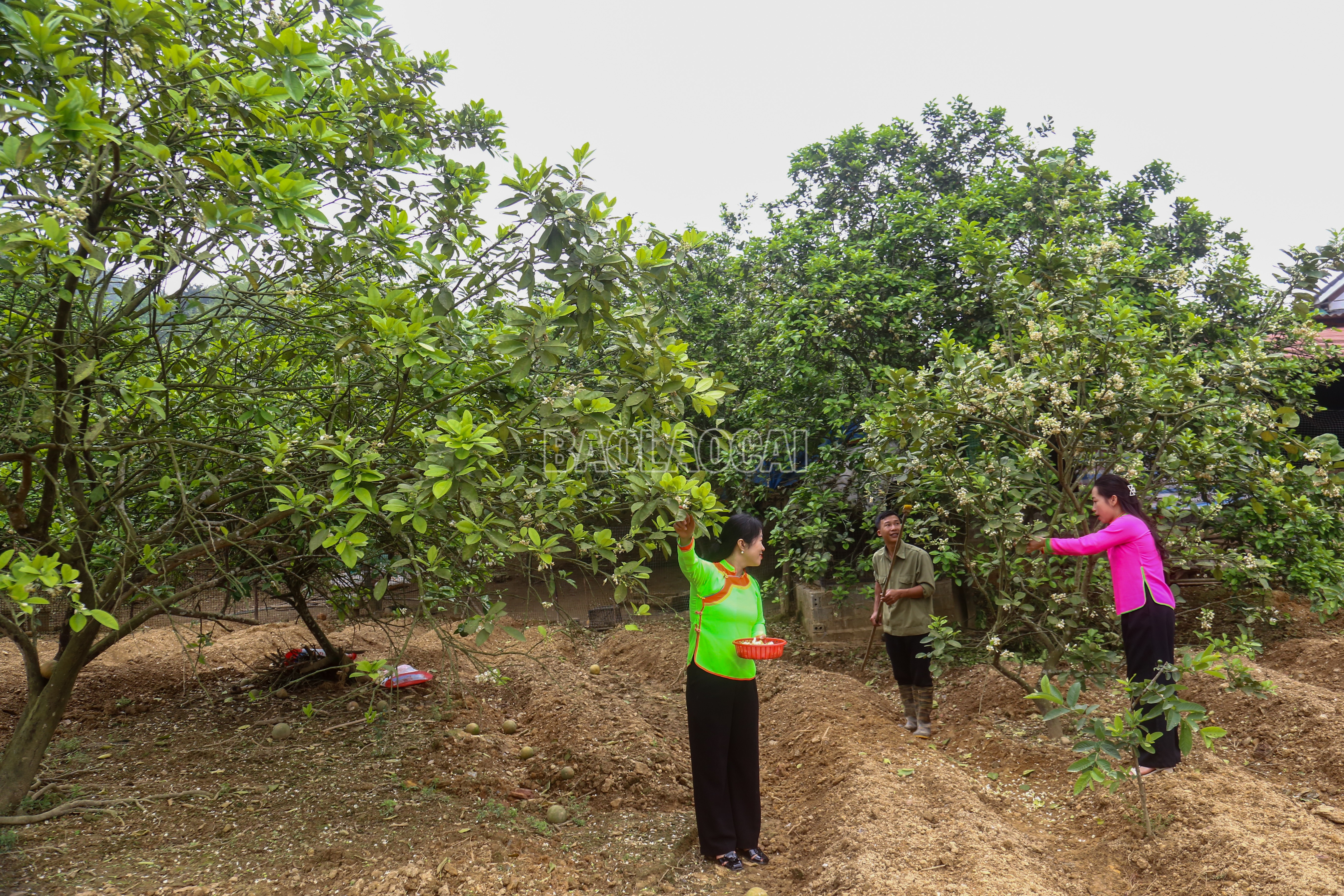
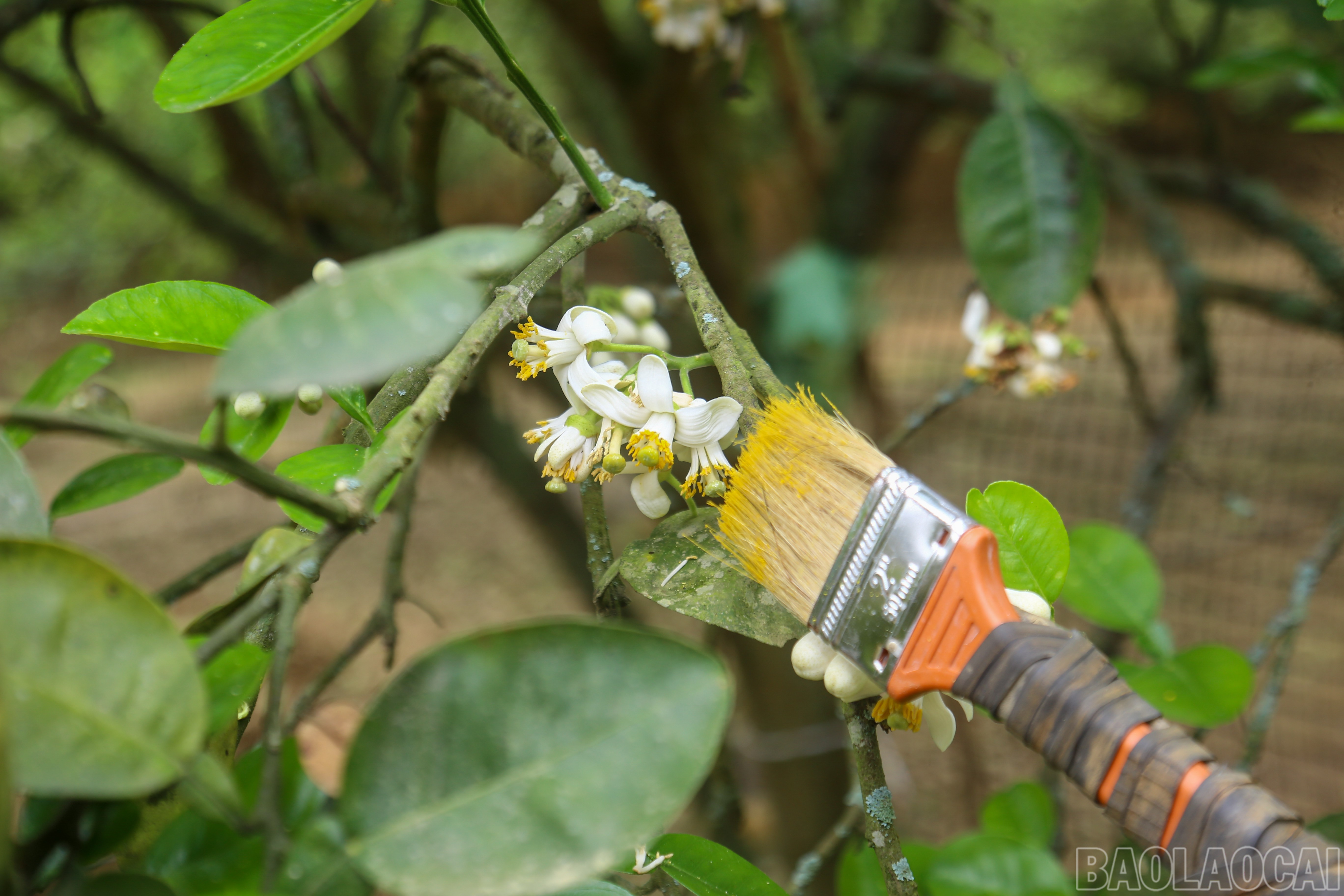
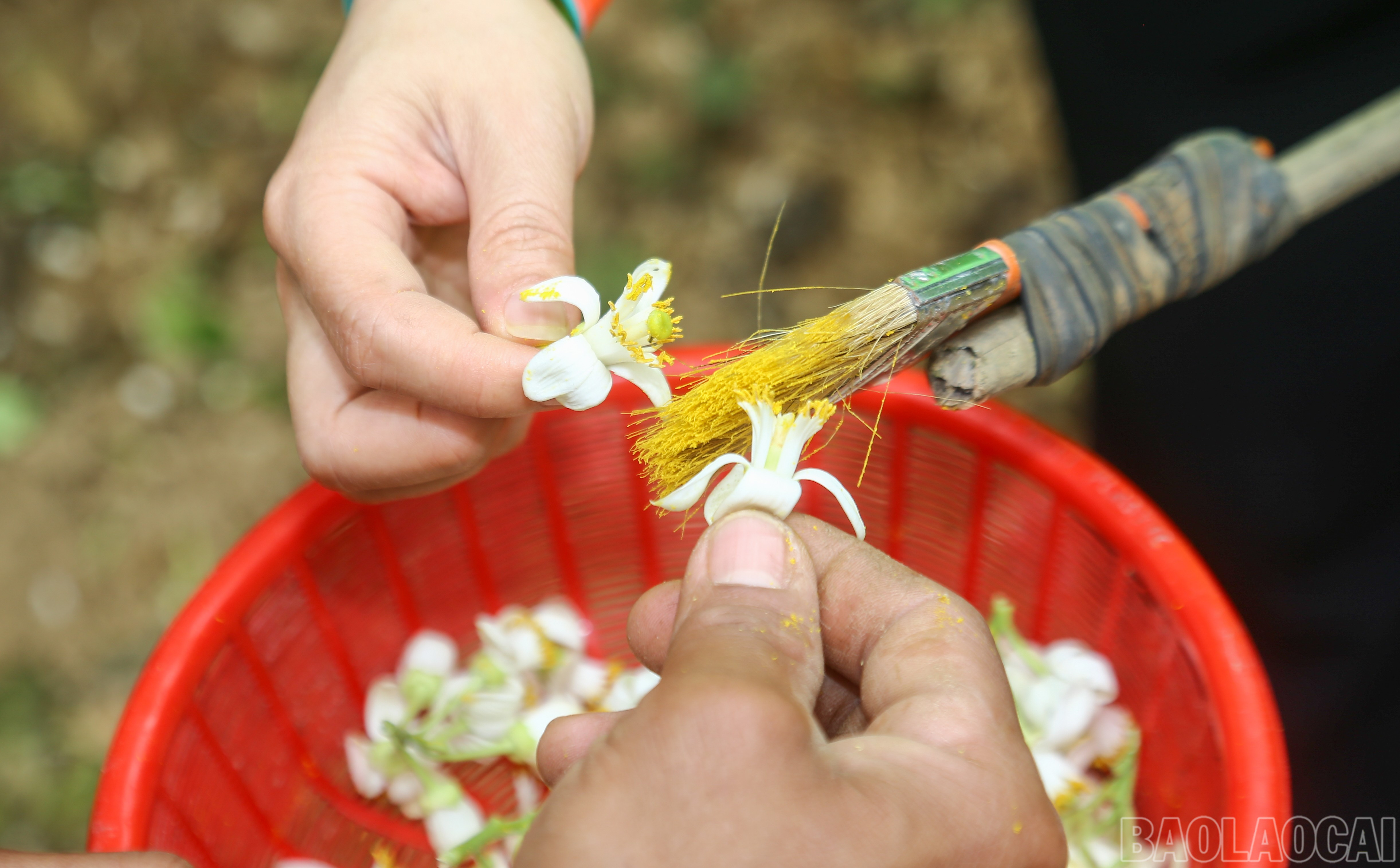
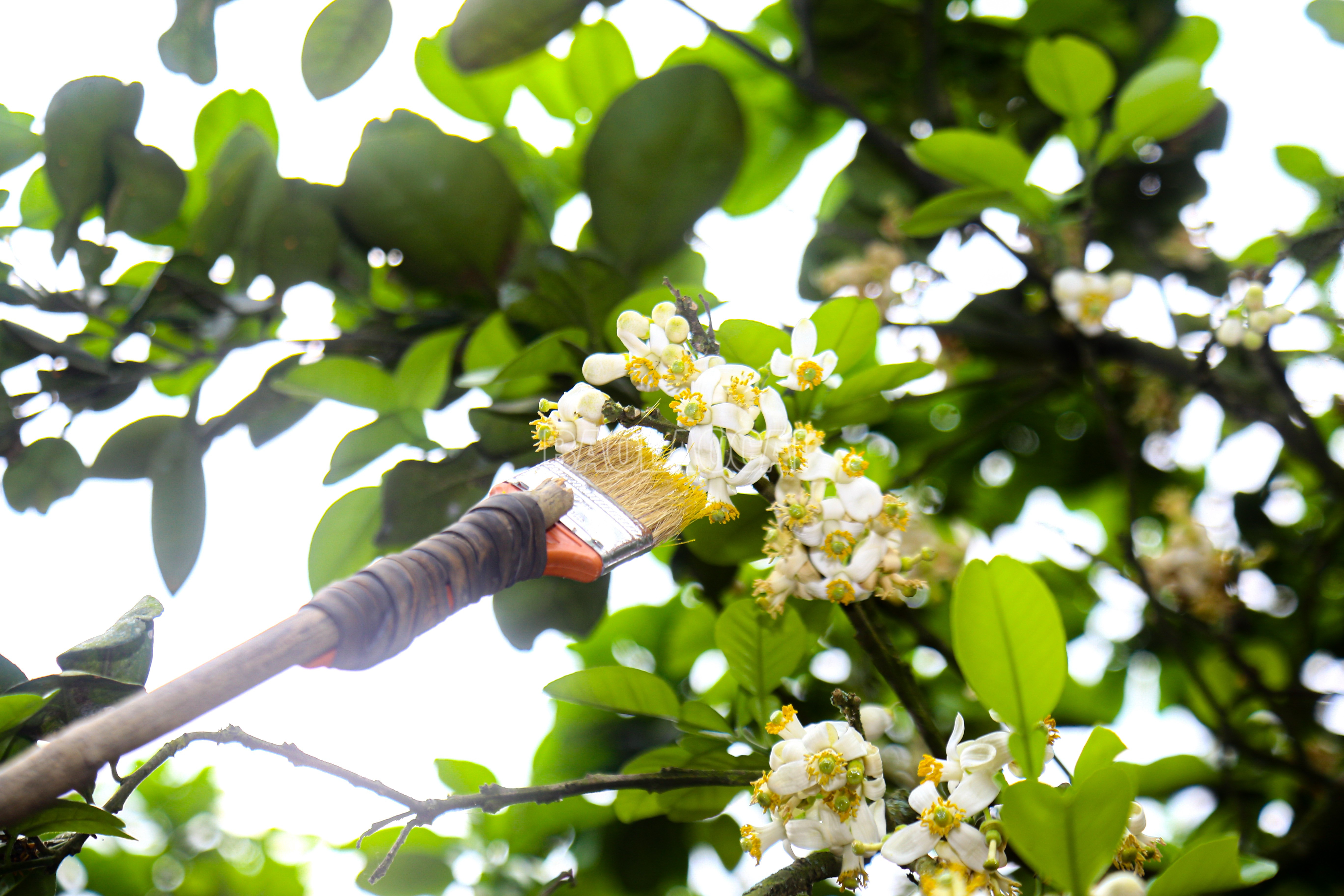
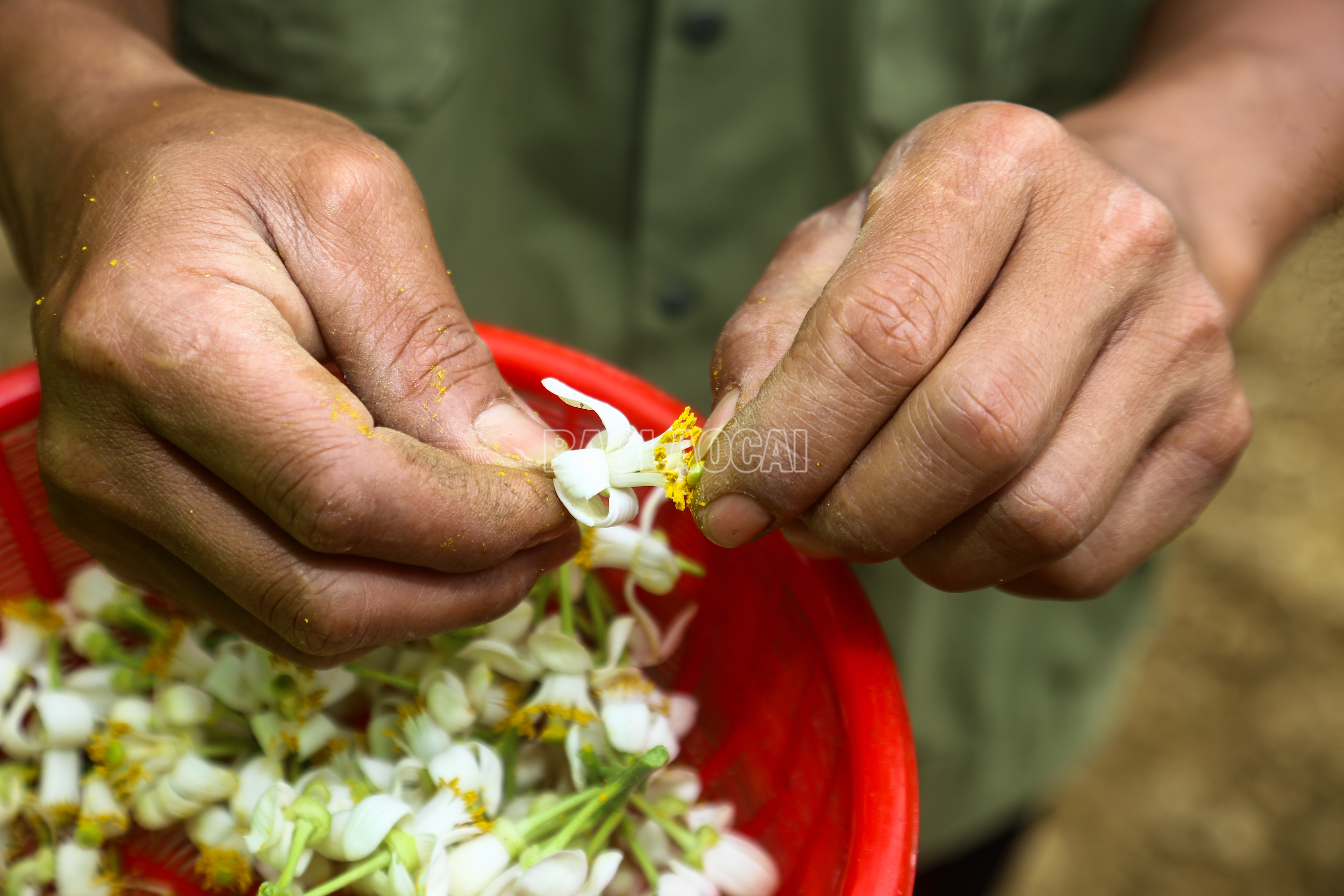
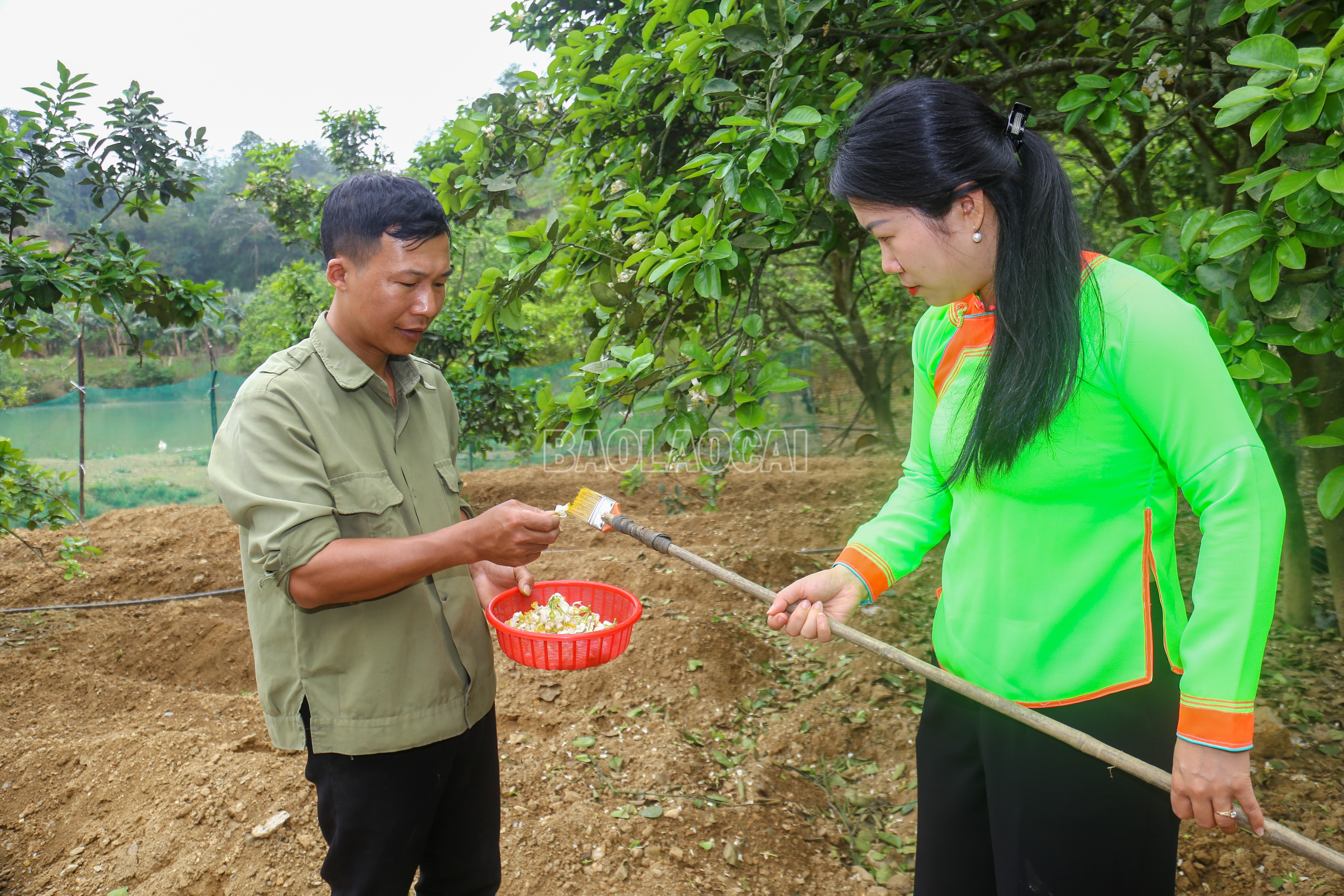
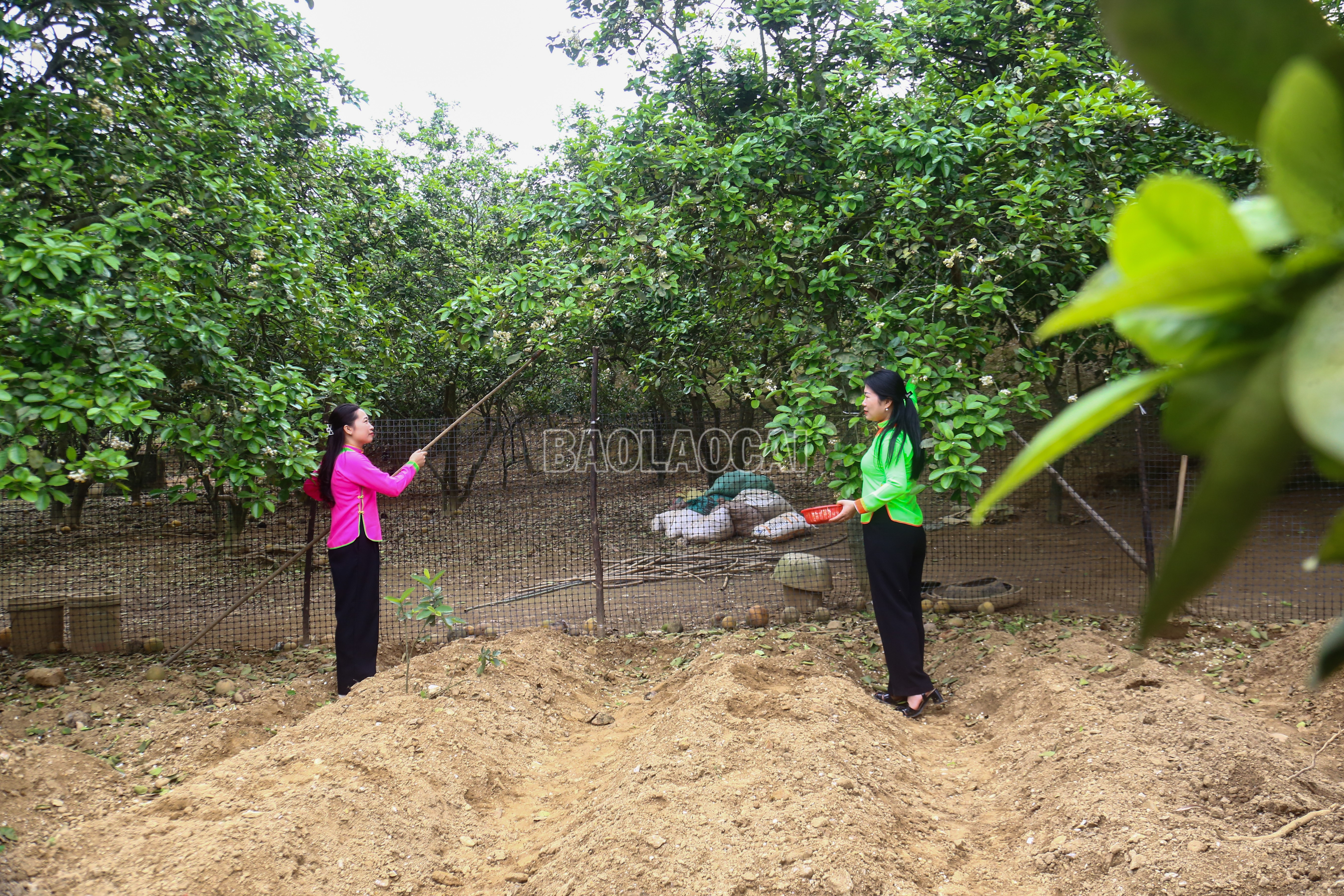
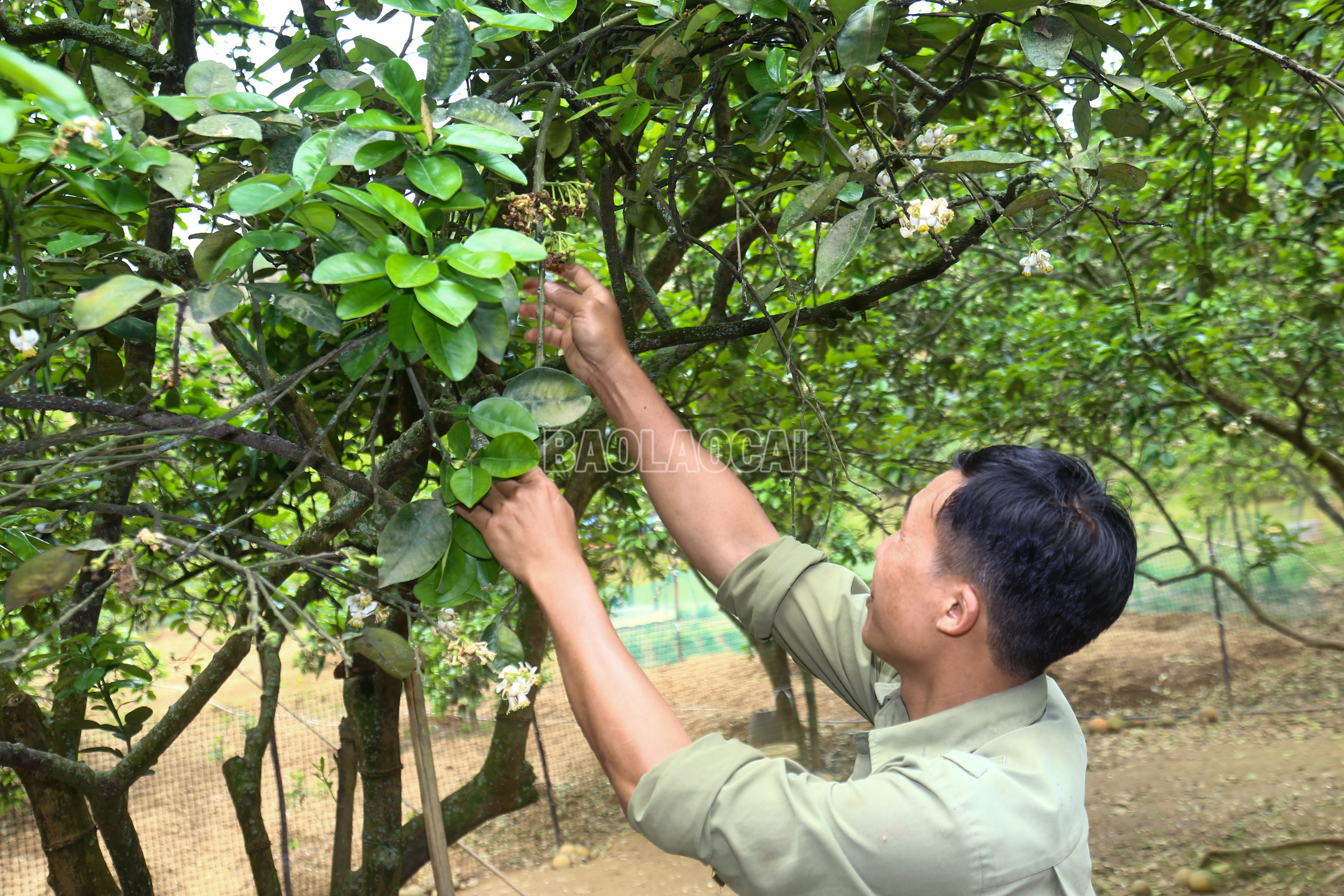
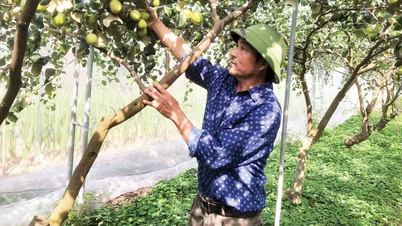
To increase fruit set, people have resorted to supplemental pollination by actively taking pollen from one pomelo flower and applying it to the stigma of another. This artificial "matchmaking" method helps pomelo trees achieve optimal yields. For low-growing trees and branches, people directly use their fingers to touch the stigmas of grapefruit blossoms for pollination. For branches at a higher level, skilled grapefruit growers use the end of a stick fitted with a brush to transfer pollen. The assistance of this homemade tool helps to ensure even pollination throughout the entire canopy. Although not complicated, this "matchmaking" task requires patience from farmers because grapefruit blossoms are very small and numerous. After manual pollination, the fruit set rate of grapefruit trees is 2-3 times higher, and the quality of the grapefruit is also better.
According to experienced grapefruit growers, the flowers selected should be uniform in size, with smooth petals, and when touched to the palm of the hand, yellow pollen should fall off; this indicates a higher chance of fruit set after pollination. Pollination must be carried out continuously while the flowers are in full bloom, so that the plant has enough time to bear fruit. Pollination will be repeated several times to ensure that no flower is missed. Thanks to pollination, grapefruit growers have more control over yield and fruit quality. When the flowering season ends, a high fruit set rate reflects the effectiveness of applying active pollination techniques.
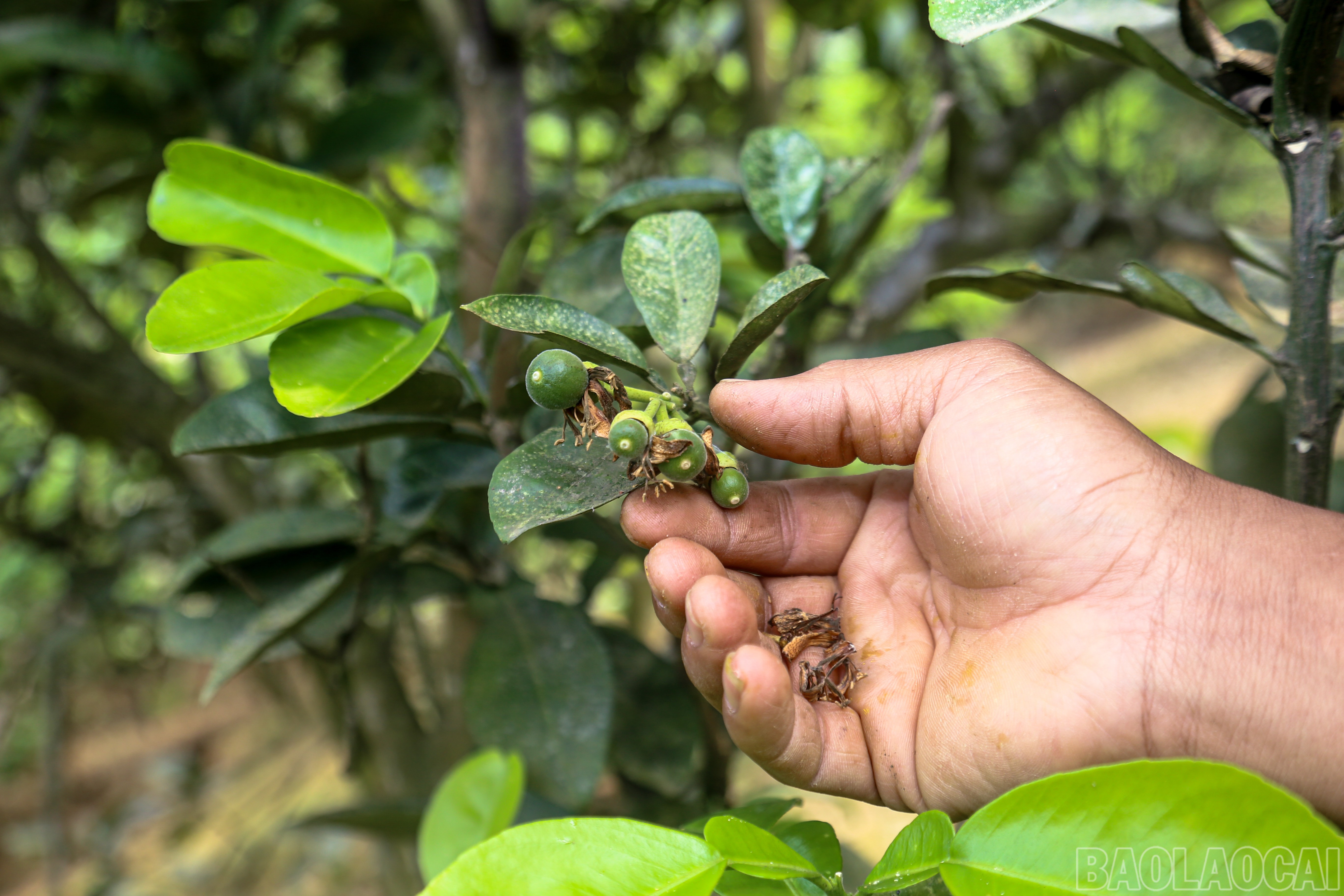
From tiny blossoms nurtured by human hands, the first sweet fruits are gradually forming. A bountiful harvest begins not only with the favor of nature, but also with the careful and meticulous work of the "matchmakers" in the grapefruit orchard.

 Báo Lào Cai•22/03/2026


























































![[Photo gallery] Nhon Trach is ready to transform into a modern and civilized city.](https://vphoto.vietnam.vn/thumb/402x226/vietnam/resource/IMAGE/2026/04/02/1775104005524_hinh_1_20260402085339.jpeg)

![[Photo gallery] Dong Phu aims for modern and sustainable urban development.](https://vphoto.vietnam.vn/thumb/402x226/vietnam/resource/IMAGE/2026/04/02/1775104023925_111_20260402104322.jpeg)







Comment (0)