


From TikTok conflicts to AI attacks
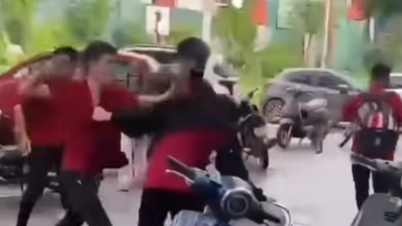
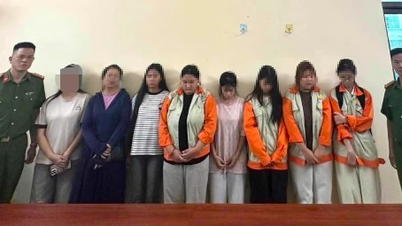
On March 26, the Ea Kao Ward Police in Dak Lak province announced that they are consolidating evidence to prosecute two groups of students who brought weapons to fight each other due to a conflict on TikTok. Previously, on the night of March 23, the Ea Kao Ward Police received a report from residents about two groups of teenagers carrying bricks, stones, and sticks gathering in alley 25, Mai Thi Luu Street (Ea Kao Ward) to fight.
That same night, the Ea Kao Ward Police directed its task forces to promptly investigate and track down the perpetrators, ensuring no students were injured. Through the investigation, the police identified 15 teenagers from two groups involved in the incident. Of these, 13 were male and 2 were female, all secondary school students from various schools in Dak Lak province.
In Hanoi, on March 10th, two female students from class 11A5 at Ngo Gia Tu High School (Phuc La ward) filmed close-up videos of a classmate and posted them on social media. After discovering the information, the homeroom teacher contacted the parents and requested the students remove the videos. However, despite being reprimanded, the two students continued to use artificial intelligence (AI) to create videos mocking and defaming their classmate. These videos were then posted on social media.
According to statistics from the Ministry of Education and Training, in the period 2021–2023, the whole country recorded nearly 700 cases involving more than 2,000 students; in the 2023–2024 school year alone, there were 466 cases, a significant decrease compared to the previous year. However, the reality shows that the picture is not at all "easier to breathe," because school violence is becoming increasingly sophisticated, especially psychological violence and cyberbullying – forms that are difficult to detect but cause deep and lasting harm. According to the National Child Protection Hotline 111, cyberbullying is on the rise, especially among children, as the digital space expands and develops rapidly.
The key is early prevention.
To address this issue, we first need to shift from a "deal with it when it happens" mindset to a "prevention" approach. According to Dr. Nguyen Quynh Phuong, Deputy Head of the Faculty of Politics, Psychology, and Physical Education (Hai Phong University), moral education, life skills, and the identification of violent behavior must be implemented regularly in schools. This should not be limited to theory but should be linked to experiential activities and real-life situations so that students learn how to control their emotions and resolve conflicts positively.
This view is also consistent with the assessment of Associate Professor Tran Thanh Nam - Vice Rector of the University of Education (Vietnam National University, Hanoi). This expert believes that young people today lack emotional control skills and are easily agitated; therefore, emotional education needs to become a core content.
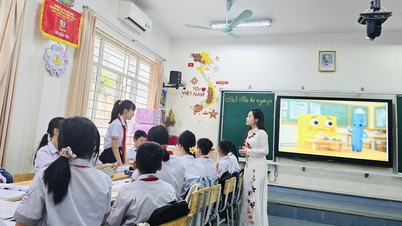
Furthermore, the role of teachers is particularly important in preventing school violence. Beyond simply imparting knowledge, teachers need to become "psychological observers," promptly identifying unusual changes in students to intervene early and prevent violent behavior from developing in its early stages. Simultaneously, schools need to build a professional psychological counseling system, creating a safe space for students to share their feelings and receive timely support.
One notable approach is the application of AI in monitoring and early warning systems. Ho Chi Minh City has required schools to establish multiple channels for receiving information, such as suggestion boxes, hotlines, cameras, and digital platforms, for students to report issues. Data is collected and analyzed to identify high-risk groups, thereby developing appropriate intervention measures. This represents a shift from passive response to proactive prevention in the context of violence spreading to the online environment.
This is coupled with inter-agency coordination between the police, health authorities, and social organizations in disseminating information, providing support, and handling incidents. Ho Chi Minh City is also strengthening control over online content, limiting harmful information that affects students.
Source: https://daidoanket.vn/bao-luc-hoc-duong-thoi-so-hoa.html




























































![[Photo] Hue: Admire the 2.4 trillion VND sea bridge, the longest in Central Vietnam.](https://vphoto.vietnam.vn/thumb/402x226/vietnam/resource/IMAGE/2026/05/24/1779614018347_anh-man-hinh-2026-05-24-luc-16-13-29.png)




































Comment (0)