

 |
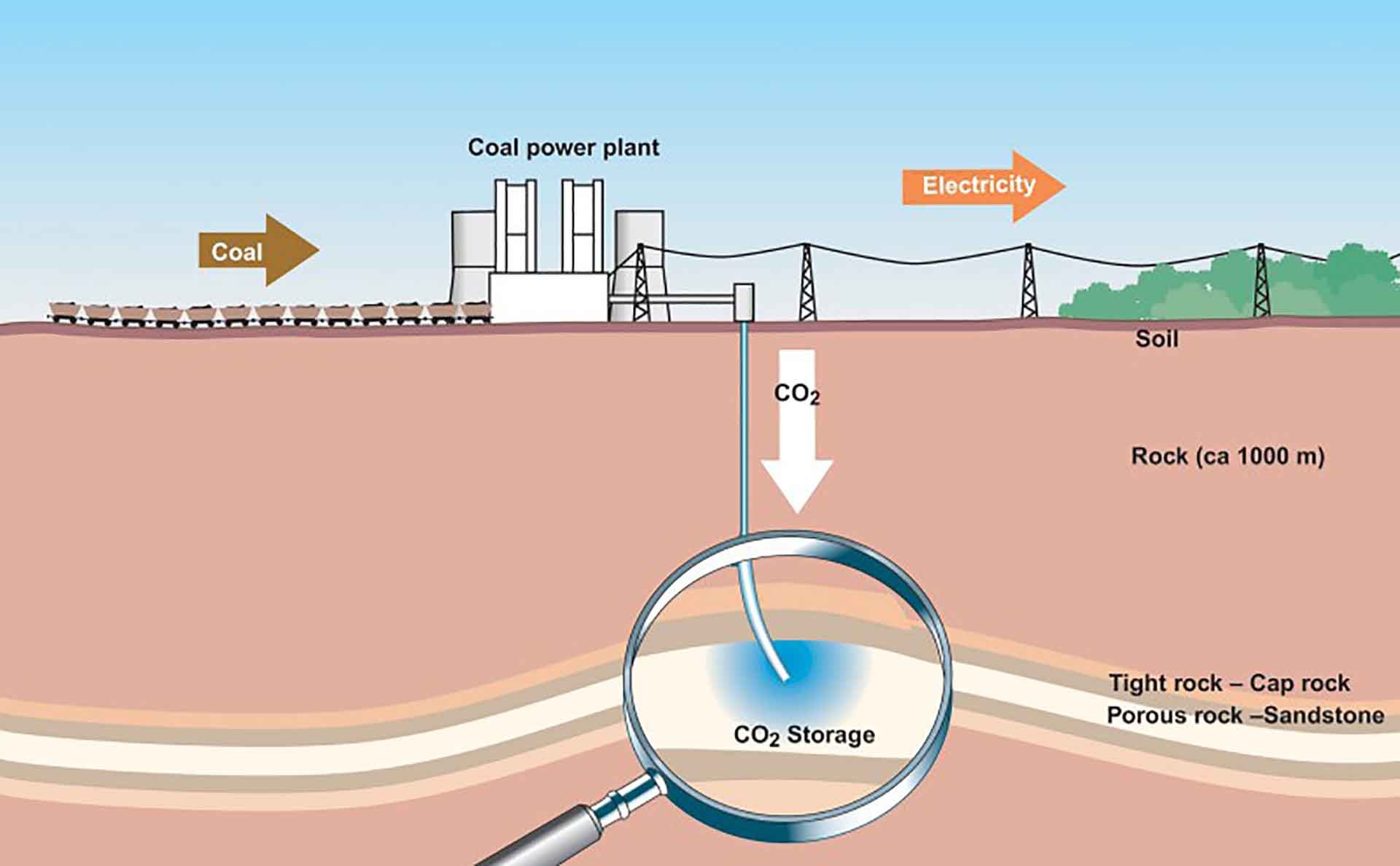
| Diagram illustrating CCS technology for carbon capture and storage. (Source: IEA) |
Power plants and manufacturing facilities around the world are major contributors to CO2 emissions, leading to global warming.
Scientists are researching the possibility of capturing CO2 before it is released into the atmosphere using carbon capture and storage (CCS) technology. CCS is the process of capturing gases produced from burning fossil fuels, separating CO2 from other gases, and transferring it to storage.
The importance of CCS technology is highlighted in the International Energy Agency (IEA) report on the target of net zero CO2 emissions by 2050.
The IEA estimates that to reduce net CO2 emissions to zero by 2050, approximately 7.6 billion tons of CO2 need to be captured annually, with 95% of the captured CO2 requiring permanent geological storage and 5% being used to create synthetic materials or other products. Currently, the amount of CO2 stored worldwide is only about 43 million tons per year.
Japan and China are leading the way.
Japan is one of the leading countries in deploying CCS technology. The Tomakomai CCS project has been implemented in Japan since 2012 in Tomakomai City by Japan CCS Co., Ltd. (JCCS).
The project location is Tomakomai City, primarily developed in industry, fisheries, paper manufacturing, and oil and gas.
During testing, the project achieved its goal of capturing 0.3 million tons of CO2 and storing it long-term in geological layers at the bottom of the ocean. The project is continuing to be refined to be ready for large-scale CO2 storage from 2030.
In China, on June 2nd, China Energy announced the commissioning of Asia's largest carbon capture, utilization, and storage (CCUS) plant in the coal-fired power sector, located in Jiangsu province. China Energy stated that the plant, connected to the Taizhou coal-fired power plant, has the capacity to capture 500,000 tons of CO2 per year.
Ji Mingbin, Chairman of China Energy's Jiangsu branch, emphasized that throughout the project's trial operation, the CCUS system demonstrated good performance and high safety standards. Energy efficiency and product quality indicators were all equal to or exceeded the initial design specifications.
Ji Mingbin revealed that both the emitted and captured CO2 can be used because China Energy has signed contracts with eight companies. The captured CO2 can be used to produce dry ice and shielding gas for welding.
These projects are part of China's efforts to achieve carbon neutrality by 2060.
Prospects in Vietnam
In Vietnam, CCS technology has recently received significant attention from policymakers, particularly following Vietnam's commitment to net-zero emissions by 2050 and its support for the "Declaration on the Global Transition from Coal to Clean Power" at the 26th Conference of the Parties to the United Nations Framework Convention on Climate Change (COP26) in 2021.
CCS technology is mentioned in many important documents and policies of the Vietnamese Government . The Decision approving the National Strategy on Climate Change for the period up to 2050 (No. 896/QD-TTg dated July 26, 2022) states: "research and application of CCS technology for fossil fuel power plants and industrial production facilities."
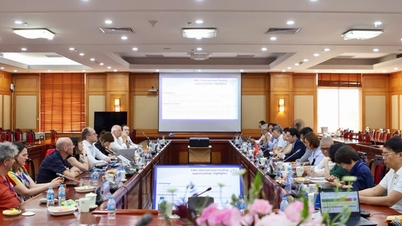
On June 28th, the Vietnam Petroleum Institute (VPI) and Smart Geophysics Solutions JSC (SGS) jointly organized an international scientific workshop on “Experiment and Modeling of Carbon Capture, Utilization and Storage” (CCUS Experiment and Modeling).
According to Associate Professor Pham Huy Giao, Director of SGS, the application of CCUS to achieve the goal of reducing CO2 emissions to zero is still in its early stages, especially in developing countries like Vietnam. “CCUS research needs to be implemented according to a complete roadmap, and the first task is to develop a CCUS research process in the laboratory and simulate the transport and storage of CO2 underground,” he said.
Previous studies on CCS provide a preliminary assessment of the feasibility of CCS deployment, particularly in enhancing oil recovery. In 2011, Vietnam became the first country in Southeast Asia to successfully implement an enhanced oil recovery project using CO2 at the Rang Dong field in the waters of Ba Ria - Vung Tau.
With a commitment to achieving net-zero emissions by 2050, Vietnam recognizes the importance of CCUS in reducing greenhouse gas emissions as outlined in the National Climate Change Strategy for the period up to 2050.
According to Dr. Nguyen Minh Quy, Deputy Director of VPI, recent research by the VPI Institute on potential CO2 sources and storage locations shows opportunities to develop a complete CCUS chain encompassing CO2 capture, transportation, utilization, and storage.
Specifically, VPI forecasts that by 2030, CO2 emissions will be reduced by 6% by converting CO2 to other substances (urea, methanol, ethanol, etc.).
Research by Dr. Phung Quoc Huy from the Asia-Pacific Energy Research Center shows that the CO2 storage capacity in some coal seams in the Quang Ninh region ranges from 12 m³ CO2/ton of coal to 22 m³ CO2/ton of coal. Therefore, Vietnam can establish regional and cluster-based CO2 storage areas to minimize construction and transportation costs.
For coal-fired power plants in the South, CO2 is captured at the plants, transported via pipelines or tankers, and pumped down to depleted oil fields offshore.
For coal-fired power plants in the North, CO2 is captured and transported via pipelines or tankers, pumped down to deep, unexploitable coal seams in the Quang Ninh and Thai Nguyen regions, and stored there.
"State management agencies should assign specialized research institutes to conduct trials of this technology at various CO2 storage locations (depleted oil and gas reservoirs, unexploitable coal seams, deep saltwater layers, etc.). Then, they should evaluate the storage capacity and control of CO2 leakage from these storage areas," Mr. Huy proposed.
Although CCS technology is seen as a solution, many countries warn that it cannot replace the need for drastic reductions in fossil fuel use and restrictions on its consumption.
This was also the warning issued by the European Union (EU) and 17 countries on July 14, emphasizing that emissions reduction technologies, including CCS, must be considered fundamental to ending the use of fossil fuels.
There is no single solution to completely address climate change. Therefore, in addition to accelerating the development of renewable energy, CCS technology will be part of an overall effort to reduce emissions on a global scale.
Source




































![[Photo] Prime Minister Pham Minh Chinh receives the Chinese Ambassador to Vietnam](https://vphoto.vietnam.vn/thumb/1200x675/vietnam/resource/IMAGE/2026/04/05/1775397481797_ndo_br_dsc-5512-jpg.webp)



































































Comment (0)