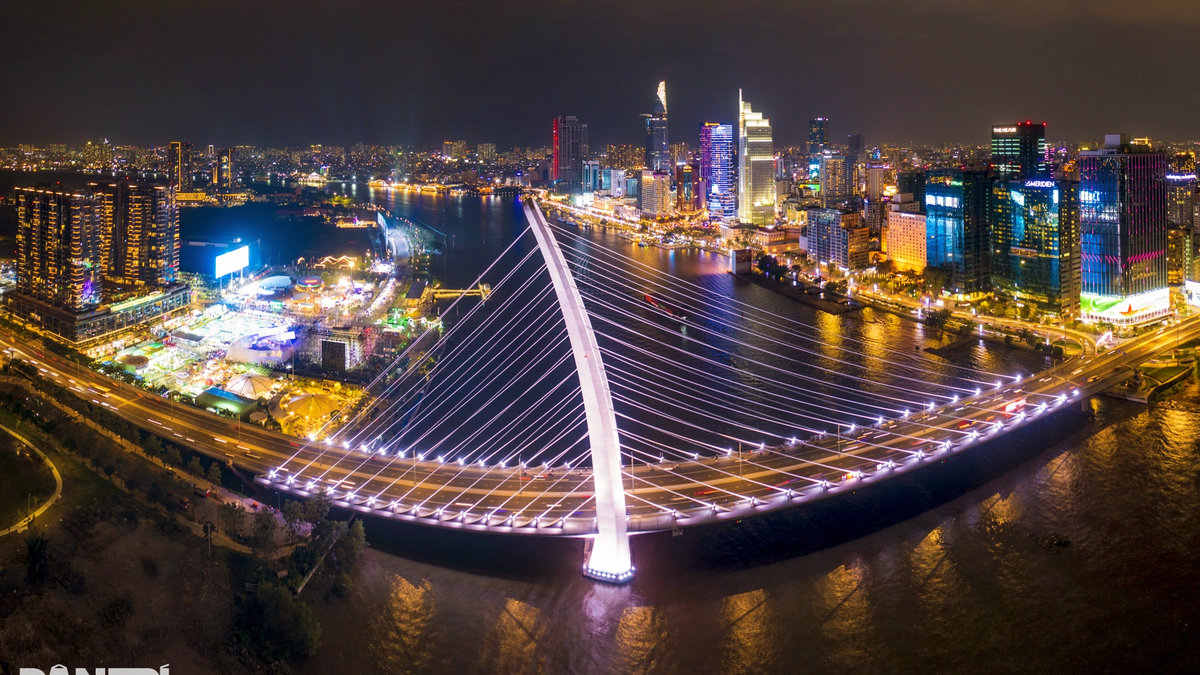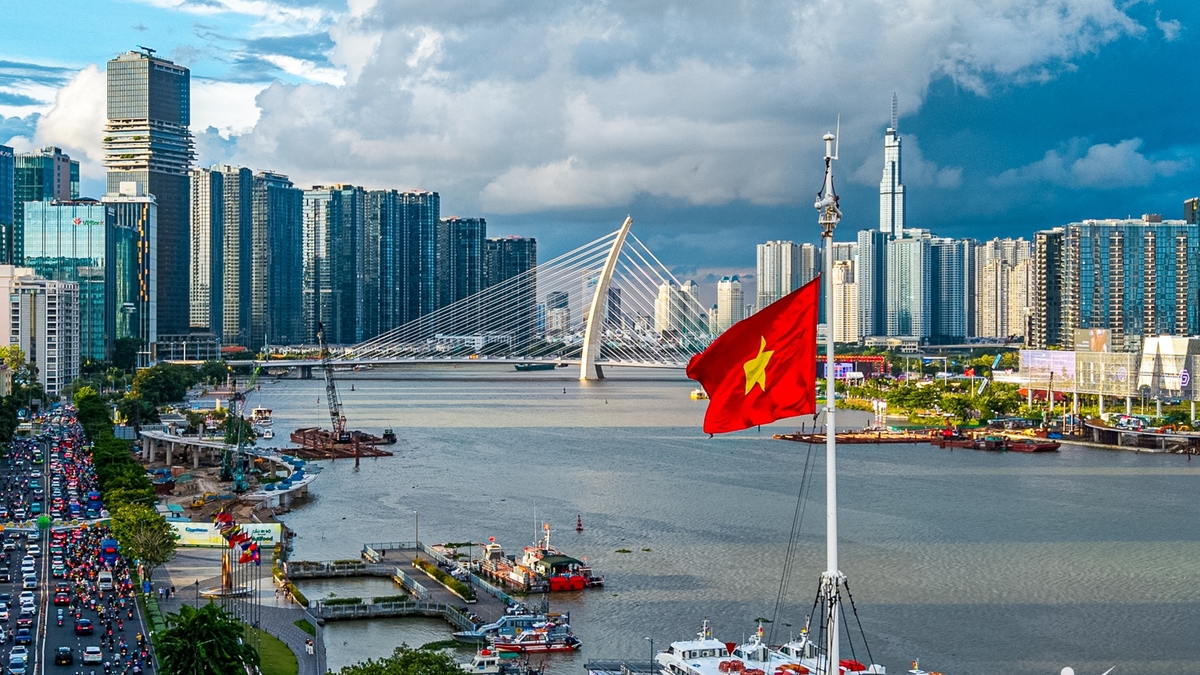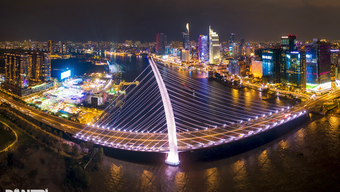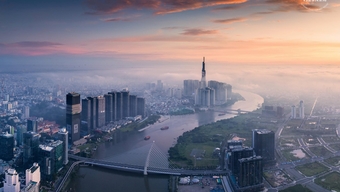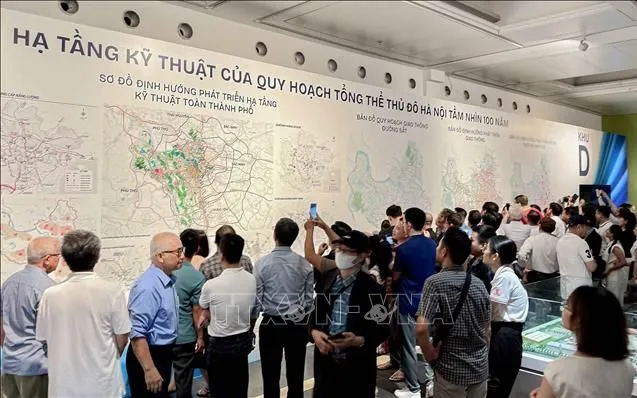
Many Hanoi residents are interested in viewing the Hanoi city planning document with a 100-year vision. (Illustrative photo: Quoc Khanh/TTXVN)
Moreover, the detailed announcement of the spatial structure roadmap (including 9 development poles, 9 major centers, and 9 dynamic axes) is considered by experts to be a step that "quenchs the thirst" for transparent information in the real estate market.
In its new development plan, Hanoi has identified nine development hubs with distinct functions, aiming to redistribute development space more rationally. The current central area continues to play the role of the cultural, historical, and political nucleus of the capital. This development is creating a new dynamism, profoundly reshaping the structure of capital flows in the service and residential real estate markets in the North.
Previously, speculative capital often followed rumors of fictitious infrastructure projects, causing land prices in suburban areas to skyrocket uncontrollably. However, with the Hanoi Capital City Master Plan with a 100-year vision, the visual representation has directly "shut down" these speculative land price surges. Investors are now focusing only on locations with specific legal zoning documents.
Simultaneously, a large supply of projects is expected to be activated. Along with the planning, Hanoi has announced a list of 276 projects calling for investment and signed 50 memoranda of cooperation. The approval time for zoning plans and detailed 1/500 scale plans is expected to be shortened from 3-6 months to only about 3 months. This will help large real estate businesses quickly resolve projects that are stalled due to legal issues, supplementing the supply of apartments and urban areas that are currently scarce in the inner city.
According to Mr. Nguyen Trong Ky Anh, Director of the Hanoi Department of Planning and Architecture, optimizing and streamlining procedures in the 1/500 detailed planning will help investors save months of project preparation time. This is the strongest legal leverage to help the real estate market shift from a waiting state to a proactive and decisive disbursement.
Prior to this event, experts predicted that the market would experience three major shifts following the planning. Based on the newly approved urban structure, the Hanoi real estate map for the second half of 2026 and the following years is projected to operate according to three major scenarios.


One of the focal points attracting attention is the Red River axis, which is expected to become a leading high-end real estate strip. Using the Red River as the main ecological and cultural landscape axis means redefining the value of riverside land plots. The areas of Dong Anh, Long Bien, Gia Lam, and parts of Tay Ho and Ba Dinh districts bordering the river will transform from "back-facing" to "front-facing" the river.
It is predicted that low-rise real estate projects, eco-villas, and luxury apartments with panoramic river views in this area will establish new price levels and maintain stable appeal thanks to their unique scenic advantages.
The second anticipated trend is the boom of the "village within the city, city within the village" model in suburban areas. For rural areas and districts preparing to become urban districts, integrated multi-functional planning at the commune level will create conditions for the sustainable development of suburban real estate.
Accordingly, the trend of purely land speculation will sharply decline, giving way to eco-friendly garden house models combined with resorts, high-tech agriculture , and a chain of OCOP (One Commune One Product) craft village experiential tourism.
Furthermore, experts also predict that another trend is that long-term capital "anchored" in industrial satellite cities such as Bac Ninh, Hai Phong, and Hung Yen (provinces belonging to the expanded Capital Region in the planning) will continue to benefit greatly as inter-regional transportation infrastructure is accelerated.
The real estate segment for housing professionals, industrial parks, and logistics warehouses in these development hubs is projected to maintain a stable growth rate of at least 15% to 20% in terms of liquidity in the coming quarters.
From an expert's perspective, Ms. Do Thu Hang - Senior Director of Research and Consulting at Savills Hanoi - assesses that this 100-year vision plan acts as a "directional filter." It helps eliminate short-term speculative segments that capitalize on spontaneously developed infrastructure.



"The cash flow from major investors in the second half of 2026 will be very clearly allocated. Approximately 70% will be for real housing projects in new central urban areas with clear construction progress, and 30% will be allocated to land plots anticipating the development of service infrastructure along the Red River," Ms. Hang explained.
Therefore, Hanoi's large-scale planning does not create sudden land price surges like in the old cyclical pattern, but it creates the most solid foundation for the healthy, transparent, and in-depth development of Hanoi's real estate market based on sustainable planning values.
Source: https://vtv.vn/bat-dong-san-het-thoi-dau-co-theo-tin-don-10026070215381815.htm