

 |
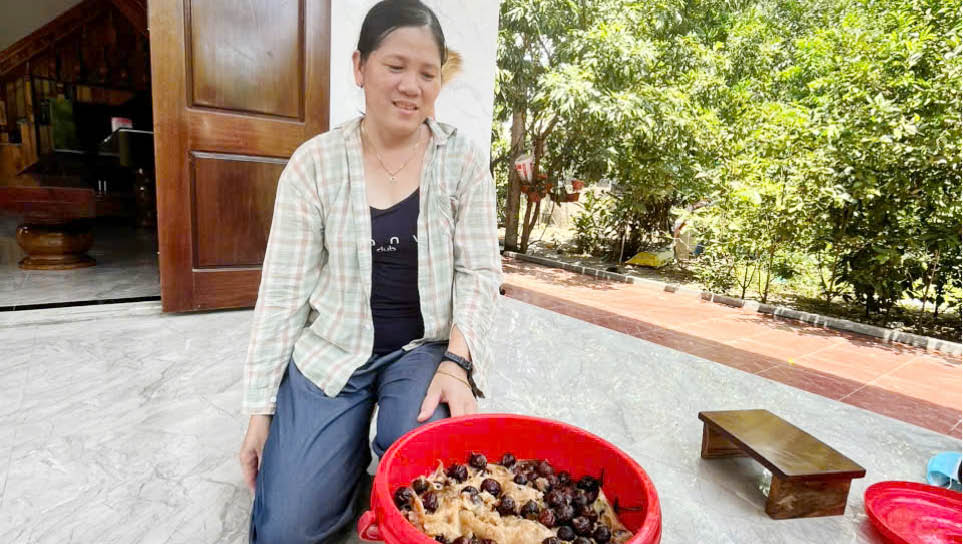
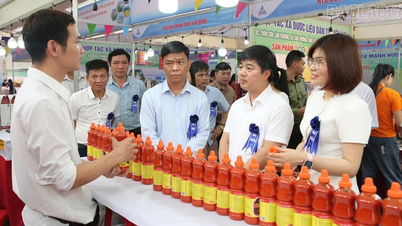
| Model for making detergent enzymes in Huong Thuy ward. |
At Dong Ba Market, as the market closes, vendors sort their waste at the source. "Every day, we sort organic waste at the market and put it in the designated bins. This activity has been initiated by the market management board for a long time, contributing to keeping the market environment clean and allowing farms, smallholdings, and cooperatives to collect organic waste for fertilizer," said Ms. Nguyen Thi Thu Huong, a vendor at Dong Ba Market.
Huong Long Saemaul Agricultural Service Cooperative is one of the pioneering cooperatives in composting using biological preparations to replace chemical fertilizers, creating a "green" and sustainable production model. According to statistics from the project "Hue - A Plastic-Reducing City in Central Vietnam," since implementing the collection of organic waste for bio-fertilizer production in 2021, Huong Long Saemaul Agricultural Service Cooperative has processed more than 6 tons of organic waste transferred from Dong Ba Market.
According to Ms. Mai Tinh Thuy, Director of Huong Long Saemau Agricultural Service Cooperative, the unit focuses on cultivating vegetables and root crops organically. On average, the cooperative makes about 4 trips per month to collect agricultural by-products from Dong Ba market, then composts them using biological preparations to create organic fertilizer for production.
“Thanks to this approach, the cooperative's vegetable growing area has been certified as safe, making it easier for products to access the market and build consumer trust. We plan to expand the cultivated area and develop more safe livestock farming models, aiming to build a closed agricultural ecosystem with the goal of reducing pollution, increasing production value, and moving towards green and sustainable agriculture for the community,” Ms. Thuy said.
Transforming waste into organic fertilizer is one of the models supported by the " Hue - A Plastic-Reducing City in Central Vietnam" project. According to a survey of waste levels in Hue at the project's inception, organic waste accounted for the largest proportion of household waste in the former Hue City, exceeding 270 tons per day. Households were the primary source of this waste, followed by markets, restaurants, and schools. To utilize organic waste as a resource and reduce emissions, the "Hue - A Plastic-Reducing City in Central Vietnam" project collaborated with partners to promote models for collection and processing at the source, such as composting, making cleaning enzymes, and producing animal feed.
“The project has collaborated with the Hue City Women's Union and the Hue City Farmers' Association to conduct 10 training courses for master trainers, covering all staff and leaders of the two associations. The training focused on methods for processing easily biodegradable organic waste using indigenous microorganisms – an environmentally friendly approach easily applicable in the community. From April to June 2025, 43 training courses on sorting organic waste at source and utilizing waste for fertilizer and cleaning enzymes were organized, with the participation of 1,390 households. Notably, more than 600 exemplary households received support with tools and biological products to directly implement the model at home, contributing to the expansion of the green living movement in Hue's community,” informed Mr. Nguyen Ngu Giao, a specialist of the project “Hue – A Plastic-Reducing City in Central Vietnam”.
These efforts have yielded many positive results, with models spreading widely, especially the model for making cleaning enzymes. Using fruit peels rich in essential oils such as oranges, lemons, grapefruits, and pineapples, combined with soapnuts and sugar, women have created a completely natural cleaning enzyme. Through this model, women's associations in wards and communes have utilized over 400kg of fruit peels, significantly reducing the amount of organic waste released into the environment.
Associate Professor Hoang Cong Tin, head of the research team for the project "Hue - A Plastic-Reducing City in Central Vietnam," stated: "For models utilizing organic waste to be effective in the long term, the support of local associations and organizations plays a crucial role. In addition, depending on the season and weather conditions, flexible implementation plans are needed to ensure fertilizer quality and minimize losses. Simultaneously, in-depth training for association and branch officials will help them become key figures in providing technical guidance and timely support to the people, so that composting and enzyme production models truly become part of daily life, contributing to nurturing a green, clean, and sustainable Hue."
Source: https://huengaynay.vn/kinh-te/bien-rac-thanh-san-pham-xanh-159036.html


![[Photo] “Red Journey” 2026: Vietnamese Youth Continue Building the Bridge of Friendship Between Vietnam and China](https://vphoto.vietnam.vn/thumb/1200x675/vietnam/resource/IMAGE/2026/04/20/1776629730866_4055880775670638308-9618-4200-jpg.webp)



























































Comment (0)