


As soon as Apple announced the pre-order event for the new iPhone models, Kaspersky noted a surge in scams exploiting the hype surrounding the event.
One common tactic involves fake Apple Store websites that trick users into pre-ordering the iPhone 17 "before it sells out." When customers enter their payment information, the fraudsters steal bank card data instead of completing a real transaction.
Furthermore, scammers also launch fake lottery programs promising free iPhones to winners. They require participants to complete surveys, provide personal information (such as email, phone number, etc.), and pay a shipping or service fee. To increase credibility, these scam sites even add fake comments from "users" claiming they have received the prize, making victims even more likely to believe and fall into the trap.
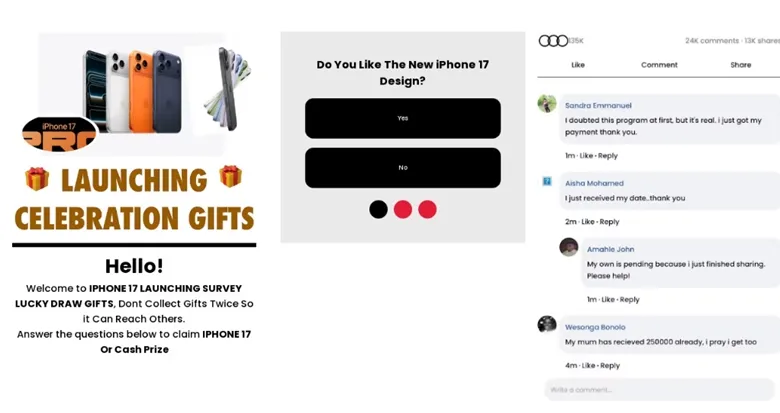
Not stopping there, the scammers also advertised the opportunity to be among the "first to experience" the iPhone 17. This tactic targeted tech-savvy users, luring them into providing contact information, shipping addresses, and paying a shipping fee in exchange for an "early trial device."
However, in reality, no products are ever shipped. Instead, victims receive a barrage of spam emails or become targets of further sophisticated scams.
Tatyana Shcherbakova, a web content analyst at Kaspersky, stated: “Cybercriminals always know how to exploit the hype surrounding major product launches, turning user excitement into opportunities to steal data. These scams are becoming increasingly sophisticated, no longer just rudimentary fake emails, but have evolved into websites with interfaces similar to legitimate sites. Users need to be vigilant, always verifying information instead of acting impulsively, to avoid becoming victims of these threats.”
Source: https://www.sggp.org.vn/bung-phat-lua-dao-khi-apple-mo-ban-iphone-17-post813777.html

![[Photo] Prime Minister Pham Minh Chinh presides over the first meeting of the Steering Committee for Cybersecurity in 2026.](https://vphoto.vietnam.vn/thumb/1200x675/vietnam/resource/IMAGE/2026/03/21/1774071141656_dsc-0252-jpg.webp)









































































Comment (0)