

Many banks are increasing their capital.
According to statistics, banks in the "Big 4" group, as well as many joint-stock commercial banks, have increased their capital. For example, Vietnam Joint Stock Commercial Bank for Industry and Trade ( VietinBank ) completed the issuance of over 2.4 billion shares to pay dividends at a rate of 44.6% at the beginning of 2026. As a result, VietinBank's charter capital increased from VND 53,700 billion to nearly VND 77,670 billion, the highest increase in the system in the first few months of the year. The bank's capital adequacy ratio (CAR) also improved significantly, creating room for credit growth for VietinBank.
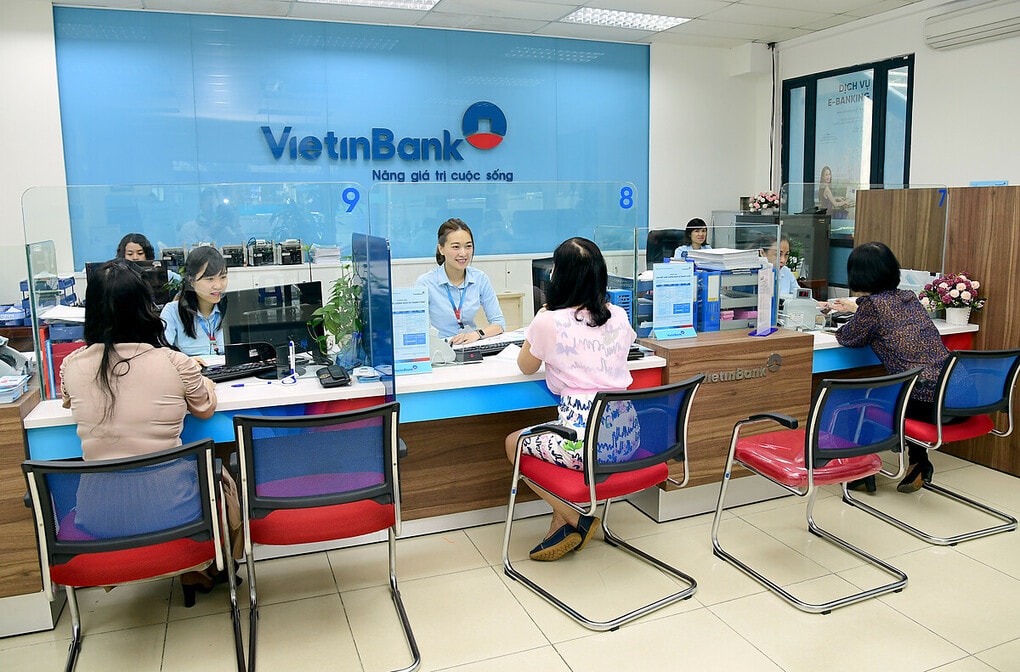
Along with VietinBank, Vietnam Foreign Trade Commercial Bank ( Vietcombank ) aims to continue being the bank with the highest asset quality and profitability in the system by implementing a private placement of approximately 543 million shares, equivalent to 6.5% of its charter capital, to a strategic partner. Combined with a plan to pay dividends in shares, Vietcombank's charter capital is expected to exceed VND 100,000 billion. Vietcombank's leadership affirmed that the capital increase is not only to meet international standards but also to prepare for opportunities in mergers and acquisitions, technology investment, and expansion into green and sustainable finance sectors.
Also part of the "Big 4" group, the Vietnam Investment and Development Bank ( BIDV ) plans a private placement combined with a stock dividend to increase its charter capital to approximately VND 91,870 billion. If completed, BIDV would become one of the banks with the largest charter capital in the system, and would also help BIDV improve its capital adequacy ratio, meeting international standards.
Strengthening capital is not only a goal for state-owned banks, but also for joint-stock commercial banks to increase competitiveness. A representative from Saigon – Hanoi Commercial Joint Stock Bank (SHB) stated that the bank has recently received approval from the State Bank of Vietnam to increase its charter capital to VND 53,442 billion through three methods: a public offering of shares to existing shareholders, a private placement of shares to professional securities investors, and the issuance of shares under an employee stock option program. After completing this plan, SHB expects to rise to the top 4 largest private commercial banks in terms of charter capital. Furthermore, the increased capital will help SHB improve its financial capacity and expand its operations.
An Binh Commercial Joint Stock Bank (ABBank) also plans to issue shares to existing shareholders at a ratio of 100:30, to raise approximately VND 3,105 billion, increasing its charter capital to nearly VND 13,455 billion, in order to improve its financial capacity. Similarly, Ho Chi Minh City Development Commercial Joint Stock Bank (HDBank) plans to increase its capital to approximately VND 50,053 billion through dividend payments and bonus share issuance at a total ratio of nearly 30%.
Large banks such as Techcombank, VPBank, ACB, LPBank, etc., also aim to strengthen their capital base to expand credit capacity, invest in technology, and enhance competitiveness. This is because increasing capital is not only a technical requirement to improve the capital adequacy ratio (CAR) but also a "buffer" to mitigate risks in the context of persistent bad debts, especially in the real estate and corporate bond sectors.
Preparing for a new growth cycle.
Economist Dr. Can Van Luc believes that the capital increase race in 2026 is not simply a matter of scale, but rather preparation for a new growth cycle – where capital quality, risk management, and digital transformation will determine the position of each bank.
According to Moody's, the world's most reputable credit rating agency, the Vietnamese banking system maintains a relatively stable operational state, although there are still factors that need to be observed, particularly regarding capital and credit growth rates. Positive economic growth is a crucial foundation supporting the operating environment of Vietnamese banks. The expansion of the economy contributes to maintaining capital demand, especially in the private sector, thereby creating conditions for banks to increase asset size and improve business efficiency.
Alongside capital consolidation, profitability is also a factor reflecting the "health" of the system. Vietnamese banks are assessed to maintain relatively good operational efficiency compared to the regional average, although they still face pressure from capital and credit costs. As interest rates adjust and risk control requirements increase, profit margins may narrow in the medium term, requiring banks to continue optimizing their asset and capital structures and improving governance efficiency.
Given the limited potential for capital raising from retained earnings, Moody's suggests these banks may need to raise capital through additional share issuance or by gradually reducing state ownership over the next few years. A recent legal reform allows state-owned banks to retain revenue from state divestments, thereby creating more room for increased capitalization.
A common theme in the 2026 plans of banks is increased investment in technology. Banks recognize that digital transformation is no longer just a trend but a matter of survival. Therefore, the capital increase is not only aimed at expanding credit but also serves a long-term strategy: building a comprehensive financial ecosystem and enhancing competitiveness in the face of the rapid development of fintech and digital payment platforms.
However, challenges remain, such as increasing competitive pressure, higher demands for transparency, stringent international standards, and unpredictable global economic fluctuations. Therefore, the quality of growth, not just profit figures, will be the crucial measure in 2026.
Source: https://hanoimoi.vn/cac-ngan-hang-cung-co-nguon-von-739274.html

































































































Comment (0)