

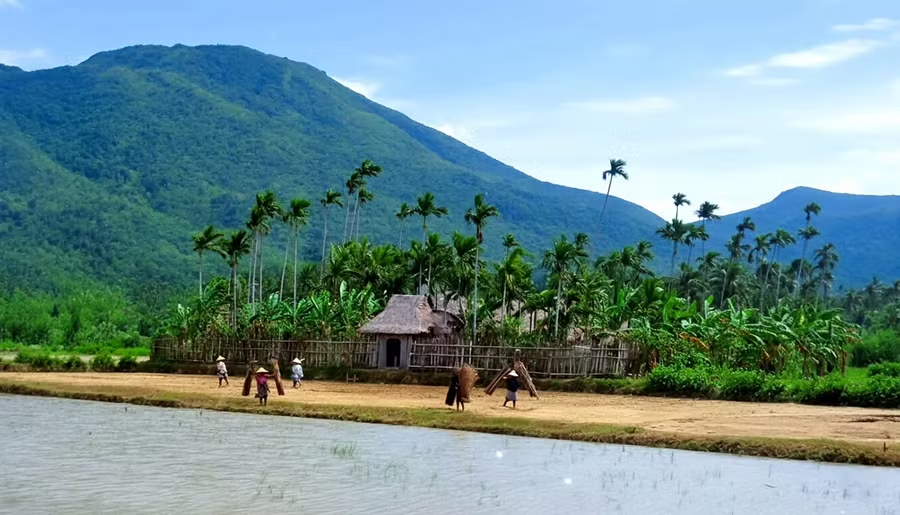
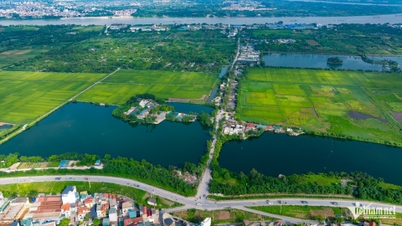
The Cong Valley lies between the Ba Hoa and Xuan Van mountain ranges, with Phu Hoa Lake at its center (many people still commonly refer to it as Uncle Ho's Fish Pond, although Uncle Ho's Fish Pond is actually only a part of Phu Hoa Lake). According to Camille Paris's writings, this area was once a pristine wilderness teeming with birds and animals, especially wild ducks; even tigers and leopards were once found here. Notably, he also mentions the valley once boasting some of the best mango orchards in the region.
He recounted a vivid detail: While supervising workers clearing vegetation for the construction of a telegraph line, the crowd suddenly panicked, calling for guns to be brought to confront "the tiger." But then, the animal that was captured turned out to be a leopard. That afternoon, it was locked in a cage and transported to the center of Quy Nhon. Such small anecdotes contribute to a clear picture of a land that at that time still bore strong traces of wildness.
Beyond being a workplace, the Cong Valley was also a popular strolling spot for the French at the time.
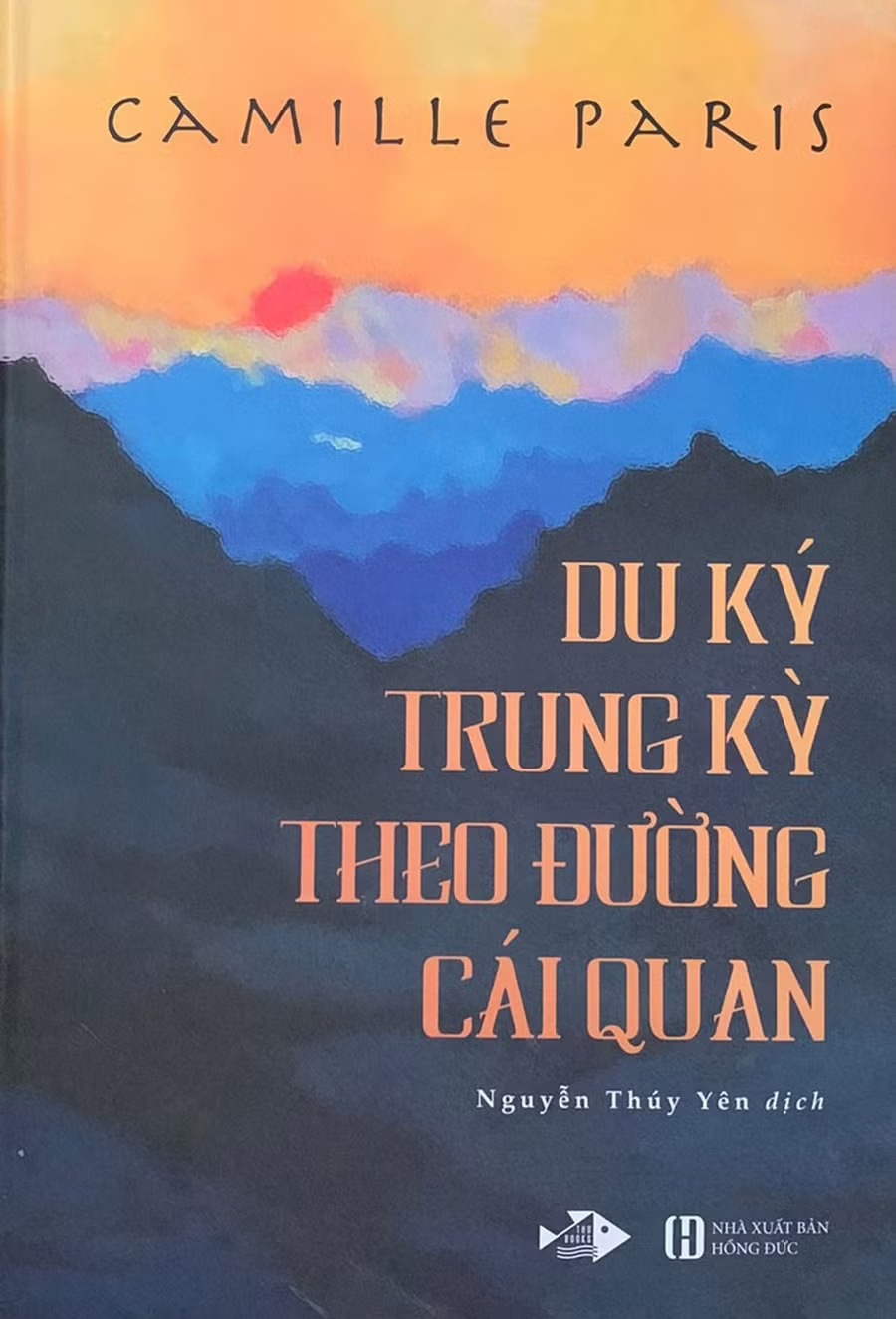
Camille Paris and her colleagues often strolled from Phu Hoa Lake, through the Cau Doi area, then circled back towards Cam Thuong and Chanh Thanh – places that have now become part of Quy Nhon city.
In 1887, Charles Lemire, a Frenchman passing through, captured the beauty of the Cong Valley with his camera. The photograph was later restored and colorized, revealing a spacious, peaceful, and picturesque landscape. Looking at it, viewers today can get a glimpse of what Quy Nhon looked like in its pristine, almost ethereal state.
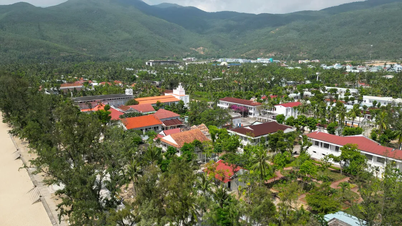
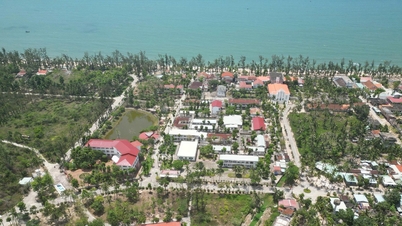
The Cong Valley is connected to the Ga Valley by a small pass called Quy Hoa Pass. According to Camille Paris's description, the Ga Valley is the area of Quy Hoa today, which later became associated with the poet Han Mac Tu and his haunting line: "Who wants to buy the moon? I'll sell the moon to them."
In the eyes of the French archaeologist, the Chicken Valley was "a charming little beach corner," where a few small houses nestled under lush green coconut groves – a scene both simple and poetic. From her very first notes upon arriving in this land, Camille Paris could not hide her astonishment: The area surrounding Quy Nhon was picture-perfect, especially the Cong and Chicken Valleys.
According to documents in the History of Quy Nhon City, the Cong Valley at that time belonged to Xuan Quang village - an ancient village that had formed in the 18th century and was named during the Minh Mang dynasty. At that time, the village had about 120 households, living mainly from agriculture . Meanwhile, the Ga Valley corresponds to Quy Hoa village, one of the earliest villages formed in the former Quy Nhon prefecture.
More than a century has passed, yet Camille Paris's travelogues retain their evocative power. They are not merely historical documents, but also a bridge connecting today's readers back to a Quy Nhon of memory: a place where sea breezes blow through green valleys, carrying the salty taste of the ocean and a serene, captivating beauty that stirs the heart.
Source: https://baogialai.com.vn/cac-thung-lung-o-quy-nhon-xua-post583645.html



























































































Comment (0)