

Expenditure on the development of the press accounts for less than 0.3% of the total state budget investment.
Over the years, press agencies nationwide, including radio, television, print, and online newspapers, have seriously implemented the leadership, guidance, and information orientation of the Party and the State; providing timely, truthful, and comprehensive information and propaganda on political , economic, and social life at home and internationally; serving as the mouthpiece of the Party and the State, a truly reliable forum for the people, and an essential mass media tool for social life.
Alongside certain successes in recent times, it is undeniable that the current trend of "journalizing" magazines and general news websites, and even the privatization of journalism—receiving funding to influence media for self-serving purposes—is occurring. There are instances of reporters extorting money from businesses or exchanging articles and links through advertising and sponsorship contracts. Many reporters have faced legal consequences after being discovered and accused. Although these are just a few bad apples, this phenomenon has led to a misunderstanding of journalism and damaged the reputation of other genuine journalists.

"Only with specific regulations can media organizations fulfill their economic role and conduct healthy media business, contributing to the green media environment we desire," affirmed Dr. Dong Manh Hung.
According to statistics: From 2017 to 2022, the Ministry of Information and Communications conducted 65 inspections and 48 audits; issued 306 administrative penalty decisions with a total fine of 8 billion 618 million VND.
At the national scientific conference "Scientific and Practical Basis for Amending the 2016 Press Law," when considering the current situation, Dr. Dong Manh Hung - Head of the Editorial Secretariat of the Voice of Vietnam Radio - stated that this figure does not fully reflect the "hidden aspects" of current journalistic activities. The fact that journalists and reporters exhibit violations of professional ethics, exploiting their status as journalists to intimidate and harass agencies, organizations, individuals, and businesses for personal gain, is real and occurs at a more serious level.
"There are many reasons for this situation, but in my opinion, the most important is the issue of operating budget. Investment in the development of journalism accounts for less than 0.3% of the total state budget investment. Not many governing bodies allocate budgets and resources to commission or support media outlets in carrying out political, informational, and propaganda tasks. Many governing bodies not only fail to provide financial resources for operations, but also impose certain contributions from media outlets to supplement the operating expenses of the governing body. The economic pressures are one of the important reasons leading to the misconduct of the press in recent times," Dr. Dong Manh Hung commented.
According to Mr. Hung, many people wonder whether journalistic economics and autonomy should be equated. In reality, these are two different concepts, but they are related. Autonomous media organizations must engage in journalistic economics, but not all media organizations that engage in journalistic economics are necessarily autonomous.
Therefore, it is necessary to clearly define the mechanism of autonomy in journalism to avoid misunderstandings or the abuse of this "autonomy mechanism" for various economic purposes. Currently, due to the autonomy mechanism, many newsrooms assign economic quotas to reporters, leading to pressure regarding work and income, making journalists susceptible to temptation, sometimes prioritizing economic contracts over the quality of their writing.
The current Press Law lacks strict regulations regarding the economics of journalism and the role of the press in economic activities.
Dr. Dong Manh Hung pointed out another phenomenon arising from the abuse of the "autonomy mechanism": reporters from specialized online magazines "break the rules" by writing articles exposing corruption or promoting businesses, but in reality, they are using it to extort money, demand advertising or media contracts for personal gain, or to pay back the money to their organization under the guise of "supporting the editorial office." This phenomenon, called "journalistic transformation of magazines," greatly affects the honor and reputation of genuine journalists and leads society to misunderstand the role of journalism. "One of the reasons leading to this situation is that the Press Law still lacks strict regulations on the economics of journalism and the role of journalism in economic activities," Dr. Hung stated.
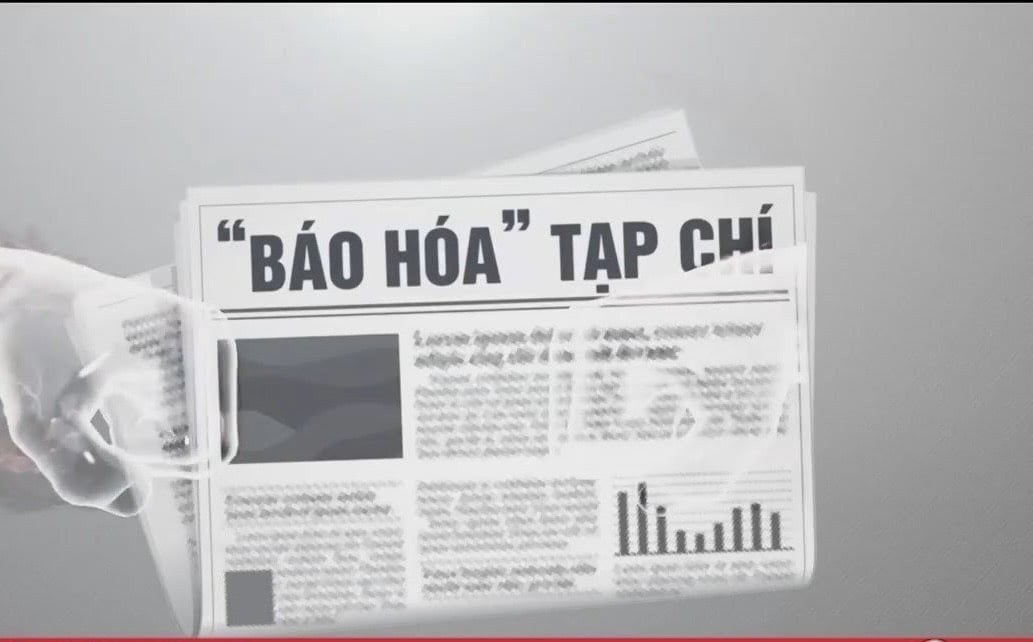
The story of economic pressures is one of the important reasons leading to journalistic misconduct in recent times. (Photo: VTV)
Mr. Hung cited the 2016 Press Law, which provides a legal framework for the development of the press economy, specifically Article 21 "Types of activities and revenue sources of press agencies" and Article 37 "Cooperation in press activities". However, these regulations are still incomplete and not specific enough, leading to confusion among press agencies in their operations and, on the other hand, creating opportunities for some press agencies and journalists to exploit loopholes and violate the law. Specifically, Clause 1 of Article 21 of the 2016 Press Law stipulates: "Press agencies operate as revenue-generating public service units. Scientific journals operate in accordance with the type of their governing body."
A revenue-generating public service unit is a type of public service unit with its own revenue sources, established by a competent state agency. It is an independent budgetary unit with its own seal and bank account, and its accounting system is organized according to the provisions of the Accounting Law. However, because it is classified as a public service unit, media organizations must comply with the same economic and financial regulations as other public service units, for example, a corporate income tax rate of 10-20%, while still fulfilling its information and propaganda functions in accordance with its political mission.
Journals published by social organizations, socio-professional organizations, and research institutes (not affiliated with state agencies, political organizations, or socio-political organizations) are not considered public service units. However, the Press Law does not specify the type of scientific journals, only providing a general provision that they "operate in accordance with the type of their governing body," leading to difficulties for these journals in their economic development.
"Clearly distinguishing between the revenue-generating business model of media organizations and the model (which can be considered a business) of magazines is extremely important. If magazines are considered businesses, they will operate according to the regulations of economic law, and this could lead to conflicts with the provisions of the Press Law," Mr. Hung said.

The Press Law is an important foundation for the operation of press agencies and journalists.
Furthermore, according to Dr. Dong Manh Hung, treating magazines as businesses would make it difficult to control and direct their content. However, if they are not businesses, what model do magazines operate under? This is a crucial issue in rectifying the "journalistic" transformation of magazines, general online information sites, and social media platforms in general by the press in recent times.
The Press Law is a crucial foundation for the operation of press agencies and journalists. Regarding new and important issues like the economics of journalism, specific regulations are needed, ideally as a separate chapter in the law. "Only with specific regulations can press agencies fulfill their economic role and conduct healthy journalistic economics, contributing to the green journalistic environment we desire," affirmed Dr. Dong Manh Hung.
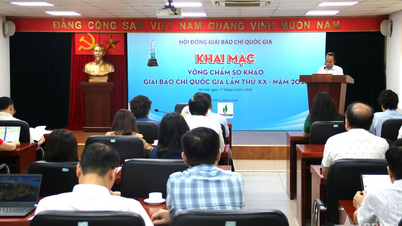
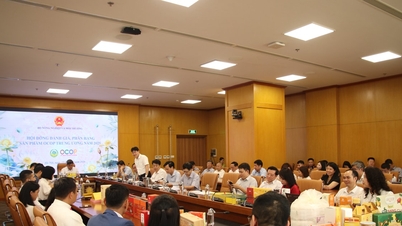
Speaking at the recent national scientific conference "Scientific and Practical Basis for Amending the 2016 Press Law," Deputy Minister of Information and Communications Nguyen Thanh Lam stated that one of the issues needing clarification from a scientific perspective is the economics of journalism. Many people still perceive this term as a new concept and question why journalism should address economic issues when its function is to fulfill political tasks.
Deputy Minister Lam argued that the press plays two roles: participating in protecting the regime and providing essential public services – information and propaganda. A scientific basis is needed to clearly define the relationship between the press and its governing body, and even higher up, the state as a major client of the press.
"We need specific, scientific regulations so that presentations can convince all levels and sectors, and convince society, especially since the issues of journalism and the economics of journalism remain pressing," Deputy Minister Lam remarked.
Phan Hoa Giang
Source






























![[Photo] “Red Journey” 2026: Vietnamese Youth Continue Building the Bridge of Friendship Between Vietnam and China](https://vphoto.vietnam.vn/thumb/1200x675/vietnam/resource/IMAGE/2026/04/20/1776629730866_4055880775670638308-9618-4200-jpg.webp)























































Comment (0)