

Increase competitiveness
According to a report by the Vietnam Cement Association, in 2024, the cement industry exported more than 29.94 million tons of cement and clinker, earning over $1.15 billion, a decrease of more than 4% in volume and nearly 14% in value compared to 2023. In December 2024 alone, cement and clinker exports increased by 4% in volume and 3.9% in value compared to the previous month, reaching nearly 2.27 million tons, equivalent to over $86.04 million, with an average price of $37.9/ton.
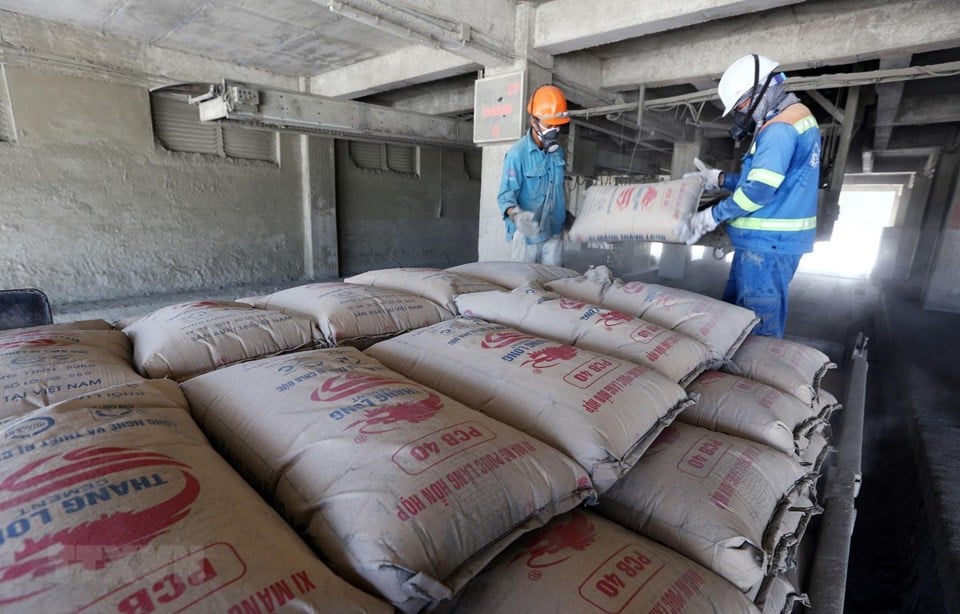
In 2024, cement clinker exports to the Philippines decreased by approximately 0.6% in volume, 11% in value, and 10.5% in price compared to 2023. The Philippines is the largest market for Vietnamese cement clinker, accounting for 27% of the total volume and 28% of the total export value of cement and clinker nationwide, reaching over 8 million tons, equivalent to 319.09 million USD, with an average price of 39.9 USD/ton.
Cement clinker exports to Bangladesh – the second largest market – reached 5.49 million tons, valued at over $175.13 million, with an average price of $31.9/ton, accounting for 18.5% of the total volume and 15.4% of the total value. Following closely behind is the Malaysian market, accounting for 5.7% of the total volume and 5% of the total value, reaching 1.68 million tons, equivalent to $57.19 million, at a price of $34/ton.
Entering 2025, export figures continued to decline, with January exports reaching nearly 2.18 million tons, generating over $76.41 million, a decrease of 32% in volume and 36% in value compared to the same period in 2024. Specifically, cement exports totaled approximately 1.43 million tons; clinker exports reached 750,172 tons, both down 4% compared to December 2024. The fact that January 2025 coincided with the Lunar New Year holiday disrupted logistics, transportation, and port handling, impacting export volumes.
In light of these developments, the Prime Minister issued Document No. 1297/VPCP-CN instructing the Ministry of Finance to study the possibility of reducing the export tax on cement clinker. Currently, the export tax rate for cement clinker is 10% according to Decree 101/2021/ND-CP, putting significant pressure on businesses amidst declining domestic consumption, export difficulties due to rising costs, and fierce competition.
Industry experts observe that since 2022, clinker exports have significantly declined, severely impacting the business of manufacturing companies. This is largely due to the increase in export tax from 5% to 10% effective January 1, 2023, making clinker less competitive in the international market compared to other countries such as Thailand, Indonesia, and India, which do not levy export taxes on clinker because it is a highly processed product.
Simultaneously, with the 10% increase in export tax and the inability to deduct input value-added tax (VAT) on exported clinker (10%), Vietnam's clinker prices have lost up to 20% of their competitive advantage in the international market. As a result, many cement companies are unable to export their products, having invested heavily in production projects. If they cannot repay their loans, coupled with high interest rates, they will face foreclosure and pressure to sell their assets.
Therefore, reducing export taxes can help lower input costs for businesses, create incentives to boost exports, and support the cement industry in overcoming difficult times. This is a crucial solution to maintain the industry's production capacity and ensure the stability of the construction materials market. This tax policy adjustment is expected to help Vietnamese cement businesses enhance their competitiveness in the international market, contributing to economic growth and the long-term stability of this important industry.
Businesses are cutting costs.
Given the aforementioned developments, businesses in the industry have implemented various management and operational solutions to reduce costs, improve productivity and quality, and lower product prices as input material prices decrease, as well as utilizing cheap raw materials from waste to reduce production costs. For example, Vicem Hoang Mai Cement Joint Stock Company recorded net revenue of nearly 506 billion VND, an 8% increase compared to the same period last year.
However, due to a sharper increase in the cost of goods sold, the after-tax profit for the fourth quarter of 2024 showed a loss of VND 15.9 billion, an increase of VND 10.6 billion compared to 2023. Even so, the company still showed many positive aspects, including a decrease in input materials, with coal prices falling from VND 75/kcal to VND 507/kcal, resulting in a VND 13.9 billion increase in profit.
However, with the average electricity price at 1,766 VND/kWh, an increase of 96 VND/kWh compared to the same period (EVN increased electricity prices by 4.8% from October 11, 2024), profits decreased by 3.2 billion VND. To save costs, from June 2024, the company began using alternative materials (tree bark, wood chips, and common recyclable solid waste) to partially replace coal dust in clinker production, resulting in a profit increase of 29.3 billion VND.
It is clear that, in order to maintain production and stabilize the market, businesses are forced to seek adaptive solutions, from optimizing costs and diversifying markets to innovating technology to enhance competitiveness; reviewing and reducing production costs for raw materials, fuels such as coal, oil, gas, and electricity. They must also restructure capital sources and reduce costs to ensure cash flow for repaying bank loans and covering input costs such as raw materials, fuel, labor, and other production expenses.
These are also the solutions that other businesses in the industry are applying to maintain and stabilize production and business, ensuring income for workers. For example, Yen Binh Cement, in the fourth quarter of 2024, boosted production and reduced costs. Along with that, the prices of key input materials such as coal, gypsum, and transportation costs decreased, and major repair costs also decreased compared to the same period, so the production cost of products decreased, contributing to increased profits. Similarly, Sai Son Cement, due to stable factory operation, reduced interest expenses because the company repaid medium-term capital, and cost savings in production, reduced prices to sell all products, and increased market coverage, Sai Son Cement's profits increased.
According to Master Pham Ngoc Trung, the imbalance between cement supply and demand stems from many causes, including dependence on input factors such as mineral resources, technology, energy, and capital. The imbalance remains inadequate, leading to surpluses and underutilization of production capacity within the industry. Therefore, solutions are needed to increase cement consumption in the domestic market, such as researching the maximum use of cement for soil stabilization in road construction at bridge and culvert locations, areas with large embankment heights, and areas with weak soil. Priority should also be given to investing in cement concrete roads in the development of rural and mountainous areas, and in areas with unique terrain such as steep slopes or areas prone to flooding.
Furthermore, it is necessary to continue promoting public investment focused on developing transportation and irrigation infrastructure, urban and rural infrastructure, and marine projects. Businesses related to construction materials and construction will be the direct beneficiaries. Along with the continued push to build 1 million social housing units and other housing construction programs and projects, this will help increase domestic cement consumption.
According to the Vietnam Cement Association, trade barriers and protectionist policies from some importing markets remain challenges for Vietnamese businesses. The shift towards exporting to a few new potential markets is a positive sign, reducing competition from large manufacturers in traditional markets.
Source: https://kinhtedothi.vn/can-quyet-sach-moi-cho-nganh-xi-mang.html


![[Photo] General Secretary and President To Lam meets with National Assembly delegates from ethnic minorities.](https://vphoto.vietnam.vn/thumb/1200x675/vietnam/resource/IMAGE/2026/04/20/1776696701056_a1-bnd-8331-3342-jpg.webp)


![[Image] National Assembly discusses the implementation of the socio-economic development plan.](https://vphoto.vietnam.vn/thumb/1200x675/vietnam/resource/IMAGE/2026/04/20/1776696707422_ndo_br_img-20260420-185419-jpg.webp)












































































Comment (0)