

Construction of the Ham Rong Bridge began in 1901, designed and built by two German engineers. The arched bridge, 9 meters wide, was completed in 1904. It was inaugurated and opened to traffic on March 17, 1905. In 1946, during the scorched-earth resistance campaign, the bridge was destroyed.
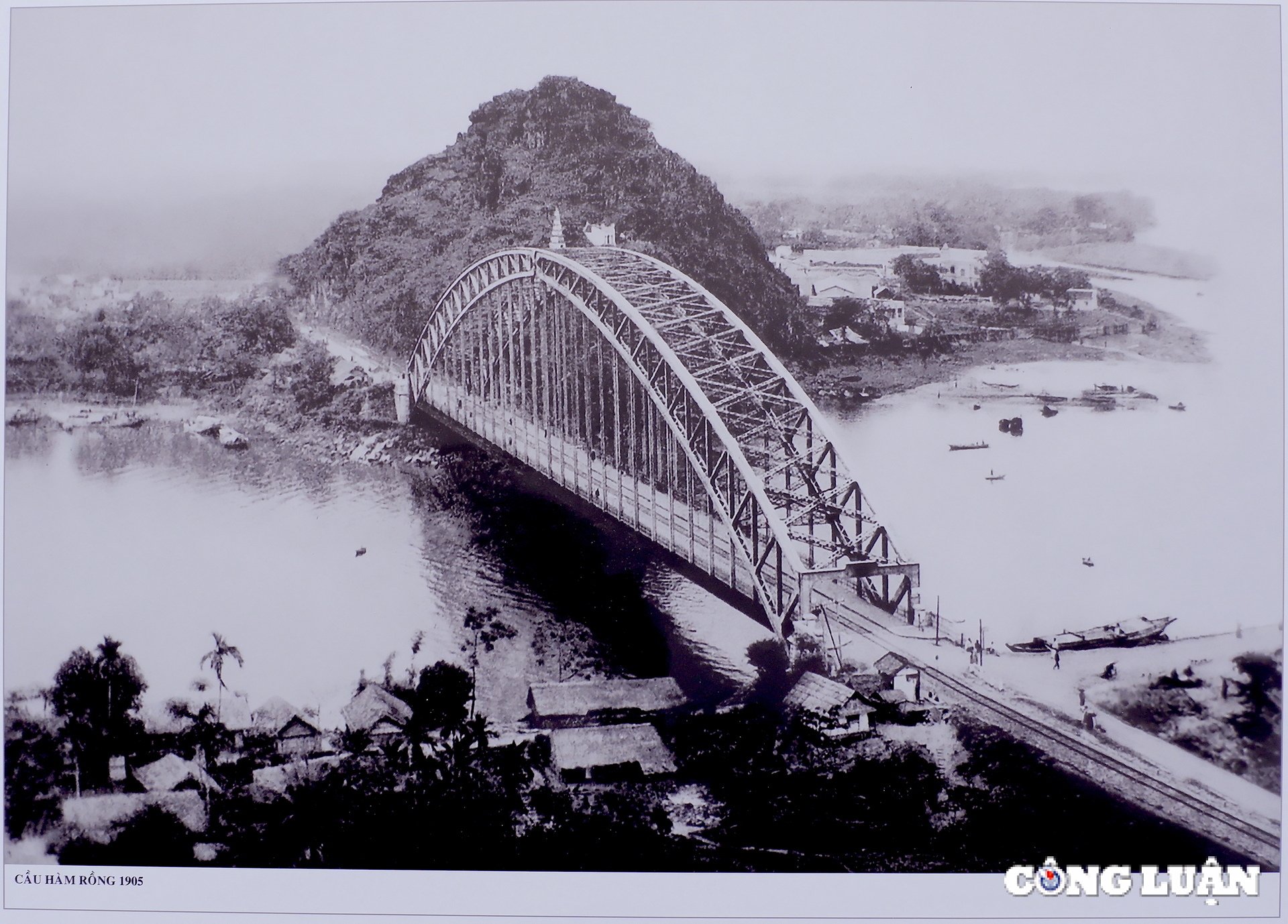
Image of "Ham Rong Bridge 1905"
In 1962, the Ham Rong Bridge was rebuilt. The bridge consists of two steel girder spans, with a railway line in the middle and roads for cars and pedestrians on either side. This area was once a key location in the war, where hundreds of American planes were shot down and dozens of American soldiers were captured.
Despite numerous fierce attacks, Ham Rong Bridge still stands proudly, nestled against the mountainside on the banks of the Ma River, becoming a symbol of the nation's strength, will, and resilience.
According to various sources, to protect the Ham Rong Bridge, our army and people deployed many artillery companies and armed forces ready for combat, determined to defend the bridge at all costs. On April 3rd and 4th, the US Air Force continuously launched fierce bombing raids in the Ham Rong - Nam Ngan area. The main target of enemy bombs and shells was the Ham Rong Bridge.

Image of "Ham Rong Bridge construction site, 1962-1963"
Enemy bombs and bullets rained down everywhere. Areas such as Ngoc Mountain, Chop Market, Nam Ngan, etc., were all devastated by enemy bombs and bullets. The enemy continuously attacked Ham Rong with dozens of aircraft divided into many groups.
The main army, local troops, and militia of Thanh Hoa province continued to bravely fight back against enemy aircraft. Fire positions at both ends of the bridge, along with positions of the militia in Nam Ngan, Yen Vuc, Hoang Long, Hoang Ly, etc., were deployed to protect the bridge.
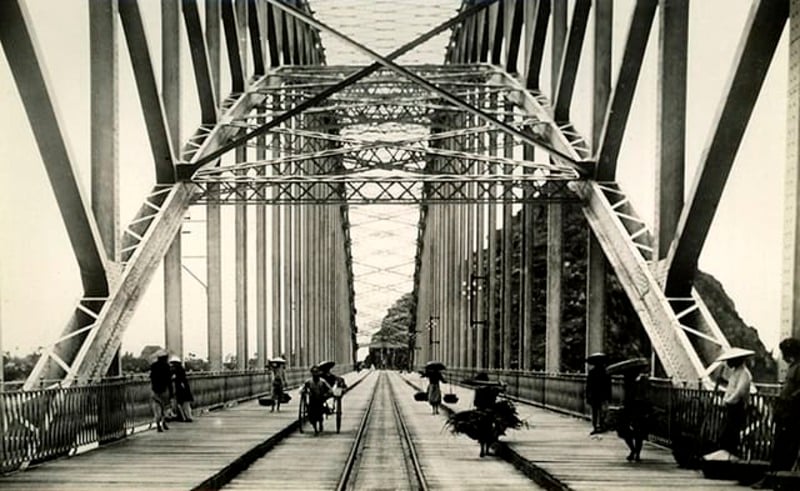
Ham Rong Bridge, a historical landmark. (Archival photo)
On April 3rd and 4th, 1965, the US Air Force launched 454 sorties, dropping thousands of tons of bombs and ammunition on the Nam Ngạn - Hàm Rồng area. During those two days of fighting, our troops and people shot down 47 American aircraft and captured many pilots. The troops and people of Hàm Rồng set the first record for shooting down American aircraft in North Vietnam.
According to veteran Le Xuan Giang, former Political Commissar of Company 4, Regiment 228: "For nearly 3,000 days and nights of tenacious fighting, the people of Thanh Hoa overcame all hardships and sacrifices to resolutely protect the Ham Rong Bridge with sacred feelings for their beloved South. Therefore, there is a folk song at Ham Rong: 'Ham Rong is blood and bones / It is the faith sent from all directions.'"
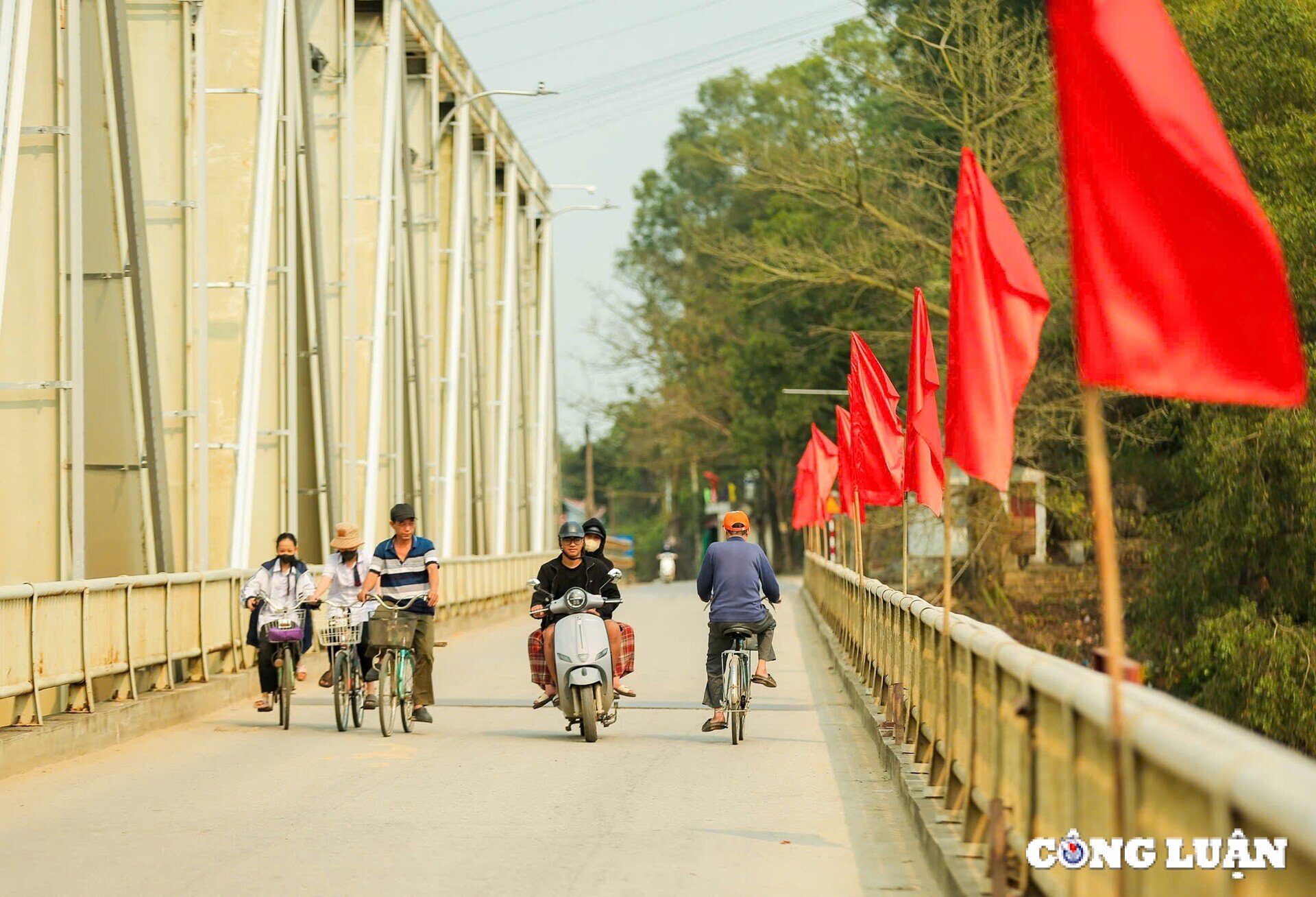
Ham Rong Bridge is also named after President Ho Chi Minh's birthday, the May 19th Bridge.
Ham Rong Bridge is also named after President Ho Chi Minh's birthday, the May 19th Bridge. The affection of the soldiers and people of Ham Rong is always directed towards President Ho Chi Minh and the capital city. The soldiers and people of Ham Rong pledged to each other: To protect the Ham Rong Bridge safely so that President Ho Chi Minh could cross the bridge to visit his compatriots in the South.
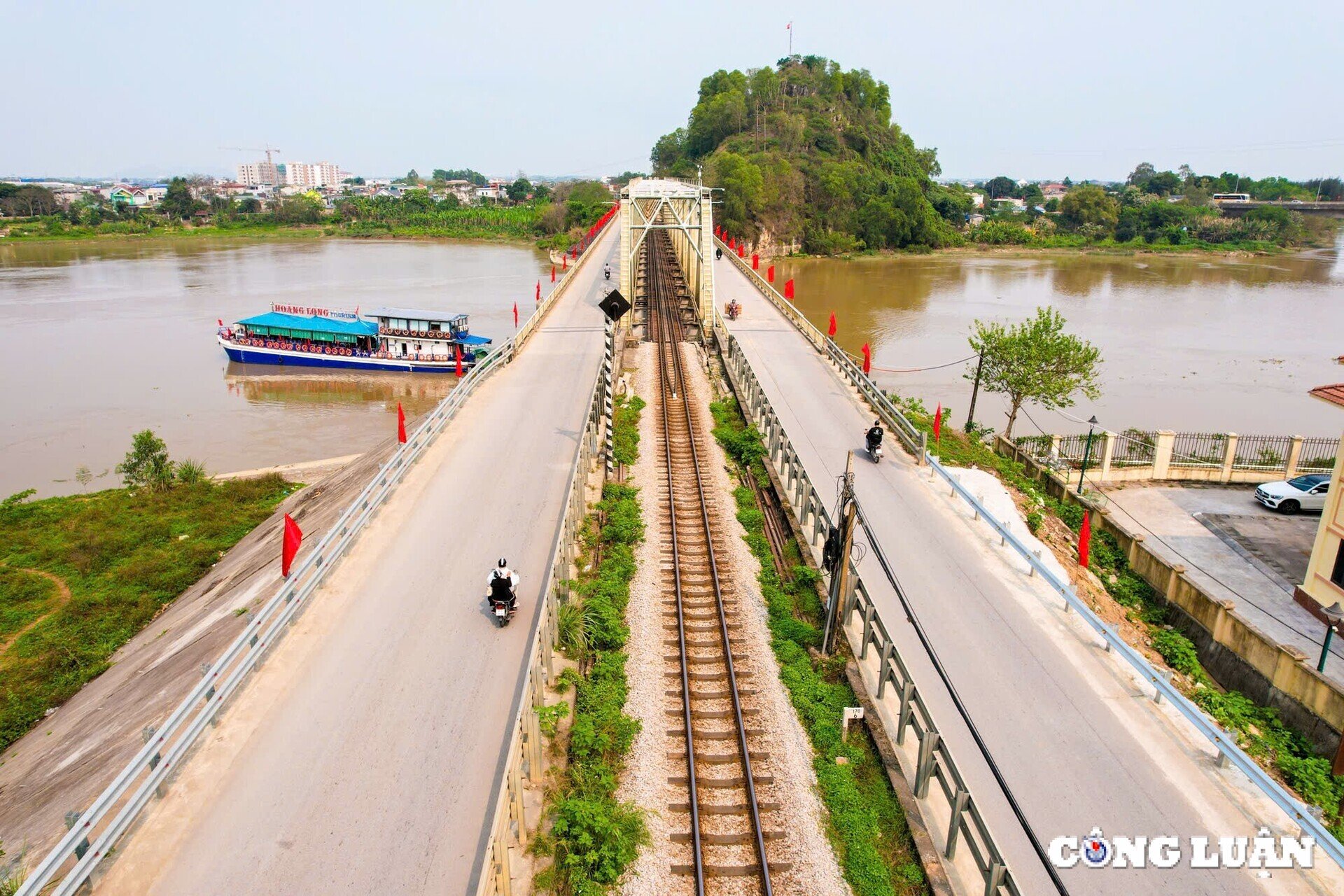
The Ham Rong Bridge has two steel girder spans, measuring 160 meters in length and 17 meters in width.
From a land heavily affected by the devastating effects of bombing and shelling, it has truly revived and developed day by day. Today, standing in Ham Rong Square, once known as the "Bomb Crossroads," looking in all directions, one can see large-scale, key national projects being built.
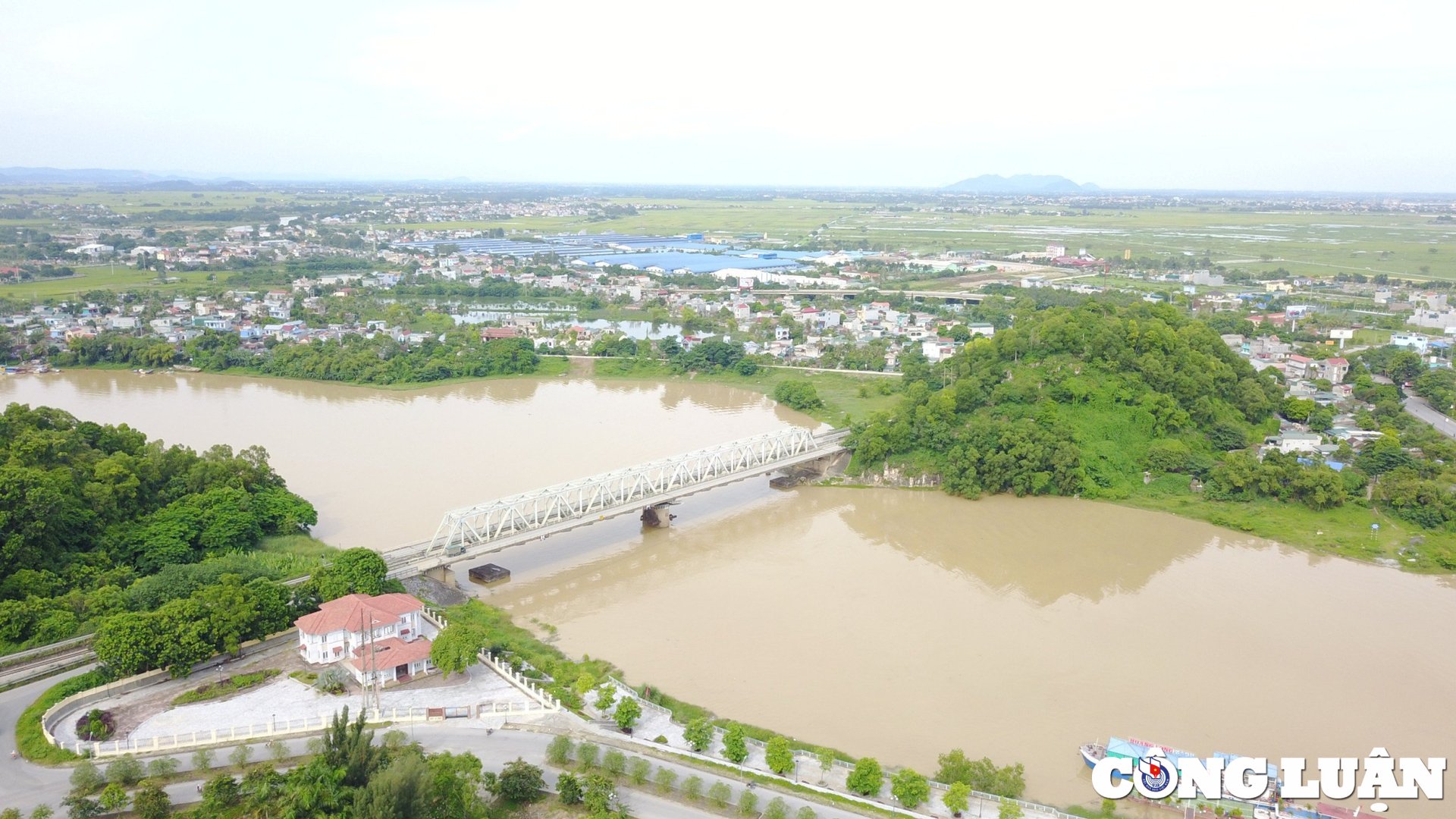
Ham Rong Bridge today
Next to Ham Rong Bridge is a monument and memorial area dedicated to the 64 teachers and students who sacrificed their lives on the banks of the Ma River, which was inaugurated on March 31, 2025, on the occasion of the 60th anniversary of the Ham Rong victory (April 3-4, 1965 - April 3-4, 2025).
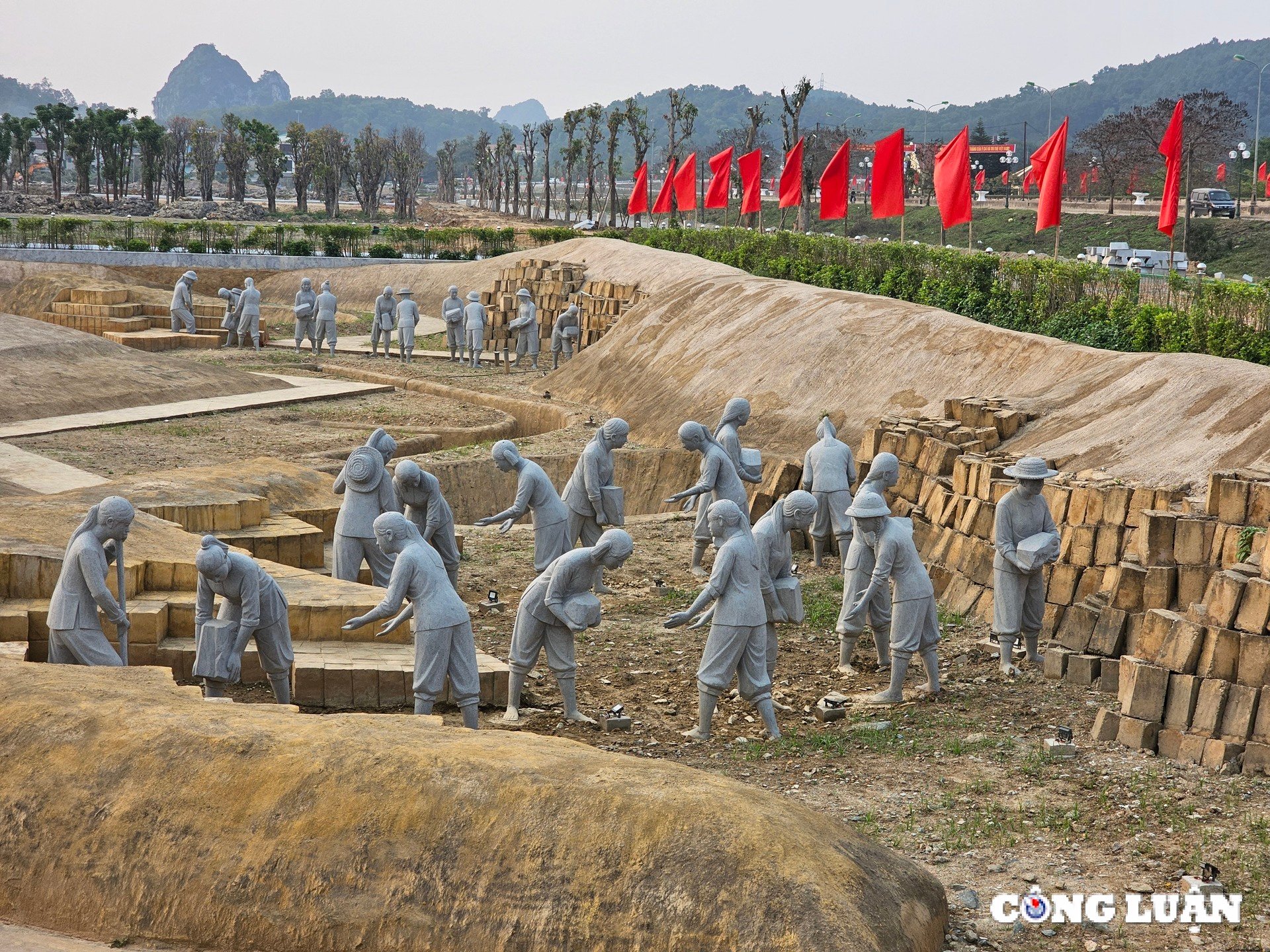
The area recreates the scene of teachers and students working to build dikes along the Ma River before it was bombed by American planes in 1972.
The victory at Ham Rong boosted the morale of the entire nation's armed forces and people, becoming a driving force for them to continue advancing to completely defeat the American imperialists and their puppets, regain independence and freedom, and unify the country.
The war is long over, and the victory at Ham Rong has gone down in history as a glorious milestone. The bomb craters of the past have now healed, and lush fruit trees have grown over them. Today, Ham Rong has become a highlight of tourism in Thanh Hoa city in particular and Thanh Hoa province in general.
Ha Anh
Source: https://www.congluan.vn/cau-ham-rong-xua-va-nay-post341323.html
![[Photo] Da Nang: Over 38,000 people "painted the streets red" during the Olympic Run for National Security.](https://vphoto.vietnam.vn/thumb/1200x675/vietnam/resource/IMAGE/2026/03/22/1774148860624_ndo_br_chay-15-jpg.webp)



![[Image] 126 communes and wards of Hanoi participate in the 2026 Olympic Run Day.](https://vphoto.vietnam.vn/thumb/1200x675/vietnam/resource/IMAGE/2026/03/22/1774155767210_ndo_br_4013885316804510786-copy-jpg.webp)
![[Photo] Hanoi residents enthusiastically participate in the 2026 Olympic Run Day.](https://vphoto.vietnam.vn/thumb/1200x675/vietnam/resource/IMAGE/2026/03/22/1774154260360_ndo_bl_91e6430c9ea310fd49b232-8788-jpg.webp)











































































Comment (0)