


According to the Ministry of Finance 's report, the actual disbursed capital from the beginning of the year to December 11, 2025, excluding the additional plan assigned by the Prime Minister after September 30, 2025 and the supplementary implementation of Resolution No. 57-NQ/TW (VND 27,429.6 billion), is estimated to reach 65.2% of the plan assigned by the Prime Minister.
Compared to the plan assigned by the Prime Minister, only 12 ministries and agencies and 20 localities have achieved a disbursement rate at or above the national average; at the same time, there are still 22 ministries and agencies and 12 localities with disbursement rates below this national average.
Notably, most ministries have high disbursement rates but low capital plans (below 1 trillion VND) or no disbursement according to projects, and some localities have high disbursement rates of local budget funds while the disbursement rate of central government budget funds is lower than the national average.
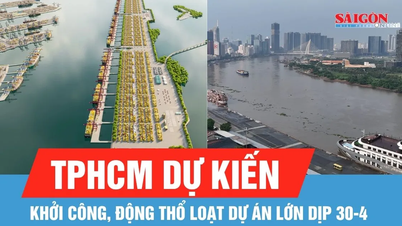
Ho Chi Minh City, the country's economic powerhouse, also received the largest allocation of public investment capital, over 152,241 billion VND, of which over 120,353 billion VND was allocated by the Prime Minister. As of November 27th, based on the allocated capital, Ho Chi Minh City's disbursement rate was approximately 60% (71,848 billion VND). While commendable, over 48,505 billion VND still needs to be disbursed in the final month of the year.
Under considerable pressure, the Ho Chi Minh City People's Committee has directed investors to accelerate the disbursement of funds for important projects and to expedite the settlement and finalization of accounts in order to achieve the public investment disbursement target for 2025.
Although there has been improvement, the disbursement of public investment capital after 11 months still falls short of expectations. The reasons cited include obstacles related to land clearance, institutional and policy issues, difficulties with raw materials, and the impact of administrative unit restructuring and the two-tiered local government model. One subjective reason is that the planning process has not been realistic enough and has not ensured the readiness of the projects.
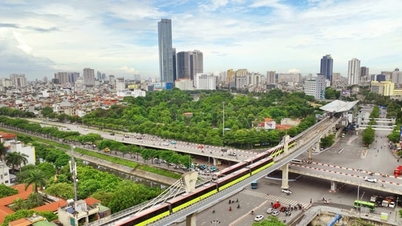
For Hanoi, the biggest challenge in public investment today is managing progress and quality. Delays in land clearance, frequent design changes, procedural obstacles, and a lack of synchronization in connecting infrastructure cause many projects to be prolonged, increasing costs and reducing investment efficiency. In addition, some large-scale strategic projects still require lengthy preparation times, delaying the realization of socio-economic benefits…
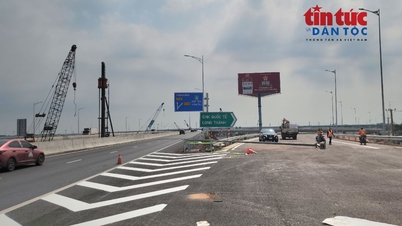
The uneven disbursement of funds across ministries, sectors, and localities, along with difficulties in disbursing funds for some large projects, especially in the fields of transportation infrastructure and high-tech investment, continues to be a major challenge.
According to economic experts, disbursing public investment capital is not only a financial task but also a responsibility for the sustainable development of the country. Relevant agencies need to act decisively, overcome existing problems and obstacles, and accelerate the disbursement process. National key projects, especially transportation infrastructure projects, will be crucial "nuclei" for driving strong economic growth in the coming period.
Therefore, in order to achieve the target of 100% disbursement of public investment capital in 2025, even greater efforts are needed from ministries, sectors, and localities during this "final push" period.
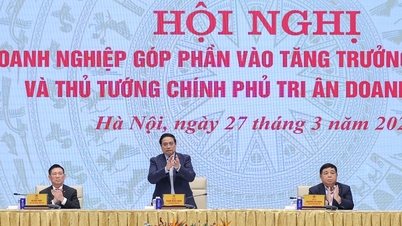
To accelerate progress and strive to achieve the goal of disbursing 100% of public investment capital, Prime Minister Pham Minh Chinh recently signed Official Dispatch No. 237/CD-TTg dated December 6, 2025, on accelerating the disbursement of public investment capital in the remaining months of 2025.
Accordingly, the Prime Minister requested Ministers, heads of central agencies, chairpersons of People's Committees of provinces and centrally-administered cities, and urged the Secretaries of Provincial and City Party Committees, Chairpersons of People's Councils, and Heads of National Assembly Delegations of provinces and centrally-administered cities to uphold their responsibilities and focus on directing the implementation of tasks more decisively, synchronously, promptly, and effectively.
“It is urgent to allocate the remaining planned capital for 2025 that has not yet been detailed for tasks and projects, and to take decisive and timely measures to accelerate the implementation and disbursement of public investment capital and national target program capital that has been allocated; to speed up the implementation of key national and important public investment projects, highways, key inter-regional projects, and projects with spillover effects...; this is a central political task associated with the responsibility of the heads of ministries, central agencies and localities,” the Prime Minister emphasized.
In addition, the Prime Minister requested the Ministry of Finance to publicly disclose weekly the implementation status and disbursement rates of ministries, central agencies, and localities through mass media.
According to Deputy Minister of Finance Tran Quoc Phuong, in its role as the agency responsible for disbursing public investment capital, the Ministry of Finance continues to recommend that the Government direct relevant units to strongly implement measures to improve the disbursement rate, especially for localities and ministries with a large volume of disbursement remaining.
At the local level, Hanoi needs to continue reviewing each project, classifying them into urgent groups, those that can be completed quickly, and those requiring adjustments. This classification helps optimize budget allocation, avoids fragmentation, and facilitates the concentration of resources on projects that can generate immediate development momentum.
With the decisive measures being implemented, the goal of disbursing 100% of public investment capital is expected to be fully achieved, contributing to the country's economic development in the next phase.
Source: https://baotintuc.vn/kinh-te/chang-ve-dich-von-dau-tu-cong-20251218083904850.htm

















































































Comment (0)