

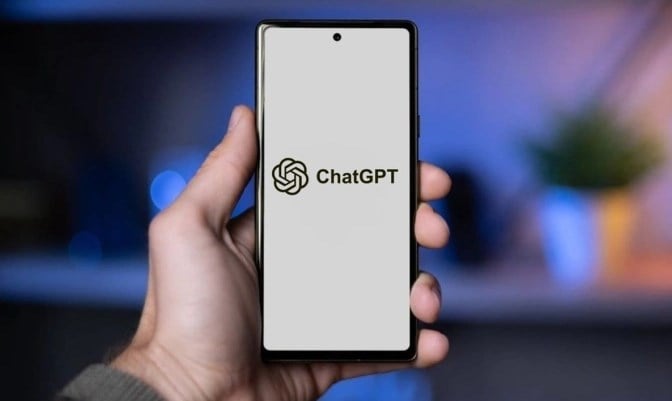
OpenAI, the parent company of ChatGPT, has confirmed this information. Accordingly, the ads being tested will be displayed in the free version of ChatGPT and the ChatGPT Go plan in the US market. Meanwhile, the paid plans such as Pro, Business, Enterprise, and Education will continue to maintain an ad-free environment.
The company emphasized that this aims to enable more users to utilize advanced AI tools without incurring any additional costs.
Addressing concerns that advertisements might disrupt or affect the quality of conversations, OpenAI has made clear commitments. They assert that advertisements will not influence the answers provided by the chatbot.
At the same time, the company does not share the content of users' conversations with advertisers. The goal of this trial is to learn and optimize.
"The focus of the experiment is learning. We closely monitor feedback to ensure the ads feel useful and blend seamlessly with the ChatGPT experience before scaling up," an OpenAI representative wrote on the blog.
In terms of format, ads will be placed outside the main ChatGPT reply section and clearly labeled "sponsored content". These ads are displayed based on the conversation topic and how users interact with it.
Notably, OpenAI stated that it will minimize the appearance of ads alongside sensitive topics such as health and politics , and will not target user accounts under 18 years of age.
OpenAI also gives users considerable control. Free users have two options: agree to view ads to continue using the full features, or opt out of ads but be limited in the number of messages they can send each day. Those who agree to view ads can disable ad personalization.
Additionally, there are options to prevent ChatGPT from using previous chat history to tailor ads, as well as to delete all ad data that the company has collected.
OpenAI's move isn't entirely unexpected. Late last year, there were speculations when some screenshots showed ad-like content appearing directly in ChatGPT responses, although OpenAI denied it at the time, calling it a faulty "suggestion."
Earlier this year, the company also quietly tested several internal advertising formats. This move was seen as necessary to cover the operating costs of its massive computing infrastructure serving hundreds of millions of users.
The emergence of advertising in the world of AI has also generated interesting reactions. Direct competitor Anthropic, the company behind the chatbot Claude, hasn't missed the opportunity to mock the idea.
In a commercial during the famous Super Bowl, they depicted a helpful AI conversation being abruptly interrupted by an awkward sales pitch, ending with the message: "Advertising is coming to AI, but not to Claude."
This shows that the competition in business models and user experience within the AI industry is becoming increasingly intense.
Source: https://baovanhoa.vn/nhip-song-so/chatgpt-bat-dau-co-quang-cao-203992.html



![[Image] Bridges and roads connecting the eastern part of Ho Chi Minh City](https://vphoto.vietnam.vn/thumb/1200x675/vietnam/resource/IMAGE/2026/04/16/1776328595108_ndo_br_bh-vt5-jpg.webp)





















































![[Infographic] Details of the Hanoi-Quang Ninh High-Speed Railway Project](https://vphoto.vietnam.vn/thumb/402x226/vietnam/resource/IMAGE/2026/04/16/1776338188424_anh-man-hinh-2026-04-16-luc-18-16-10.png)
![[Photo] National Assembly Chairman Tran Thanh Man meets with the Speaker of the Georgian Parliament](https://vphoto.vietnam.vn/thumb/402x226/vietnam/resource/IMAGE/2026/04/16/1776338494029_anh-man-hinh-2026-04-16-luc-18-21-21.png)





















Comment (0)