


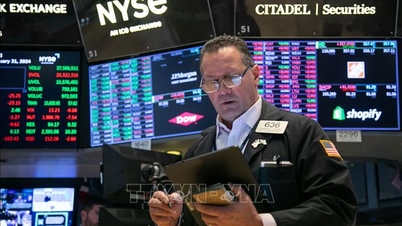
At the close of trading, the Dow Jones Industrial Average fell 42.36 points, or 0.09%, to 49,149.63, while the S&P 500 lost 37.14 points, or 0.53%, to 6,926.60 and the Nasdaq Composite technology index dropped 238.12 points, or 1%, to 23,471.75.
Michael O'Rourke, chief market strategist at JonesTrading in Stamford, Connecticut, said investors are looking to shift capital away from expensive mega-cap technology stocks and toward more defensive, value stocks. Technology stocks in the S&P 500 index fell, while more defensive sectors like consumer staples saw gains. The Russell 2000, which comprises smaller-cap stocks, closed at a record high.
Bank stocks also continued their recent decline following mixed quarterly earnings reports. The S&P 500 banking index fell, with Wells Fargo shares losing 4.6% after the company's fourth-quarter 2025 earnings failed to meet expectations. Shares of Citigroup and Bank of America also declined, even as both giants reported fourth-quarter 2025 earnings that exceeded Wall Street's forecasts.
After strong growth in 2025, financial stocks, including banks, reversed course and fell this week amid concerns over US President Donald Trump's proposed cap on credit card interest rates. JPMorgan executives warned that such a move could put pressure on consumers and hurt the financial industry's profits.
Michael O'Rourke noted that after a period of strong growth coupled with only average or mediocre earnings reports, the market is witnessing profit-taking and consolidation in the banking sector. However, he said that overall, investors remain optimistic about the sector.
Conversely, energy stocks rose as crude oil closed higher amid concerns about potential supply disruptions from Iran.
Investors also took note of data released on January 14th, which showed that the US Producer Price Index (PPI) for November was in line with expectations, but retail sales exceeded those of the past month. Earlier data indicated that consumer prices rose as anticipated in December.
According to data from LSEG, the US Federal Reserve is expected to keep interest rates unchanged in the first half of this year, including at its January meeting, and traders are anticipating at least two interest rate cuts before the end of 2026.
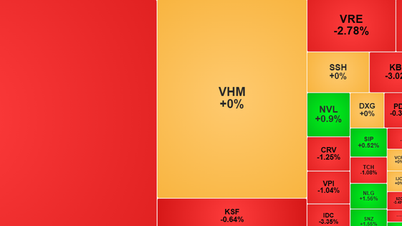
In Vietnam, at the close of trading on January 14th, the VN-Index fell 8.49 points (0.45%), closing at 1,894.44 points. The HNX-Index rose 0.47 points (0.19%) to 253.32 points.
Source: https://baotintuc.vn/thi-truong-tien-te/chi-so-nasdaq-dan-dau-da-giam-บน-pho-wall-20260115073455689.htm







































































































Comment (0)