|
Ms. Nguyen Thi Kieu (Binh Phu ward) receives regular home visits from the Healthcare team for check-ups and basic tests. Photo: Duy Hieu. |
Mrs. Nguyen Thi Kieu (from Binh Phu ward) stood by the door, her eyes wide with surprise as she watched the smiling strangers in the yard. Only when she heard her children and grandchildren warmly greeting her did the 64-year-old woman believe that doctors had actually come to her home to examine her.
For many years, the debilitating arthritis and diabetes have made each trip to the hospital a grueling ordeal for her. Sitting in her armchair in the living room, watching the doctor carefully measure her blood pressure, Mrs. Kieu couldn't hide her emotion.
An unprecedented campaign is being carried out simultaneously across Ho Chi Minh City.
In mid-April, an unprecedented large-scale health campaign took place simultaneously across Ho Chi Minh City. From central health centers to even the smallest houses in remote alleys, residents gained proactive, free, and virtually "hand-delivered" access to healthcare services. This groundbreaking step is completely changing how urban residents take care of their own health.
This is considered a major step forward for the city's healthcare sector, and a concrete implementation of the policy to strengthen primary healthcare and manage public health in accordance with Resolution 72 of the Politburo on reforming the healthcare system towards prevention, proactiveness, and comprehensiveness.
Thanks to this large-scale screening, many people have been able to detect the disease in its early stages. For example, Mr. Khuong (73 years old, Hiep Binh ward), despite previously only having routine blood pressure checkups, was found to have a thyroid nodule this time. Similarly, Mrs. Chau (75 years old, Hiep Binh ward) was surprised to receive abnormal thyroid results after years of neglecting screening.

|
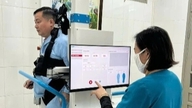
Patients undergoing radiotherapy at the Ho Chi Minh City Oncology Hospital. Photo: Duy Hieu. |
Unlike traditional approaches, this is the first time the Ho Chi Minh City health sector has organized mobile healthcare teams to go directly to people's homes, prioritizing the elderly, vulnerable groups, and those in difficult circumstances. The seemingly "accidental" findings from this trip represent a golden opportunity for people to receive early intervention, avoiding serious consequences later on.
According to preliminary statistics from the Ho Chi Minh City Department of Health, on the very first day of the campaign, 103 hospitals and health centers simultaneously launched operations in 168 wards and communes, recording 29,687 visits for free screening.
Notably, initial screening results showed that as many as 19,088 cases (64.3%) were found to have health problems. Treatment classification revealed:
- 10,634 people were transferred to local health stations for monitoring and management.
- 8,447 cases presented with complex medical symptoms requiring referral to a higher level of care or specialized examination.
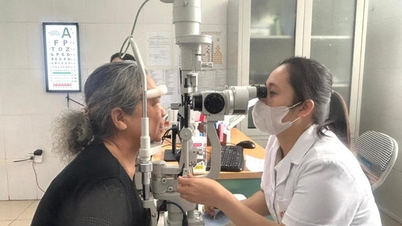
In the disease category, non-communicable chronic diseases such as hypertension, diabetes, and cardiovascular diseases continued to dominate with 16,175 consultations, of which more than 7,100 patients were included in the long-term treatment management list. In addition, the campaign also expanded specialized screening to include cancer, obstetrics and gynecology, ophthalmology, dentistry, dermatology, hepatitis, etc., to detect dangerous abnormalities early and allow for timely intervention.

|
Mr. Nguyen Manh Cuong, Vice Chairman of the People's Committee of Ho Chi Minh City, said the city aims for 100% of its citizens to receive at least one health check-up by 2026. Photo: Duy Hieu. |
Seven solutions to accelerate progress so no one is left behind.
Following initial successes, Ho Chi Minh City is entering an accelerated phase with the goal of bringing health check-up services to all nearly 14 million people this year. Associate Professor Dr. Tang Chi Thuong, Director of the Ho Chi Minh City Department of Health, said that the health sector has identified seven key solutions to achieve the goal of universal health check-ups.
These solutions focus on expanding health check-up points from hospitals and health centers to businesses, schools, residential areas, and providing home visits for the elderly and people with disabilities. Simultaneously, a model for health check-ups that is not dependent on administrative boundaries will be implemented to facilitate access for the public.
In parallel, every time people visit a healthcare facility for any reason, from medical examinations and treatment, follow-up appointments for chronic diseases, prenatal checkups, to vaccinations, they will be able to complete their routine health check-ups if they haven't already.


|
For the first time, the health sector in Ho Chi Minh City organized free health check-ups and screenings for the public on a large scale. Photo: Duy Hieu. |
The Dashboard system will also be upgraded from a statistical tool to a real-time management platform. This will help local authorities accurately track the number of people who have been examined and those who have not, and proactively organize examinations or home visits for special cases.
The city is also stepping up inspections of the implementation of regular health check-ups for workers, while promoting communication to foster the habit of regular health check-ups in the community.
Practical experience after one month of implementation shows that localities with decisive leadership from their heads have achieved higher progress. This confirms that universal health check-ups are not only the responsibility of the health sector but also require the synchronized participation of the entire political system, businesses, and every citizen.
The goal is not only to complete the 2026 plan but also to lay the foundation for a proactive healthcare model. Every citizen will have an electronic health record, enabling continuous health management and early intervention starting from the primary healthcare level.
A lifetime "health passport"
In anticipation of the 50th anniversary of the official renaming of Saigon - Gia Dinh City to Ho Chi Minh City (July 2, 1976 - July 2, 2026), the city's health sector is gradually realizing the goal of building electronic health records for every citizen.
An electronic health record is only truly valuable when it fully and continuously reflects the health and disease progression of each individual over time. What seemed incredibly difficult to achieve on a scale of nearly 15 million people is now gradually becoming a reality thanks to two core data sources.

|
Electronic health records accumulate both lifetime health data and lifetime disease data for each individual. Photo: Medinet . |
First is lifecycle health data. This data is generated from the nationwide health check-up program. According to the plan, every citizen will receive a routine health check-up at least once a year. The results of each check-up will be standardized and automatically updated to their electronic health record.
Over the years, indicators of physical condition, blood pressure, blood sugar, blood lipids, organ function, risk factors, screening results, and risk stratification will be continuously updated, forming a data series reflecting the changes in each person's health from when they were healthy.
Secondly, there is the lifecycle data system. Alongside health check-ups, the Ho Chi Minh City Department of Health is urgently developing a healthcare data warehouse, expected to be completed by the end of 2026. Once this system is operational, medical examination and treatment data for citizens at hospitals and healthcare facilities in the city will be interconnected, standardized, and directly integrated into electronic health records.

Vietnam encourages US businesses to expand investment in high technology.On the morning of June 26th, at the Government Headquarters, Deputy Prime Minister Ho Quoc Dung received Mr. Jeff Place, Supply Chain Director of Coherent Group (USA). During the meeting, the Deputy Prime Minister affirmed that Vietnam encourages US businesses to expand investment, especially in high-tech, innovation, and semiconductor industries. Every time a person visits a doctor, receives inpatient treatment, undergoes surgery, has tests, diagnostic imaging, or takes medication, the system automatically records this information to create a medical history, reflecting the individual's complete healthcare record.
By combining the National Health Check-up Program with the Health Sector Data Warehouse, Ho Chi Minh City is gradually realizing its goal: Every citizen will have a complete and continuously updated electronic health record throughout their lifetime; all professional decisions and health policies will be built on a big data platform, aiming for a smart, modern, and people-centered healthcare system.
Source: https://znews.vn/chiec-ho-chieu-dac-biet-cua-nguoi-dan-tphcm-post1646946.html









![[Image] National conference summarizing one year of operation of the overall organizational model of the political system, the three-tiered government model.](https://vphoto.vietnam.vn/thumb/1200x675/vietnam/resource/IMAGE/2026/07/01/1782882811691_ndo_br_1-jpg.webp)