

In the history of our nation's struggle for national liberation and defense, national hero Le Hoan not only made immense contributions to the war against the Song Dynasty, the pacification of Champa, and the preservation and consolidation of national independence, but also had many merits in diplomacy , building and developing the Great Viet nation.
 Le Hoan Temple in Trung Lap village, Xuan Lap commune (Tho Xuan district). Photo: Nguyen Dat
According to historical records: Le Hoan (941-1005) was born in Xuan Lap, Ai Chau (now Xuan Lap commune, Tho Xuan district). Le Hoan's childhood was marked by hardship and poverty. He was born without knowing his father and lost his mother at the age of six, but he was fortunate to be taken in and raised by an official named Le. At the age of 16, Le Hoan joined the army of the hero Dinh Bo Linh, participating in suppressing the rebellion of the Twelve Warlords. With his talent and resourcefulness, he earned the trust of the soldiers and was given command of 2,000 troops. In 971, at the age of 30, Le Hoan was promoted by Dinh Bo Linh to the rank of Ten-Commandment General, the supreme commander of the entire army. This was a recognition of his merits and contributions.
For nine years as the Commander-in-Chief of the Ten Divisions, Le Hoan devoted himself wholeheartedly to building a powerful army, wholeheartedly supporting the Dinh Dynasty. At that time, the country was peaceful, partly due to the dedication and talent of the general in charge of the army. However, the work of building a unified nation and stabilizing the government did not last long before a major upheaval occurred at the end of 979. Do Thich, driven by his ambition to become king, murdered King Dinh Tien Hoang and his eldest son, Dinh Lien. Afterward, the court enthroned the second son, Dinh Toan, and Le Hoan was appointed regent. Some officials, fearing that Le Hoan would overshadow Dinh Toan, attempted to rebel and left Hoa Lu. However, with his intelligence and resourcefulness, Le Hoan quickly suppressed these internal rebellions.
No sooner had internal strife been quelled than external enemies arose. Upon hearing of the death of Emperor Dinh Tien Hoang, and with Dinh Toan succeeding at a young age, the court officials were embroiled in infighting and killing each other. Taking advantage of this, the Song dynasty launched an invasion. At this critical moment, the nation's survival was at stake, and the responsibility of steering the ship of Dai Co Viet was entrusted to Le Hoan by Empress Dowager Duong Van Nga and the generals. In 980, Emperor Le Dai Hanh ascended the throne, beginning the Early Le Dynasty. His first task was to stabilize the court and urgently organize resistance against the invading Song army. On the Song side, they launched an invasion of our country in June of the year Canh Thin (980), mobilizing 30,000 troops with many experienced generals. By February of the year Tan Ty (981), the Song army had invaded our country. In March 981, Hou Renbao and Sun Quan Hung led their troops into Lang Son ; Tran Kham To led his troops to Tay Ket; Luu Truong led his naval forces into the mouth of the Bach Dang River.
On our side, the king led the army to intercept the enemy. By sea, the king ordered troops to plant stakes in the Bạch Đằng River to block enemy warships. The enemy's naval forces suffered a defeat on the Bạch Đằng River after many fierce battles. On land, unable to coordinate with the naval forces and facing fierce resistance from our troops, the Song army was forced to retreat. Taking advantage of the victory, our army continued the pursuit and annihilated many enemy forces. The army commanded by Trần Khâm Tộ advanced into Tây Kết, but upon hearing that the two land and naval forces of Hầu Nhân Bảo and Lưu Trùng had been routed, panicked and led their troops back. The king led his army to intercept them, and Trần Khâm Tộ's army suffered a crushing defeat, with more than half of them killed. The enemy's corpses littered the fields. We captured two enemy generals, Quách Quân Biện and Triệu Phụng Huân, and brought them back to the capital, Hoa Lư. In a short period of time, with his military talent combined with skillful diplomacy, King Le Dai Hanh commanded his troops to defeat three invading Song Dynasty armies, thwarting their ambition to invade our country.
After defeating the Song army, Le Dai Hanh immediately thought of punishing Champa, a country that had always been aggressive towards Dai Co Viet in the south. In 982, our navy, commanded by Le Hoan, crossed the sea and advanced south, directly attacking the Champa capital, Indrapura. This was the first southern campaign in the history of our nation's founding. From then on, the Champa king had to pay annual tribute and pledge allegiance, further consolidating the independence of Dai Co Viet. Le Hoan's achievement of defeating the Song and pacifying Champa is a glorious feat in the history of the nation.
In the Complete Annals of Dai Viet, Ngo Si Lien wrote: "The king was victorious wherever he fought, beheading the King of Champa to avenge the humiliation of the barbarian invaders capturing envoys, and crushing the Song army to thwart the king's and his ministers' sure-win strategy. He can be called the greatest hero of his time."
With those glorious victories, Emperor Le Dai Hanh demonstrated outstanding military talent, superb martial skills, and was a victorious general in the history of our nation's struggle for national liberation and defense. But his genius was not limited to military matters; under the reign of Emperor Le Dai Hanh, Dai Co Viet also achieved many successes in economics, diplomacy, military affairs, and culture.
In the cultural sphere, King Le Dai Hanh paid special attention to the "cultural and ideological" life, protecting and promoting the nation's ancient cultural heritage. Talented dancers and singers of the time, such as Duong Thi Nhu Ngoc and Pham Thi Tram, were bestowed the title of "Uu Ba" by the king and ordered to teach dance and singing to soldiers. This not only preserved the ancient cultural heritage of their ancestors but also motivated the soldiers to dedicate themselves to their military careers.
Furthermore, he was very interested in developing agriculture, handicrafts, small-scale industries, and fine arts. Blacksmithing, pottery, and silk weaving were also expanded and developed throughout the provinces, promptly serving the people's lives and national defense (according to An Nam Chi Luoc, in 985 Emperor Le Dai Hanh used one ton of white silk in diplomatic ceremonies with the Song dynasty. This shows how prosperous the silk industry was at that time).
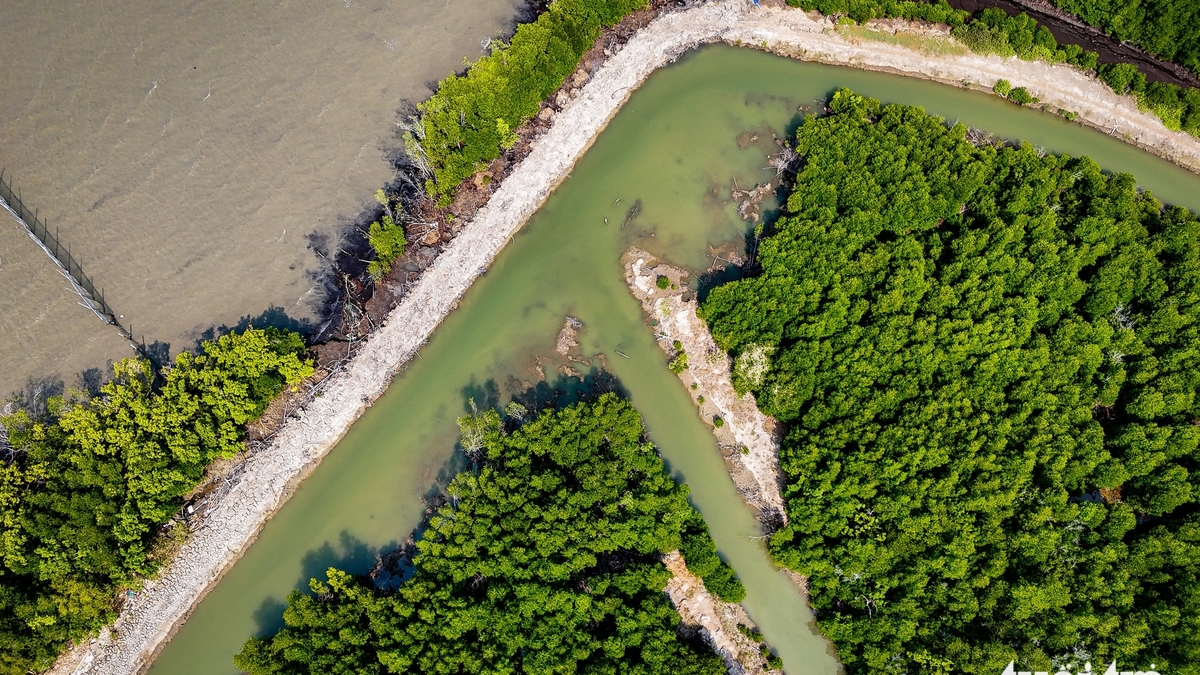
At the same time, he was also the first person recorded in history to advocate for digging canals and building roads. In Thanh Hoa, the Le Dynasty canal, the section flowing through Nghi Son town, bordering Nghe An province, was the first canal dug, formed during the reign of King Le Dai Hanh to connect waterways from the capital Hoa Lu to the Ngang Pass - the border between Dai Co Viet and Champa. During the feudal era, the Le Dynasty canal played an important role in transporting military supplies, expanding territory to the south, and developing agriculture. Over time, the Le Dynasty canal remains a valuable waterway system.
Because of his skillful and comprehensive leadership of the Great Viet Kingdom in all aspects, historians and scholars like Ngo Thi Si and Phan Huy Chu unanimously assessed the state of the Great Viet Kingdom and its economic, cultural, and social development: “Chinese envoys had to show reverence, mountain chieftains ceased rebellion. Hoa Lu Citadel prospered more than during the Dinh Dynasty. He paid attention to the people's well-being, cared about national affairs, focused on agriculture, strictly enforced border defense, and established laws. He was extremely diligent and wholeheartedly concerned about the selection of soldiers.”
With his outstanding strategic brilliance, Emperor Le Dai Hanh was not only a quintessential hero of the Vietnamese nation in defeating the Song Dynasty and pacifying Champa, but also successfully completed a pivotal task of the 10th century, ushering in a new, more glorious and brilliant era for the nation. His talents and virtues will be remembered in history, forever serving as a shining example for future generations to be proud of and to enhance their sense of responsibility in working together to build a more prosperous and beautiful homeland.
Nguyen Dat
This article uses material from the books "The Context of Establishing Thang Long as the Capital and the Career of Le Hoan" (Hanoi Publishing House) and "King Le Dai Hanh and His Hometown Trung Lap Village" (Thanh Hoa Publishing House - 2013).
Source

![[Photo] General Secretary and President To Lam meets with National Assembly delegates from ethnic minorities.](https://vphoto.vietnam.vn/thumb/1200x675/vietnam/resource/IMAGE/2026/04/20/1776696701056_a1-bnd-8331-3342-jpg.webp)
![[Image] National Assembly discusses the implementation of the socio-economic development plan.](https://vphoto.vietnam.vn/thumb/1200x675/vietnam/resource/IMAGE/2026/04/20/1776696707422_ndo_br_img-20260420-185419-jpg.webp)


































































Comment (0)