

Many low-interest loan packages and government subsidies are available.
Observations in Ho Chi Minh City show that by December 2025, the city had developed over 1,100 OCOP products achieving 3-4 star ratings. For OCOP producers, various financial and credit support measures are currently being implemented in parallel with other initiatives.
Accordingly, Resolution 09/2023/NQ-HĐND has been expanded in terms of both geographical scope and beneficiaries. Household producers, cooperatives, and small businesses developing OCOP models throughout the city can access loans from the Ho Chi Minh City Financial Investment Company (HFIC) up to a maximum of 200 billion VND per project. Local budgets will subsidize 50% to 100% of the interest rate, depending on the type of business.
In addition, the Department of Agriculture and Environment has completed the draft resolution on encouraging the restructuring of urban agriculture applicable to the entire city (after the merger). This includes a maximum interest rate subsidy of up to 100% for OCOP (One Commune One Product) businesses. Furthermore, investors developing 4-star and 5-star OCOP products will receive an 80% interest rate subsidy from the city budget to purchase seeds, materials, feed, fuel, and pay for labor.
In other provinces and cities, credit financing for OCOP models is also thriving. For example, in Dong Thap and Tay Ninh, by the end of 2025, outstanding loans to OCOP cooperatives producing key agricultural products such as rice, catfish, mangoes, durian, and ornamental flowers are expected to reach nearly 27,000 billion VND. In Can Tho, as of November 2025, approximately 850 billion VND has been lent by banks to collective economic models, mainly OCOP entities and cooperatives producing under value chain linkage models.
Meanwhile, in An Giang and Ca Mau provinces, small-scale OCOP cooperatives have accessed tens of trillions of VND in preferential interest rate loans from banks. Banks such as Agribank, BIDV, and KienlongBank are currently providing very effective loans with credit packages specifically for OCOP customers, such as Agribank's 2,000 billion VND credit package with interest rates 2% lower than regular loans and a maximum limit of 1 billion VND per project; and KienlongBank's 1,000 billion VND "Accompanying OCOP" credit package with preferential interest rates reduced by 1.2-2% per year for OCOP customers with 3 stars or higher.
According to a representative from Agribank An Giang, thanks to preferential loans, more than 1,500 businesses and cooperatives in the locality have successfully developed OCOP products, contributing to the development of many traditional craft villages, such as: dried fish processing, reishi mushroom production, Centella asiatica wine, cherry wine, etc.
 |
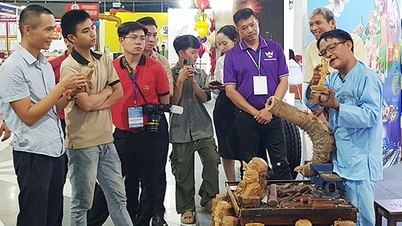
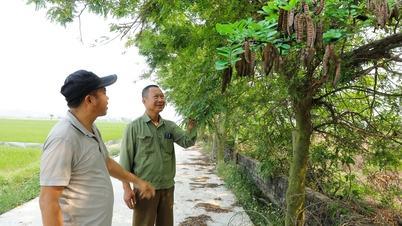
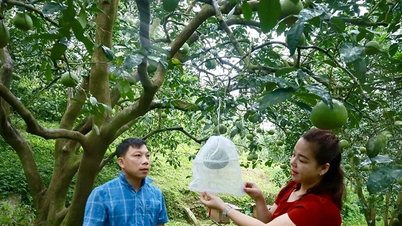
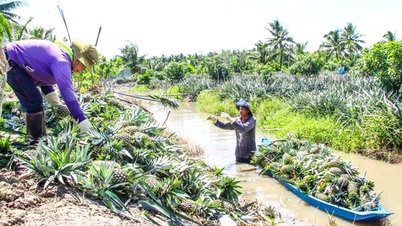
| Many OCOP product manufacturing facilities have received investment capital and financial services from banks. |
Potential and safe credit segments
According to the Ministry of Agriculture and Environment, the OCOP program has had a strong impact in recent years, promoting a shift in production mindset from small-scale to value chain linkages. Statistics show that currently, about 60.7% of OCOP entities have achieved 3 stars or higher, with an average annual revenue growth of 17.6%, creating a "multi-value" rural economic ecosystem. OCOP models are also opening up sustainable livelihood development opportunities, attracting 40% of participants who are women and 19.6% who are ethnic minorities. Many products have reached the global market, exported to more than 60 countries.
In terms of credit investment, commercial bank branches in the Mekong Delta region report that OCOP customers in particular, and cooperatives involved in closed-loop agricultural production chains in general, are currently considered low-risk and high-return customer groups for capital investment.
Mr. Nguyen Van Hoang, Deputy Director of Agribank An Giang, believes that the OCOP (One Commune One Product) program is a promising segment because cooperatives and business households have received support and advice, improved management capacity, and technology application, thereby creating high-quality products that are easy to control and have a high return on investment. By engaging with OCOP programs, banks also have the opportunity to experiment with flexible lending models, apply digital technology, and connect with e-commerce. This increases the likelihood of capital recovery and allows for the development of financial products more suitable to practical needs.
A representative from BIDV Ca Mau also stated that the strong development of the OCOP model creates a sustainable customer base for credit institutions, enabling them to increase credit growth in priority sectors such as production, processing, and export. Many OCOP cooperatives, after consolidation, have transparent finances and stable revenue; some models have adopted high technology, supply chain management, and strong brand development. Therefore, opportunities to access unsecured loans from banks will also improve, creating greater control over working capital.
However, according to commercial bank branches in the Southwest region, lending to OCOP (One Commune One Product) customers is currently not without its difficulties and shortcomings. Most notably, while cooperatives are certified under the OCOP program, their individual members do not have separate certificates, making it difficult for them to obtain personal loans.
To address these obstacles, commercial banks are currently approaching the issue by developing preferential loan packages based on OCOP product rankings, offering interest rates 2-3% lower, and prioritizing unsecured loans for cooperatives with transparent and feasible projects. In addition, some banks are also collaborating on digital transformation, providing comprehensive support from production to processing and consumption, and offering management consulting. However, to further increase credit flow to this customer group, ministries, departments, and localities need to continue supporting OCOP models, improving management capacity, especially financial management; and simultaneously increasing budgetary support to create a source of capital to support and share risks with banks.
Source: https://thoibaonganhang.vn/cho-vay-ocop-ngay-cang-mo-rong-175903.html

![[Photo] General Secretary and President To Lam holds telephone conversation with Chairman of the Liberal Democratic Party of Japan and Prime Minister of Japan Takaichi Sanae](https://vphoto.vietnam.vn/thumb/1200x675/vietnam/resource/IMAGE/2026/04/13/1776077840503_a1-bnd-7942-6402-jpg.webp)
![[Photo] General Secretary and President To Lam presents the Politburo's Decision on personnel matters to 4 Party Committees directly under the Central Committee.](https://vphoto.vietnam.vn/thumb/1200x675/vietnam/resource/IMAGE/2026/04/13/1776077847172_a1-bnd-8005-950-jpg.webp)


![[Image] Expediting land clearance at Alley 310 Nghi Tam to facilitate the construction of Tu Lien Bridge](https://vphoto.vietnam.vn/thumb/1200x675/vietnam/resource/IMAGE/2026/04/14/1776160406551_ndo_br_z7724148990408-9e5d4777e3c4504998b4286178b2e66e-jpg.webp)






















![[Photo] Prime Minister Le Minh Hung and Prime Minister Robert Fico attend the Slovakia-Vietnam Business Forum](https://vphoto.vietnam.vn/thumb/1200x675/vietnam/resource/IMAGE/2026/04/13/1776075264359_ndo_br_dsc-6775-jpg.webp)

























































Comment (0)