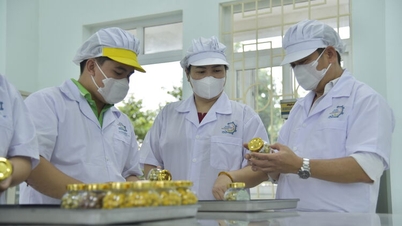
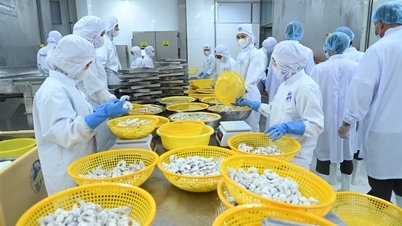
From being a "backup" option, this education system is gradually becoming a flexible and suitable path, opening up many learning and career opportunities for learners.
"Early morning route" for many students
Ho Chi Minh City is entering its largest-ever 10th-grade enrollment season, putting significant pressure on the education system. According to statistics, this year the city has over 169,000 students graduating from 9th grade, an increase of nearly 43,000 compared to last year. Given the sharp increase in the number of candidates, the Department of Education and Training anticipates that approximately 70% of students will be admitted to public high schools, meaning the remaining 50,000 will have to find other options after graduating from junior high school. Therefore, the pressure extends beyond the exam itself, posing a challenge in choosing suitable options based on each student's abilities and circumstances.
In this context, post-grade options are becoming increasingly diverse, ranging from private schools and continuing education centers to vocational training. Notably, there has been a clear shift in trends, with many students and parents proactively making early decisions, not waiting for exam results. Instead of focusing on private schools as before, many students are now enrolling in continuing education centers and vocational training centers. This shows that this educational system is gradually becoming a proactive choice, better suited to real-world needs.
In fact, observations from last year's enrollment season show that many continuing education centers and vocational training centers in Ho Chi Minh City had already filled nearly two-thirds of their enrollment quotas before the announcement of the 10th grade entrance exam results. The majority of these were students who did not take the exam but chose to register early to secure a place. Conversely, after the stressful exam concluded, many parents found themselves in a difficult situation when their children failed all three of their preferred public high school choices, rushing to centers only to be disappointed because all the slots had been filled.
According to Mr. Huynh Huy Vu, Director of the Continuing Education Center, Hoc Mon Vocational Education and Continuing Education Center (Xuan Thoi Son commune), at that time many centers became very popular, and enrollment quickly met targets. For the 2025-2026 school year, the center enrolled 8 classes, and it is predicted that the number of applications will continue to increase this year. To meet the actual demand, the center has added more teachers and plans to expand its scale to 9 classes with approximately 450 students.
Mr. Vu commented: "Given the increasing population pressure and learning needs, continuing education is no longer a 'last resort' option as before, but is being proactively considered by many students and parents due to its cost advantages and post-graduation opportunities."
Sharing the same view, Mr. Do Minh Hoang, Director of Chu Van An Continuing Education Center (An Dong Ward), said that even before the entrance exam for 10th grade, many centers in various localities had already received a large number of applications. This shows the early interest of students, especially in densely populated areas with high competition rates. According to him, if students do not proactively research and register early, many may have to study far from home or be forced to switch to other options such as vocational schools or private schools because continuing education centers have already filled up their places.



Flexibility, cost savings, and expanded career opportunities.
According to Mr. Nguyen Minh Kha, Director of the Vocational Education and Continuing Education Center of District 4 (Khanh Hoi Ward), before each entrance exam for grade 10, the center receives about 30 early applications. Last academic year, the center enrolled 5 classes with 175 students; this year, it is expected to enroll 5 classes but increase the number to 190 students. On average, the number of registered students increases by 10-15% each year, showing that the demand for education at continuing education centers is growing.
“This increase reflects the growing confidence of parents and students in continuing education in the context of continuously improving training quality. The high school graduation rate at the center in recent years has consistently been above 95%. Students still participate in the national high school graduation exam and receive diplomas equivalent to those of students from regular high schools.”
In addition, flexible study schedules help reduce pressure, creating conditions for students to proactively self-study, improve their physical fitness, or participate in labor to support their families. Especially, many centers have partnered to provide vocational training at the intermediate level, helping students, after graduation, not only obtain a high school diploma but also a vocational certificate, ready to enter the labor market,” Mr. Kha said.
Mr. Do Minh Hoang also noted that continuing education is gradually becoming a proactive choice for many families. While previously it was often considered a "last resort" option for those who failed to get into public high schools, now more and more students are choosing it from the start due to its flexibility and clear career orientation. Improved training quality and curricula that align with the need for early vocational training and access to the labor market have contributed to the increased attractiveness of this system.
However, to maintain and develop sustainably, Mr. Hoang believes that continuing education centers and vocational training centers need to continue improving overall quality, from curriculum and teaching staff to facilities. At the same time, strengthening vocational training partnerships, increasing practical training opportunities, and providing clear job placement guidance for graduates are key factors.
"Only by ensuring the quality of training and the outcomes for students can centers become reliable learning destinations. Then, learners will not only have a place to continue their studies, but also opportunities for long-term, sustainable development. Conversely, if quality is not improved, continuing education will only serve to meet the need for temporary learning spaces, lacking appeal and failing to build trust," Mr. Hoang emphasized.
Sharing the same view, Mr. Huynh Huy Vu believes that the appeal of continuing education stems from several factors. First, the quality of training is increasingly affirmed with a high graduation rate, approaching that of regular high schools; students still receive a high school diploma like students from public schools.



Furthermore, the training program combines general education and vocational training, with some content even being provided free of charge, giving students more options: continuing their education at university or college while also being ready to enter the labor market after graduation. In addition, the low tuition fees are a significant advantage, especially suitable for the children of workers and laborers, contributing to expanding access to education for a wider range of people.
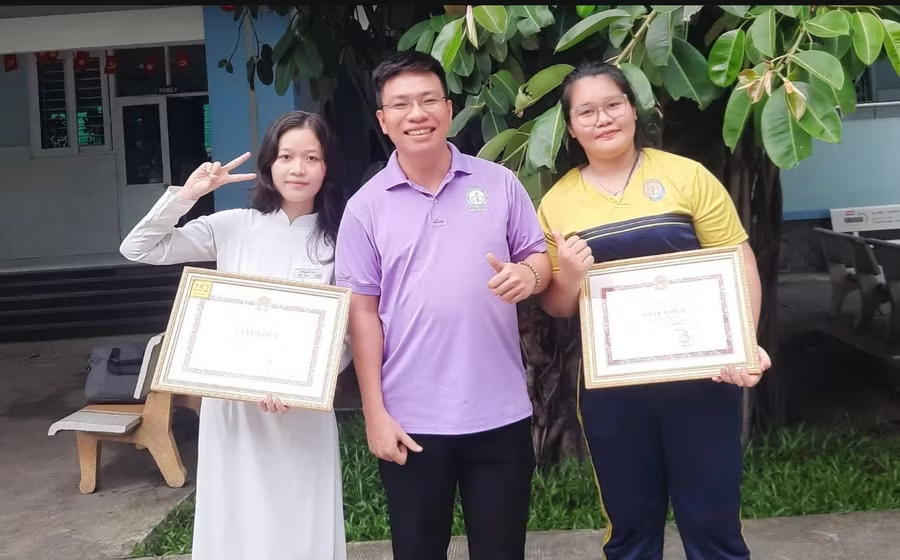
Doan Hoai Khanh Ly, a student at Ho Chi Minh City Open University, shared: “I failed to get into three public high schools and chose to pursue a continuing education program. Overcoming my insecurities, I worked hard and achieved 27.75 points in the C20 subject combination in the 2025 High School Graduation Exam, becoming the top-scoring student in the entrance exam at Ho Chi Minh City Open University. In my opinion, opportunities exist in any environment if you truly strive. The programs at continuing education centers are still implemented seriously according to the regulations of the Ministry of Education and Training, and the dedication and support of the teachers have further motivated students to confidently strive for success.”
Source: https://giaoducthoidai.vn/chu-dong-lua-chon-trong-mua-tuyen-sinh-post775440.html



![[Photo] A phone-free summer afternoon at the village library](https://vphoto.vietnam.vn/thumb/1200x675/vietnam/resource/IMAGE/2026/06/27/1782551770949_anh-1-jpg.webp)
![[Photo] Thousands of people participate in a run to show their support for the campaign "Sharing a common determination to build drug-free communes, wards, and special zones".](https://vphoto.vietnam.vn/thumb/1200x675/vietnam/resource/IMAGE/2026/06/27/1782554475933_0673e2a3df7b5e25076a-8283-jpg.webp)