

 |
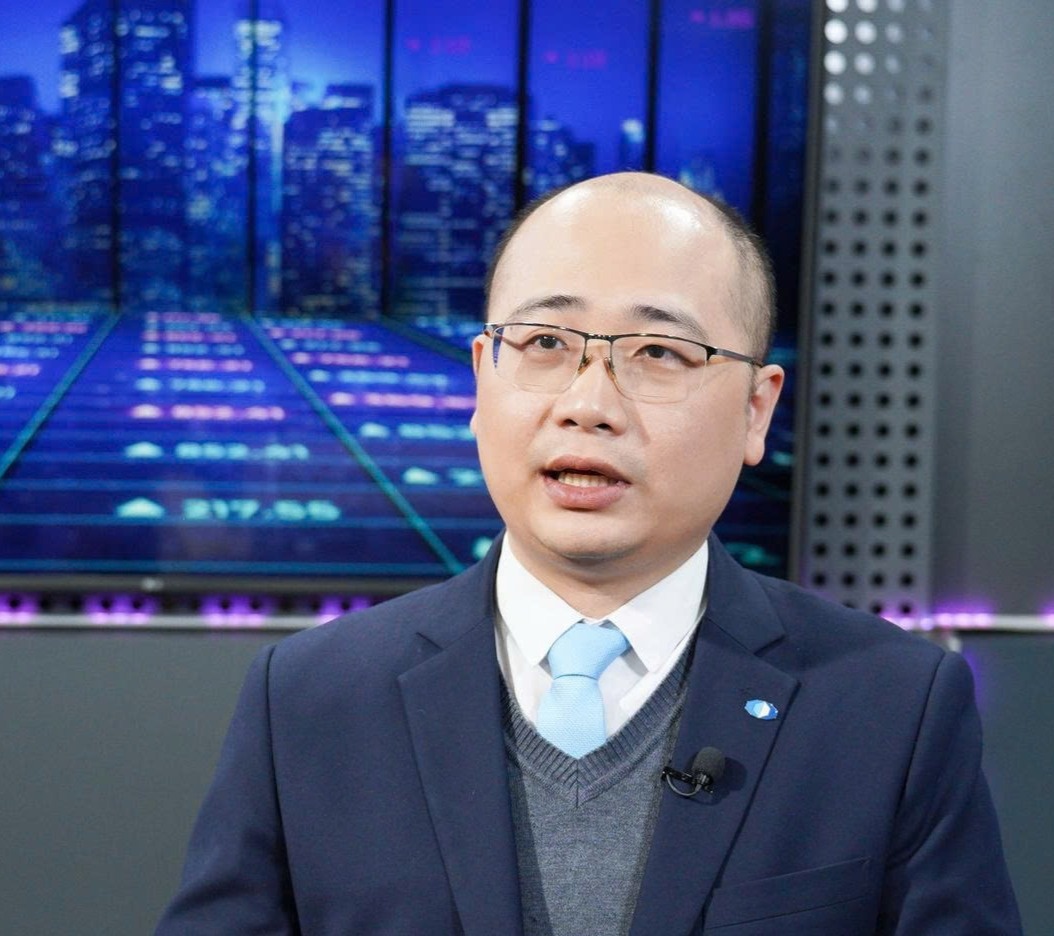
| Mr. Le Quang Chung, Deputy General Director of Smart Invest Securities Joint Stock Company (AAS) |
Opportunities arise, along with certain conditions.
Assessing the economic growth target of 10% for 2026, Mr. Le Quang Chung stated that this is a challenging goal, but not without a basis for achievement. The first important foundation lies in the growth results of 2025, when the Vietnamese economy recorded a growth rate of over 8%, creating a new groundwork for the next period.
In this context, the policy framework is perceived to be clearer and more decisive than in previous periods. The issuance of major resolutions, including Resolution 79 on the development of the state-owned economy, shows a focus on allocating resources to key state-owned enterprises, those capable of leading and spreading growth. The policy goes beyond simply setting goals; it also demonstrates a determination to remove institutional and procedural bottlenecks and improve implementation, thereby creating a foundation for the economy to accelerate in the coming period.
Another key pillar emphasized is public investment. In 2026, the disbursement of public investment is expected to continue to be a crucial support for growth, not only directly contributing to GDP but also creating a strong ripple effect on related sectors such as construction, materials, logistics, and consumption. As disbursement progresses substantially, public investment will act as a "leading channel" for the entire economy.
Furthermore, the export outlook for 2026 is considered more positive thanks to the gradually recovering global economy. The US Federal Reserve's (Fed) interest rate reduction cycle, along with improved demand in major markets such as the US and EU, is seen as a supporting factor for Vietnam's key export sectors. Trade data shows that US imports from Southeast Asia increased sharply in 2025, reflecting the trend of supply chain restructuring and shifts in the origin of goods, with Vietnam emerging as a clear beneficiary.
Alongside external drivers, stable domestic consumption is considered a crucial internal strength. As incomes gradually recover and consumer sentiment improves compared to the 2023-2024 period, domestic consumption is expected to become a supporting pillar, helping to balance growth in the context of a global economy that still harbors many uncertainties.
Alongside the foundations for achieving growth targets, challenges and risks are also clearly identified. First, the high comparative base of 2025 narrows the room for breakthroughs in 2026, requiring the economy to have new, breakthrough drivers.
A notable constraint is that as inflation tends to rise, the room for further policy easing is limited. Credit growth is projected at around 15%, while the GDP growth target is 10%, creating a complex balancing act.
According to past practices, achieving double-digit GDP growth typically requires a 20-23% increase in credit. Tighter credit controls could therefore become a challenge to growth if not offset by efficient capital utilization and other drivers.
Furthermore, external risk factors such as protectionist trade trends, supply chain fluctuations, and geopolitical risks remain present. These factors can impact exports, capital flows, and market sentiment, requiring proactive management and flexible adaptability from the economy.
Strong differentiation and a need for selective strategies.
From a market perspective, the first stock trading sessions of 2026 showed positive signs regarding liquidity and cash flow. Seasonal factors at the beginning of the year, along with the readiness of cash flow to return after a period of declining liquidity, created notable upward movements.
More importantly, a new sense of optimism is emerging as investors begin to price in the narratives of 2026, including higher economic growth, improved business results, and the prospect of a market upgrade. The diversification of capital flows across multiple stock groups, rather than concentrating on a few large-cap stocks, is seen as a positive structural signal, indicating that the market is entering a healthier phase with a more sustainable upward trend.
However, the overall outlook for 2026 is not viewed as a "win-win" scenario. The market is projected to be highly differentiated, with clear priorities and focal points. Supporting factors such as better economic growth, upgrade expectations, and reasonable interest rates will lay the foundation for an upward trend, but the degree of benefit will vary among industries and businesses.
In this context, the need to improve the quality of goods on the market has also arisen. Developing new products such as ETFs, expanded derivatives, or a more transparent corporate bond market is seen as a necessary condition to attract large and long-term capital flows, especially international capital, as the market moves closer to the upgrade standard.
Investment strategy and industry selection in the new cycle
In a highly fragmented market, investment strategies are recommended to be medium- and long-term, but still flexible to adapt to short-term fluctuations. For individual investors, prioritizing a bottom-up approach to stock selection, focusing on specific companies rather than a top-down approach by industry, is considered appropriate given the increasingly clear differences in quality and prospects among businesses.
Prioritizing large-capitalization companies with strong financial foundations and those directly benefiting from major economic reforms is also seen as a safer approach. While opportunities for short-term trading still exist during certain periods, this requires high discipline and experience and is not suitable for all investors.
From the perspective of investment organizations and securities companies, the development strategy is suggested to revolve around three main pillars. Firstly, improving the quality of in-depth investment advisory services to meet the increasingly sophisticated needs of clients in a more complex market. Secondly, developing asset management and long-term investment activities, in line with the trend of medium- and long-term capital flows as the market is upgraded. Thirdly, researching and implementing new products, accompanying investors as the market enters a new phase of development.
Regarding sectors, several areas are considered to have significant potential in 2026, including state-owned enterprises and infrastructure, which directly benefit from public investment and major resolutions. The banking sector continues to play a crucial role due to credit growth, but requires careful selection of banks with good asset quality. The securities sector benefits from improved liquidity and the prospect of an upgrade, while the industrial, export, and logistics sectors are supported by the recovery cycle of global trade.
However, the overarching point is that investment should not be based purely on industry groups. The selection of businesses should be based on necessary and sufficient factors such as transparent governance, a clear growth strategy, and the ability to directly benefit from policies or long-term trends. In this approach, 2026 should not be seen as the year to "buy the whole market," but rather the year to choose the right business, the right story, and the right cycle.
Source: https://thoibaonganhang.vn/chung-khoan-2026-tru-cot-nao-du-suc-dan-dat-177385.html









































































































Comment (0)