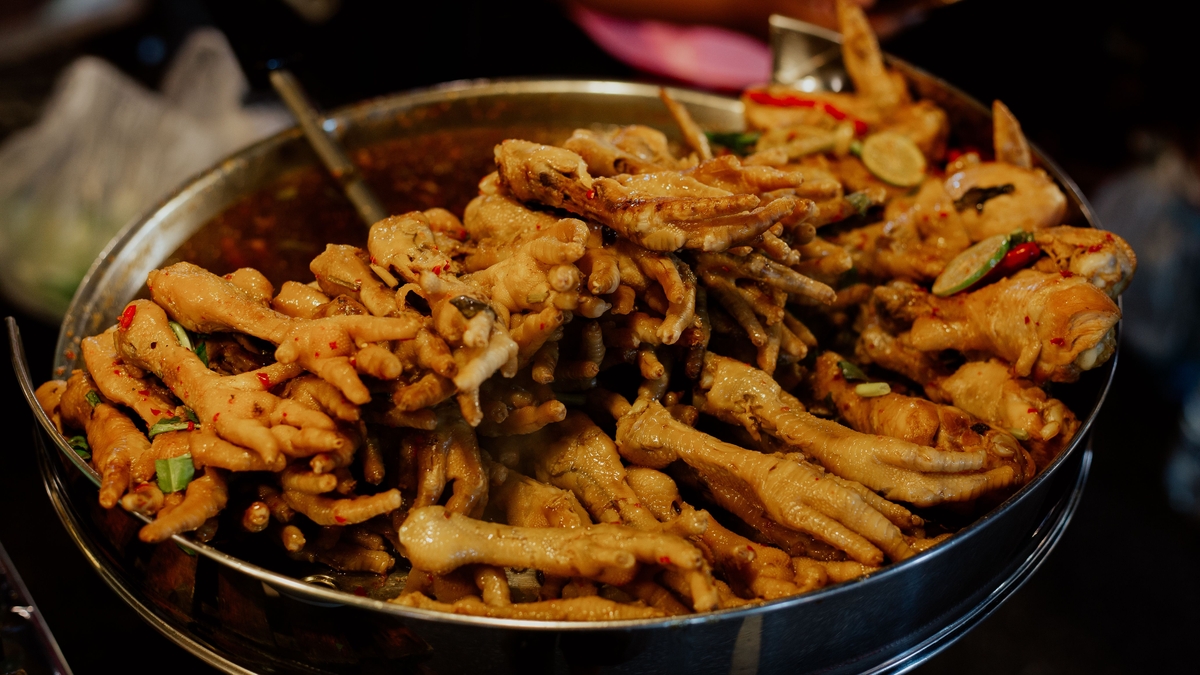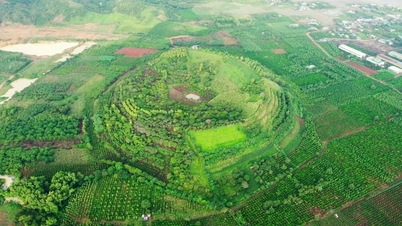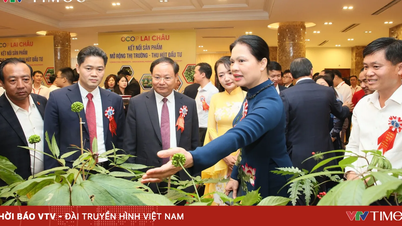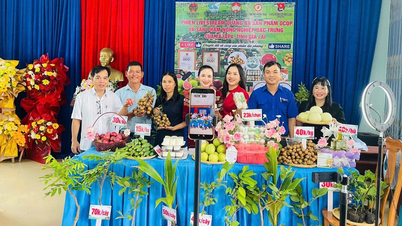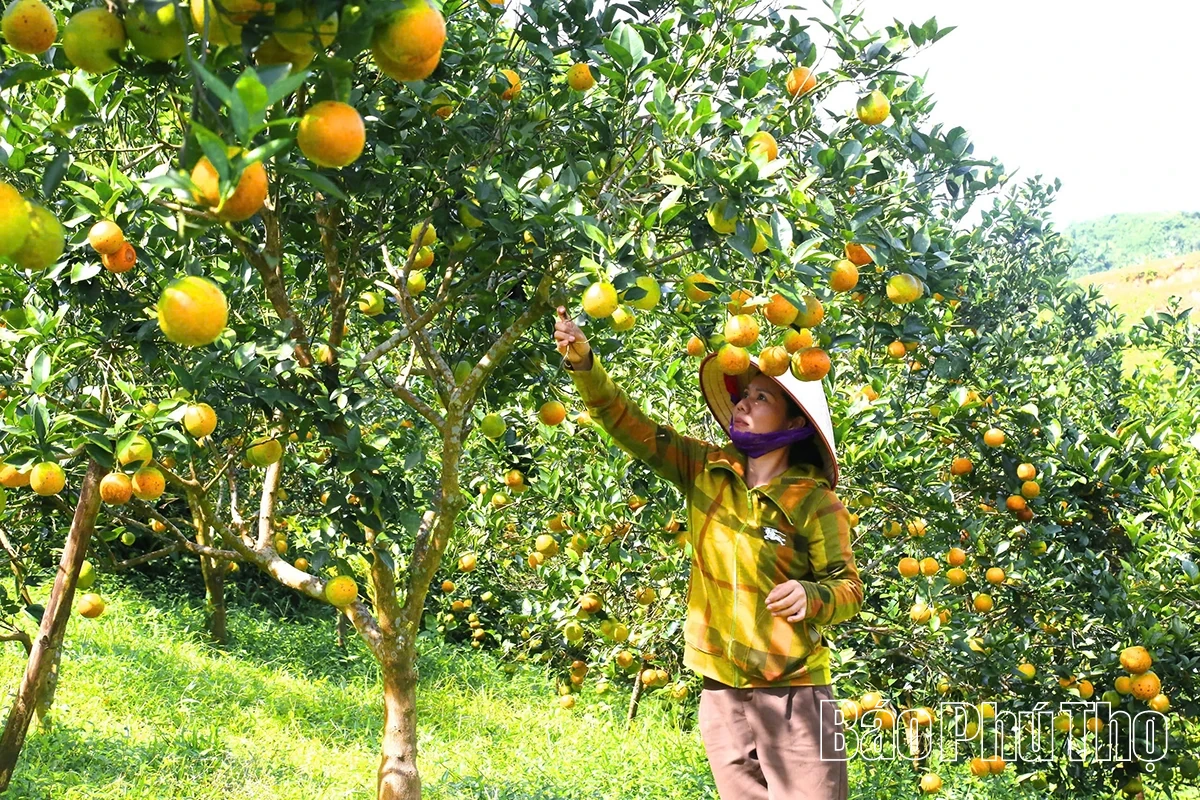
After being recognized as meeting OCOP standards, Cao Phong oranges from Cao Phong commune have seen their price increase by nearly 20% compared to before.
Stable growth
The goal of developing agriculture, rural areas, and farmers, as outlined in the Party's 14th National Congress documents, is not merely a purely economic plan but a comprehensive strategy aimed at reshaping the nation's landscape in the new era. This reflects a strong shift in theoretical thinking, where agriculture is "positioned" to develop based on ecological and technological foundations, rather than the exploitation of raw resources as before. The emphasis on "efficiency" and "sustainability" demonstrates the Party's long-term vision in addressing climate change and global market fluctuations. In this context, science and technology, innovation, and digital transformation are identified as three key "spearheads" to create breakthrough added value, propelling Vietnamese agricultural products further up the global supply chain.
Following the merger, Phu Tho province has a large-scale, diverse, and abundant agricultural production base with great potential for developing modern agriculture towards commodity production, concentration, and high technology. Agricultural production in the 2020-2025 period is shifting towards safety, concentration, and increased product value; average growth is estimated at 3.6% per year. The growth in added value of agriculture, forestry, and fisheries reached 3.29%, contributing 0.37 percentage points to the province's GRDP growth. In particular, some crops and livestock are among the top in the country, such as tea, pigs, and poultry farming.
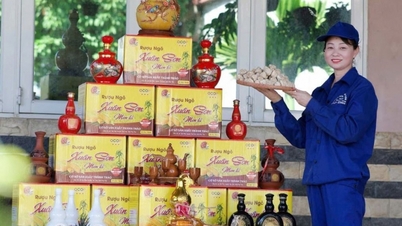
Several agricultural products meet the requirements and standards of export markets, such as wood and wood products, bananas, tea, and red-fleshed dragon fruit. The average production value is estimated at over 162 million VND per hectare of cultivated land. The value of OCOP products is gradually increasing; to date, the province has 689 OCOP products meeting standards of 3 stars or higher (including 6 products with 5 stars), an increase of 567 products compared to 2020. National target programs such as New Rural Development and Sustainable Poverty Reduction are proactively implemented and achieve high results, with the multidimensional poverty rate decreasing by an average of 0.94% per year.

To date, the province has established 686 concentrated farming areas covering nearly 83,000 hectares, many of which have achieved VietGAP, GlobalGAP, and organic certifications; 766 farming area codes have been issued and managed, covering a total area of nearly 10,000 hectares for domestic consumption and export, and 4 packaging facility codes are in place for export. In 2025 alone, the total volume of agricultural products exported is expected to be over 15,100 tons, with an export value of over 511 billion VND.
These results show that the province's agricultural sector is gradually developing steadily towards concentrated, commodity-based, and sustainable production.
Stepping confidently into a new era.
The vigorous implementation of Politburo Resolution No. 57 on the Development of Science and Technology and Innovation and Politburo Resolution No. 68 on the Development of the Private Economy has created new vitality in modern agricultural production. The mindset of agricultural production is gradually being replaced by a mindset of agricultural economics. Farmers are now paying attention to market demands, producing what the market needs rather than the traditional practice of producing what they have. Alongside this economic innovation is a revolution in the appearance of rural areas, where the draft proposes building rural areas that are not only modern in infrastructure but also prosperous and happy in spiritual life. The concept of "new rural areas" in the coming period will be expanded to include high-quality social services, approaching urban standards.
Mr. Nguyen Van Quan, Deputy Director of the Department of Agriculture and Environment, affirmed: For the period 2025-2023, the Department of Agriculture and Environment has clearly defined the following objectives: Developing an efficient, sustainable, and ecological agricultural economy towards high-tech, organic, circular, and high-value agriculture, linked with building modern new rural areas and civilized farmers. Innovating and improving the efficiency of production organization: Shifting strongly from building "agricultural product supply chains" to developing "value chains for specific product sectors". Maintaining and developing large-scale, concentrated production areas; key products, OCOP products, specialties, organic products, according to safety, organic, and circular standards; building brands for key agricultural products. Managing the quality of agricultural, forestry, and aquatic products in a synchronized and effective manner. Simultaneously, continuing to strongly apply scientific and technological advancements, innovation, and digital transformation. Promoting the mobilization of investment resources into agriculture and rural areas. Improving policies on agriculture and the environment
To achieve strong and sustainable development commensurate with its potential, the agricultural sector needs to identify the promotion of ecological agriculture and the circular economy as the inevitable path to sustainable development. Applying circular agricultural models and fully utilizing by-products as inputs for other production chains helps reduce costs and lessen dependence on imported materials. Simultaneously, integrating agriculture with rural tourism and heritage preservation is a solution to create sustainable living spaces. Furthermore, continuing to effectively apply science and technology and digital transformation in all processes of agricultural production, processing, and consumption plays a key role in building a modern agricultural sector in the new era.



Quan Lam
Source: https://baophutho.vn/chuyen-minh-don-ky-nguyen-moi-247087.htm



![[Image] National conference summarizing one year of operation of the overall organizational model of the political system, the three-tiered government model.](https://vphoto.vietnam.vn/thumb/1200x675/vietnam/resource/IMAGE/2026/07/01/1782882811691_ndo_br_1-jpg.webp)