

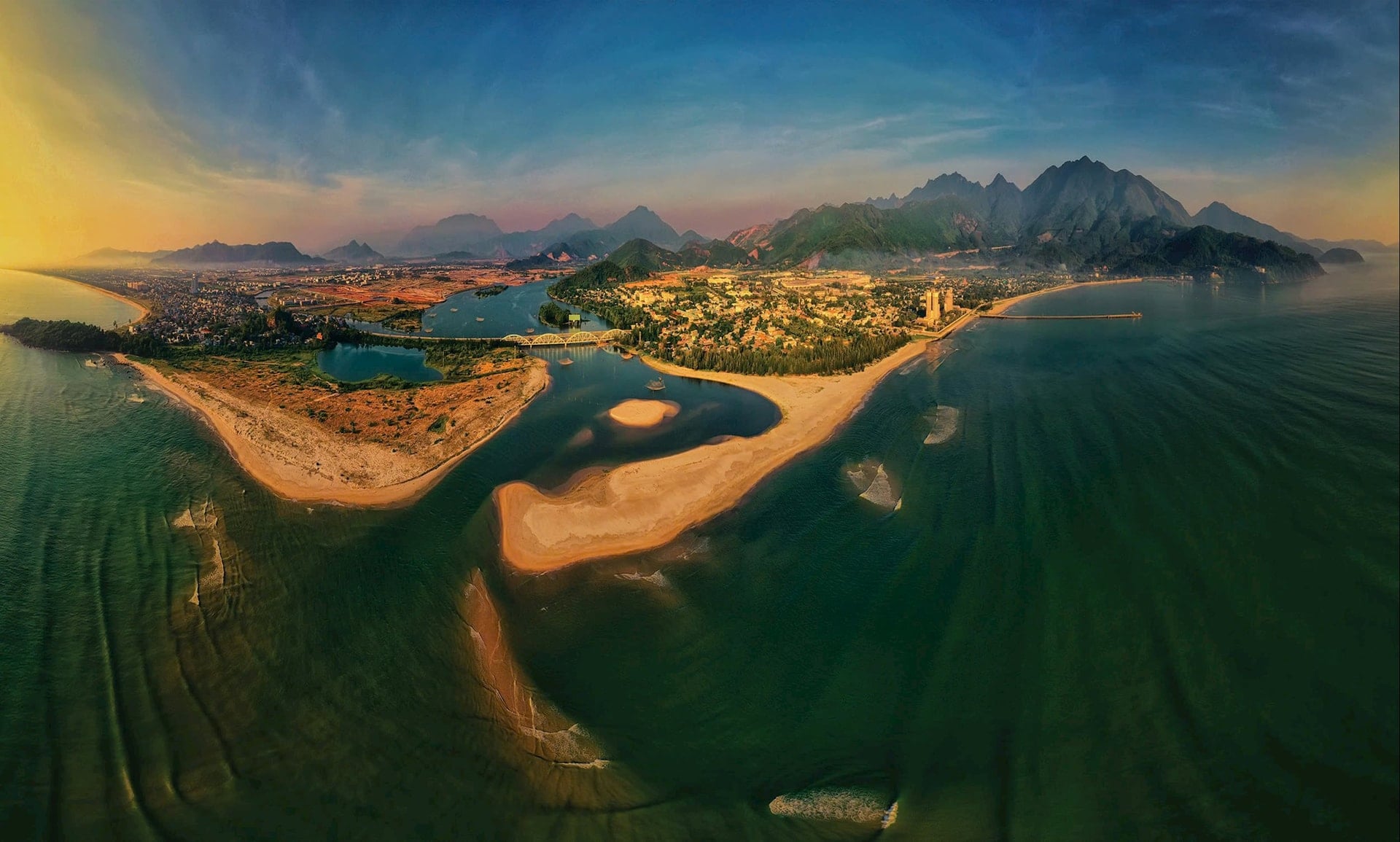
Not only is this river a witness to countless historical changes, but it also holds great potential for developing unique eco- tourism and cultural tourism in the northern part of Da Nang city.
Historical and cultural landmarks
Originating from the North and South rivers of the Truong Son mountain range, the Cu De River flows through Hoa Vang commune and Hai Van ward before emptying into the East Sea right at the ancient village of Nam O.
The book "Dai Nam Nhat Thong Chi" recorded: "Eight miles north of Hoa Vang district, there are two sources: one from Dai Giao Lao mountain in Thua Thien prefecture, flowing into the confluence gorge, this is the northwestern waterway of the Cu De source; the other from Tra Ngan mountain in Man, also flowing into the confluence gorge, this is the southwestern waterway of the Cu De source; the two sources merge at the confluence gorge, flowing through Cu De commune, where the Hoa O river flows in to form the Cu De river, which empties into the Cu De estuary." This is considered one of the important waterways connecting the upstream and downstream regions of the ancient Quang Nam province.
Over a thousand years ago, the Champa people, with their sea-oriented vision, chose the Cu De estuary as their place of residence, cultivation, and worship. Today, in Nam O village, the ruins of the Xuan Duong Cham tower and centuries-old Cham wells still remain. Archaeologists believe that the Xuan Duong tower, built in the 11th century, served as both a religious center and a "lighthouse" guiding Cham ships out to sea.
The people of Nam O village still recount the story of Princess Huyen Tran (Dai Viet), wife of King Che Man (Champa), who stopped here on her way back to her "homeland." In the 14th century, Vietnamese people from Thanh Hoa and Nghe An provinces followed the southward migration to settle along the Cu De River. According to the Phan family genealogy of Da Son village, Phan Cong Thien and other Phan, Kieu, Do, and Nguyen families were sent by King Tran Du Tong to Hoa Chau to reclaim land and establish Tra Na village, marking the beginning of the exploration and development of Quang Nam province.
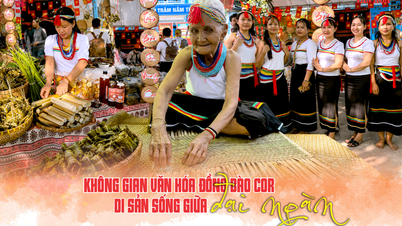
Furthermore, the upstream area of the Cu De River in Hoa Bac is home to the Co Tu ethnic community, mainly migrants from Tay Giang and Nam Giang. Their culture, including gong music, gongs, sculpture, weaving, brocade making, cuisine , traditional festivals, and dances like the Tang Tung Da Da and folk songs, creates a vibrant cultural tapestry that complements the majestic and unspoiled natural landscape.
Throughout history, the Cu De River has witnessed many significant events. In 1635, it served as an important military stronghold when Lord Nguyen Phuc Lan suppressed the rebellion of Nguyen Phuc Anh. During the Tay Son dynasty, the Truong Dinh royal palace on the banks of the Cu De River was where Lord Nguyen Due Ton and his grandson Nguyen Phuc Anh (later King Gia Long) stopped before heading south. These historical relics have made the Cu De River not only a river of nature, but also a river of national history.
Along both banks of the river, numerous ancient architectural relics are still preserved, such as Nam O communal house, Da Son pagoda, Ba Ham Trung shrine, Xuan Duong Cham tower, Nam O square well, ancestral tombs, clan churches, and moss-covered old houses… Each relic is a unique piece of heritage in the riverine cultural space of Quang Nam province.
Ink painting
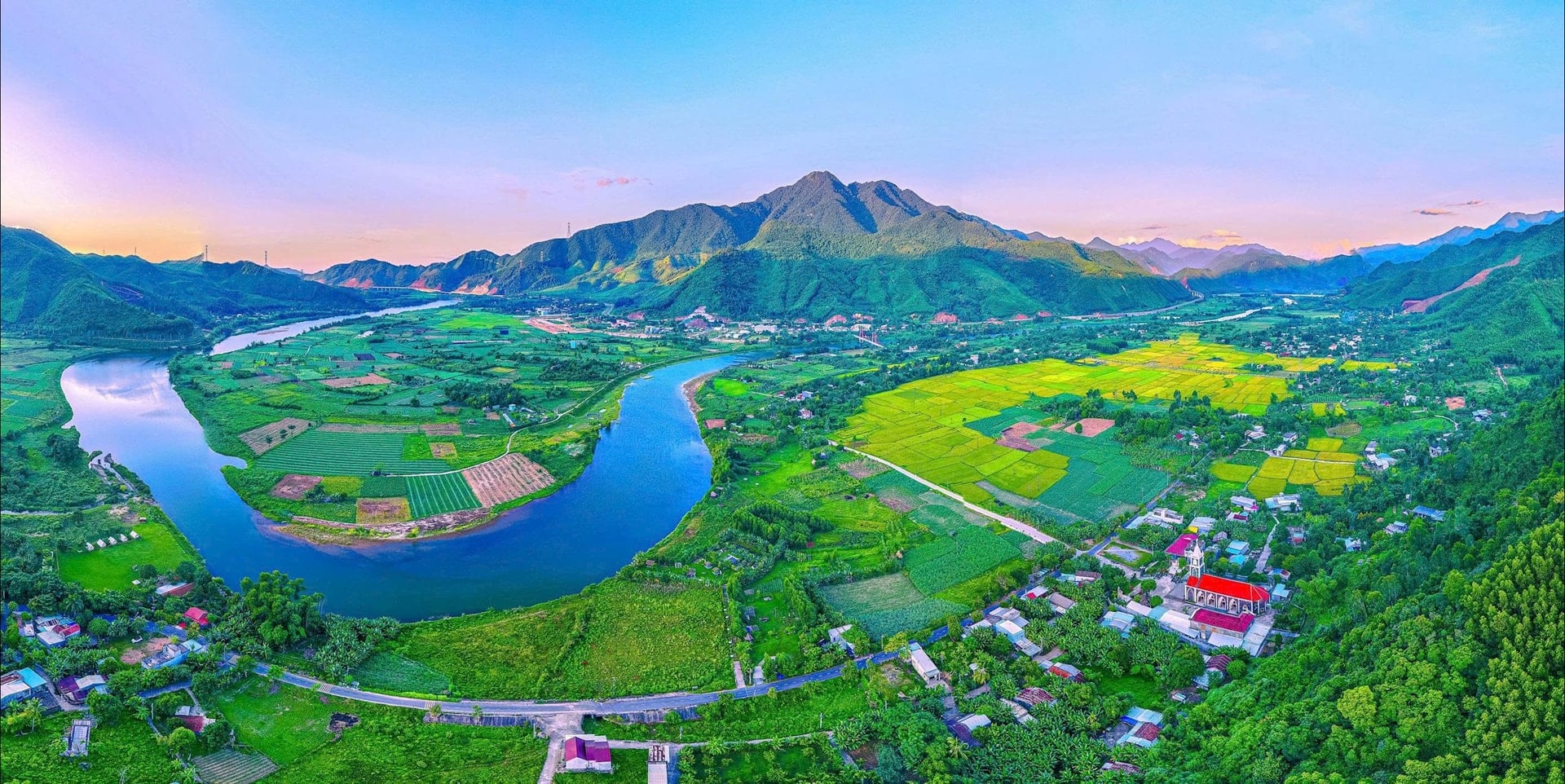
Besides its historical value, the Cu De River also boasts a stunning natural landscape, a rare "ink painting" in Da Nang. From its source at Ta Lang and Gian Bi, the river meanders through rolling mountains, reflecting the forest trees onto its clear blue surface.
Downstream, the river unfolds a peaceful yet magnificent landscape with villages, rice paddies, sugarcane fields interspersed with hills, small boats nestled on the banks, and fishing nets spread out on the river... This beauty makes the Cu De River an ideal location for developing ecotourism, community tourism, and rural experiential tourism.
Every year, the people of Hoa Bac and Lien Chieu districts organize a boat racing festival on the Cu De River. This is not only a lively sporting event but also a spiritual ritual praying for favorable weather and a bountiful harvest. From the upstream to the downstream Nam O area, the culinary resources reflecting the unique character of the Cu De River contribute to shaping a distinct culinary brand for tourism in this region.
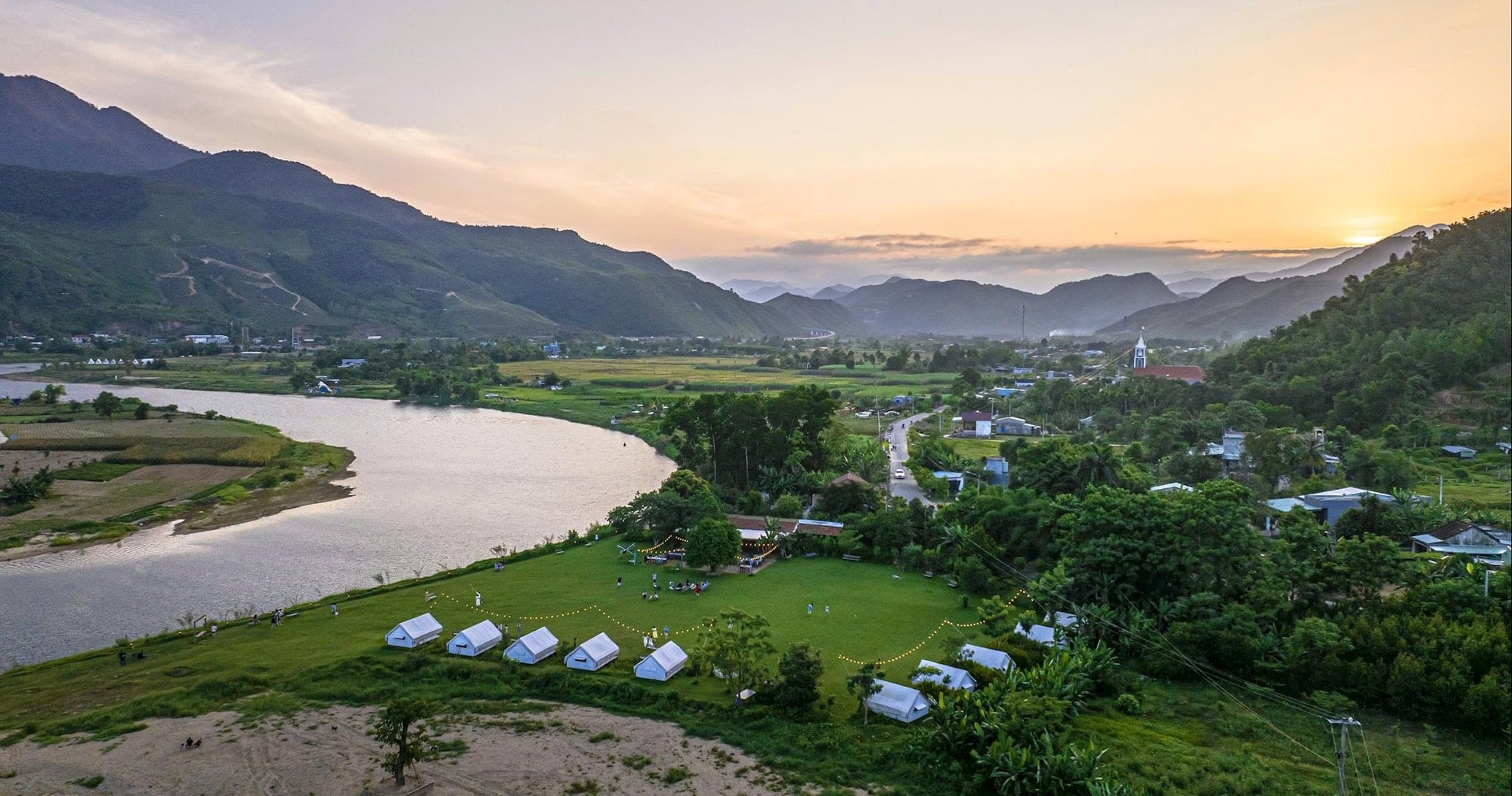
Ecotourism and community-based tourism along the river are developing quite rapidly with the emergence of ecotourism areas such as Cu De Camping, Yen Retreat, Hoa Bac Ecologde - Camping Space Art, Lang Me Campsite...
However, for various reasons, ecotourism here has only focused on exploiting the natural landscape along the river and establishing farms with minimal infrastructure, resulting in low economic efficiency. Despite having financial resources, investors are unable to invest on a large scale.
To effectively exploit the tourism potential of the Cu De River and connect the lowlands with the highlands, Da Nang needs to invest in diverse and comprehensive wharves and destinations along the Cu De River, linked to tourism products; regularly organize cultural, sports, and tourism events associated with the Cu De River; and support businesses in investing in and effectively exploiting eco-tourism and rural agricultural destinations on both banks of the river...
When history and the present are connected, Cu De will have the opportunity to "awaken" - becoming an attractive eco-cultural tourism destination in Central Vietnam.
Source: https://baodanang.vn/chuyen-o-dau-nguon-cu-de-3313908.html
![[Photo] Solemn bathing ceremony and Buddha procession in Hue](https://vphoto.vietnam.vn/thumb/1200x675/vietnam/resource/IMAGE/2026/05/31/1780228263543_1-jpg.webp)
![[Photo] The General Secretary, President and his wife begin their state visit to the Philippines.](https://vphoto.vietnam.vn/thumb/1200x675/vietnam/resource/IMAGE/2026/05/31/1780230559452_anh-man-hinh-2026-05-31-luc-19-28-11.png)
![[Photo] Admire the coral "masterpiece" amidst the million-year-old heritage of Dak Lak province.](https://vphoto.vietnam.vn/thumb/1200x675/vietnam/resource/IMAGE/2026/05/31/1780221235105_anh-man-hinh-2026-05-31-luc-16-53-27.png)















![[Video] Sunset at Lap An Lagoon – Where the sun sets over the fishing nets](https://vphoto.vietnam.vn/thumb/340x192/vietnam/resource/IMAGE/2026/05/31/1780192137701_beach-landscape-sea-water-nature-grass-745871-pxhere-com.jpeg)




































![[Photo] Admire the coral "masterpiece" amidst the million-year-old heritage of Dak Lak province.](https://vphoto.vietnam.vn/thumb/402x226/vietnam/resource/IMAGE/2026/05/31/1780221235105_anh-man-hinh-2026-05-31-luc-16-53-27.png)



































Comment (0)