

Krông Jing, a particularly disadvantaged commune in M'Drắk district, Đắk Lắk province, has a natural area of 7,477 hectares, 12 villages, and a population of approximately 12,345 people, comprising 15 ethnic groups (of which ethnic minorities account for nearly 70%). Here, the old stories that people often tell their children and grandchildren are about life before 2005, a time of great hardship when life depended entirely on farming, with backward farming and production conditions resulting in unstable crop and livestock yields. It was not uncommon to experience food shortages even before the planting season, or to lack money for pesticides and fertilizers at the beginning of the planting season. With food scarce, there was no money for daily expenses. At that time, the only solution to these difficulties was selling unripe rice to traders at low prices. When harvest time came, traders came directly to the fields to collect the rice, leaving some families with nothing to take home. With people in need, loan sharks find an excuse to infiltrate the villages, making the already difficult situation even worse for many.
As a resident of the village, Mr. Y Hoan Ksơr of M'Lốc B hamlet understood better than anyone the extreme hardship of his people. However, these difficulties were insurmountable as the villagers lacked accumulated capital and relied on self-sufficient production methods. Therefore, in 2005, when he was elected village head, and just as the Dak Lak Provincial Branch of the Vietnam Bank for Social Policies (VBSP) was implementing a credit support policy to help villagers eliminate the practice of selling unripe rice and illegal lending, he understood that an opportunity to help them had arrived. Leveraging his authority as village head, he and the VBSP branch went door-to-door to explain the policy and assist villagers in applying for loans. “At that time, the bank provided loans of 3 million dong per household to eliminate the practice of selling unripe rice and illegal lending, and the villagers were very happy,” he recounted, adding that the policy credit was like rain in a drought, helping them solve many pressing needs in their lives. Rice plants no longer need to be sold prematurely; instead, they can be harvested in the autumn, providing people with food and eliminating the worry of hunger.
In 2010, he became a member of the Communist Party and is now the Deputy Secretary of the village Party branch. Having studied and absorbed the Party's policies, guidelines, and ideals, and having visited various localities and successful production models, he realized that only by increasing production could he escape poverty. From then on, he went door-to-door, encouraging villagers to borrow policy-based credit for raising cattle and pigs, making manure to grow grass for cattle, and planting acacia trees to develop the economy and avoid wasting land. Initial hesitations about not being able to repay loans or about business failures gradually disappeared after the pioneering households successfully developed their businesses. Households gradually learned from each other's successful livestock and forestry models.
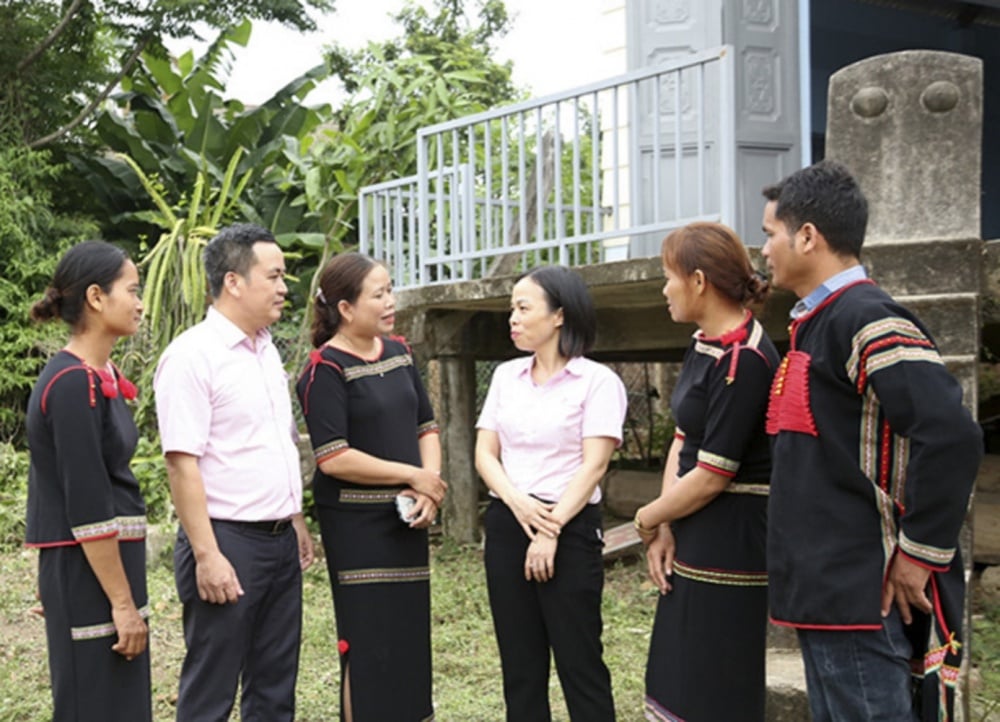 |
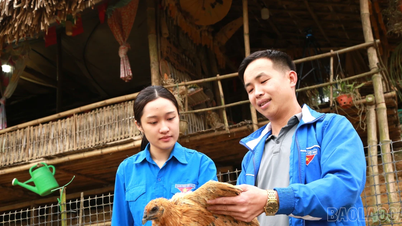
| Officials from the Social Policy Bank of M'Drắk district and political and social organizations always stand alongside local people in borrowing capital and developing their economy. |
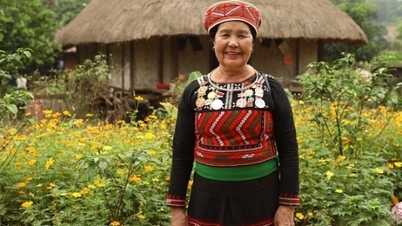
Policy credit funds are also helping women in the village to take control of their own lives. Ms. H'Pak Nie, head of the women's association in M'Lốc B village, said, "Before the Social Policy Bank existed, women faced many difficulties in accessing capital for family development, and they had less social interaction than men, leading to many challenges and low self-esteem. This low self-esteem made them reluctant to go out and interact with others, leaving it all to their husbands, which further reduced their knowledge. This lack of knowledge led to many problems, and ultimately, women felt very insecure." Therefore, in her role as head of the women's association, she has devoted herself to promoting and supporting women in accessing capital that brings economic benefits to their families. The association also helps women organize social gatherings and interactions to improve their self-confidence and communication skills.
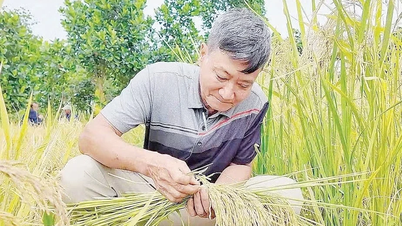
Mr. Ygoanh MLô, head of the loan group in M'Suốt hamlet, Krông Jing commune, said that the story of borrowing capital for economic development is not something that happens overnight, but requires continuous support from the Social Policy Bank and the entire political and social system, especially in difficult areas like Krông Jing. Although Dak Lak is the coffee capital, that natural advantage is not available to Krông Jing. Previously, people in the commune had developed coffee cultivation. Looking at the coffee plants growing tall and flowering in November-December, they thought a bountiful harvest was near, but the flowers rotted and fell off before they could bear fruit because this area is prone to flooding during the peak of the rainy season. People could only rely on rice cultivation, facing persistent poverty. As one of the first seven households in the hamlet to pioneer loans under the program to combat premature rice crop failure, he bought fertilizer for agricultural production. Yields increased, and poverty and predatory lending no longer plagued them. He and many other households switched to borrowing from the bank to raise breeding cattle and grow cassava. Then, when land became scarce and they discovered that cassava cultivation depleted the soil in just 3-4 years, resulting in low economic value, the government and the Social Policy Bank helped the people develop enclosed cattle farming and switch to planting acacia trees. “Calculated, one hectare sells for 100 million dong, with about 20 million dong spent on seeds and fertilizer, so we earn 80 million dong,” said Mr. Ygoanh MLô. With 5 hectares of acacia trees harvested in staggered cycles, his family earns a stable income of 100 million dong each year, not including other sources of income. This has also laid the foundation for his family to escape poverty and has allowed them to save money to build a new house. Successful households like his serve as an inspiration for other villagers to follow in their economic endeavors. Drawing on his own production experience, when assigned to lead one of the two credit groups in the village, he propagated and inspired the villagers, helping them understand the meaning and opportunities from policy credit funds and the concern of the Party and State for the people, thereby encouraging them to boldly borrow capital to develop their economy. Currently, all 95 members who borrowed capital are planting acacia trees combined with raising cattle. Previously, they were all poor households, but now only 65 households remain.
Mr. Y Loc Nie, District Party Committee member, Party Secretary, and Chairman of the People's Council of Krong Jin commune, M'Drak district, stated that the commune is particularly disadvantaged due to its large area and dense population, and the current high poverty rate is a major concern for the local Party committee and government. “We recognize that reducing the poverty and near-poverty rate is crucial, and the responsibility of each Party member lies with the Party branch. Following the motto ‘Party branches actively participate, Party members closely monitor households,’ we have assigned Party members, especially Party committee members, to oversee each village and hamlet to assist local communities. We have particularly emphasized the pioneering role of Party members. Locally, some Party members, even without assigned tasks, have helped the poor in various ways within their capabilities and resources. Furthermore, we have directed the entire political system, ensuring the synchronized involvement of all levels and sectors in carrying out political tasks. This includes the participation of the armed forces and the Military Committee working alongside the people to address social welfare issues and fulfill local political tasks,” he stated.
The accumulation of these efforts has ignited the flame of credit for poverty alleviation, creating significant changes in this area. By the end of 2023, Krông Jin commune no longer had any starving households, with the poverty rate at 28% and the near-poverty rate at 11.6%. In contrast, these rates were 42.67% and 19% in 2021. Although the poverty rate remains high, the path out of poverty is wide open, with 1,763 households currently borrowing from the Vietnam Bank for Social Policies (VBSP) with a total outstanding loan balance of 90,115 million VND as of May 30, 2024, and no overdue or bad debts.
Source: https://thoibaonganhang.vn/co-dang-cuoc-doi-am-no-hanh-phuc-bai-1-158882.html
![[Image] National Assembly discusses the implementation of the socio-economic development plan.](https://vphoto.vietnam.vn/thumb/1200x675/vietnam/resource/IMAGE/2026/04/20/1776696707422_ndo_br_img-20260420-185419-jpg.webp)




![[Photo] General Secretary and President To Lam meets with National Assembly delegates from ethnic minorities.](https://vphoto.vietnam.vn/thumb/1200x675/vietnam/resource/IMAGE/2026/04/20/1776696701056_a1-bnd-8331-3342-jpg.webp)













































































Comment (0)