Resolution 09 not only sets new development goals for Ho Chi Minh City but also opens up an unprecedented direction: from a special mechanism to building a Law on Special Urban Areas with the spirit of thorough decentralization and delegation of power.
The Politburo 's Resolution 09/2026, recently issued, comes as Ho Chi Minh City enters a new phase of development with a broader scope and a greater role. Resolution 09 is expected to become the "key" to unlocking institutional, infrastructure, resource, and urban governance bottlenecks, helping Ho Chi Minh City fully utilize its potential and advantages and create a breakthrough in this new development phase. In an interview with a reporter from the Nguoi Lao Dong newspaper, Associate Professor Tran Hoang Ngan – a member of the 16th National Assembly, Chairman of the Development Breakthrough Advisory Council, Saigon University – shared his perspective on the distinctive features of Resolution 09 and the expectations for Ho Chi Minh City in this new era.
Reporter: Resolution 09 can be considered a "pioneering resolution" for Ho Chi Minh City to enter a new era. According to the Associate Professor, what makes Resolution 09 different from previous resolutions?
- Assoc. Prof. Dr. Tran Hoang Ngan: First of all, in my opinion, the biggest difference of Resolution 09 is that, in addition to assigning Ho Chi Minh City more responsibilities and making it a symbol of Vietnam's dynamic development in the 21st century, it also opens up an unprecedented direction: from a special mechanism to building a Law on Special Urban Areas for Ho Chi Minh City with the spirit of thorough decentralization and delegation of power so that the city can truly play its leading role. This is a historic opportunity for Ho Chi Minh City.

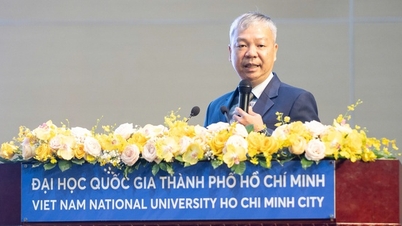
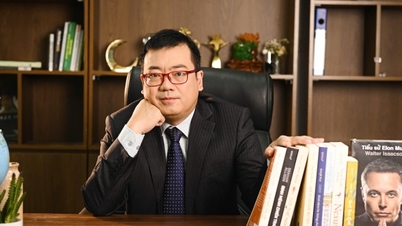
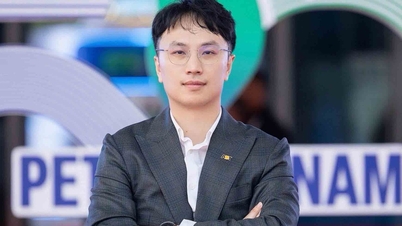
Associate Professor Tran Hoang Ngan - Member of the 16th National Assembly , Chairman of the Breakthrough Development Advisory Council, Saigon University
While previous resolutions primarily focused on special mechanisms and superior solutions to overcome difficulties and facilitate the city's development, this time the thinking has gone further: moving from special mechanisms to creating a new institutional foundation for a special urban area. This point is crucial because Ho Chi Minh City is not only a major developing locality but also a special urban area, a center of economy , culture, science and technology, innovation, international integration, and an important growth pole for the entire country.
"Thorough decentralization and delegation of power, along with the development of a special Urban Law, are two complementary elements. Once institutional obstacles are removed, Ho Chi Minh City will be able to fully utilize its potential and advantages, mobilizing maximum social resources to accelerate rapid and sustainable development in the new era."
Assoc. Prof. Dr. Tran Hoang Ngan
For over 50 years, the Central Government has consistently given special attention to Ho Chi Minh City through numerous major policies and resolutions such as Resolution 01/1982, Resolution 20/2002, Resolution 16/2012, Conclusion 21/2017, Resolution 31/2022, and now Resolution 09/2026.
However, this time the context is different. Resolution 09 was issued for the newly merged Ho Chi Minh City, following its merger with Binh Duong and Ba Ria - Vung Tau, as the country entered a new era of development. The development space is wider, the role is greater, and the requirements are also higher.
For many years, Ho Chi Minh City has been entrusted with the role of the leading city, the center of innovation, and the national growth pole. But why is the city still constantly mentioned as "not having fully exploited its potential"?
In my opinion, the biggest reason lies in the system.
For a long time, we have viewed institutions as tools of management. But in today's competitive environment, institutions are no longer just for management; they have become tools of competition.
Ho Chi Minh City possesses significant advantages in terms of economic scale, human resources, innovation capacity, strategic location, and international connectivity. However, for many years, the city has operated within an institutional framework that is not truly compatible with its role as a special urban area. In other words, Ho Chi Minh City is already a special urban area, but its development institutions are not truly compatible with that special nature. This is a paradox that has persisted for a long time.
Therefore, many previous resolutions, including Resolution 09, consistently state that Ho Chi Minh City has not fully exploited its potential and advantages; and that bottlenecks exist in institutions, infrastructure, resources, and urban governance. In my opinion, this is precisely why Resolution 09 opens a new direction: building an institutional framework compatible with the role of a special urban area, enabling Ho Chi Minh City to fully utilize its potential and advantages and truly become the engine of growth in the new development phase.


He just mentioned "compatible institutions." Is this one of the core principles of Resolution 09 when addressing the issue of drafting the Law on Special Urban Areas for Ho Chi Minh City?
- I believe this is the most groundbreaking aspect of this resolution. Previously, we talked a lot about special mechanisms and superior mechanisms. But this time, Resolution 09 takes it a step higher: developing a Law on Special Urban Areas for Ho Chi Minh City. That has great significance.
Ho Chi Minh City needs a special, groundbreaking institutional framework; one that is appropriate to its geopolitical position, economic scale, social characteristics, and leading role. This resolution clearly states the requirement: thorough decentralization and delegation of power, ensuring the city has sufficient authority and responsibility to handle its affairs.
In my opinion, this is an extremely powerful message.

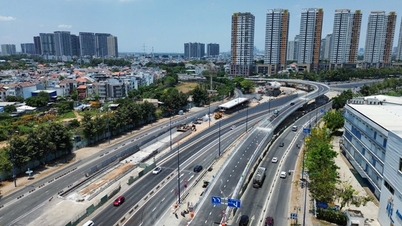
Ho Chi Minh City is facing an opportunity for rapid and strong development thanks to groundbreaking mechanisms and thorough decentralization and delegation of power. Photo: HOANG TRIEU
He repeatedly emphasized the phrase "thorough decentralization and delegation of power." Why did he consider this the biggest difference compared to previous special mechanisms?
- This is precisely the turning point. Previous resolutions paved the way for a superior mechanism, leading the National Assembly to issue Resolution 54/2017, Resolution 98/2023, and then Resolution 260/2025 amending Resolution 98.
These resolutions have truly been groundbreaking. But this time, the story goes further. If there is a Law on Special Urban Areas, Ho Chi Minh City will not only implement pilot mechanisms but can also be more proactive in governance.
Ho Chi Minh City will be granted direct decentralization to the People's Council, People's Committee, and the Chairman of the People's Committee in many areas, except for areas related to national defense, security, foreign affairs, and some other specific matters. More importantly, after the law is enacted, Ho Chi Minh City can proactively develop sub-legal documents to organize implementation, instead of having to wait for guidance from central ministries and agencies as before. This is a significant difference compared to the past.
To put it simply: Ho Chi Minh City is empowered to make decisions more quickly, more practically, and with greater accountability.
It can be said that the Law on Special Urban Areas will help Ho Chi Minh City resolve a long-standing issue: While having special mechanisms, it still lacks the authority to implement them quickly?
- That's right. In fact, over the past period, the Central Government has granted Ho Chi Minh City many special mechanisms and policies such as Resolution 54, Resolution 98, and Resolution 260. The city has also been granted special mechanisms for the development of urban railways, an international financial center, and many other strategic programs.
But as we enter a new phase of development, the requirement is not just for more policies, but also for sufficient authority to act more quickly. If we continue to operate according to the old procedures, it will be very difficult to meet the new pace of development.
The resolution has been passed, the direction is clear. In your opinion, what should Ho Chi Minh City do to translate the spirit of Resolution 09 into action and bring the resolution into reality as soon as possible?
- First and foremost, it is necessary to thoroughly disseminate the spirit of Resolution 09 throughout the entire political system. Simultaneously, the draft Law on Special Urban Areas must be urgently finalized. The process of gathering opinions on this draft law must be very open-minded, attentive, and scientific. This is because this law must not only serve the present but also create a foundation for long-term development.
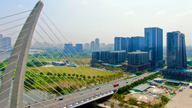
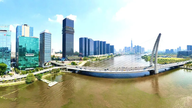
Another crucial task is to foster social consensus, leverage the leadership role of Party organizations, and ensure the involvement of the entire political system and all segments of the population to implement Resolution 09 effectively.
There will be a different perspective on Ho Chi Minh City.
Having been born, raised, studied, researched, and worked in Ho Chi Minh City for over half a century, Associate Professor Dr. Tran Hoang Ngan said he was very happy and moved to receive the news that the Politburo had issued Resolution 09.
According to Associate Professor Tran Hoang Ngan, for many years, the Central Committee's resolutions on Ho Chi Minh City have repeatedly stated that the city has not yet fully exploited its potential and advantages. He hopes that in the coming years, when summarizing Resolution 09, we will no longer have the assessment that "Ho Chi Minh City has not yet fully exploited its potential and advantages." Instead, we will see Ho Chi Minh City developing in accordance with its position, capable of leading national growth, and truly becoming a regional and global metropolis.
"I believe that the aspiration to bring Ho Chi Minh City to the same level as leading cities in Asia and the world is feasible and will soon become a reality," Associate Professor Tran Hoang Ngan expressed.
Source: https://nld.com.vn/co-hoi-lich-su-de-tp-hcm-but-pha-196260526215608438.htm
![[Photo] General Secretary and President To Lam attends the 13th National Congress of the Ho Chi Minh Communist Youth Union](https://vphoto.vietnam.vn/thumb/1200x675/vietnam/resource/IMAGE/2026/06/25/1782356968989_ndo_br_1-jpg.webp)
![[Photo] General Secretary and President To Lam receives Palestinian Ambassador Saadi Salama](https://vphoto.vietnam.vn/thumb/1200x675/vietnam/resource/IMAGE/2026/06/25/1782365384740_a1-bnd-9423-8322-jpg.webp)
![[Image] Schools organize meetings and introduce teaching models to students admitted to grade 10.](https://vphoto.vietnam.vn/thumb/1200x675/vietnam/resource/IMAGE/2026/06/25/1782368077271_ndo_br_z7970052192242-1ec8daeb77a6eed1a4e9f58c564ddd3e-jpg.webp)