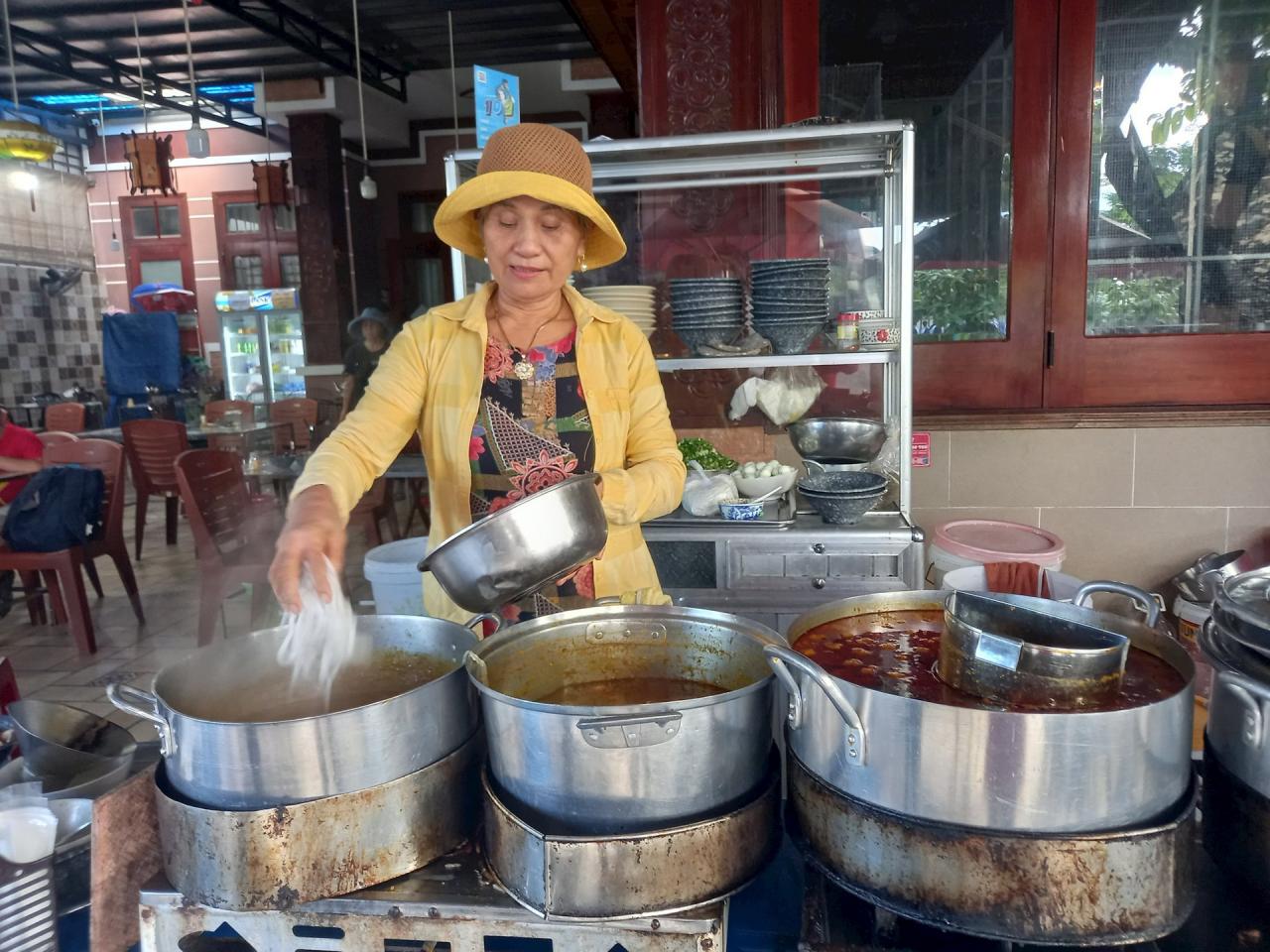
In Hoi An, banh canh (rice noodle soup) stalls are sometimes simply mobile vendors carrying their "eatery" along the streets. Whenever someone orders, they just find an empty space, set up a few plastic chairs, and the dish is served. Tourists can also find famous, "traditional" banh canh stalls that have been around for decades, such as those selling fish cake banh canh at Chua Cau Pagoda, Co Xuan's banh canh, and Ba Quyt's banh canh…
Whether enjoying banh canh (rice noodle soup) on the street or at famous eateries, diners still feel a sense of familiarity and simplicity. The aroma of rice flour, a few sprigs of scallions and cilantro, seems to encapsulate the flavors of the countryside. The pot of noodles simmering over a charcoal fire evokes memories of childhood in the backyard kitchen, with its simple yet delicious dishes.
One of the reasons why Hoi An's banh canh (rice noodle soup) is always a popular choice for tourists looking for snacks is its affordable price. Most banh canh vendors are local residents who don't rent premises, so they make a profit from selling in large quantities.
The ingredients are not imported but handcrafted from locally grown produce, so the price is quite "familiar" and affordable. For just 15,000 VND, you can get a steaming hot bowl of bánh xèo, enough to satisfy everyone in Hoi An, from students to laborers.


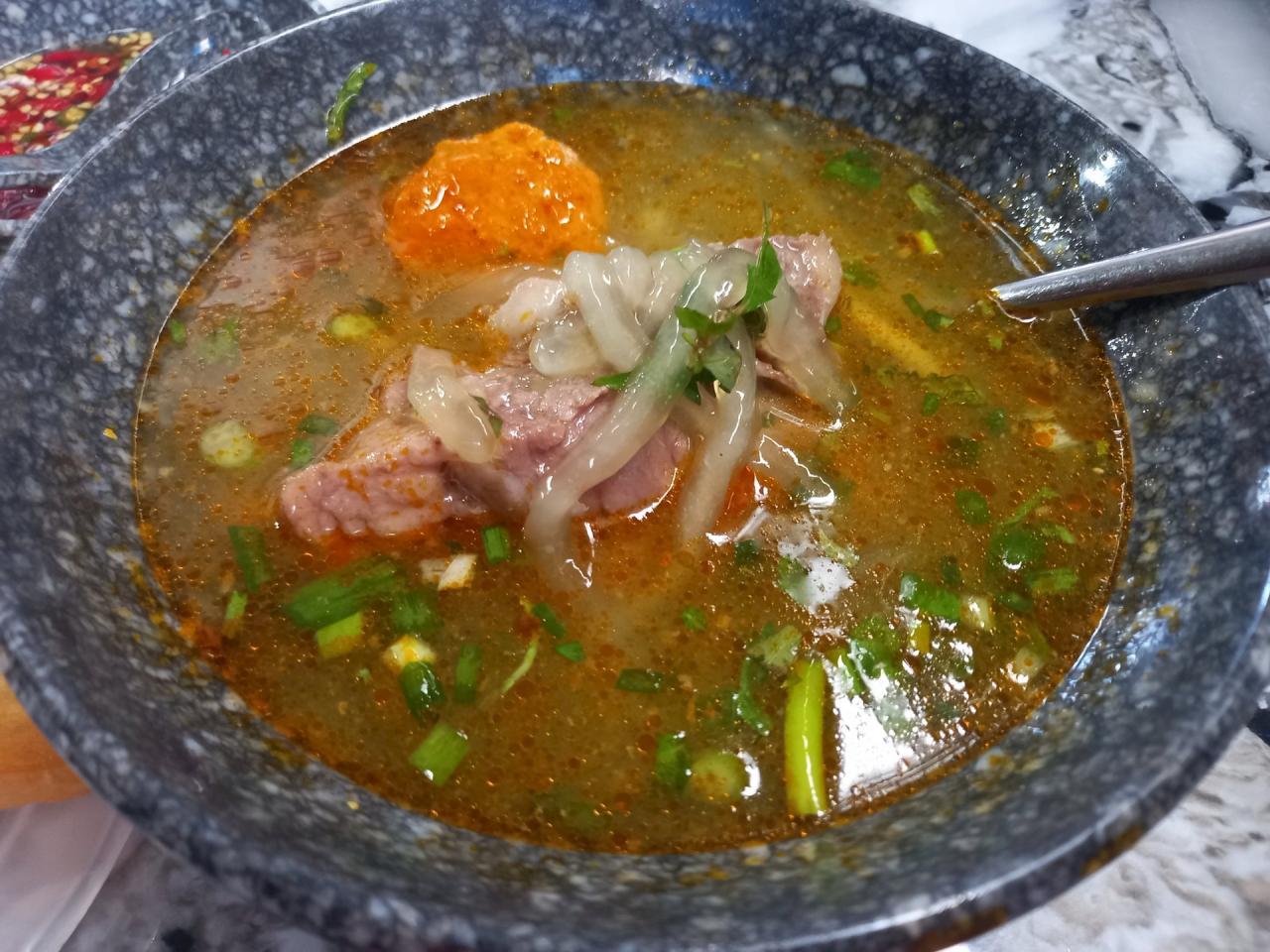
Visitors from afar not only get to discover a local delicacy but can also stop to rest and chat. Therefore, instead of just encountering a taste of home in familiar dishes, diners feel like they're traveling back in time to a bygone rural market with simple, beloved snacks.
You can enjoy Hoi An-style banh canh (rice noodle soup) anytime, whether it's early morning or late afternoon. Initially, Hoi An banh canh was simply a snack for the locals, but over time, it has become a beloved "brand" that fascinates many diners.
Rice noodles are made from rice flour, carefully and thoroughly kneaded. The dough is then rolled thinly into sheets and cut into small, bite-sized strands. Finally, the noodles are boiled until cooked. After cooking, they should be quickly removed and placed in cold water to prevent them from sticking together and to maintain their chewy texture.
The essence of the traditional Vietnamese rice noodle soup (banh canh) in the Old Quarter is not just the noodles themselves, but the broth also plays a crucial role. Depending on the type of banh canh, the broth preparation varies; for example, banh canh with crab, fish cake, or pork trotters may include corresponding ingredients. Although variations have been made to suit different tastes over the years, the broth has consistently maintained its sweet and savory flavor derived from simmered pork bones.



It's unclear when exactly, but each strand of banh canh (Vietnamese rice noodle soup) has contributed to strengthening the bond between the people of Hoi An and tourists. That's the great value created by a small, endearing bowl of banh canh.
Therefore, to ensure Hoi An remains "preserved" in the hearts of tourists, sometimes we have to start with simple treats – like preserving the authentic taste of Hoi An's banh canh (rice noodle soup) in the heart of the city. Only then, when tourists experience Hoi An's cuisine , will they truly feel like they're returning to their own kitchen, and will be reluctant to leave!
Source: https://baoquangnam.vn/con-thuong-banh-canh-thi-ve-pho-hoi-3138660.html