

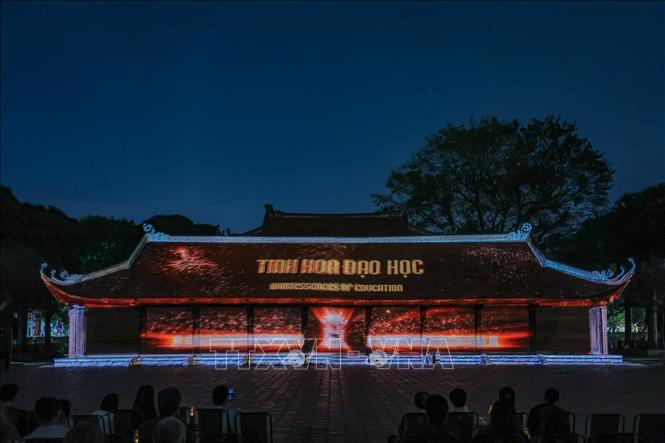
National memory is "awakened" by technology.
The landscape of Vietnam's cultural heritage is emerging as a stream of memory and identity, where each region preserves its own unique values. Monuments, intangible cultural heritage, national treasures, and UNESCO-recognized heritage sites are testaments to the depth of history and richness of Vietnamese culture. From ancient architectural structures and vibrant traditional festivals to expressive folk art forms, all have woven together a "living heritage space."
In the context of rapid technological development, bringing heritage into the digital space is not just an option, but has become an inevitable path for traditional values to be reborn in a new, more accessible, vibrant form, with the potential for widespread dissemination.
According to Mr. Tran Huu Son, Director of the Institute for Applied Folklore Research, cultural heritage is not an immutable entity but is always in motion, being recreated and transformed throughout different historical periods. Despite changes over time, heritage retains its core essence. Therefore, digitization plays a crucial role in recording the entire process of heritage evolution, creating a database to serve research, evaluation, and the full identification of the value of each type of heritage.
Digitizing heritage goes beyond mere "preservation" and opens up a completely new approach to culture. Technologies such as virtual reality, augmented reality, 3D modeling, and big data have helped recreate spaces, artifacts, and intangible values vividly and authentically. Viewers are no longer limited by space and time, but can "step into" history, observe every detail, and feel the depth of culture through multiple senses. More importantly, digitization helps systematize documentation scientifically , creating a foundation for future research, preservation, and restoration of heritage. This is also a way for values that seem fragile to the erosion of time to be sustainably preserved, becoming the nation's "digital memory" in the new era.
Beyond its preservation aspect, digitalization opens up opportunities to promote the value of heritage in modern life. Online museums, digital exhibitions, virtual tours, and creative products based on heritage are gradually becoming bridges between tradition and the public. Especially for the younger generation, who grew up with technology, heritage, when "retold" in digital language, becomes more accessible and appealing. Instead of passively receiving, young people can interact, explore, and even recreate heritage from their own perspectives. This not only helps spread cultural values but also sparks creativity, contributing to the formation of cultural industry products that are deeply rooted in national identity. Therefore, heritage is not just a past to be preserved, but also becomes a crucial resource for economic development, tourism, and building the national image in the context of integration.
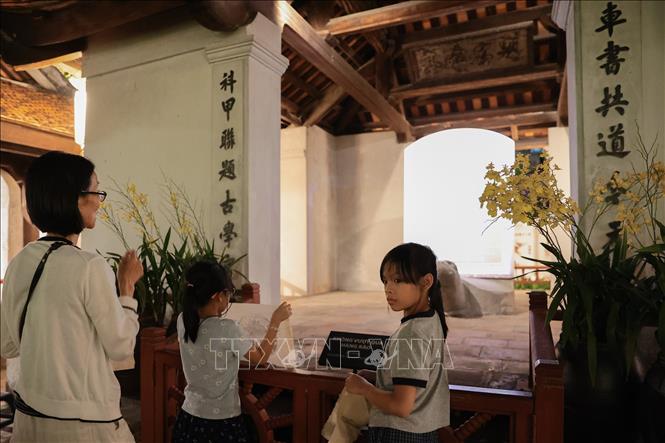
Children experience a heritage space combined with technology, interacting with the "ancient turtle" at the Temple of Literature - National University ( Hanoi ), contributing to raising awareness of national history and culture. Photo: VNA
In practice, Hanoi is demonstrating a systematic and scientific approach to digitizing heritage in conjunction with sustainable development. The city is not only focusing on data digitization but also on building a synchronized digital ecosystem that combines preservation, education, and innovation. Many historical sites and museums have applied modern technologies such as 3D projection, virtual reality, and multimedia narration, enhancing the public experience. Simultaneously, heritage education programs are designed flexibly, integrating technology to attract students. Hanoi is also developing creative spaces, pedestrian streets, and cultural events linked to heritage, creating conditions for heritage to "live." This approach not only effectively preserves traditional values but also transforms heritage into a resource for the development of the cultural industry.
The Temple of Literature - National University, considered Vietnam's first national university, is a famous historical site in Hanoi, embodying the cultural and educational values of the feudal period and preserving the country's traditions. According to Ms. Duong Ngoc Ha, Deputy Director of the Cultural and Scientific Activities Center of the Temple of Literature - National University, two software programs, "Igniting the Source of Learning" and "Searching for Sacred Animals," have been integrated into the heritage education program for secondary schools. Children are very enthusiastic about using these technological devices to explore knowledge in these beneficial extracurricular programs.
Spreading Vietnamese values in the digital age.
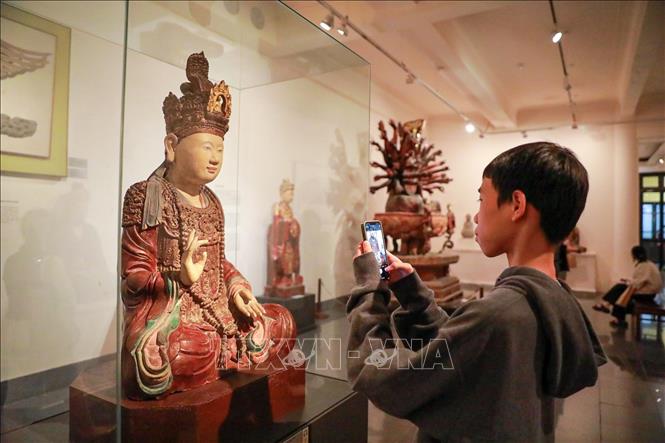
Visitors experience activities at "Museum Night". Photo: VNA
According to Mr. Nguyen Anh Minh, Director of the Vietnam Fine Arts Museum: The Vietnam Fine Arts Museum, which houses more than 20,000 art artifacts, including 9 National Treasures, is entering a new phase with significant changes thanks to the application of technology and digital transformation. From a little-known destination, the Museum has now become a close-to-nature, vibrant, and attractive art space for the general public. One of the breakthroughs is the application of the iMuseum VFA multimedia commentary system with many popular languages and location technology, allowing visitors to access information about hundreds of representative artifacts directly on their mobile devices. The Museum also innovates live exhibitions with advanced technology. Dong Ho and Hang Trong paintings, or ethnic costume motifs, are layered and animated into moving images, creating a unique visual experience for viewers…
The Vietnam Fine Arts Museum has undergone a remarkable transformation, with visitor numbers increasing by over 300% compared to five years ago, with domestic visitors accounting for approximately 70%. From being "forgotten" on the tourism map, the Museum has now become a familiar cultural destination for young people, families, and art lovers. The Museum's creative activities and technological applications in recent times have contributed to bringing the Museum closer to the public and spreading the love of art.
According to experts in applying technology in the field of heritage: It is necessary to expand the digitization of heritage to create big data, providing "raw materials" for deep learning programs, thereby creating AI tools or AI generators with in-depth capabilities for heritage or derivative products from heritage.
Museum digitization is a journey of transforming the soul of artifacts, the spirit of exhibition spaces, the depth of historical data, and the echoes of cultural stories into a digital language. This process offers profound strategic benefits, including the perpetual preservation and restoration of heritage; expanding global access in space and time; enhancing multi-sensory experiences and interactions; supporting scientific research and elevating education; promoting economic development and fostering cultural tourism…
The goal of building a national database of cultural heritage and artifacts is a strategic step, enabling centralized management and maximizing the value of this treasure trove. The participation of technology partners, with their proven expertise and experience gained through numerous real-world projects, is a key factor in accelerating the digitization process. Integrating new technologies not only helps preserve heritage but also creates unique experiences, attracting tourists and fostering a creative economy based on heritage.
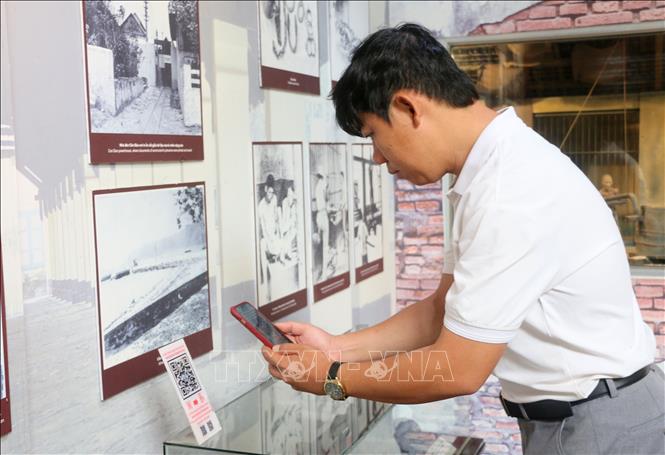
Visitors scan QR codes to access information at the Exhibition House on the Life and Career of President Ton Duc Thang, located within the Ton Duc Thang Memorial Area in My Hoa Hung commune, An Giang province. Photo: VNA.
The digitization of heritage and the strong application of modern technologies are now also taking place at major events. A prime example is the National Achievements Exhibition commemorating the 80th anniversary of National Day (September 2, 1945 - September 2, 2025), which showcased the strong application of modern technologies and introduced many innovative exhibition ideas, appearing for the first time in a national-scale exhibition. Virtual reality (VR), augmented reality (AR), interactive touch screens, 3D models, and multimedia presentations were seamlessly integrated into the exhibition spaces, allowing the public not only to observe but also to directly interact, explore, and experience. Some units also introduced digital maps of achievements, artificial intelligence applications, virtual exhibition tours, and many other novel and attractive forms of presentation… creating an educational space that inspires pride in every citizen.
When traditional values are recreated through technology, heritage no longer remains static in nostalgia, but becomes a vibrant, relatable, and far-reaching source of inspiration. In the midst of a digitized world, national cultural identity remains clearly present as an inexhaustible source, nurturing the soul and inspiring aspirations for sustainable development in future generations.
Source: https://mst.gov.vn/cong-nghe-ke-chuyen-lich-su-van-hoa-197260324164839427.htm


![[Image] Nguyen Tat Thanh Street is expected to be widened, reducing traffic congestion.](https://vphoto.vietnam.vn/thumb/1200x675/vietnam/resource/IMAGE/2026/03/24/1774326200262_ndo_br_3-6869-jpg.webp)


































































Comment (0)