

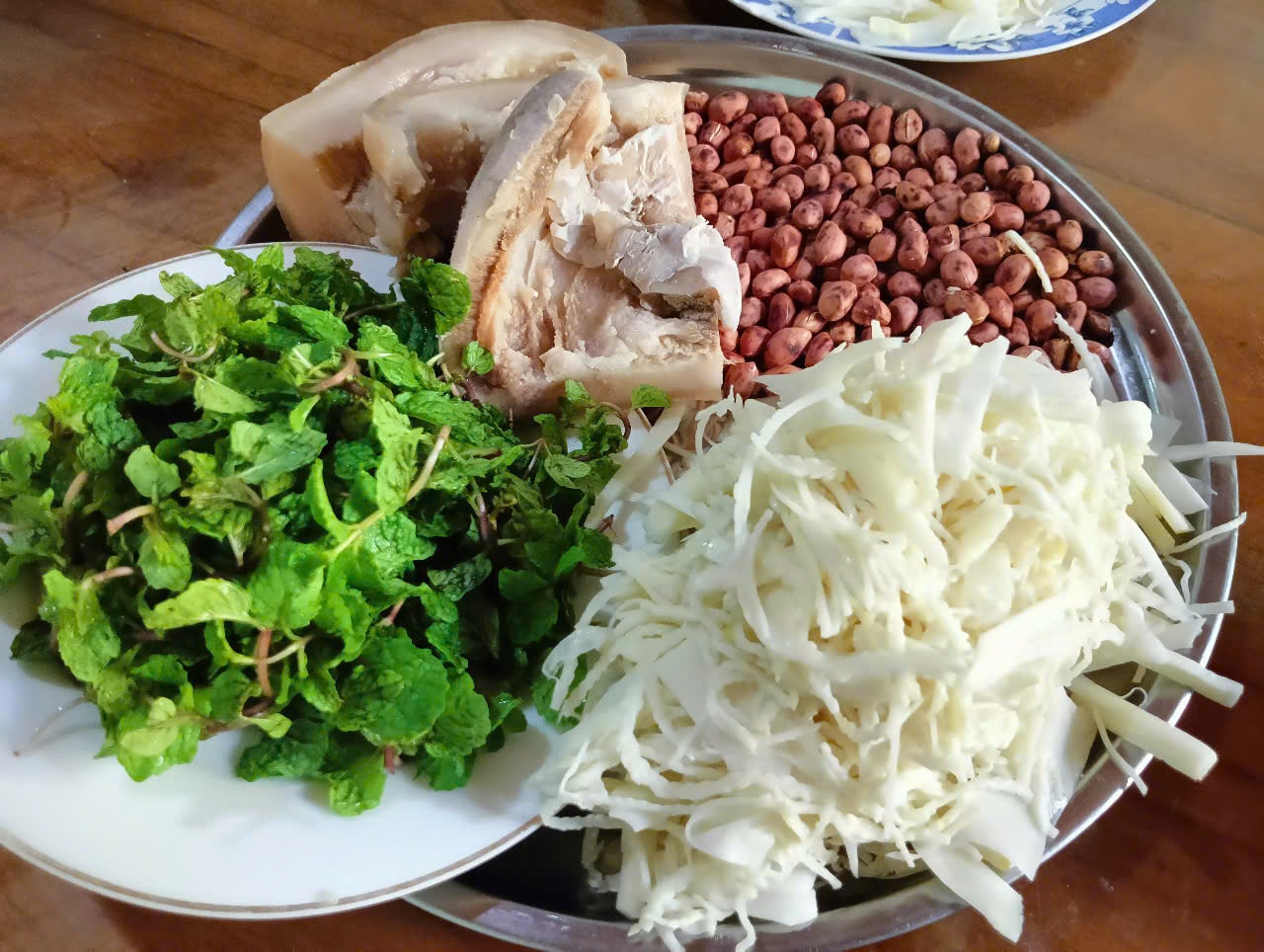
My childhood was filled with the pure fragrance of betel nut blossoms wafting from the window. Summer afternoons spent secretly gathering fallen betel nut blossoms from the garden; moonlit nights, I'd open the windows wide and dreamily listen to the gentle breeze carrying the scent of betel nuts... I also remember the rich, aromatic betel nut root salad my mother made in the kitchen.
My family planted a betel nut garden, which not only provided shade but also improved our family's livelihood during harvest season. We children rarely got to enjoy betel nut hearts because, to get them, we had to cut down the entire tree. We only got to enjoy them when the betel nut trees were infested with pests or had grown too old and tall, and our parents cut them down to plant new ones.
It's not rare, but it's seldom encountered, so whenever my mother found a palm heart, she cherished it as if she'd discovered a truly precious delicacy. She showed me how to harvest the palm heart quickly and with less effort.
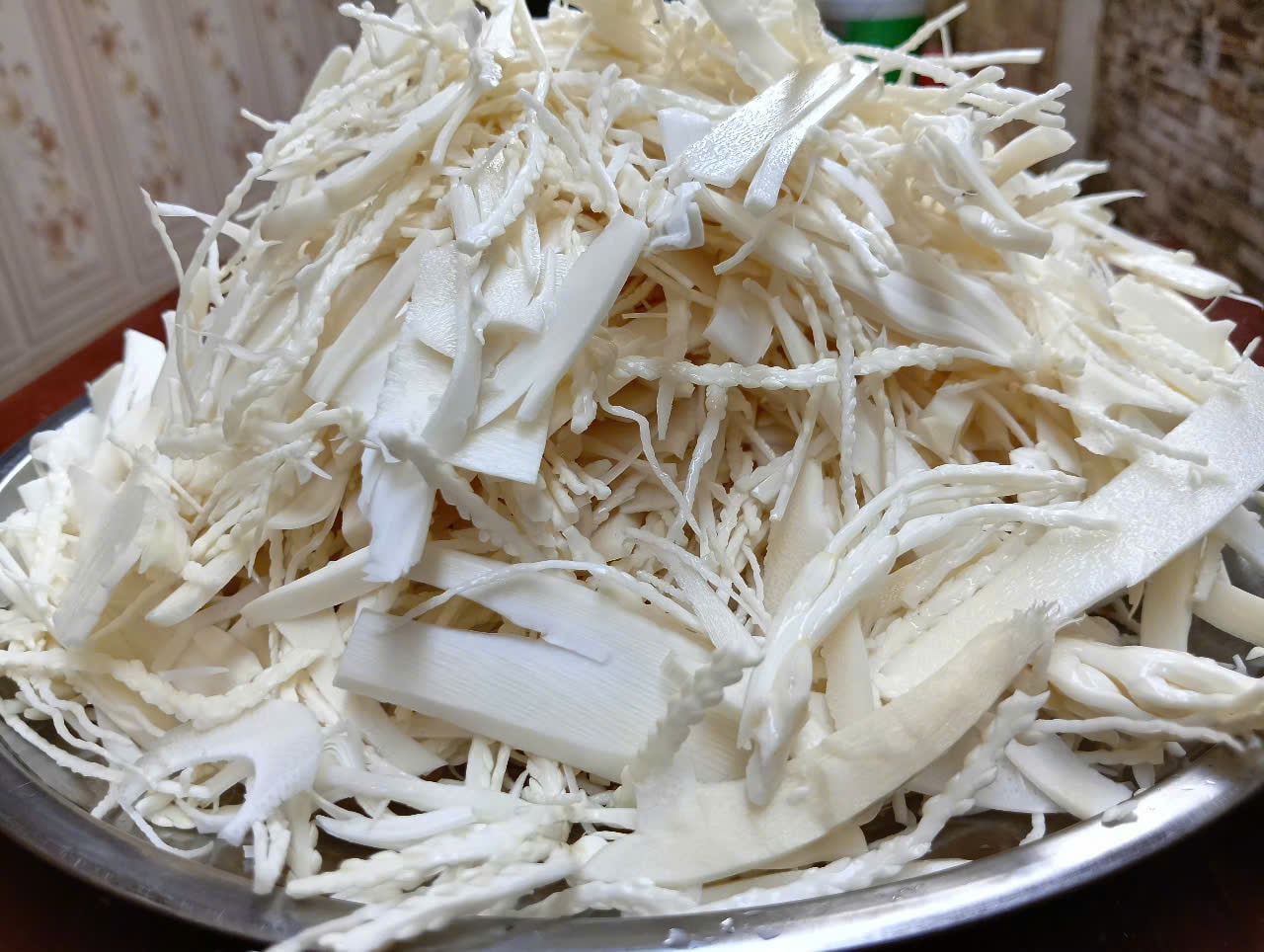
After the betel nut tree is harvested, the top part is cut off, and the outer layers are peeled away. The heart of the betel nut is then revealed, appearing opaque white, soft, and crunchy. Not only is it delicious, but this ingredient is also clean and contains plenty of fiber and minerals that are good for the digestive system.
My mother transforms the palm heart into many unique dishes, such as shrimp soup, braised in soy sauce, or stir-fried with shrimp. All of them have a special flavor, both rustic and appealing. But my sisters and I still love the salad the most. My mother's salad plate is like a painting, with the ivory white of the palm heart, the pale yellow of the meat slices, accented with the green of the herbs and a touch of yellow from the roasted peanuts.
Whenever we had palm heart at home, my mother and I would meticulously cut it into bite-sized pieces, then soak it in a mixture of vinegar or diluted salt water to maintain its crispness and white color.
Remove the palm heart strips from the water and drain them. Next, sauté a little shallots, garlic, and crushed fresh chili peppers until fragrant, then add the palm heart. Cook over high heat, stirring quickly, and turn off the heat so that the palm heart is just cooked but not dehydrated.
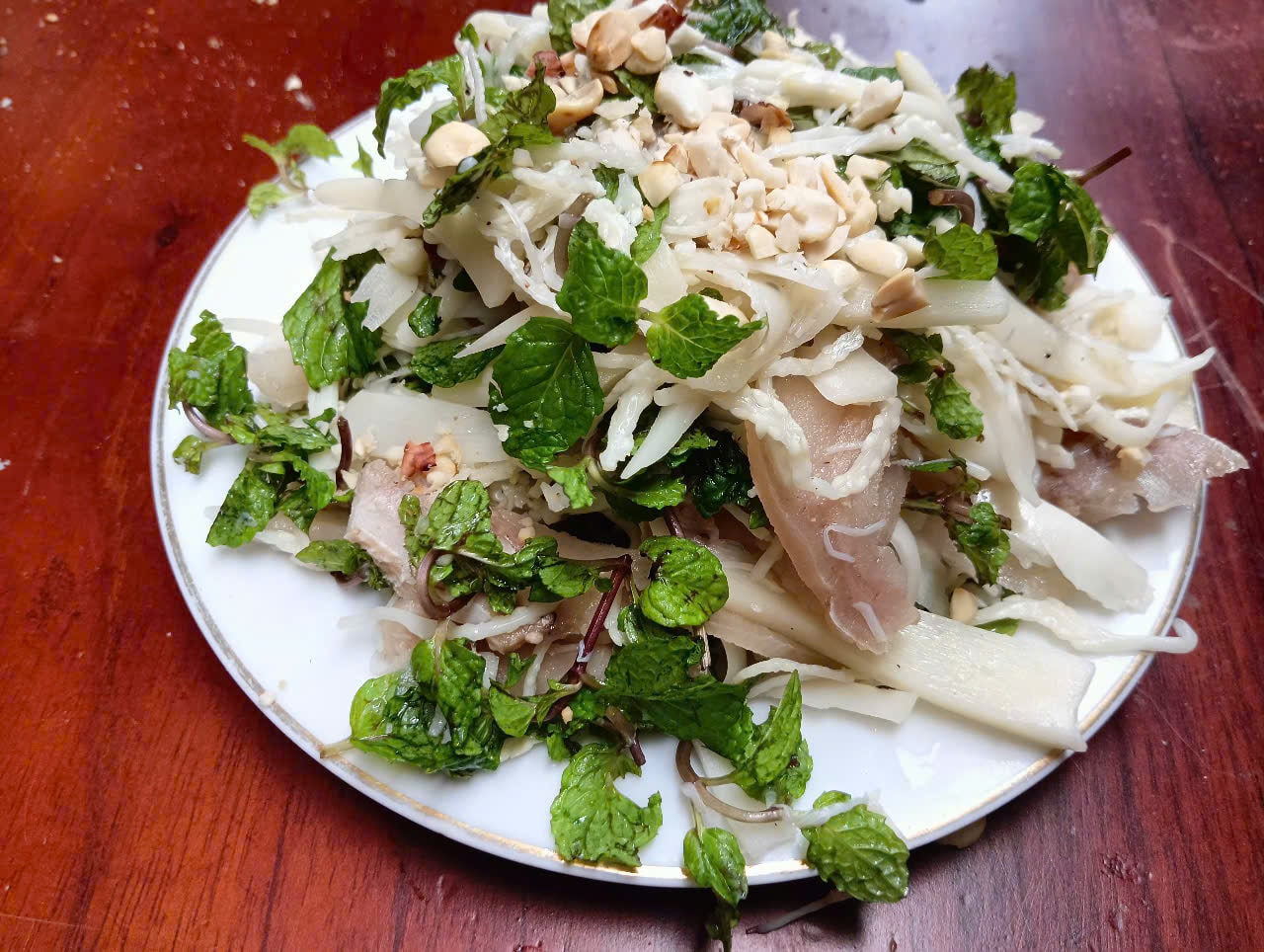
My mother usually uses a large bowl to mix the prepared palm heart, pouring in the freshly prepared fish sauce; adding chili powder, herbs, and basil, mixing well, and then serving it on a plate. My mother's palm heart salad is simple to make, crispy on the outside, soft and refreshing on the inside, blended with the aroma of roasted peanuts, basil, herbs, and the pungent spiciness of chili.
On days when we felt a bit "fancy," Mom would add thinly sliced pork belly or pig's ears, or peeled boiled shrimp to the mixture. For my sisters and me, the sweet, sour, and spicy flavor of the fish sauce alone was enough to make our taste buds tingle; we couldn't find anything to complain about.
Even now, amidst an abundance of delicious dishes, I still can't stop craving palm heart salad. Just like this afternoon, returning home coincided with my parents replacing their palm trees, allowing me to indulge in this local specialty. Watching my mother meticulously tearing apart the palm heart with her thin, bony hands, my heart ached. Time flies so fast!
Source: https://baoquangnam.vn/cu-hu-cau-ca-mot-troi-thuong-nho-3153762.html



















![[Photo] Prime Minister Pham Minh Chinh receives the Chinese Ambassador to Vietnam](https://vphoto.vietnam.vn/thumb/1200x675/vietnam/resource/IMAGE/2026/04/05/1775397481797_ndo_br_dsc-5512-jpg.webp)































































Comment (0)