Even after leaving the lecture halls, they continue to be an important part of academic life, contributing financially, intellectually, and prestigiously.
"Rescue" during economic fluctuations
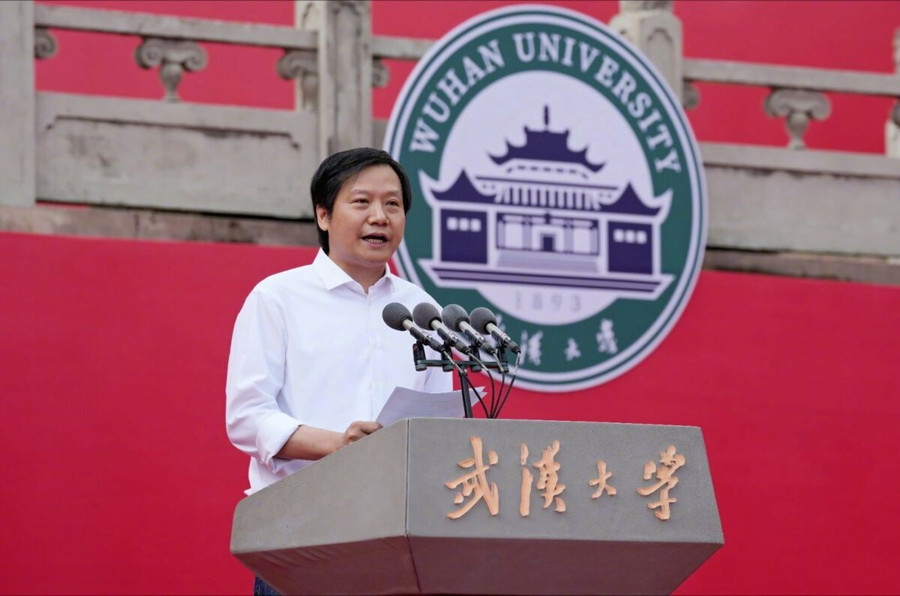
In November 2023, billionaire Lei Jun, the founder of Xiaomi, donated 1.3 billion yuan to Wuhan University in China, where he graduated with a bachelor's degree in computer science in 1991. This was the largest personal donation ever given to a Chinese university.
In many countries, especially developing ones, the relationship between alumni and universities remains weak. Maintaining regular interaction is not given enough attention, while the systems for managing alumni information and data lack uniformity.
Wuhan University stated that it will use the donation to “innovate technology and cultivate talent.” The investment will help train more outstanding engineers, scientists, and technology entrepreneurs, contributing to the country's development.
A month later, Duan Yongping, co-founder of smartphone companies Oppo and Vivo, announced a donation of 1 billion yuan to his alma mater, Zhejiang University.
In December, Yang Yuanqing, Chairman of Lenovo Computer & Consumer Electronics, donated approximately $28 million to the University of Science and Technology of China, where he was pursuing his master's degree. This was the largest donation the university had ever received. Prior to that, in 2020, Mr. Yang also donated $1.4 million to the university's COVID-19 research fund.
In addition, Mr. Yang has made significant contributions to Shanghai Jiao Tong University and Tsinghua University, two of China's top universities.
Similarly, billionaire He Xiangjian, founder of Midea Appliance Group, spent 3 billion yuan to establish a fund to support scientific research in 2023, helping researchers at several universities in fields such as climate change and artificial intelligence.
Previously, Cao Dewang, Chairman of Fuyao Group, donated 10 billion yuan through his charitable foundation to build Fuyao University of Science and Technology, a non-profit university focused on applied science and engineering education.
Many other fields of study also receive funding from this source, including Mathematics, Physics, Chemistry, Literature, History, and Philosophy. Billionaire Lei Jun also revealed that while studying at the university, he received a scholarship from a business to cover his tuition fees.
Cooperation for mutual development
Tsinghua University is a prime example of building a large and influential alumni community in China. The university currently has approximately 140,000 alumni worldwide, with over 100,000 coming from short-term training programs or international collaborations. Many of them are business leaders, technology experts, researchers, and high-ranking officials.


Through this network, Tsinghua University has established educational investment funds, faculty support programs, and job placement networks for students. The university's "Alumni Mentor Program" is a crucial bridge between generations. Hundreds of alumni participate in career counseling for young students, helping them better understand the job market and career paths.
In addition, initiatives such as the “Professional Committee of Integrated Circuits of Tsinghua Alumni Association” create a forum for collaboration among semiconductor industry experts, supporting research and development of technology for the university and the nation.
Thanks to these donations, even during years of economic volatility in China, universities have remained stable. In addition, businesses have actively organized recruitment drives, job fairs, and provided early internship opportunities for students, helping universities to partially address the unemployment problem faced by millions of graduates.
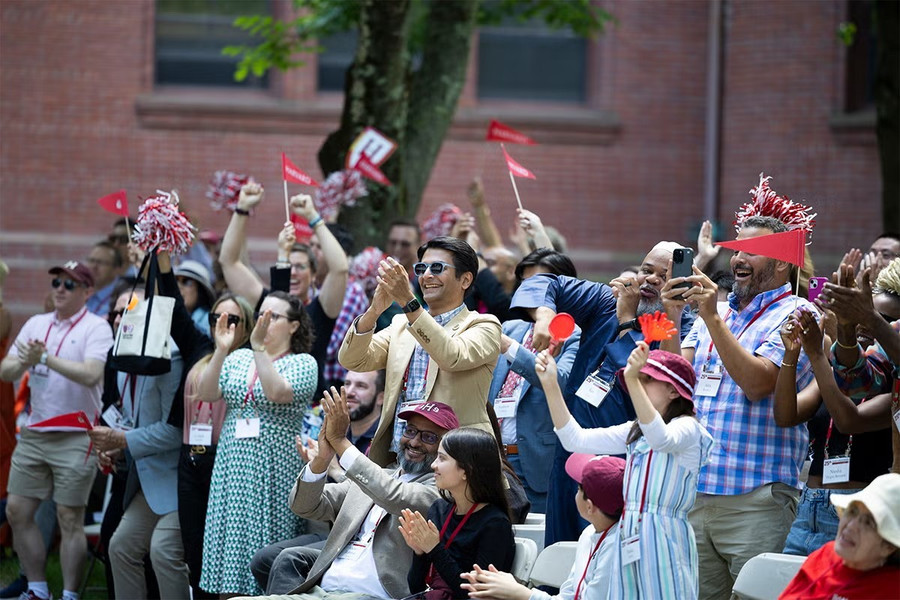
At major universities like Harvard (USA) or Oxford (UK), the alumni community is organized and operates as a dynamic ecosystem. This connection becomes a long-term development strategy.
Harvard is a prime example of harnessing the power of its alumni network. The "Harvard Campaign," launched in 2013, alone mobilized over 633,000 donations from 153,000 households in 173 countries, bringing in billions of dollars for scholarship projects, research, and facility expansion.
According to its 2023 financial report, Harvard received approximately $486 million from alumni and affiliated organizations. These contributions not only help the university maintain its substantial financial resources but also reflect the trust and pride of generations who have studied there.
Harvard alumni contribute not only financially, but also provide intangible value through career mentoring, leading research projects, and connecting recent graduates with job opportunities. The nine-month "Student-Alumni Mentoring Initiative" allows students to be mentored by experienced alumni in a variety of fields.
The "Harvard Alumni Entrepreneurs" network has become a meeting point for thousands of startup founders and students, sharing resources, connecting with investors, and creating a broad collaborative environment. Alumni also actively volunteer in admissions interviews, community events, and campaigns to promote the university's image globally.
While Harvard stands out for its financial mobilization capabilities, Oxford impresses with its global network. The university currently has over 375,000 alumni, organized into more than 160 groups by region or subject. From London to Singapore, from New York to Nairobi, Oxford alumni groups act as cultural ambassadors, support admissions, organize academic events, and build strong career networks for recent graduates.
Oxford also focuses on developing professional communities such as the “Cyber Security Alumni Network,” where IT professionals meet, share knowledge, collaborate on research, and explore career opportunities. Many of Oxford’s scholarship funds and research facilities are built on alumni contributions, demonstrating the long-term and strategic value of this connection.
Opportunities for developing countries
Looking at these models, it's clear that the success of top universities is inseparable from their engagement with the alumni community. They are strategic partners, social resources, cultural ambassadors, and intellectual patrons. However, not all universities achieve similar results.
One of the biggest challenges is geographical distance and time barriers. If students are not encouraged to participate in extracurricular activities or do not deeply experience the school culture during their studies, they may lose their sense of belonging after graduation. Many schools only reach out to alumni when they need to raise funds, making the relationship one-sided and lacking depth.



Another problem is the limited capacity for managing the alumni community. Building and maintaining a network requires dedicated personnel, a data platform, supporting technology, and stable funding. Many universities consider this a secondary activity, assigning it to a small department, leading to fragmented and inconsistent operations.
However, these challenges are not insurmountable. Many experts believe that building a digital alumni network is the most viable solution currently. Universities can learn from the flexible mentoring models of Harvard or Tsinghua, connecting mentors and mentees by industry and region, and allowing online exchanges instead of in-person meetings. This expands the scope and bridges the geographical gap between alumni and current students.
Fundraising campaigns also need to be transparent, have specific goals, and be clearly communicated. Instead of making general appeals, schools should link requests for contributions to specific projects such as scholarships, research, or facility improvements.
Another way to harness the power of alumni is to turn them into "media ambassadors." They can share their personal success stories, feature in promotional videos and articles, or refer potential students to the school. Successful alumni are living proof of the quality of education.
Overall, alumni are a valuable "social asset" for universities. They are both a product, a partner, and a source of inspiration for the sustainable development of education. In a world undergoing rapid transformation with technology, globalization, and academic competition, investing in the alumni community is no longer an option but a necessity. When a university maintains contact with its former students, it not only preserves memories but also secures its future.
I will use my name and reputation to attract social contributions as the primary source of funding for the school in the future. The goal is to serve the country and its people. Education is not a business. —CAO DEWANG, Chairman of Fuyao Group
Source: https://giaoducthoidai.vn/cuu-sinh-vien-nguon-luc-chien-luoc-post756639.html

![[Image] A look back at the capital's preparations for the century-long master plan.](https://vphoto.vietnam.vn/thumb/1200x675/vietnam/resource/IMAGE/2026/06/29/1782750453122_quy-hoach-100-nam-minh-duy-1-2118-jpg.webp)
![[Photo] General Secretary and President To Lam works with the Party Committee of the Government on the work of preventing and combating storms, floods, extreme natural disasters and climate change.](https://vphoto.vietnam.vn/thumb/1200x675/vietnam/resource/IMAGE/2026/06/29/1782729441945_a1-bnd-0385-9454-jpg.webp)

![[Photo] National Assembly Chairman Tran Thanh Man attends the Conference to announce the Master Plan for Hanoi Capital City with a 100-year vision.](https://vphoto.vietnam.vn/thumb/1200x675/vietnam/resource/IMAGE/2026/06/29/1782709639728_ndo_br_1-jpg.webp)