Penalty shootouts have long been considered one of the most brutal, dramatic, and controversial mechanisms for determining victory in elite sports .
Officially incorporated into the Laws of Football by the World Football Federation (FIFA) and the International Football Association Board (IFAB) in 1970, this mechanism was created to replace purely random methods such as coin tossing or draws.
However, after more than half a century in existence, the very structure of penalty shootouts has become the focus of a large-scale academic debate worldwide.
Playing first only has a 15% chance of winning.
On June 30th, within just a few hours, two European football giants, Germany and the Netherlands, both bowed out of the World Cup to weaker opponents in the same manner: they succumbed in penalty shootouts.
Germany was the first team to fall. After 120 minutes of stalemate with Paraguay, "The German Tanks" lost in the penalty shootout, ending their World Cup journey in a way no one wanted.
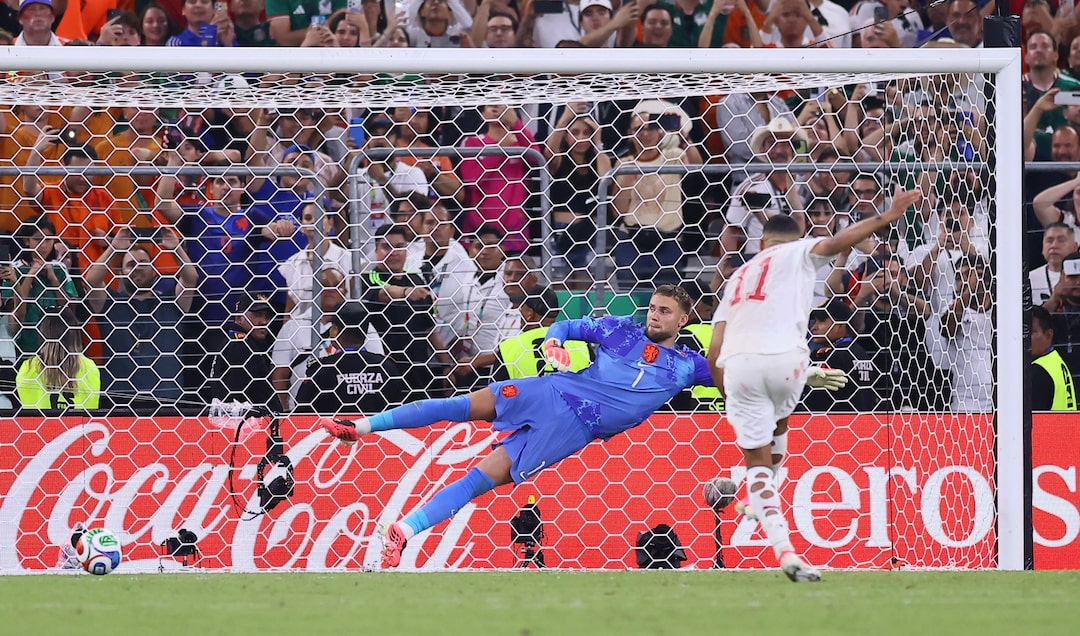 |
Morocco took the second penalty kick in the shootout against the Netherlands but ultimately won. Photo: Reuters. |
Less than a few hours later, the Netherlands followed suit. The "Orange Tornado" drew 1-1 with Morocco in halftime and then lost on penalties.
Interestingly, both defeats followed the same pattern: both Germany and the Netherlands won the coin toss and chose to kick first.
Shortly afterward, Opta released alarming statistics. Specifically, in the last 13 penalty shootouts at World Cup finals, the team that took the first penalty only won twice, equivalent to 15%.
A win rate of only 15% is clearly a disastrous figure and shows that penalty shootouts are no longer as fair as FIFA presented them when it introduced them.
Notably, this 15.3% win rate is in stark contrast to previous historical trends, where the team that shot first had won 15 out of the first 24 penalty shootouts, or 63%.
The abrupt collapse of a statistical advantage once considered a truth raises fundamental questions about behavioral psychology, game theory, and the evolution of data science in modern football.
In 2010, research by Ignacio Palacios-Huerta, a professor at the London School of Economics, found that the team that takes the first penalty kick has a 60% probability of winning.
If a team is successful when taking the first penalty, the pressure on the opposing team's second penalty taker will be greater. If a team fails to take the first penalty, their goalkeeper will have a chance to correct the mistake in the next penalty.


That explains why many experts and players have called for a change to the traditional ABAB style of play (each team taking turns playing alternately).
It's time to change the rules.
The shortcomings of the staggered penalty shootout format have long been discussed, and the adoption of an ABBA format, similar to tie-breaks in tennis, has been considered.
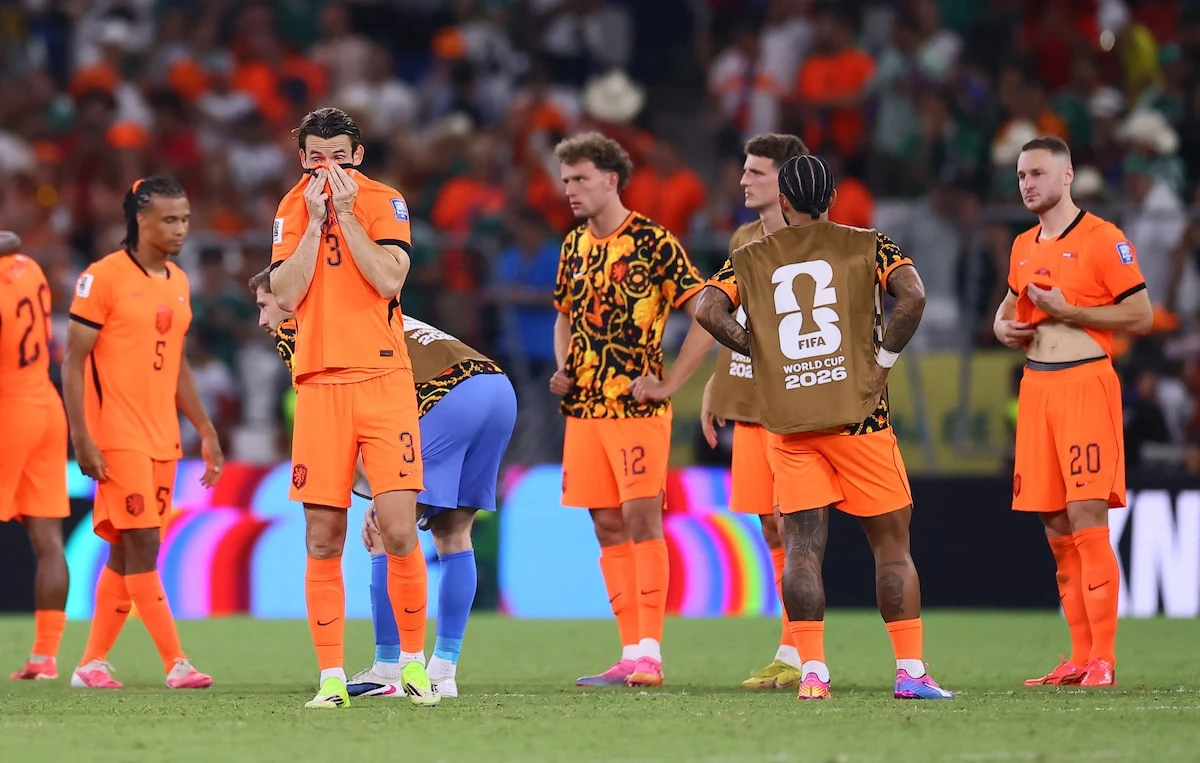 |
In the last 13 penalty shootouts at World Cup finals, the team that takes the first penalty has won only twice, or 15%. Photo: Reuters. |
According to research from the Economic Inquiry , if the ABBA method were applied in penalty shootouts, the probability difference between kicking first and second would no longer exist. Tennis still uses this method today.
FIFA experimented with ABBA in 2017 at European and world youth tournaments. The English Football Association (FA) used ABBA in the Community Shield and League Cup in the 2017/18 season. The Netherlands adopted it in the 2018/19 season.
During that period, the percentage of teams that kicked first winning in penalty shootouts was only 50%. From the time FIFA experimented with ABBA in May 2017 until its conclusion in August 2018, there were 36 matches where ABBA was used in penalty shootouts.
As a result, the teams that kicked first in the first round (A) won 18 times. The teams that kicked second (B) won 18 times. The probability of 60-40 is reduced to 50-50 based on the above pattern.
However, in June 2018, FIFA announced the end of ABBA's experimentation in penalty shootouts, a decision that subsequently sparked controversy.
Although it helps to balance penalty shootouts, football remains, at its core, a sport of popular simplicity.
The alternating ABAB format, like a pendulum, has been deeply ingrained in the minds of billions of fans for nearly 50 years.
In reality, ABBA is simply a game where the first five kicks result in a win or a loss.
If the two teams are tied after 5 rounds and go to a 6th round of penalties, things become more complicated. It's important to note that all players remaining on the field after 120 minutes must take a penalty. No one is allowed to take two penalties until the 11th round is completed.
Many IFAB members believe things become even more complicated if the penalty shootout extends to double digits.
This complexity and trouble falls on the referees and organizers. The referees are responsible for recording the jersey numbers and the order in which players take their shots. Things might be simpler for coaches, as they usually determine the players' shooting order beforehand.



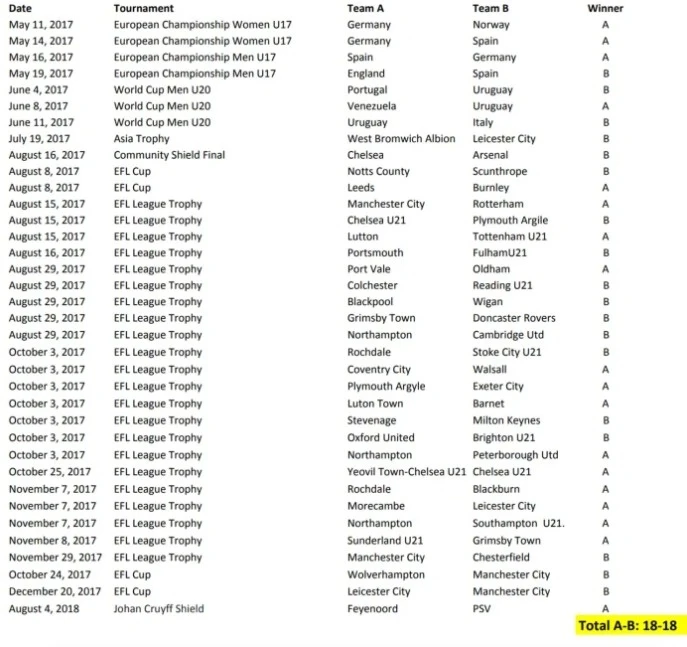 |
The penalty shootout results of the 36 matches that were tested with ABBA. Photo: AER. |
"From an experimental standpoint, the ABBA style of play seems fairer, but it's a bit difficult to understand," commented David Elleray, Technical Director of the IFAB and former referee.
In addition, the need to constantly remember who is shooting which turn in the ABBA structure creates confusion for television viewers and spectators in the stadium.
Furthermore, while the ABBA-style shot relieves constant chasing pressure, it also creates a new and equally terrifying form of pressure.
If Team A scores on the first penalty, Team B faces two consecutive penalties. If Team B's first player misses, the psychological pressure mounts exponentially on the second player who must take the next penalty. This could potentially cause the penalty shootout to end too early, losing its dramatic, back-and-forth nature.
Source: https://znews.vn/da-den-luc-fifa-phai-thay-doi-luat-da-luan-luu-post1665000.html


![[Image] National conference summarizing one year of operation of the overall organizational model of the political system, the three-tiered government model.](https://vphoto.vietnam.vn/thumb/1200x675/vietnam/resource/IMAGE/2026/07/01/1782882811691_ndo_br_1-jpg.webp)