

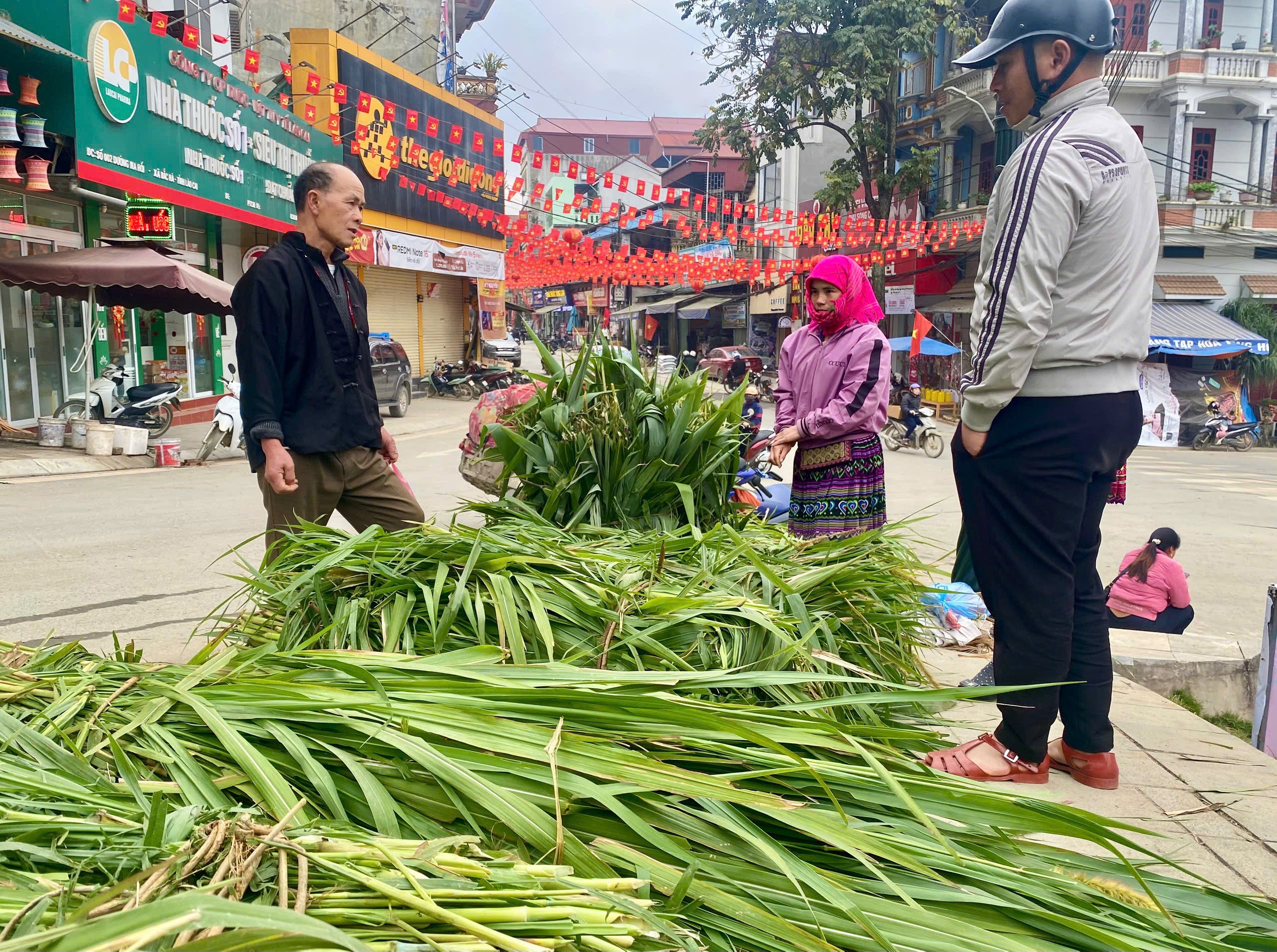
Locals simply call it the "grass market," a unique feature found only in the highlands of Bac Ha during springtime. Bac Ha is known for its cold climate, with long winters, frost, and freezing temperatures that make grasslands scarce. Therefore, as Tet (Lunar New Year) approaches, in addition to ensuring a comfortable holiday for their families, people are busy stocking up on feed for their buffaloes, cows, and horses – their "mainstays of livelihood" that have accompanied them throughout the year.
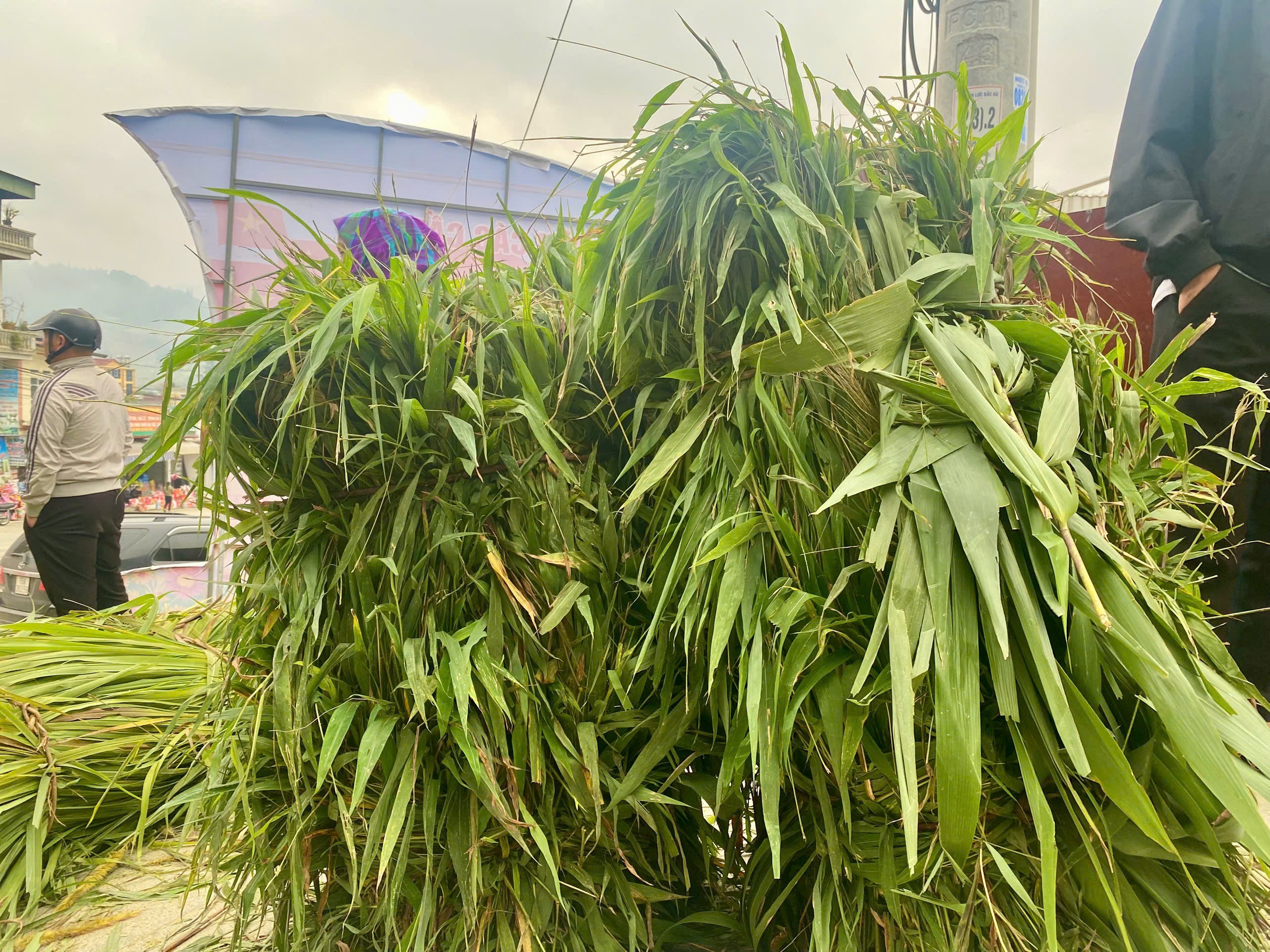
Amidst the hustle and bustle of the year-end market, a simple "grass market" stands out, its air filled with the pungent scent of fresh grass right in the center of the commune… delighting many visitors… No signs, no fancy stalls, just bundles of green grass neatly tied and piled in small heaps in a corner of the market…
The grass is brought down from the villagers' gardens to sell, mainly elephant grass, but also bundles of grass cut from the hillsides, such as bamboo grass and reed grass. Each type of grass is suitable for different types of livestock. According to the sellers, elephant grass and bamboo grass are sweet and soft, and are preferred by horses, buffaloes, and cows. Reed grass, on the other hand, has a slightly bitter taste, but buffaloes really like it, eating it well and keeping them warm during the coldest days.
From 6 a.m. on the 28th day of the 12th lunar month – the last Bac Ha market day before the Lunar New Year of the Horse 2026 – Ms. Ly Thi Xay from Thai Giang Pho village, Bac Ha commune, brought her grass to the market. The bundles of grass, cut from her garden and carefully tended throughout the winter, were now tightly bound and still damp with dew.
Ms. Ly Thi Xay shared: "At the end of the year, everyone is worried about their buffaloes and horses. If we have grass, we bring it out to sell, which not only gives us extra money to buy things for Tet but also helps our neighbors have food reserves for their livestock during Tet."
Unlike the noisy bargaining of clothing stalls or the bustling vegetable and fruit section, the "grass market" corner has its own rhythm. This year, the price of each bundle of grass ranges from 120,000 to 160,000 VND depending on the type. Buyers examine the grass, squeeze it, smell it, and inquire about its tenderness and sweetness. The sellers honestly tell stories about their fields and the days they cut the grass in the cold mist.
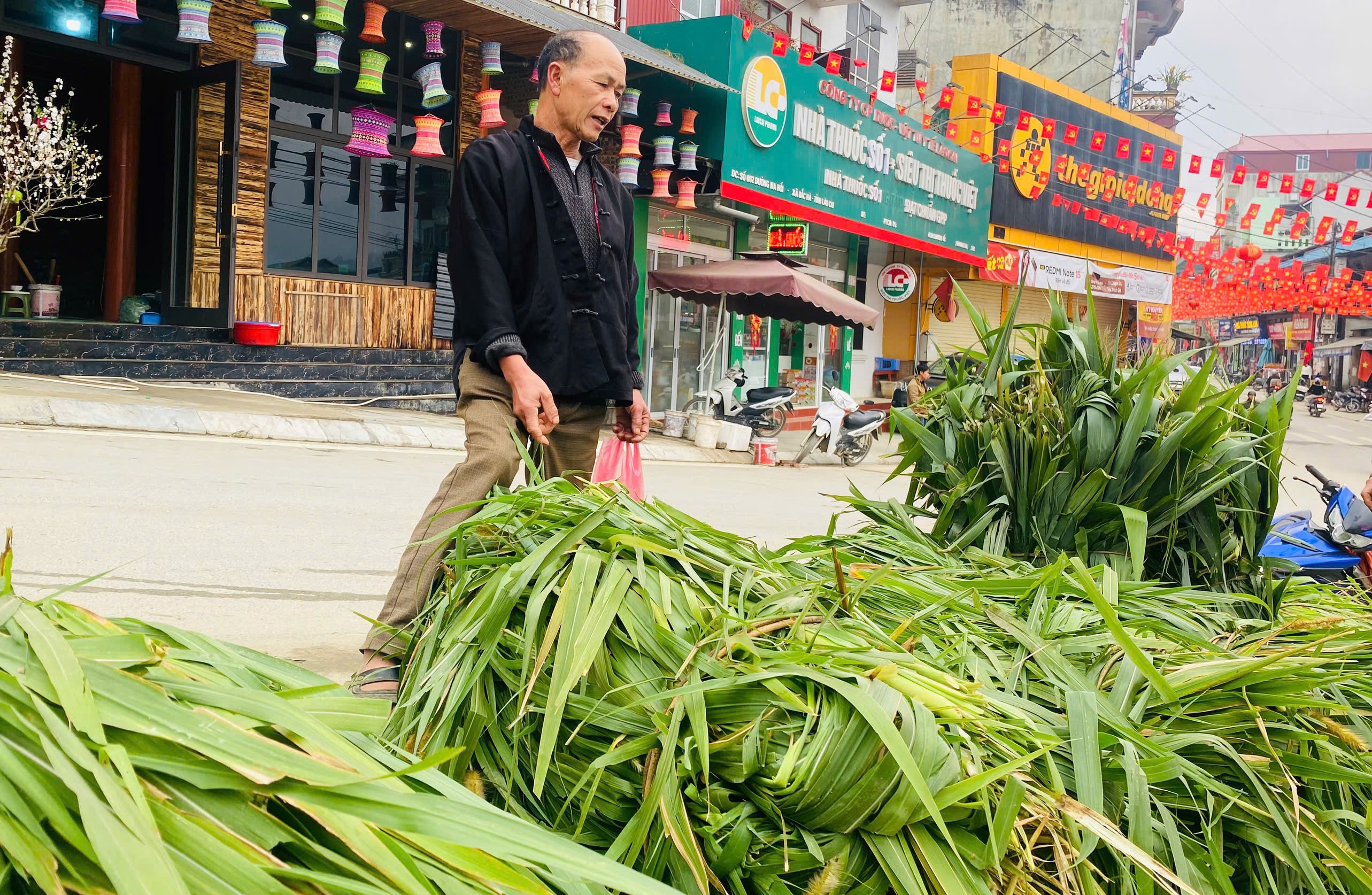
Giàng Seo Pao, from Bản Hồ village, Bắc Hà commune, made sure to go to the market early. For him, preparing for Tet (Lunar New Year) for his family is important, but taking care of his five buffaloes is equally crucial. "I want my buffaloes to have a good Tet too, so every year I buy grass in advance. I can only enjoy Tet with peace of mind if the buffaloes are healthy," Pao said with a smile.
Meanwhile, Mr. Vang Van Cuong from Na Ang A village came to the grass market both to buy grass and to experience the atmosphere of the Tet market: "Every year, at the end of the year, there's this 'grass market.' It's probably rare to see people bringing grass to the market to sell for buffaloes and horses like this elsewhere. The grass sold during this time is to stockpile food for the buffaloes and horses that have diligently helped us plow the fields, carry goods, and participate in races and tourism all year round. So they also need 'a lavish Tet'."
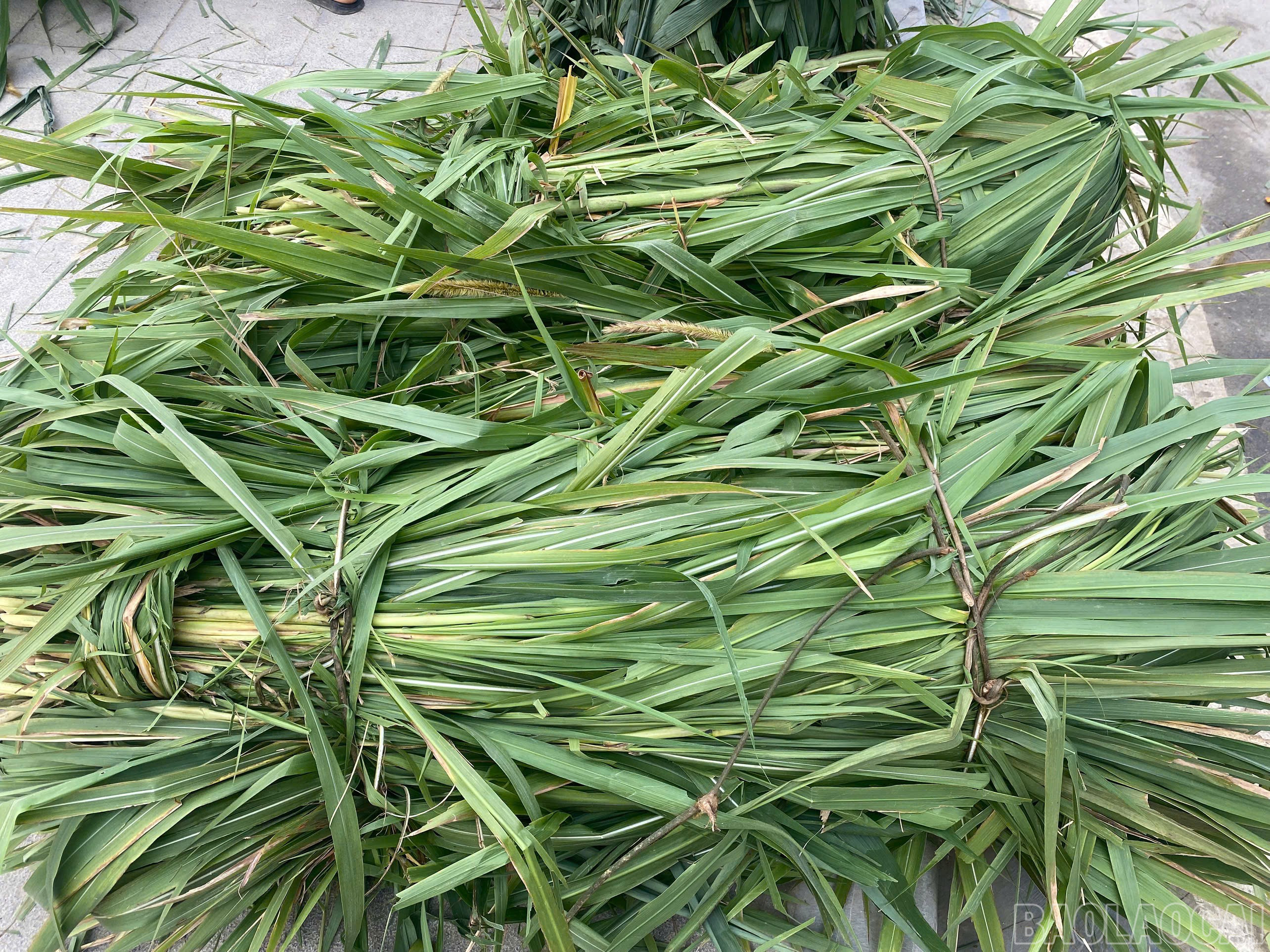
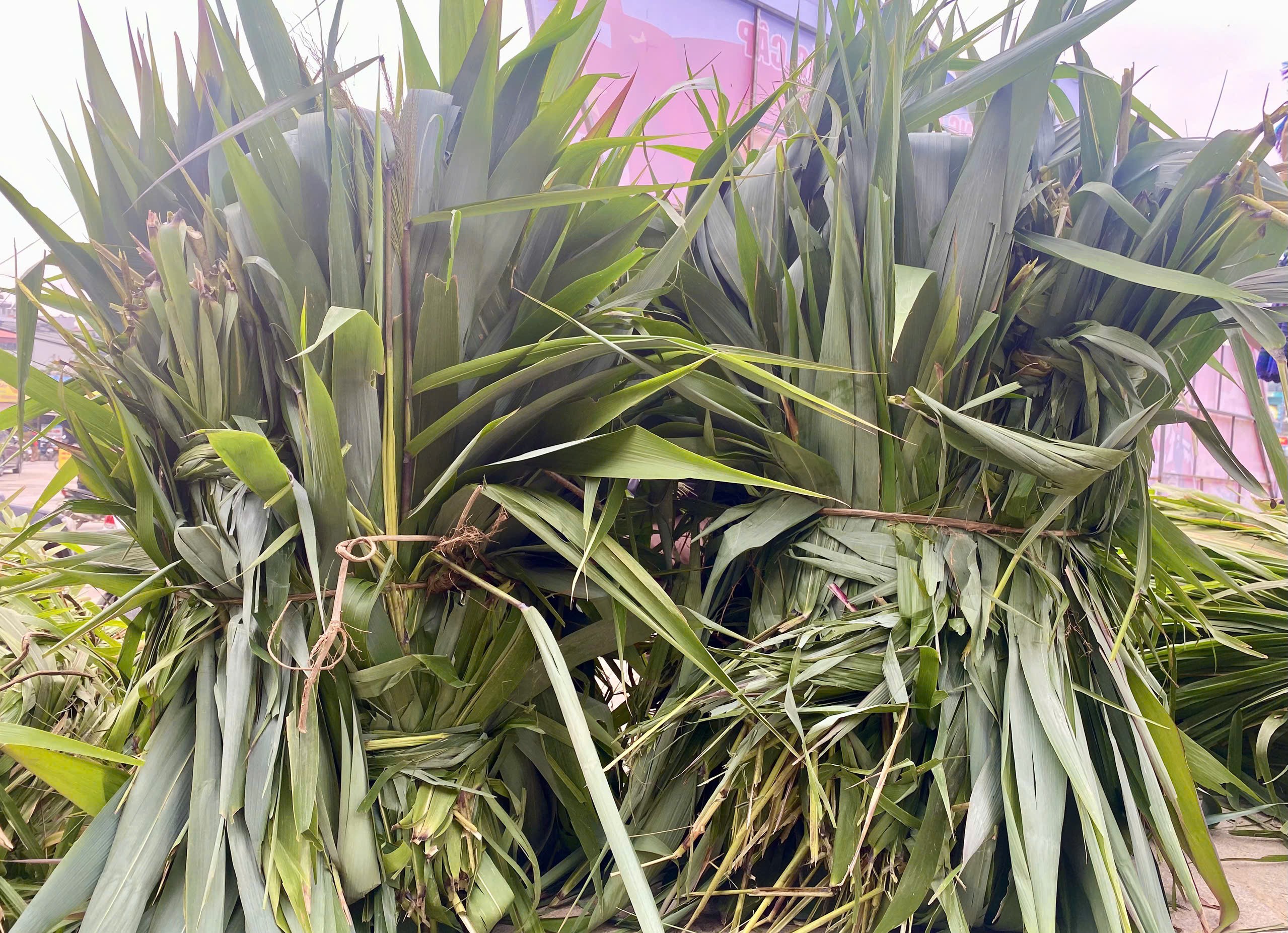
In the highlands of Bac Ha, buffaloes, cows, and horses are not just assets, but also companions. They follow their owners to the fields, to the market, over mountain passes… and the horses even speed along the racetracks of Bac Ha, accompanying tourists on their journey to explore this "white plateau".
In the days leading up to Tet (Lunar New Year), while people are tidying up their houses and preparing sticky rice cakes and corn wine, livestock pens are also cleaned and carefully covered. Bundles of grass bought from the market are the "feast" for the animals in each Hmong, Tay, and Nung family in Bac Ha.
In the final market of the year, the sight of bundles of lush green grass amidst the bustling crowds of Tet goods evoked a unique and special feeling. It wasn't just about buying and selling; it was about sharing, a cultural aspect of agricultural production deeply intertwined with nature. The Bac Ha market, renowned for its colorful dresses, the sounds of flutes, and the laughter, stood out. Amidst the myriad of products, this quiet corner of the "grass market" created a distinctly "Bac Ha" atmosphere – a place where people not only prepared for Tet for themselves but also cared for the livestock that had shared a year of rain and sunshine with them. It served as a reminder of a place where spring arrived not only for people but also knocked on the doors of every buffalo and horse stable on this "white plateau"...
Source: https://baolaocai.vn/dac-sac-cho-co-ngay-can-tet-post893806.html
![[Photo] First session of the 14th Congress of the Vietnam Trade Union](https://vphoto.vietnam.vn/thumb/1200x675/vietnam/resource/IMAGE/2026/06/03/1780465947883_ndo_br_img-3852-jpg.webp)

![[Photo] General Secretary and President To Lam presides over a meeting with the Central Organizing Committee.](https://vphoto.vietnam.vn/thumb/1200x675/vietnam/resource/IMAGE/2026/06/03/1780482764658_a1-bnd-4741-3342-jpg.webp)
![[Photo] Secretary of the National Assembly Party Committee, Chairman of the National Assembly presides over the meeting of the Standing Committee and Executive Committee of the National Assembly Party Committee.](https://vphoto.vietnam.vn/thumb/1200x675/vietnam/resource/IMAGE/2026/06/03/1780480353201_ndo_br_bnd-2585-jpg.webp)




































![[Video] Sunset at Lap An Lagoon – Where the sun sets over the fishing nets](https://vphoto.vietnam.vn/thumb/1200x675/vietnam/resource/IMAGE/2026/05/31/1780192137701_beach-landscape-sea-water-nature-grass-745871-pxhere-com.jpeg)
























Comment (0)