

 |
| The fresh fish is processed right on the fish raft at the facility of Ms. Le Thi Cuc (in Suoi Tuong hamlet, Tri An commune). |
Besides providing a natural source of fish, fishermen on Tri An Lake have also developed the processing of specialty dishes from the natural aquatic resources of the lake. Among these, fish cakes made from natural fish such as snakehead fish cakes, carp fish cakes, and minnow fish cakes are one of the famous specialties known for their fresh and delicious quality. The processing of Tri An Lake fish cakes not only contributes to creating added value and stabilizing income but also represents a source of pride for the local fishermen as a delicious natural product.
Fresh, natural fish source
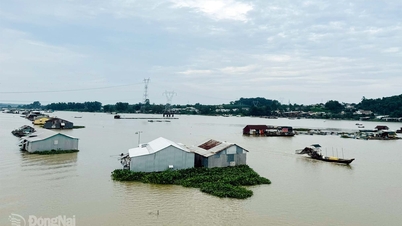
Dong Nai possesses enormous aquatic potential with nearly 90,000 hectares of water surface and the Dong Nai and La Nga river systems flowing through it. In addition, the province has 20 lakes currently used for aquaculture and fishing, with a total area of nearly 51,500 hectares. This creates favorable conditions for the development of cage/raft aquaculture models. The province has nearly 1,300 rafts and over 5,200 cages for aquaculture, concentrated most heavily on Tri An Lake.
In 2025, the total aquatic product output in the province is expected to reach over 82,500 tons. In addition to the abundant aquaculture production, with over 6,400 tons per year, the harvested aquatic product represents a significant natural resource, providing livelihoods for thousands of fishing households in the province.
Fishing activities on Tri An Lake take place year-round, but the dry season (approximately from November to April of the following year) is the most favorable time for fishing due to the abundant fish resources.
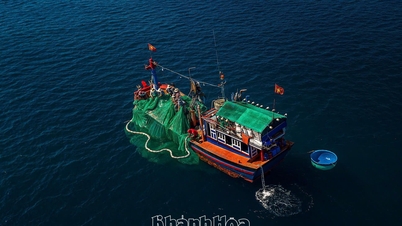
According to fishermen on Tri An Lake, in the past, the lake was abundant with fish, including many valuable specialty species such as eels, barracuda, catfish, and snakehead fish. Among them, the most abundant species included anchovies, carp, and needlefish. Fishermen on Tri An Lake usually cast their nets at night and gather at the fishing ports in the morning.
Freshly caught seafood from Tri An Lake is usually sold by fishermen directly to wholesalers at the fishing ports. In previous years, traders could collect tons of fresh fish of various kinds daily for distribution to many different provinces and cities. This year, due to the impact of storms and floods, the fish population in the lake has decreased significantly compared to previous years, thus affecting the income of the fishermen.
Mr. Nguyen Van Den, a fisherman in Tri An commune, said: "All the fish farms on Tri An Lake have fishing boats. The fishermen here mainly rely on their labor for profit. The seafood they catch is partly sold to cover daily living expenses, and partly used as feed for the fish in the farms. Previously, during the fishing season, a single night's net haul could yield a hundred kilograms of various fish. Nowadays, even when a boat hits a good school of fish, it only catches 30-40 kg per night, mainly common types like anchovies, barracuda, and carp... These fish sell for relatively low prices, so some are sold on the market, and some are processed into feed for the fish in the farms to reduce investment costs."
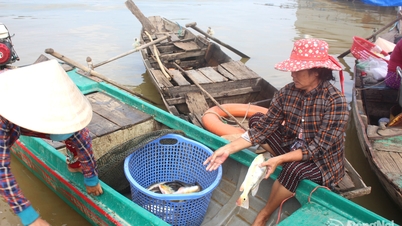
Prepared right on the raft.
According to fishermen on Tri An Lake, the abundance of different types of fish varies depending on the season and time of year. Common species include: carp, grass carp, silver carp, and minnows. These fish are small in size and usually sell for relatively low prices, so some are processed as feed for fish raised in cages/rafts to reduce investment costs, while others are sold at local markets near fishing ports.
Because of the abundant and inexpensive supply of fresh fish, some fishing households or residents living near the fish market have invested in processing and making various types of fish cakes to supply to the market.
 |
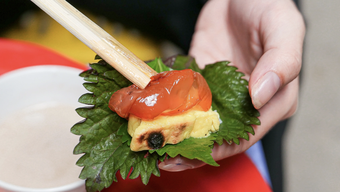
| Fish cakes, prepared on rafts, are transported by fishermen to the docks to supply buyers. Photo: Binh Nguyen |
For the past 10 years, Ms. Le Thi Cuc, a fish farmer in Suoi Tuong hamlet, Tri An commune, has had a side job processing fish cakes from naturally caught fish in Tri An Lake. Later, the processing activities gradually expanded in scale, not only providing the main income for Ms. Cuc's family but also creating jobs for dozens of local workers. Ms. Le Thi Cuc shared: “My family has fish cages, and the fresh fish we buy from fishing boats are processed right on the cages. The best parts of the fresh fish are used to make fish cakes, while the discarded parts are used as feed for the fish in the cages. After processing the fresh fish, I only season it with salt, fish sauce, sugar, and spices… then grind it into a paste. The fish cakes are delicious because they are made from naturally caught fish in the lake, with firm and sweet meat. These pure fish cakes are frozen for preservation and sold daily.”
Sharing her story of dedication to the fish cake making profession, Ms. Thai Thi Dinh, owner of the Bay Pha fish cake processing facility in Suoi Tuong hamlet, Tri An commune, added: “My house is right in the fish market area, always with a readily available supply of fresh fish at a low price, so I make fish cakes to supply to various places. The facility usually advances money to fishing boats to maintain a stable supply of fresh fish year-round. The freshly caught fish is processed immediately. During peak season, the facility processes several hundred kilograms of fish per day; during off-peak season, we make a few dozen kilograms of fish cakes. As soon as they are processed, the facility freezes them and delivers them to customers daily, so no preservatives are needed, yet the quality of the fish cakes remains fresh and delicious.”
According to fish cake processing facilities in Suoi Tuong hamlet, although it is a specialty, the fish cakes sold at the processing site are quite affordable, ranging from 60,000 to 80,000 VND/kg depending on the type of fish used. During times of fish scarcity, processing facilities only increase the price by 10,000 to 20,000 VND/kg to compensate for the rising cost of raw materials. Towards the end of the year, the demand for processed specialties made from seafood from Tri An Lake increases, so the fish cake and dried fish processing activities are busier than usual.
Besides processing fish cakes, many fishermen at the fishing ports on Tri An Lake also develop the trade of processing various types of dried fish. Ben Nom hamlet (Thong Nhat commune) is one of the fishing ports with many households and establishments producing dried fish from natural fish sources on Tri An Lake. This is a traditional craft that has existed in the area for decades. Among them, dried needlefish is a unique specialty, contributing to the distinctive character of this craft village.
Mr. Nguyen Thanh Hoang, Head of the Song Nuoc Dried Mackerel Cooperative, said: Currently, the Song Nuoc Dried Mackerel Cooperative alone has nearly 20 households and processing facilities participating. Dried mackerel from Tri An Lake has long been well-known in the market. This specialty has been recognized as an OCOP product of Dong Nai province. This provides the conditions for the cooperative to expand the fishing supply chain, standardize the processing process from fishing to packaging, and ensure traceability to affirm the brand of Tri An Lake's specialty dried fish on the market through quality.
“Fish cakes and dried fish are unique specialties of Tri An Lake. The province is creating favorable conditions for fishermen and processing facilities to develop the processing of these specialties. Looking ahead, fishing and processing activities must comply with regulations to protect aquatic resources and adhere to regulations on safe and hygienic food production.”
Deputy Director of the Department of Agriculture and Environment Nguyen Van Thang
Plains
Source: https://baodongnai.com.vn/dong-nai-cuoi-tuan/202601/dac-san-cha-ca-thien-nhien-ho-tri-an-f8f083f/



![[Photo] Prime Minister Pham Minh Chinh receives the Director of RMIT University Melbourne (Australia)](https://vphoto.vietnam.vn/thumb/1200x675/vietnam/resource/IMAGE/2026/04/02/1775142120087_thiet-ke-chua-co-ten-2026-04-02t214220784-png.webp)

![[Photo Gallery] Tri An - an ecological urban area beside a green lake](https://vphoto.vietnam.vn/thumb/402x226/vietnam/resource/IMAGE/2026/04/01/1775014583510_z7672831871486_21772015e9b8af220696a711658b1284_20260331201612_20260331222745.jpeg)




![[Infographic] 'On the eve' of becoming a city, by the end of the first quarter, Dong Nai had the highest growth rate in the Southern region.](https://vphoto.vietnam.vn/thumb/402x226/vietnam/resource/IMAGE/2026/04/02/1775127107225_thumbnail_tang_truong_grdp_01_20260402162952.jpeg)








![[Photo gallery] Nhon Trach is ready to transform into a modern and civilized city.](https://vphoto.vietnam.vn/thumb/402x226/vietnam/resource/IMAGE/2026/04/02/1775104005524_hinh_1_20260402085339.jpeg)
![[Photo gallery] Dong Phu aims for modern and sustainable urban development.](https://vphoto.vietnam.vn/thumb/402x226/vietnam/resource/IMAGE/2026/04/02/1775104023925_111_20260402104322.jpeg)


















































Comment (0)