

However, to ensure synchronized implementation from training and management to quality assurance, the legal framework needs to be improved in a flexible manner, paving the way for the deep and sustainable development of the digital university model.
Shaping the strategy
In its development strategy for the period 2022-2030, with a vision to 2045, Hanoi University aims to become a digital university and develop a digital university model. Associate Professor Pham Ngoc Thach, Chairman of the University Council, stated that to realize this goal, the university will research and learn from successful digital transformation models around the world , including Australia.
According to Associate Professor Pham Ngoc Thach, the current priority is to develop a concrete action plan. First, the university will review its overall planning, focusing on developing human resources – the core element of digital transformation.
Simultaneously, Hanoi University will focus on professional development for lecturers, especially in designing learning experiences in the digital environment; promoting cooperation with domestic and international organizations on educational technology; and implementing the procurement and development of online courses, including blended learning, online degree programs, and certificate programs.
Associate Professor Pham Ngoc Thach stated that one of the key directions is to prepare for the establishment of HANU Edtech - the innovation center of Hanoi University; and at the same time, to research the level of readiness for digital transformation at higher education institutions to serve as a basis for policy planning and implementation models in the next phase.
Sharing international experience, Associate Professor Tran Thi Ly from Deakin University (Australia) said that the university maintains a dedicated team for digital transformation and digital learning spaces, directly supporting lecturers in teaching. All documents, readings, videos, and reference materials are uploaded to the system, allowing students convenient access anytime, anywhere.
According to Associate Professor Tran Thi Ly, the key factor at the organizational level is ensuring that innovation truly enhances the quality of learning for students. This is also why Deakin University consistently achieves high student satisfaction rates, as the university invests heavily in the learning experience.
She acknowledged that the initial stages of digital transformation presented many challenges: lecturers had to dedicate significant time to digitizing materials, designing lectures, recording and editing videos, and enhancing interaction. However, once the learning materials system and lesson structure were perfected, the workload decreased significantly, and teaching effectiveness improved noticeably.

Data interoperability - enhancing efficiency
In November 2024, the University of Technology (Vietnam National University, Hanoi) established the Digital University Center with the core mission of operating information systems and implementing digital transformation in all of the university's activities.
Mr. Do Hoang Kien, Director of the Center, stated that previously, each faculty and department used a separate, interconnected information system, making it difficult to synthesize data for management and decision-making. This not only slowed down processing progress but sometimes also created unnecessary frustrations. Based on this reality, the university decided to build a digital university management model on the Canvas LMS platform.
The new system quickly gained acceptance from faculty and students. For learners, the digital platform creates a flexible learning environment, allowing them to self-assess their progress, track their effectiveness, and proactively adjust their plans – from course selection and time management to grade goals.
According to Mr. Kien, the transition to a digital university governance model has thoroughly addressed long-standing shortcomings in course registration; and at the same time, met the requirements for personalized training programs through appropriate suggestions and advice throughout the learning process.
Thanks to interconnected and real-time data updates, the university can make quick and timely decisions; lecturers can be more proactive in teaching and gradually move towards complete autonomy in academic management. The digital university model is expected to create a solid foundation for the modernization and improvement of training quality at the University of Technology.
Dr. Nguyen Huy Tiep - Department of Engineering Physics and Nanotechnology, University of Technology (Vietnam National University, Hanoi), noted that, despite the existence of various teaching methods, the digital platform has made the implementation of these methods more convenient and effective. The system not only provides professional support but also motivates staff, lecturers, and students, fostering a positive attitude.
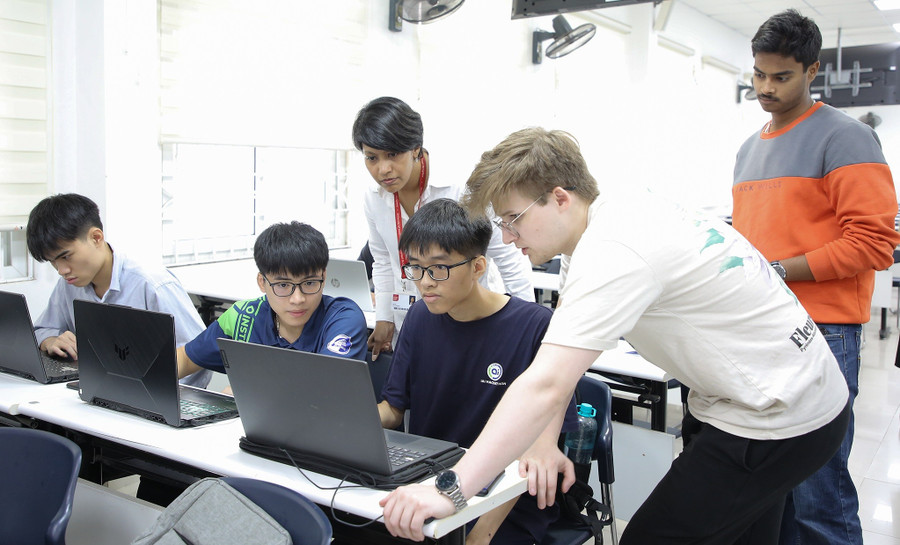
According to Dr. Tiep, transparency is one of the outstanding advantages of the digital management system. All staff and faculty members must update their work progress; any delays are immediately reflected through "gaps" in the data chain, clearly showing the interrupted position and the individual who has not completed the task. Thanks to this, the digital platform is not only a supporting tool but also becomes a driving force for management innovation, contributing to improved operational efficiency throughout the university.
Currently, the Government has issued many guidelines and policies to promote digital transformation in education. In particular, Resolution No. 57-NQ/TW on breakthroughs in the development of science, technology, innovation and national digital transformation, and Resolution No. 71-NQ/TW on breakthroughs in the development of education and training both emphasize the urgent need to accelerate digital transformation in higher education.
As a key training institution in the field of technology, the University of Technology (Vietnam National University, Hanoi) recognizes that applying the digital university governance model is an inevitable trend. Professor Chu Duc Trinh, the university's rector, stated that the implementation process has inevitably faced difficulties, and some staff members have even had to leave the system due to their inability to meet the new requirements of the modern governance model.
However, after a period of operation and process refinement, the model's effectiveness has become evident. The system helps reduce the administrative workload while ensuring transparency in all teaching and research activities. As a result, faculty, students, and parents have greater confidence in the school's governance quality and are inspired to be more proactive in their studies and work.
"In reality, many students have graduated a year early. This means their academic productivity has increased by about 25% compared to before," said Professor Chu Duc Trinh, expressing his hope that the digital university model will continue to drive innovation and contribute to improving the quality of education in the future.
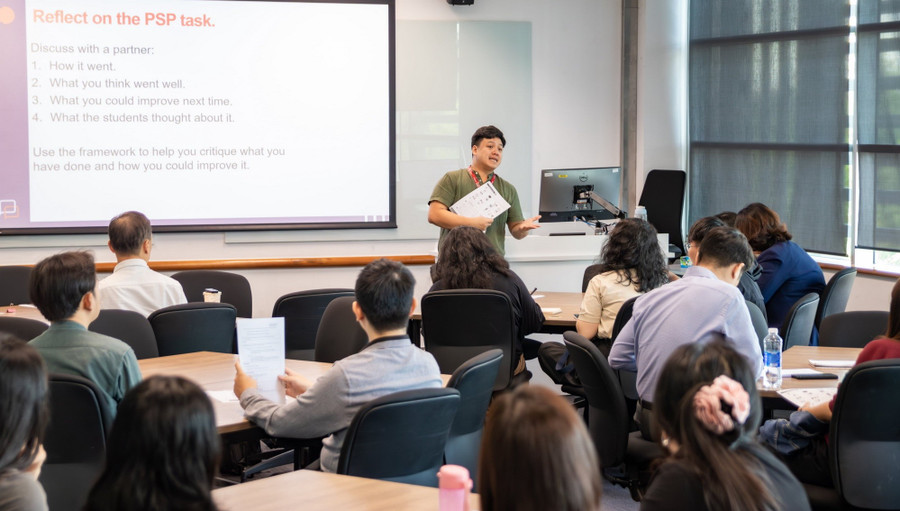
A special mechanism is needed for digital higher education.
According to the draft Law on Higher Education (amended), "digital higher education" is defined as a training model based on a digital platform, not limited by space and time, and can be flexibly implemented in many different forms and methods of training. Mr. Luu Ba Mac (Lang Son National Assembly delegation) assessed this as a progressive direction, in line with the trend of digital transformation and open learning, and contributing to improving the quality of teaching and learning in the new context.
However, after reviewing the draft, Mr. Luu Ba Mac noted that some regulations are still inconsistent and could easily lead to multiple interpretations during implementation. For example, the draft still requires formal and regular training to take place at licensed locations, while the nature of digital education is independent of physical space.
Furthermore, regulations regarding in-person, distance, and blended learning methods do not clearly define their compatibility with the digital higher education model, potentially creating conflicts between training institutions, management agencies, and quality assurance systems during implementation.
Based on practical implementation, National Assembly representatives from Lang Son province proposed clearer regulations: For training programs organized entirely in the digital space, the requirement for a licensed location should not apply. Instead, training institutions must fully meet standards regarding digital infrastructure, data security, learning management and monitoring, learner authentication, and quality assurance.
According to Mr. Luu Ba Mac, digital higher education needs to be defined as an overall framework; in which direct, distance, or blended learning methods can operate flexibly according to technical standards and implementation conditions issued by the Ministry of Education and Training. Regulations on licensed locations should only apply to direct learning, in order to avoid overlap and ensure suitability with the specifics of online training.
Regarding the draft Resolution on some specific policies for implementing Resolution 71, Mr. Luu Ba Mac proposed adding specific financial mechanisms, especially spending limits for digital infrastructure, databases, digital learning materials, and mechanisms for leasing domestic digital platform services, instead of focusing solely on investing in equipment.
He also proposed allowing a number of large higher education institutions and national universities to be selected as pilot centers for implementing the digital higher education model, with a higher degree of autonomy in finance and personnel organization, along with a clear accountability mechanism.
Discussing breakthrough policies in the digital transformation of education, Ms. Nguyen Thi Hue (National Assembly delegation from Thai Nguyen province) proposed implementing several pilot models, focusing on cooperation between the State, schools, and businesses to build a smart national education system. This model includes reforming educational institution governance, organizing training and teaching on digital platforms, and applying artificial intelligence in a controlled manner, consistent with Vietnamese culture, language, and law.
According to Ms. Hue, teachers and lecturers need to be supported by "virtual assistants," while students can access "virtual tutors" to improve learning effectiveness. Along with that, the management, testing, and evaluation systems must be designed to suit the requirements of the digital transformation context. She also proposed piloting a digital higher education model, allowing universities to link and share digital learning materials, physical and virtual laboratories, thereby forming an open higher education ecosystem that connects and expands access opportunities for learners.
Another important point she emphasized was the need to establish a specific mechanism for receiving, transferring, and commissioning high-quality vocational training programs in cutting-edge technology fields such as core technologies, semiconductors, AI, automation, biotechnology, and renewable energy. The representative from Thai Nguyen suggested that policies supporting tuition fee reductions and scholarships are necessary to attract and train high-quality human resources for strategic sectors, meeting the development requirements of the digital age.
The most important foundation in digital transformation and teaching innovation is strategic planning. Each university has its own development direction; therefore, any innovation in teaching and learning can only be sustainable when placed within that overall strategy and consistently implemented in the university's regular activities. - Assoc. Prof. Dr. Tran Thi Ly
Source: https://giaoducthoidai.vn/dai-hoc-so-can-hanh-lang-phap-ly-manh-de-but-pha-post762261.html




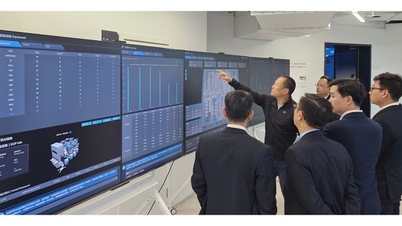
![[Photo] General Secretary and President visit the China-ASEAN AI Application Cooperation Center](https://vphoto.vietnam.vn/thumb/1200x675/vietnam/resource/IMAGE/2026/04/17/1776404277677_vna-potal-tong-bi-thu-chu-tich-nuoc-tham-trung-tam-hop-tac-ung-dung-ai-trung-quoc-asean-8706616-2286-jpg.webp)























![[Photo] National Assembly Chairman Tran Thanh Man attends the policy seminar to promote Vietnam-Türkiye cooperation.](https://vphoto.vietnam.vn/thumb/1200x675/vietnam/resource/IMAGE/2026/04/16/1776351415367_vna-potal-chu-tich-quoc-hoi-tran-thanh-man-du-toa-dam-chinh-sach-thuc-day-hop-tac-viet-nam-tho-nhi-ky-8705791-jpg.webp)





























































Comment (0)