

The Hanoi Department of Health has just announced the implementation of an intervention model to prevent and control overweight and obesity among students in some primary schools, aiming to reduce the burden of disease.
Health news update March 12th: Worrying rates of overweight and obese students.
The Hanoi Department of Health has just announced the implementation of an intervention model to prevent and control overweight and obesity among students in some primary schools, aiming to reduce the burden of disease.
The high rate of overweight and obese students is a cause for concern.
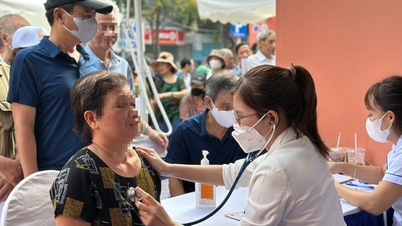
In 2024, the Hanoi City Center for Disease Control and Prevention, in collaboration with relevant units, implemented an intervention model to prevent overweight and obesity at three primary schools: Le Loi (Ha Dong), Nguyen Du (Hoan Kiem), and La Thanh (Dong Da). They assessed the nutritional status of 3,600 students; investigated and evaluated the knowledge and practices of 1,600 parents with overweight or obese children; and evaluated 250 teachers and kitchen staff from the three primary schools.
 |
| Illustrative image. |
The results showed that the percentage of overweight and obese students was 43.2% (Nguyen Du School 45.9%; Le Loi School 43.7%; La Thanh School 34.9%), and the percentage of malnourished students was 3.1%.
The model has organized training for 105 healthcare workers on methods for assessing the nutritional status of primary school students; and skills in providing individual counseling for students with overweight or obesity.
Organize nutrition communication and advocacy activities to prevent overweight and obesity among students for teachers, school meal preparers, and parents of overweight or obese children at 3 schools.
Based on the survey results, the model provided counseling interventions for parents and students at Le Loi and La Thanh schools whose children were overweight or obese, and also monitored and provided professional support on individualized nutrition counseling at the primary school.
Regarding activities to improve children's nutritional status, in addition to training and communication on nutrition, in 2024, the City's Center for Disease Control conducted a survey and assessment of the nutritional status of children under 5 years old and surveyed the chronic energy deficiency of women of childbearing age in 60 clusters across 30 districts, counties, and towns, with 3060 mother-child pairs participating.
The results showed that the malnutrition rate among children under 5 years old was 4.8% for underweight, 8.8% for stunting, 4.6% for wasting, and 5.9% for overweight and obesity.
The center collaborated with local authorities to successfully organize the Micronutrient Day campaign in June and December, achieving a 99.9% rate of children aged 6-35 months receiving vitamin A.
During the first phase of the Micronutrient Day campaign, 607,437 children under 5 years old were weighed and measured to assess malnutrition rates. The results showed that the rates of underweight malnutrition were 6.6%, stunting malnutrition was 9.8%, wasting malnutrition was 0.3%, and overweight/obesity was 1.1%.
Preventing shingles in patients with chronic conditions reduces the healthcare burden.
According to Associate Professor Dr. Nguyen Trung Anh, President of the Vietnam Geriatrics Association and Director of the Central Geriatrics Hospital, nearly two-thirds of people aged 60 and over suffer from chronic diseases, with more than half having multiple co-morbidities. Many studies show that co-morbid chronic diseases increase the risk of shingles, and this risk is even higher when patients have multiple co-morbidities.
People with chronic conditions such as cardiovascular disease, diabetes, and chronic obstructive pulmonary disease (COPD) are at a higher risk of developing shingles.
Post-herpetic neuralgia can severely impact quality of life, including prolonged insomnia, negative psychological effects, and less common complications such as stroke, myelitis, and cerebral arteritis. Treatment for these complications can be lengthy and costly, especially for the elderly and those with underlying health conditions, placing a significant strain on the healthcare system.
Professor Dr. Truong Quang Binh, Chairman of the Scientific Council of the University Medical Center of Ho Chi Minh City, and Chairman of the Atherosclerosis Sub-Association - Vietnam Cardiology Association, stated that cardiovascular patients have a 34% higher risk of developing shingles compared to the general population.
In particular, when infected with shingles, patients with stable cardiovascular conditions may experience dangerous cardiovascular events such as stroke, transient ischemic attack, or myocardial infarction.
Although the incidence of this event is not high, it can seriously affect the quality of life and even threaten the patient's life. Therefore, proactive prevention of shingles in cardiovascular patients is extremely important.
Shingles can also negatively impact blood sugar control. People with diabetes are at increased risk of developing shingles and facing more severe and prolonged complications such as secondary infections, pain, and slow wound healing. Meanwhile, shingles in individuals with chronic respiratory disease can worsen symptoms of chronic obstructive pulmonary disease, shortness of breath, or increase the frequency of exacerbations.
Shingles not only affects mental and physical health, but also places a significant medical, financial, and social burden. Treatment, especially for long-term complications, can be costly due to the expenses associated with initial consultations, care, inpatient and outpatient treatment, and extended hospitalization.
Therefore, according to Associate Professor Dr. Le Dinh Thanh, Director of Thong Nhat Hospital, early preventive measures and multidisciplinary coordination play a crucial role in helping patients understand the risks and potential complications of shingles, especially in those with underlying medical conditions.
With adequate and timely advice, patients can proactively take measures to protect their health, minimize the risk of disease and complications, and improve the effective management of chronic diseases. This not only improves quality of life but also contributes to reducing the burden on the healthcare system.
Partial liver resection due to habit of holding toothpicks in the mouth while sleeping.
According to information from the Central Hospital for Tropical Diseases, the hospital recently admitted a 77-year-old man from Hanoi with persistent, dull abdominal pain of unknown origin.
Doctors assessed the patient's condition and performed a CT scan. The results showed that the patient had an abscess in the left liver lobe, measuring over 10 cm, with a foreign object lodged inside, which was the cause of the prolonged infection.
After careful consideration, the doctors decided to perform a laparoscopic left hepatic lobectomy to remove the foreign body and treat the abscess, preventing potentially dangerous complications.
During the surgery, doctors discovered a large abscess, more than 10 cm in diameter, located in the left lobe of the liver and adhering to the lesser curvature of the stomach. Inside the abscess, a bamboo toothpick, approximately 5 cm long, was deeply embedded in the liver parenchyma.
Fortunately, the abscess did not rupture; otherwise, the patient's life could have been in danger. After the surgery, the patient was alert and recovered quickly.
According to the patient's medical history, he had a habit of chewing on bamboo toothpicks after meals, even while sleeping. This caused him to unknowingly swallow the toothpicks. Small, sharp, and hard, bamboo toothpicks can easily puncture the stomach wall and migrate to the liver, small intestine, or colon. If not detected promptly, this foreign object can cause serious damage, leading to prolonged inflammation and the formation of dangerous abscesses.
According to Dr. Dao Thi Hong Nhung from the Department of Diagnostic Imaging (Central Hospital for Tropical Diseases), foreign objects penetrating the liver are very rare. To avoid the risk of swallowing foreign objects and unfortunate consequences, people should not hold bamboo toothpicks in their mouths after eating, especially when lying down or sleeping.
If you suspect you have swallowed a foreign object, absolutely do not try to remove it yourself by sticking it down your throat, as this could cause the object to move deeper into the mucous membrane or to a dangerous location.
People should also avoid using folk remedies such as drinking vinegar or eating hot rice to dislodge foreign objects, as this can cause the object to move deeper and cause serious injury. If you experience prolonged abdominal pain or unexplained fever, you should immediately go to a medical facility for examination and timely treatment.
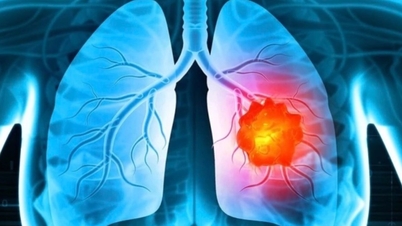
Lung cancer detected through routine health checkups.
A routine health checkup unexpectedly revealed lung cancer in a patient with no obvious clinical symptoms. Early detection of lung cancer significantly improves treatment chances and prolongs the patient's life.
Recently, Medlatec General Hospital received a special case when Mr. NQV (from Long Bien, Hanoi) came for a routine health check-up.
At the time of examination, the patient did not present with any clinical symptoms such as persistent cough or shortness of breath. However, a CT scan of the lungs revealed a small tumor measuring 20.8x7.5mm in the lung, with a LUNG-RADS 4A classification, indicating a potential for malignancy.
Doctors performed a CT-guided biopsy of the tumor, and the pathology results confirmed it was adenocarcinoma of the lung.
In addition, EGFR gene mutation testing revealed that the patient had the DEL19 mutation, which helped determine the appropriate targeted treatment regimen. Thanks to the early detection of lung cancer, Mr. V. was transferred to the Oncology Hospital for timely treatment.
Lung cancer is currently the leading cause of cancer death worldwide.
Despite advances in diagnosis and treatment, the disease is often detected at a late stage, leading to a high mortality rate. According to Globocan's 2022 report, Vietnam recorded 24,426 new cases and 22,597 deaths from lung cancer.
According to Dr. Nguyen Van Tuan from the Pathology Center at MEDLATEC, non-small cell lung cancer (NSCLC) accounts for up to 80% of all lung cancer cases.
EGFR gene mutation testing plays a crucial role in selecting the appropriate treatment regimen. Patients with EGFR mutations respond well to tyrosine kinase inhibitors (TKIs), which help control the disease and prolong survival time.
Genetic mutation testing helps personalize treatment, avoid unnecessary procedures, reduce side effects, and improve patients' quality of life.
It is important that regular lung cancer screenings can help detect the disease at an early stage, when treatment is still effective. Dr. Tran Van Thu, Deputy Head of the Diagnostic Imaging Department at MEDLATEC General Hospital, recommends that high-risk groups should undergo regular lung cancer screenings, including:
People over 50 years old. Long-term smokers. People with a family history of lung cancer. Early detection of lung cancer increases the chances of survival and minimizes the risk of metastasis. If the disease progresses to a late stage, the chances of a cure are very low.
If symptoms such as a persistent cough of unknown origin, coughing up blood, shortness of breath, unexplained chest pain, or weight loss and fatigue appear, people should immediately go to medical facilities for examination and timely treatment. These signs could be symptoms of lung cancer and need to be detected early to have a chance of effective treatment.
Another case involves Mr. VTL (59 years old, Hanoi) who came to MEDLATEC for examination due to a headache accompanied by pain and discomfort in the right side of his ribs. X-ray and CT scan results revealed a suspected malignant tumor in his left lung.
Following a biopsy, doctors determined that Mr. L. had non-small cell lung cancer. Along with genetic mutation testing and immunohistochemical staining, Mr. L. was diagnosed with early-stage lung cancer and will undergo appropriate treatment.
Regular lung cancer screenings not only help detect the disease early but also significantly improve patients' chances of survival.
Techniques such as CT scans, EGFR gene mutation testing, and immunohistochemical staining are opening up opportunities for effective and personalized treatment for each patient.
Doctors advise that if people belong to a high-risk group or have any suspicious symptoms, they should get screened for lung cancer immediately to protect their health. Don't let lung cancer become a "deadly scythe" when it can be effectively prevented and treated through early detection.
Source: https://baodautu.vn/tin-moi-y-te-ngay-123-dang-lo-ve-ty-le-hoc-sinh-thua-can-beo-phi-d252627.html

![[Photo] “Red Journey” 2026: Vietnamese Youth Continue Building the Bridge of Friendship Between Vietnam and China](https://vphoto.vietnam.vn/thumb/1200x675/vietnam/resource/IMAGE/2026/04/20/1776629730866_4055880775670638308-9618-4200-jpg.webp)


































































































Comment (0)