

In Sa Pa during the late autumn days, the morning mist hangs low, and a light drizzle blankets the paths. Through the mist, the rhythmic sound of chiseling blends with the scent of wood and damp earth. In a corner of the garden, an old man with graying hair diligently carves the face of a Hmong girl with a gentle, profound gaze onto an old wooden board.

Having dedicated over 30 years to sculpting, Mr. Tran Van Khi (Sa Pa ward) can no longer remember how many works he has carved. However, there is one thing he has never forgotten: the exhilarating feeling of first transforming lifeless blocks of wood into "awakened" pieces under his hands.
His passion came to him quite naturally. As a young man, while searching for orchids in the forest, he often came across tree roots and pieces of driftwood floating in the stream… For some reason, in his eyes, they all possessed form and life. He would pick them up, carve, and piece them together. Gradually, after the sound of his chisel, faces, figures, plants, flowers, and animals would emerge.
He confided, "When 'creating,' I never sketch beforehand; I let the wood 'guide' me." It is this 'spontaneity' that gives his works a rustic, natural feel, imbued with the unique character of the Northwest highlands.
"Wood also has a soul; wherever you carve it, you have to understand what it wants to say. Each block of wood is a story, just waiting for you to listen and tell it," Mr. Khi confided.

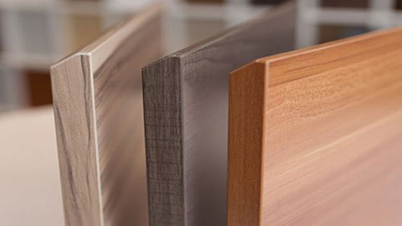
Mr. Khi has a particular fondness for cypress wood – a type of wood that was once closely associated with the lives of the highland people. Old cypress planks, once used for roofs and kitchen walls, were later dismantled to make way for corrugated iron roofs and brick walls. Mr. Khi seeks out these planks, carefully cleaning them, leaving even the cracks and smoky burn marks intact. For him, they are not discarded wood but "fragments of memories from the mountains and forests," and under his hands, they "come to life" in a new form, imbued with the breath of the people and culture of Northwest Vietnam.
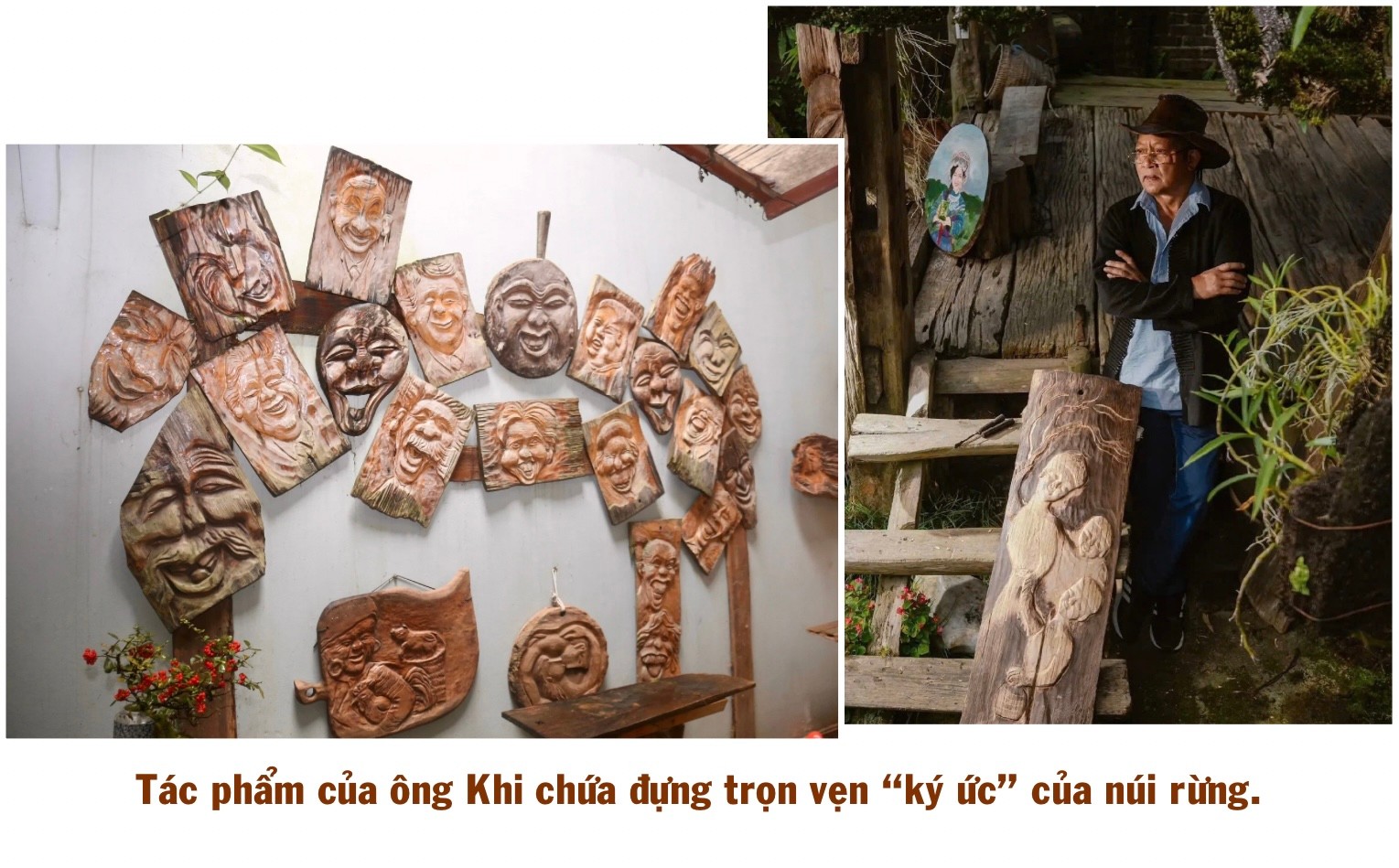
Without elaborate embellishments, he preserves the natural patina of time, allowing the cracks to become the "wrinkles" of memory. Each piece is therefore both old and warm, reflecting the very essence of mountain life. "The wood is old, but its soul is not. It once lived with people, enduring the sun, wind, kitchen smoke, and hearing laughter in the house. When I carve on it, I am telling the story of this land," Mr. Khi explains.
For over 30 years, Mr. Khi has quietly lived with wood. He pursues his craft not for fame, and certainly not for commercial gain. For him, sculpting is a way of "communicating" with nature, a way for the carpenter to recount the culture of the highlands through the very planks that have lived alongside generations.

Growing up surrounded by the sounds of her father's chiseling, Tran Lan Anh developed a special love for wood. She would often sit quietly beside him, watching the shapes gradually take shape under his hands, feeling the life hidden within each grain of wood. She said that since childhood, every time she saw her father diligently working on an old piece of wood, she felt something both familiar and sacred about it.

Like her father, Lan Anh always saw a soul in wood. However, the more she worked, the more she felt that the simple wooden artworks of father and daughter still lacked a certain color – like an unfinished painting. Sharing a love for traditional textiles, Lan Anh and her father frequently researched the patterns of different ethnic groups – fabrics that breathed the spirit of the mountains and forests, rustic yet full of life. And then, during a trip, suddenly, Mr. Khi said: "If only these colors could blend into the wood…" – a simple idea that opened a new direction for both father and daughter.
Lan Anh recalled childhood memories of her father carving small wooden dolls for her and her sister to play with. Back then, those toys were just bare pieces of wood, without any clothing. From that memory, she suddenly came up with an idea: to dress the wood in brocade – preserving its rustic charm while highlighting the beauty of traditional culture.
From then on, during her travels through the highland markets, Lan Anh would ask for scraps of fabric from the locals, then meticulously piece them together with the carved wooden blocks that her father had sculpted. Every stitch, every patch of fabric attached to the wood was carefully considered by her, ensuring that the colors did not overpower but blended into the natural wood grain.

Then, the first works were born. Pieces of brocade embraced the wood, and everything seemed to brighten. The colors of the brocade blended with the rustic charm of the wood, creating a feeling that was both familiar and new. Lan Anh said that at times she worried that this combination might detract from the inherent rustic quality, but when she placed her hand on each plank and felt the warmth of the brocade fibers, she understood that wood and brocade were meant to be together.
And so, new works of art were created one after another. Every detail, every color was infused with love and respect for this land by the father and daughter. The old pine planks now continue to tell their story in a different form.

“Seeing the colors of the brocade blending into the wood grain fills me with joy and pride. This newness isn't flashy, but warm and intimate, just like how my father diligently worked for so many years. Now, as I continue his legacy, I only want to ensure that these old pieces of wood continue to ‘live,’ telling new stories,” Lan Anh further shared.
In the quiet space, the sounds of chiseling and knife work by Mr. Khi continued to echo steadily, like the familiar rhythm of the mountains and forests. In another corner, his daughter meticulously attached small pieces of fabric to a block of wood, her hands skillful and her eyes intently focused and captivated.

Now, their works are not just wooden paintings, but a "harmony" of seemingly silent materials, now blended and resonating. In them, one not only sees the beauty of art, but also feels the deep love for their homeland and the people of the highlands.
Source: https://baolaocai.vn/danh-thuc-ky-uc-cua-nui-rung-post885720.html


![[Photo] Conference announcing the Politburo's Decision on organizational and personnel matters](https://vphoto.vietnam.vn/thumb/1200x675/vietnam/resource/IMAGE/2026/04/01/1775017881825_bnd-2410-1472-jpg.webp)

































































Comment (0)