

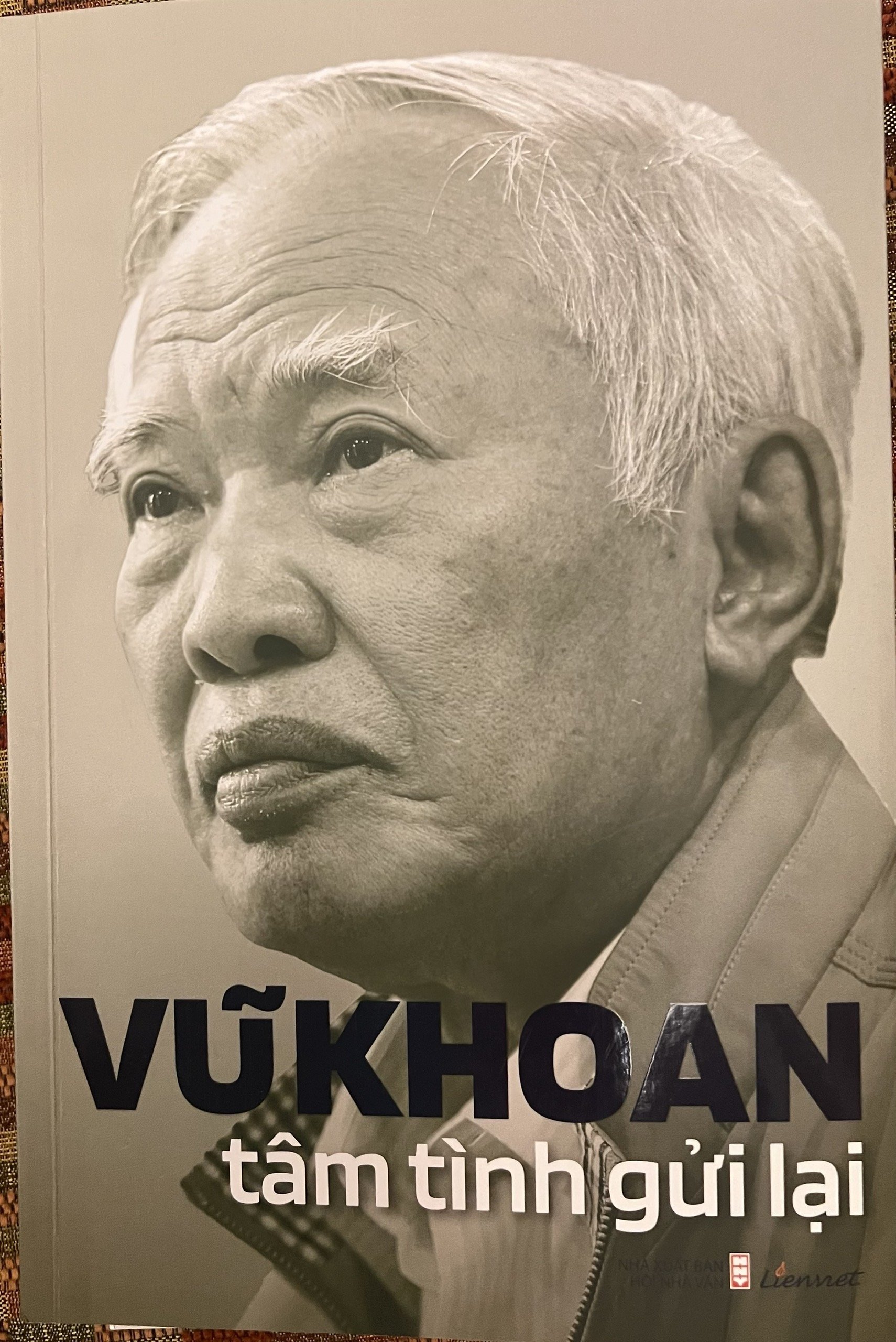
In my hands is the book "Vu Khoan - A Message of Love." Looking at his face in the soulful portrait, which fills the entire cover, I feel as if he is confiding in us, simultaneously as a learned and wise statesman, a close and affectionate older brother, and a warm and intimate friend. His face reflects thoughtfulness, yet is also full of sharing, empathy, and affection.
This book was compiled by a group of his subordinates, out of admiration and affection for their leader, teacher, and elder brother Vu Khoan, with the consent of his wife, Ho The Lan, who collected and selected some of his writings and writings about him.
Although this book only reflects a part of the life and career of Mr. Vu Khoan, it has nonetheless illuminated the portrait of a brilliant diplomat and a great personality.
During my 44-year career in journalism, I spent approximately 30 years writing commentary on international affairs and Vietnam's foreign policy. Therefore, I frequently had the opportunity to meet and interview Mr. Vu Khoan. In his capacities as Deputy Minister of Foreign Affairs (1990-1998), Permanent Deputy Minister of Foreign Affairs (1998-2000), Minister of Trade (2000-2002), Deputy Prime Minister in charge of foreign economic relations (2002-2006), and Secretary of the Central Committee of the Communist Party (2001-2006), Mr. Vu Khoan made significant contributions to policy development and directly implemented the process of dismantling the embargo and blockade, particularly during the negotiation and signing of the Vietnam-US Trade Agreement, the normalization of Vietnam-US relations, and the process of opening up and integrating deeply into the international community, including Vietnam's accession to the World Trade Organization (WTO).
Mr. Vu Khoan also directly led and participated in negotiations for Vietnam's integration with countries in the region, expanding international relations with important partners, and enhancing Vietnam's prestige and position. It can be said that Vu Khoan is one of the "architects" of Vietnam's foreign policy and diplomacy over the past few decades, especially during the turbulent years of regional and global events where Vietnam was always a sensitive "nodal point" under great pressure.
According to Ambassador Nguyen Tam Chien, former Deputy Minister of Foreign Affairs , Mr. Vu Khoan was involved in the decision-making process and directly and excellently implemented major national policies in Vietnam's important international activities over the past decades.
I remember, at a press conference when Mr. Vu Khoan was Deputy Minister of Foreign Affairs, he greeted me warmly, shook my hand, and said: “ I still regularly read your commentaries. The writers of the People's Army Newspaper write sharply and skillfully. Writing international commentary is very difficult now. Just keep trying .” That was a time when our country faced countless difficulties under siege and embargo, and the foreign relations front was always heated with issues of Cambodia, democracy, human rights, religion, and the boat refugees that the West called “boat people”…
During those years, the People's Army Newspaper regularly published commentaries on the aforementioned pressing issues. At a critical juncture in history, marked by dramatic and disruptive changes, the task of writing commentary became extremely sensitive and challenging. Hundreds of commentaries on the collapse of the socialist regimes in the Soviet Union and Eastern Europe, the Gulf War, the Asian financial crisis, the Yugoslav Wars, the 9/11 attacks, the war in Afghanistan, Vietnam-US relations, and more were all produced under such urgent and difficult circumstances.
After the newspaper published those commentaries, we were all eagerly awaiting public reaction and the opinions of the leadership at various levels, and there were times when we felt quite nervous and tense. Therefore, the comments of Deputy Minister of Foreign Affairs Vu Khoan, as mentioned above, were a very meaningful encouragement for the commentators at the People's Army Newspaper. For me personally, this served as a "guarantee" of the spirit of "daring to think, daring to write" about difficult issues.
Vu Khoan was one of the senior leaders of the Party and State who always considered the press a special weapon with immense effectiveness. He was a great friend of the press community and also a great journalist himself. He wrote extensively and well.
Last year, both the press and the public were shocked and saddened to learn of his death on June 21, 2023, the 98th anniversary of Vietnamese Revolutionary Journalism.
I recall that 19 years ago, during Prime Minister Phan Van Khai's official visit to the United States, on the night of June 20, 1995, in Washington, before the very important talks between our Prime Minister and the US President, the head of the Government and Deputy Prime Minister Vu Khoan presided over a meeting to congratulate the press, including 25 journalists who participated in that historic trip. It seems that this was the first time a meeting commemorating Vietnam's Revolutionary Press Day was held abroad during a high-level visit.
At that meeting, Deputy Prime Minister Vu Khoan delivered a heartfelt and warm speech, expressing his respect and affection for journalists and his understanding of their work, highlighting the difficulties and challenges facing the press in the new circumstances. We were all deeply moved by the government leader's concern. Duong Trung Quoc, Editor-in-Chief of the magazine "Past and Present," took out the elegantly printed invitation and asked everyone attending the meeting to sign it to preserve this profound and unforgettable memory from our time in America.
Prime Minister Phan Van Khai's visit took place against the backdrop of a segment of Vietnamese Americans in the US who, still clinging to misconceptions and outdated hateful attitudes, organized fierce subversive activities. They gathered outside the hotel where our delegation was staying, shouting and causing a commotion.
On the morning of June 21, 1995, as the car carrying Vietnamese journalists arrived at the White House gate, we saw a crowd waving flags of the former Saigon regime, holding up banners and shouting loudly. American police prevented this group from approaching us. After attending the press conference of Prime Minister Phan Van Khai and President G. Bush in the Oval Office, as we were leaving the gate and getting into the car, several audacious extremists rushed forward, jumped onto the car, spat, and hurled extremely rude insults and abuse.
Most heartbreakingly, among the 25 Vietnamese journalists on that trip, were two veteran journalists: Dao Nguyen Cat, Editor-in-Chief of the Vietnam Economic Times, and Pham Khac Lam, Editor-in-Chief of the Vietnam-America Magazine and former Director General of Vietnam Television. Despite their advanced age, they had to struggle to get into the vehicle as the aggressive mob rushed towards them. (These two respected veteran journalists recently passed away, leaving behind a deep sense of loss among their colleagues nationwide.) American police immediately intervened.
That day, after receiving news that Vietnamese journalists had been attacked right outside the White House, Deputy Prime Minister Vu Khoan shared words of encouragement with the journalists and provided us with additional information about the Vietnamese community in the US. He emphasized that those opposing the normalization of US-Vietnam relations were only a small minority, mainly officers of the former Saigon regime, or still grieving over the past years, or lacking sufficient information about the situation in Vietnam and US-Vietnam relations. He stressed that the majority of overseas Vietnamese were oriented towards their homeland and were very enthusiastic about the groundbreaking progress in US-Vietnam relations. The next morning, during breakfast, I presented Deputy Prime Minister Vu Khoan with the interview about the results of my visit to the US before sending it to the People's Army Newspaper. The Deputy Prime Minister read it while sipping his coffee, finished it quickly, handed it back to me, and said very briefly: "It's done."
A few months ago, while reviewing some documents, I stumbled upon a handwritten draft of an interview from that historic trip. Nineteen years have passed, yet it feels like I finished it just last night. A few days later, during a meeting with Mr. Vu Ho, the son of Deputy Prime Minister Vu Khoan, before he left to assume his duties as Ambassador Extraordinary and Plenipotentiary to South Korea, I showed him the draft of the interview.
Seeing the draft of his father's interview from nearly 20 years ago, Mr. Vu Ho was deeply moved. I would also like to add that the wife of Deputy Prime Minister Vu Khoan is Mrs. Ho The Lan, a veteran diplomat and former Director of the Press Department of the Ministry of Foreign Affairs, whom I had the opportunity to meet and work with for many years. I also greatly admire Mrs. Ho The Lan's meticulous, reliable, dedicated, and thoughtful work style. Generation after generation, it is a family with a very proud diplomatic tradition.
Throughout his life, Vu Khoan worked in diplomacy, as a strategic researcher and leading expert in foreign economic relations, yet he was truly a professional journalist, both in the quantity and quality of his articles and his journalistic style. He was a dedicated contributor to the Nhan Dan newspaper, the People's Army newspaper, and many others. Every newspaper hoped to publish his articles, especially for commemorative and Tet (Lunar New Year) issues.
A colleague of mine at the Nhan Dan newspaper shared that Mr. Vu Khoan was always responsible and meticulous with every word. Even after writing and submitting, he wasn't necessarily finished; he would continue to monitor and closely follow the developments. On numerous occasions, author Vu Khoan made crucial last-minute adjustments, faster than even the news and political reporters.
Journalist Bao Trung from the People's Army Newspaper expressed that interviewing Mr. Vu Khoan always fills him with excitement. He is excited by his profound intellect, yet always witty about the realities of life, and by the fact that he is a man of a wonderful generation, ready to listen and inspire, imparting knowledge to young people.
Author Vu Khoan was awarded the B Prize (there was no A Prize) at the 2011 National Journalism Awards for his work "A Warm Heart and a Cool Head Are Needed," which dealt with incidents in the East Sea. He wrote this piece in his capacity as a contributor to the People's Army Newspaper even after retiring and still working on his computer every day.
Mr. Vu Khoan is a shining example of self-learning and self-improvement through practical experience, constantly striving to fulfill increasingly important tasks. Ambassador Nguyen Tam Chien said that Mr. Vu Khoan once jokingly told people, "I am an uneducated person." In fact, throughout his life, he never received any formal academic degree. With the rare opportunity to have served as an interpreter for President Ho Chi Minh, General Secretary Le Duan, Prime Minister Pham Van Dong, General Vo Nguyen Giap, and others, Mr. Vu Khoan diligently studied the communication skills and situational handling techniques of these outstanding leaders of the country.
Those who had the opportunity to work with or converse with him retained a positive impression of a wise yet humble and simple leader and politician. He possessed a remarkable talent for presenting complex issues in a simple and easily understandable way. According to Ambassador Pham Quang Vinh, Vu Khoan embodied a combination of profound knowledge, strategic vision, eloquent reasoning, and a distinctly Vietnamese character, always adhering to the national interest. His thinking, strategic vision, style, and character were persuasive, contributing to internal consensus and leading to strategic decisions at crucial moments for the country. In foreign affairs, he always pondered the interests of the nation, identifying advantages and disadvantages along with insightful interpretations. All these thoughts and shared experiences were recorded by his younger colleagues in the book "Vu Khoan – Thoughts Left Behind."
Flexibility in handling situations to create a positive effect has become Vũ Khoan's style. He once recounted: "At a very large party hosted by the American side to celebrate the ratification of the Vietnam-US Trade Agreement, I began my speech with Luther King's quote, 'I have a dream.' I also said that I had a dream the night before, and in that dream I met American business partners and introduced them to various Vietnamese products. Then I invited Vietnamese businesses to stand up, thereby creating a very good impression…"
He was an inspiration to everyone, especially the younger generation. His most significant contribution to the field of training and developing cadres was the successful training courses on diplomatic methods and skills, which he personally led as the main lecturer at the Diplomatic Academy from 2011 to 2016.
These courses were affectionately called "VK classes" by the students. Each course lasted six weeks, with a different topic each week. With the heartfelt teaching, "Skills are the lever to bring knowledge into life," Mr. Vu Khoan exchanged, discussed, summarized, and distilled from his experiences in diplomatic work to share with future generations the "techniques" and "tricks" of professional work.
Through his teaching style, he transformed seemingly complex and macroscopic concepts into simple, easy-to-remember conclusions. Many promising officials who participated in the "VK" course went on to become department heads, ambassadors, and heads of representative offices in key locations around the world.
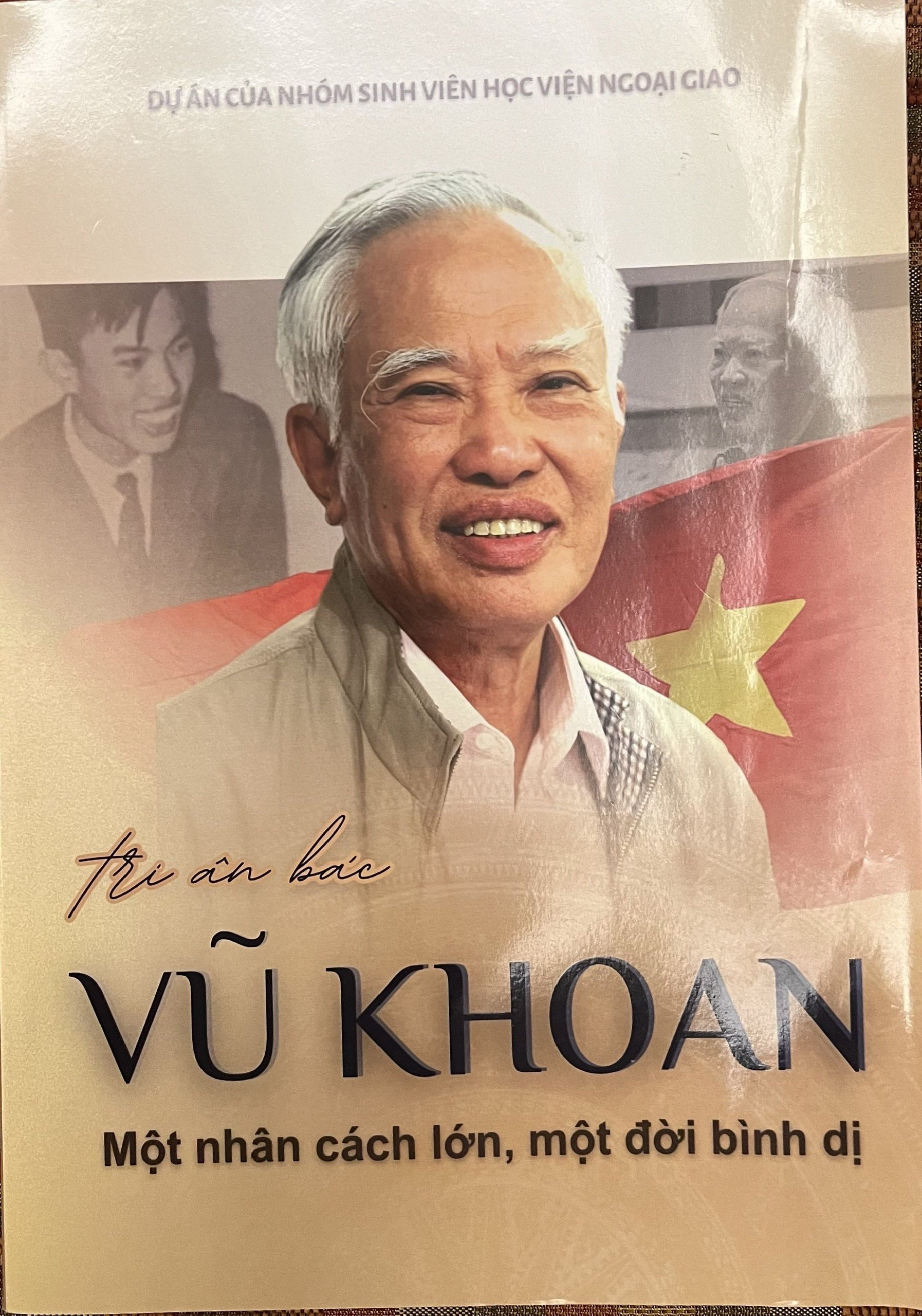
Shortly after his passing, a group of students from the Diplomatic Academy compiled and dedicated to his family the work "Paying Tribute to Uncle Vu Khoan: A Great Personality, a Simple Life." Ambassador Nguyen Phuong Nga, former President of the Vietnam Union of Friendship Organizations, when recalling his advice, "Strive to be a decent person," wrote emotionally: "Uncle Vu Khoan, a man whose full life helped us understand more about what it means to be a decent person."
April 21, 2024
Journalist Ho Quang Loi
Source
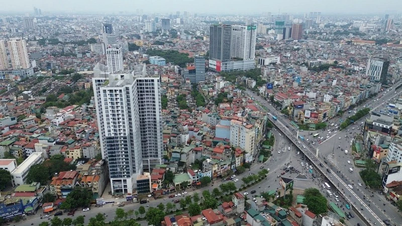
![[Image] Hanoi's urban life under the challenge of a "scorching hot" environment](https://vphoto.vietnam.vn/thumb/1200x675/vietnam/resource/IMAGE/2026/05/25/1779706979265_nang-nong-t5-2026-minh-duy-7-4636-jpg.webp)
















































Comment (0)