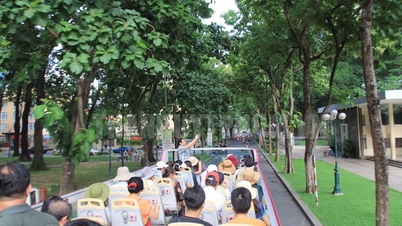
Iran says the US and Israeli airstrikes have cost its economy hundreds of billions of dollars. Photo: Getty Images
Compensation for war losses?
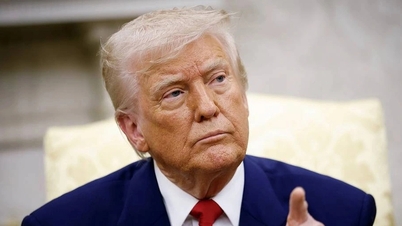
President Donald Trump and Vice President JD Vance both asserted that Washington did not contribute a single penny of American taxpayers' money to the reconstruction fund. The US government's non-contribution to this fund is understandable, as it is a politically sensitive issue in an unpopular war. During negotiations, Iran reportedly offered $400 billion in war damages, which the US refused, and this fund is considered a form of "compensation."
Currently, more than half of the funds have been pledged, coming from companies based in the US, Gulf states, Asia, South America, and Africa. In Asia, the identified companies are from South Korea, Japan, Singapore, and Malaysia. The pledged investments span the energy, logistics, manufacturing, and transportation sectors. Sources from Iran indicate that the mechanism for contributing to the fund will be implemented in various ways, including guaranteeing loans, establishing credit lines, or directly financing the reconstruction of war-damaged sites, such as the Mobarakeh steel complex, oil refineries, airports, and other infrastructure.
The Islamic Republic of Iran possesses the world's second-largest proven natural gas reserves and the fourth-largest oil reserves. This nation of over 92 million people also boasts a young, highly educated population, a diverse industrial base, and untapped potential in sectors ranging from petrochemicals and mining to tourism and agriculture .


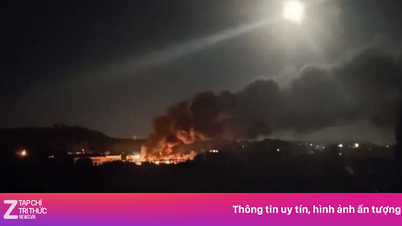
In reality, despite being one of the largest economies in the Middle East, Iran has attracted virtually no significant foreign direct investment over the past four decades, being shut out of global capital markets by US and international sanctions. Iranian national assets abroad are also frozen. Against this backdrop, the US-Israeli air campaign, which began on February 28th, alone inflicted significant damage to Iran's infrastructure. In a preliminary assessment in mid-April, Tehran stated that the US and Israeli airstrikes had cost the Iranian economy $270 billion, equivalent to approximately 57% of its GDP.
Opportunities for economic integration
Arman Mahmoudian, an expert on international relations at the Institute for National and Global Security at the University of South Florida (USA), believes that investing in Iran is a way to encourage the country's economic integration and financial dependence on external sources, thereby forcing it to maintain more peaceful and stable relations with countries in the region. "By investing in Iran and becoming a more valuable economic partner, Arab nations can hope to minimize the possibility of being targeted by Tehran," Mahmoudian stated.
Nevertheless, Arab nations remain hesitant to publicly contribute to the fund, despite the US's commitment to developing an implementation plan on their behalf. Meanwhile, although not directly investing, the US plays a crucial role in the implementation of the reconstruction fund. The mechanism for implementing this plan will be finalized as part of the final agreement within 60 days. After that, all necessary permits and exemptions for related financial transactions will be decided by the US.
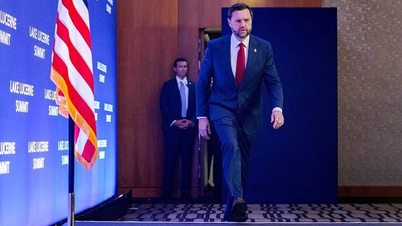
In a statement on June 18, Vice President JD Vance cited a specific example of the US role: The United Arab Emirates (UAE) wants to invest in building a power plant in Iran, but this is currently impossible due to US sanctions. “What we are saying is that if Iran behaves properly (according to the agreement) and if the UAE wants to build the power plant, then we will ease the sanctions necessary to make that possible,” Vance stated.
In the long term, regional investors hope that if Iran truly abandons its nuclear weapons development ambitions, the US will push for a UN Security Council resolution to lift international sanctions against Iran, allowing countries more freedom to choose to invest in Iran according to their needs.



KIEN HOA
Source: https://baocantho.com.vn/dau-tu-300-ti-usd-vao-iran-de-lam-gi-a207671.html

![[Image] National conference summarizing one year of operation of the overall organizational model of the political system, the three-tiered government model.](https://vphoto.vietnam.vn/thumb/1200x675/vietnam/resource/IMAGE/2026/07/01/1782882811691_ndo_br_1-jpg.webp)


















![[INFOGRAPHICS] Policies to support vocational retraining and decommissioning of fishing vessels no longer needed for fishing operations.](https://vphoto.vietnam.vn/thumb/402x226/vietnam/resource/IMAGE/2026/07/01/1782905930516_1782905712.webp)