

As artificial intelligence (AI) changes the way we learn and are tested, shifting towards competency-based assessment, the question is no longer whether or not we should continue with tutoring, but rather how we should re-evaluate and reorganize it within the new learning ecosystem.
"THE FAMILIAR SHADOW" OF MODERN EDUCATION
Shadow education is not a phenomenon unique to Vietnam. In international research, "shadow education " refers to a system of extracurricular tutoring that exists alongside and follows the main curriculum. According to Professor Mark Bray (University of Hong Kong), this is a form of supplementary learning, taking place outside of school hours, often for a fee, aimed at improving academic performance and exam results. It's called "shadow" because it depends on formal education: when the curriculum changes, the tutoring also changes accordingly.
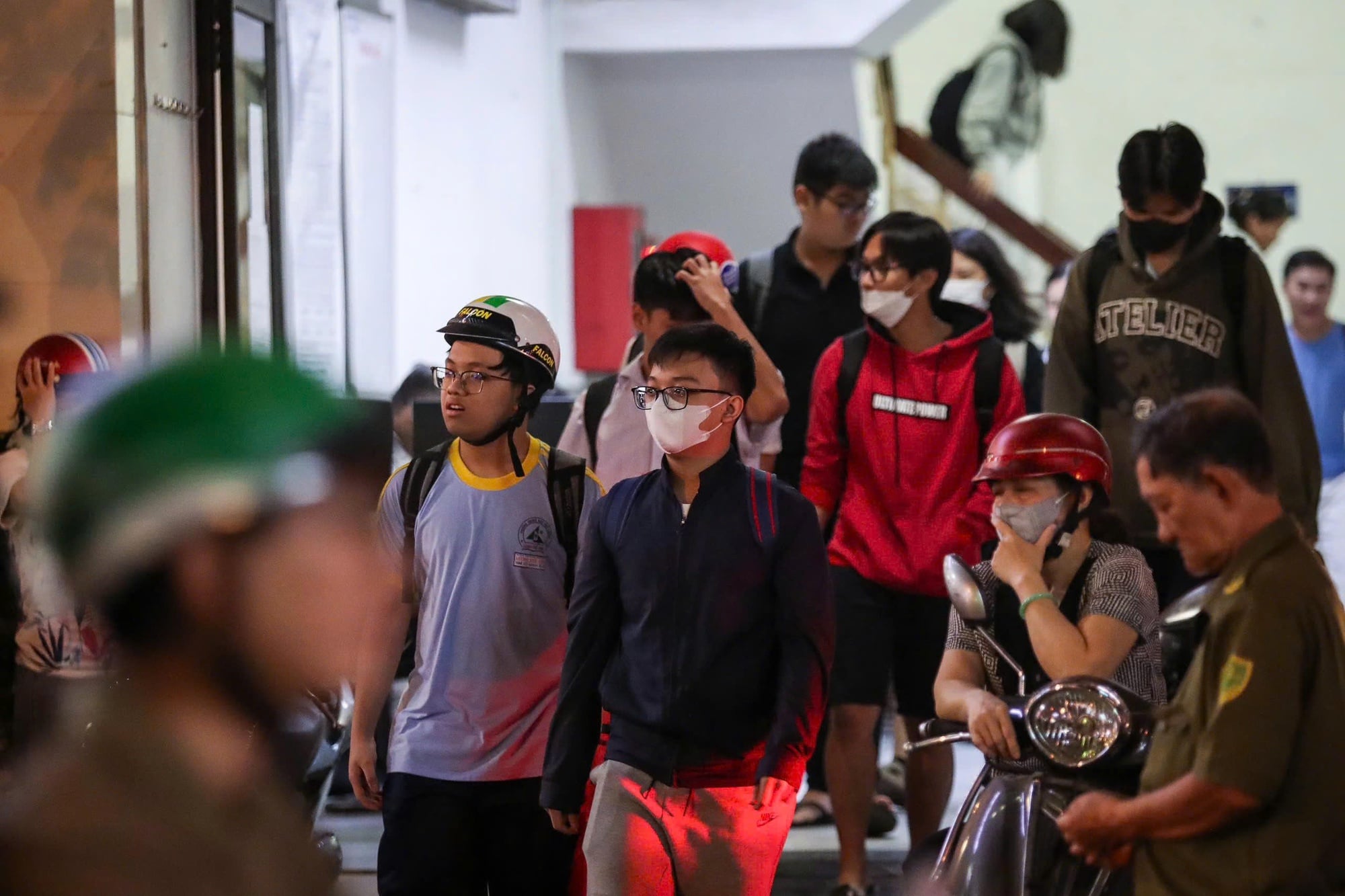
Extra tutoring is both a real need and a reflection of the system's limitations.
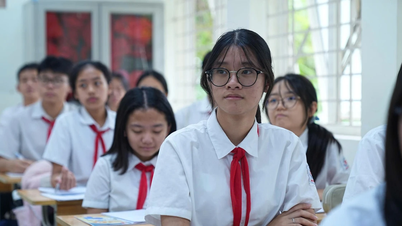
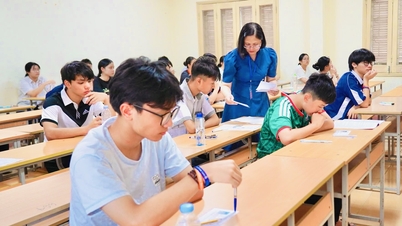
PHOTO: NHAT THINH
In East Asian countries, where exam pressure is high, this system thrives in the form of cram schools. Meanwhile, in the West, tutoring exists but is primarily for individual supplementary learning, not becoming a large-scale structure.
A common thread is that when formal education faces pressure from evaluation and competition, the need for extra tutoring increases. In Vietnam, extra tutoring is both a real need and a reflection of system limitations: large class sizes, limited time, a heavy curriculum, competitive exams, and the mentality that "not taking extra tutoring will lead to falling behind" compared to peers.
TWO PERSPECTIVES, A GAP
In today's society, tutoring is often viewed from two perspectives. One side argues that it is a necessary solution to compensate for the shortcomings of formal schooling. Tutoring helps students consolidate and expand their knowledge, practice skills, and prepare for important exams.
The other side views tutoring as a manifestation of deviance: increased pressure, high costs, diminished self-learning ability, and social consequences, including increased wealth inequality: children from affluent families with the means to attend tutoring are more likely to gain admission to high-quality schools, while children from poorer families have fewer opportunities and therefore find it more difficult to access quality education.
Both perspectives are valid, but they don't address the root of the problem. In reality, current educational methods still primarily revolve around the transmission and practice of knowledge. Meanwhile, as Associate Professor Dr. Nguyen Kim Son, Deputy Head of the Central Committee's Strategic Policy Department, once noted, educational methods are merely an "extension" of the educational ecosystem for accessing knowledge. It's worth noting that the goal of modern education has changed: it no longer stops at learning knowledge, but aims to develop comprehensive competencies for learners.
The biggest gap in tutoring isn't about whether or not it exists, but rather its failure to adapt its content and methods to a rapidly changing world that demands highly sophisticated skills in the 21st century, particularly critical thinking, communication and collaboration, complex problem-solving, creativity, and lifelong learning.

When knowledge is readily and quickly accessible, the important thing is not "what to know," but knowing how to learn and how to ask questions.
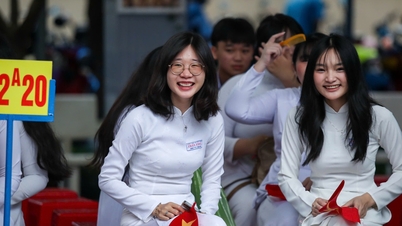
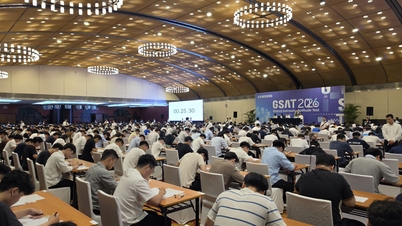
Photo: Dao Ngoc Thach
" Learn more to know" becomes "Learn more to know how to learn"
The emergence of AI is fundamentally changing the way people learn. With just an internet-connected device, students can receive detailed solutions to exercises; create practice problems at different difficulty levels; have knowledge explained in various ways; and search for abundant learning materials… These functions were previously the "strengths" of many traditional tutoring classes. This poses a clear challenge: If tutoring only focuses on solving problems and practicing exam questions, technology can completely replace it.
In this context, the value of a teacher no longer lies in providing solutions, but in crucial abilities such as guiding learning methods, helping students understand the essence of the problem; developing independent thinking, and inspiring motivation to learn.
In other words, AI can replace the "knowledge and skill transmission" aspect, but it cannot replace the "guidance and development" role of the teacher.
One of the biggest changes in the AI era is the role of the learner. When knowledge is readily and quickly accessible, the important thing is not "what you know," but how to learn and how to ask questions. Self-learning ability therefore becomes a core competency. Learners need to know how to search for information, assess its reliability, connect and apply knowledge, and adjust their learning process accordingly.
If tutoring only provides ready-made solutions, students will become accustomed to depending on their teachers. If organized properly, tutoring can become a place to cultivate effective learning methods and lifelong self-learning habits. This is the fundamental difference between "tutoring to know" and "tutoring to learn how to learn."
EXAM REVOLUTION CHANGES DIRECTION: EXTRA CLASSIFICATION CANNOT CONTINUE "THE OLD WAY"
The implementation of the 2018 General Education Program marks a shift from assessing knowledge to assessing competence. From 2025 onwards, entrance exams for grade 10 and high school graduation exams will reduce rote memorization and increase application and connection to real-world situations. This is not just a technical change, but directly impacts the way teaching and learning are conducted.
When exam questions no longer prioritize familiar question types or quick problem-solving techniques, the practice of rote learning and cramming will gradually lose its effectiveness. Students may be able to solve many problems but still struggle with new situations due to a lack of analytical and application skills. This change forces the teaching and learning system to adjust. Continuing with the old approach will make it outdated and even counterproductive. Conversely, a shift in direction could transform it into a supportive space for developing competencies, helping students deeply understand the underlying principles, hone their thinking skills, and approach open, interdisciplinary issues.
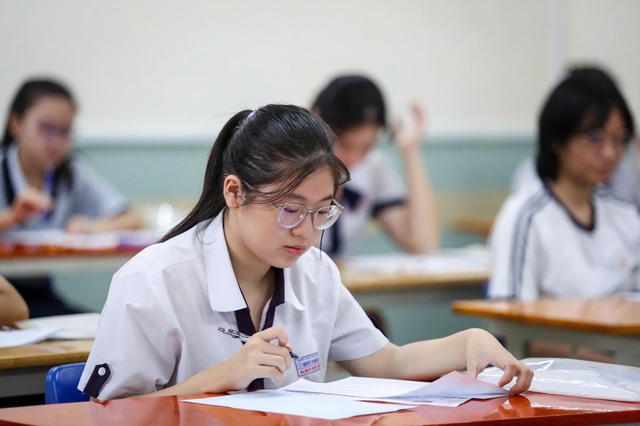
The 2025 high school graduation exam will focus on application-based learning and testing competencies, rather than purely rote memorization. With this shift in exam format, tutoring must also change its role, moving from "exam preparation" to "competency development."
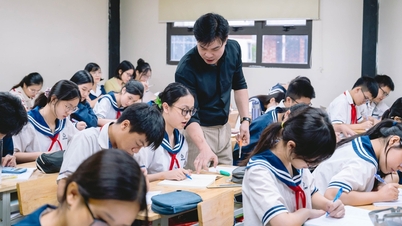
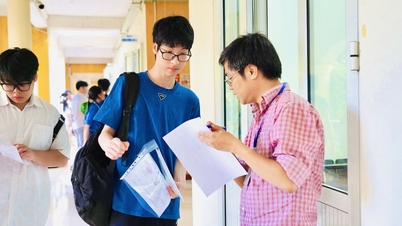
Photo: Nhat Thinh
With the shift in exam format, tutoring must also change its role, from "exam preparation" to "competency development." This is not just a requirement for adaptation, but a condition for tutoring to continue to exist and be valuable in the new educational ecosystem: the competency-based development ecosystem.
For the education system to adapt to the age of AI and the trend of competency-based testing, a holistic approach is needed. First and foremost, the quality of formal education must be improved. When schools help students firmly grasp knowledge, develop skills, and keep up with the curriculum, the need for extra tutoring due to "knowledge gaps" will significantly decrease.
Secondly, it is necessary to promote quality, two-session-per-day teaching and eventually make it free for junior and senior high school students. When school time is organized rationally, students can consolidate knowledge and hone skills during regular class hours, reducing their reliance on extra tutoring.
Thirdly, self-learning abilities must be developed from the primary school level. Therefore, the pressure of exams, assessments, and grading at this level needs to be reduced. Consideration could be given to using only two levels of assessment – "Pass" and "Fail" – from grades 1 to 4, with grading only introduced in grade 5, in order to create a relaxed learning environment and encourage proactive and enthusiastic learning.
Extracurricular activities need to be managed transparently, ensuring voluntariness and preventing them from becoming coercive. The content of supplementary teaching should shift from exam preparation to developing competencies, helping students understand the fundamentals, hone their thinking skills, and apply their knowledge. Simultaneously, opportunities for experiential learning such as clubs, projects, arts, sports , STEM, and programming should be expanded to promote holistic development. Technology and AI should be utilized as effective learning support tools.
Source: https://thanhnien.vn/day-them-hoc-them-trong-thoi-dai-ai-185260323211135035.htm





























































































Comment (0)