

This year, with the first-ever implementation of a two-tiered government structure, the authorities and people of Hanoi are even more proactive in preparing to ensure that each festival is truly a joyful, civilized, and safe celebration.
Season of Hopes
Spring is the season that marks the beginning of a new year, and it is also the season when Hanoi bursts with its own unique vitality. Before the last cold winds of summer have completely passed, before the heat of summer has even arrived, spring is a transition, a bridge between the old and the new, between hot and cold, between endings and beginnings.
Besides, after the hustle and bustle of the year-end, free from worries, pressures, and deadlines, each person has a "break" to relax and plan for the new year.
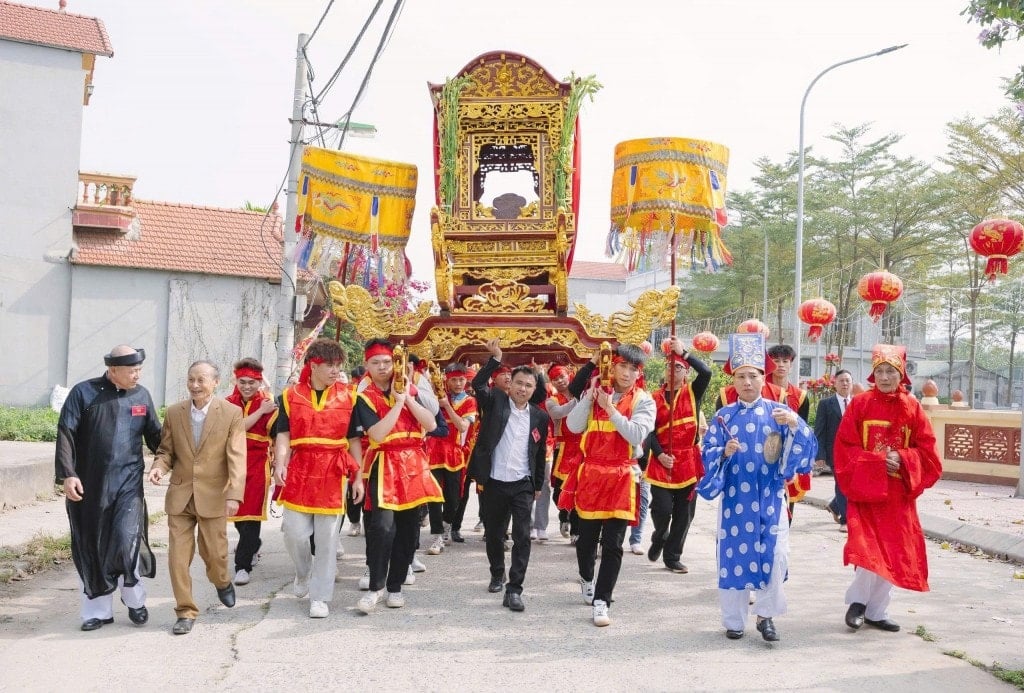
Therefore, everyone harbors hopes and wishes for spring. In this context, the weather seems to be in harmony with people's wishes. Not torrential rain, but a light drizzle, enough to cover the streets with a thin layer of mist. In this atmosphere, the temple bells chime, and crowds of people flocking to festivals begin to bustle along the streets.
Attending spring festivals is about returning to one's roots, to tradition, and to the spiritual world to remember ancestors, to cultivate goodness and compassion, to let go of attachments, and to wish for good things for oneself, family, community, and country.
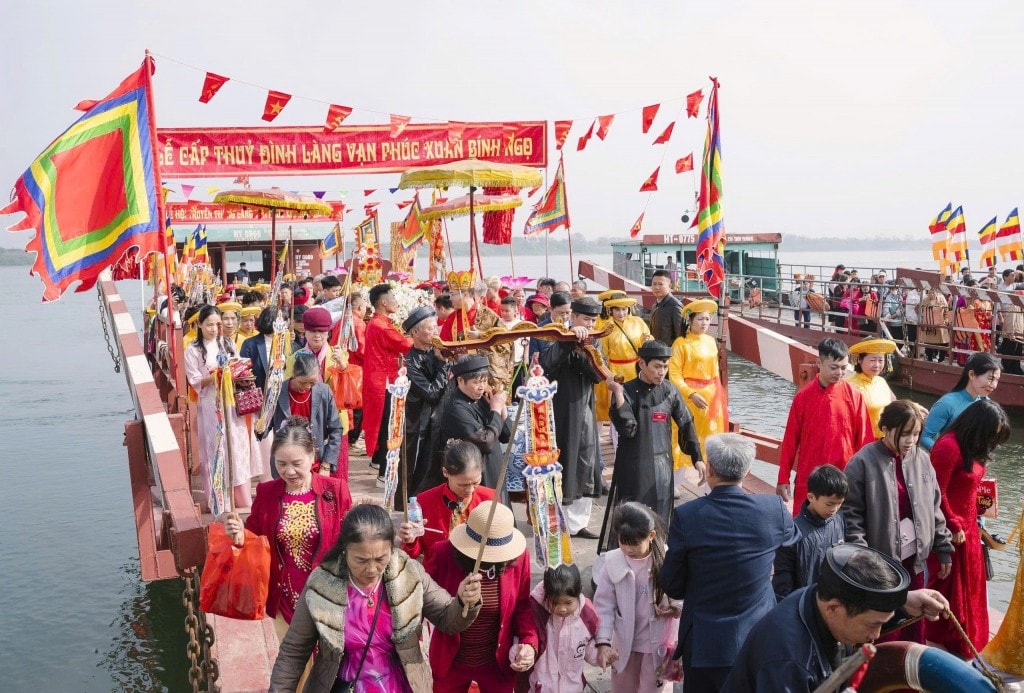
According to data from the Ministry of Culture, Sports and Tourism, Hanoi has the largest number of festivals in the country, with over 1,600 traditional festivals. Of these, approximately 1,000 to 1,500 festivals are held each year, mainly concentrated in the spring. These are not merely cultural and religious events, but also community spaces where people reconnect with their roots, pay tribute to their ancestors, and express their hopes for a peaceful and prosperous new year.
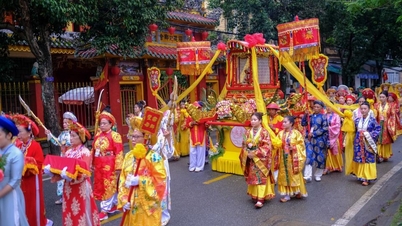
The festive atmosphere creates a unique character for the capital city in the early days of the year. From the inner city to the suburbs, from ancient village temples to famous historical sites, crowds of people mingle but still maintain the order and politeness characteristic of the people of Thang An.
This year, many major festivals in Hanoi continue to be held with new highlights, both preserving traditions and focusing on improving the quality of organization.
This year's Co Loa Festival was organized in a very orderly and civilized manner. On the 5th day, visitors from all over could participate in activities such as crossbow shooting, Ferris wheel rides, sports competitions, and Quan Ho folk singing. The 6th day was the main festival with rituals such as the official announcement ceremony, incense offering, and other activities.
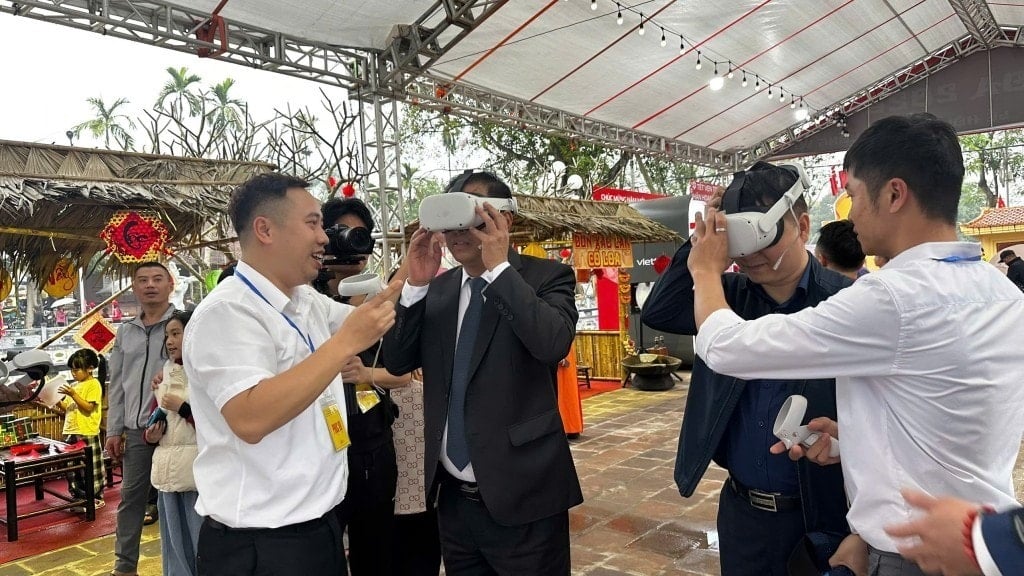
In particular, the "Digital Heritage and Traditional Festival Space" offers the people and tourists new, visual, and emotionally rich experiences about the history and culture of Co Loa.
In the digital experience space, participants can check in at unique traditional settings; tour historical sites online via VR360 technology; enjoy videos introducing the festival; admire vivid 3D hologram images; participate in games to learn about history; and capture memorable moments at the modern photobooth…
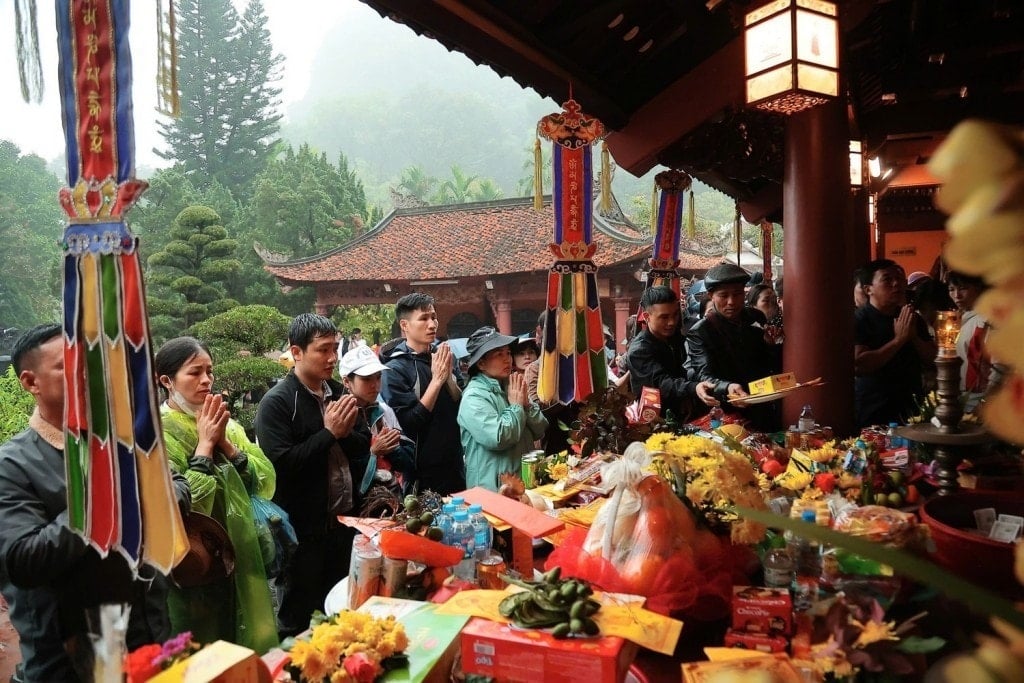
Highlights of this year's Huong Pagoda Tourism Festival include electronic ticketing, online ticketing, automated ticket vending machines, QR code ticket control, and the installation of AI cameras to proactively manage traffic flow. The organizing committee has also established a rapid response team to handle information and incidents via a hotline at 19001207…
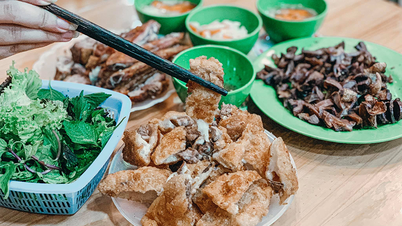
The food stalls at Huong Pagoda have been neatly arranged, expanding the space from Thien Tru Pagoda to Huong Tich Cave, creating favorable conditions for locals and tourists to visit and enjoy the spring festivities. The practice of hanging slabs of fresh meat in front of food stalls along the road leading to Thien Tru Pagoda or Huong Tich Cave has been officially removed.
Authorities are constantly on duty at key locations, promptly guiding and assisting tourists and handling any arising situations. Traffic flow management and regulation are carried out flexibly and effectively, contributing to building an image of a civilized, friendly, and professional festival.
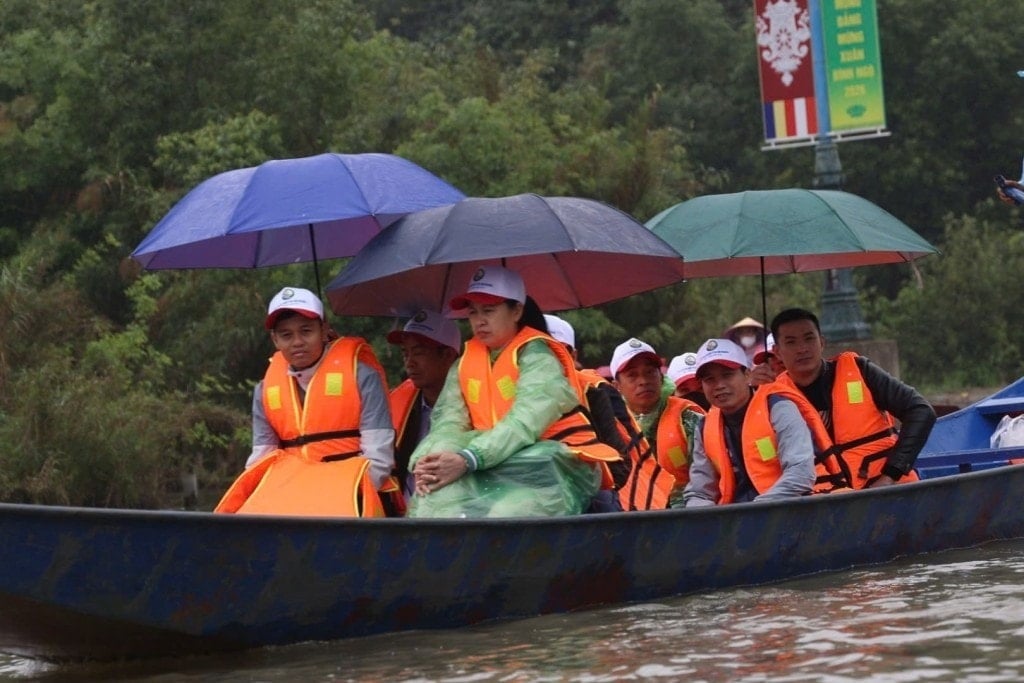
It is noteworthy that the local authorities took proactive measures from the outset. Planning, training for festival staff, inspection of facilities, fire safety, and security were all carried out before the festival officially opened. As a result, residents and tourists could participate in the festival with greater peace of mind and confidence.
Therefore, the festival season is not only a source of joy for the community but also a measure of the cultural organization and management capabilities of local authorities.
The government is the "conductor," and the people are the "cultural ambassadors."
This year marks the first time Hanoi has organized its festival season under a two-tiered government model. This places higher demands on commune and ward authorities – the units directly responsible for organizing and managing festival activities at the local level.
This means that local authorities must be more proactive, more creative, and more clearly accountable to the people. Each festival is not only an annual cultural event but also an opportunity to bring together community spirit and affirm the unique identity of each locality.
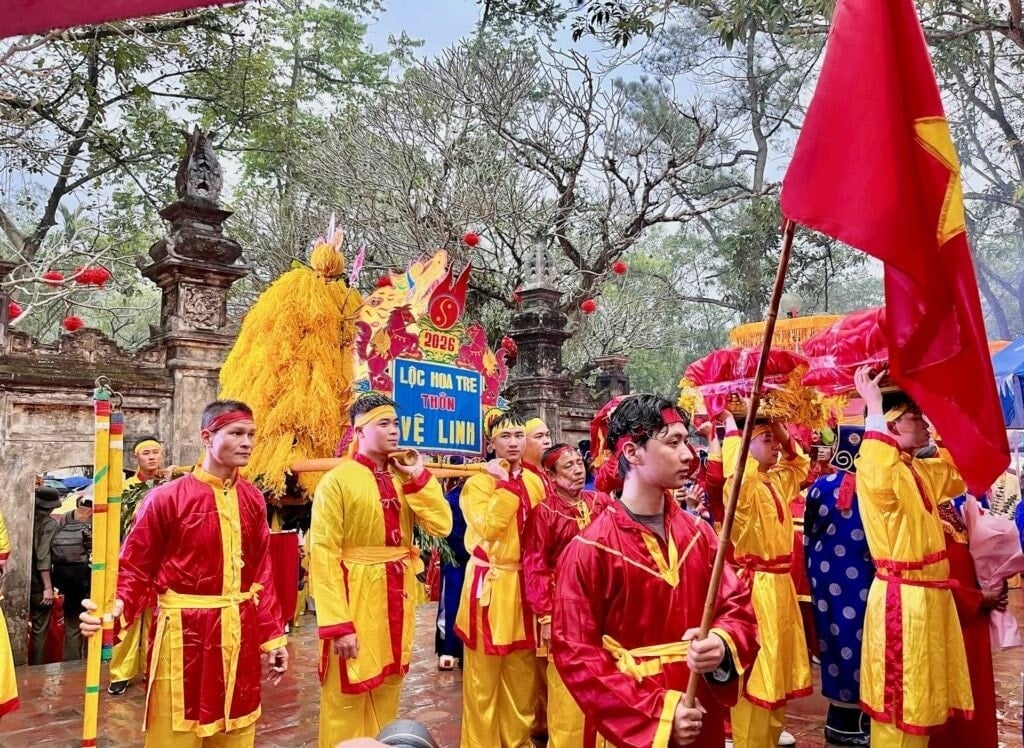
To achieve this, many communes and wards have focused on reviewing the entire process of organizing festivals: from the script for the ceremonial and festive parts; plans for ensuring security and order; parking arrangements; and the assignment of personnel to guide and assist visitors. Public awareness campaigns through loudspeaker systems, social media, and local electronic portals have been intensified to enhance community understanding.
One of the key requirements is ensuring food safety and hygiene. Inter-agency inspection teams have been established to regularly inspect food stalls around the festival area. Commitments to refrain from selling substandard goods and from arbitrarily raising prices are strictly enforced.
In addition, ensuring the safety of the festival, from fire prevention and rescue to controlling the number of participants, is also emphasized. At crowded festival sites such as Huong Pagoda, Giong Temple, and Co Loa Temple, traffic diversion plans and clear signage help to limit localized congestion.
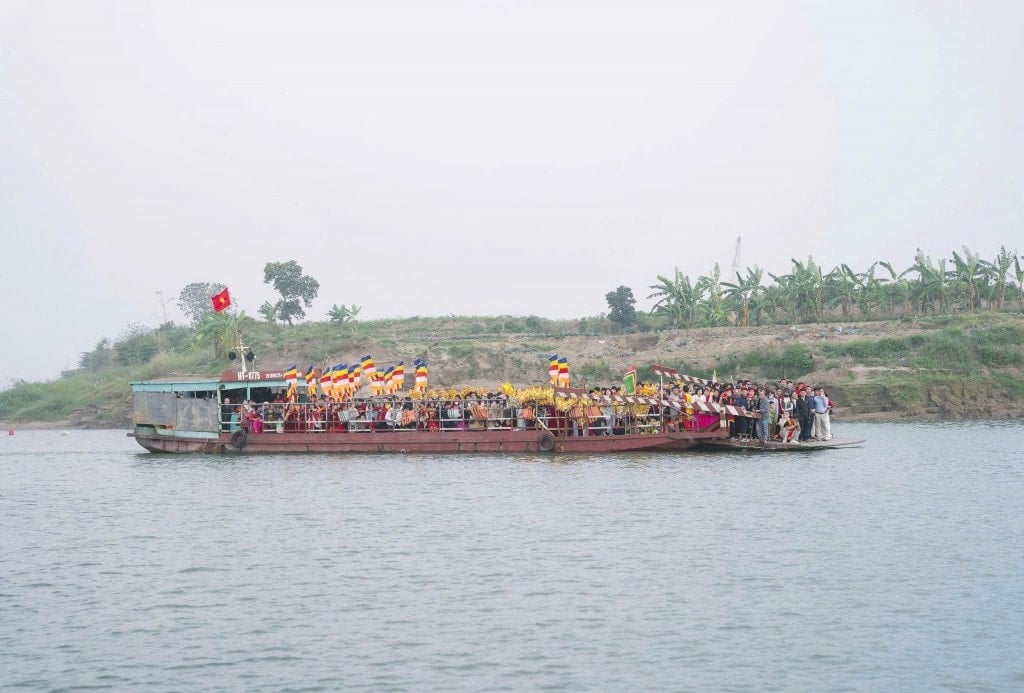
Another key focus of this year's festival is the eradication of superstition. Local authorities are intensifying efforts to educate people about the true value of the festival, emphasizing gratitude to ancestors, promoting good deeds, and praying for good fortune, rather than using it as a place for offensive and uncivilized behavior. Practices such as fortune-telling, profiteering from exchanging small denominations of money, and the widespread burning of votive paper are being addressed and dealt with promptly.
The awareness of the people, from festival participants to service businesses, is also a decisive factor. A civilized festival season cannot rely solely on the efforts of the government. People need to enhance their responsibility, behave courteously, avoid pushing and shoving, refrain from littering, and not exploit the festival for personal gain. Businesses need to comply with regulations, clearly display prices, and avoid soliciting customers aggressively.
In reality, when the organization is well-prepared and community awareness is raised, the festival becomes not only a cultural space but also a driving force for local economic development. Tourism, food, accommodation, transportation services, etc., are activated, creating more jobs and income for the people.
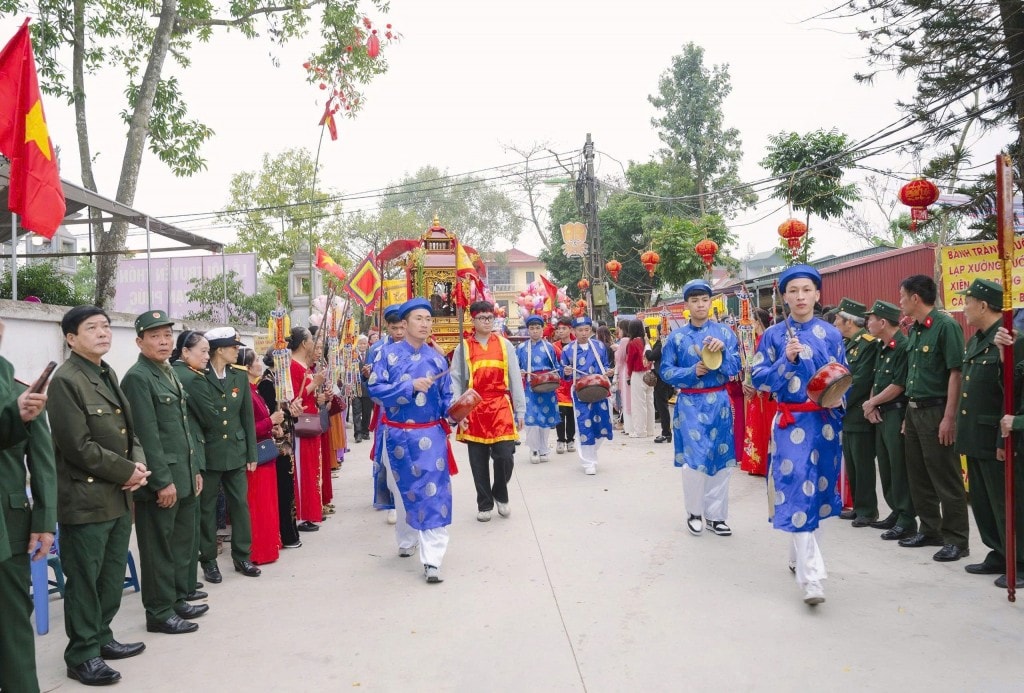
Hanoi enters this year's festival season with a new mindset – one of proactiveness, responsibility, and expectation. Amidst the gentle spring rain, the people of the capital city not only attend festivals to pray for good fortune, but also to experience the city's transformation in its organization, management, and preservation of traditional cultural values.
To make the festival a truly joyful and vibrant season, every citizen is a "cultural ambassador," and every local government is a "conductor" coordinating the community's rhythm. When tradition is respected and civilization is upheld, the festival season will not only be a fleeting joy at the beginning of the year, but also a sustainable foundation for an elegant, modern, and culturally rich capital city.
Source: https://hanoimoi.vn/de-le-hoi-la-mua-vui-nao-nuc-735093.html

![[Photo] General Secretary and President visit the China-ASEAN AI Application Cooperation Center](https://vphoto.vietnam.vn/thumb/1200x675/vietnam/resource/IMAGE/2026/04/17/1776404277677_vna-potal-tong-bi-thu-chu-tich-nuoc-tham-trung-tam-hop-tac-ung-dung-ai-trung-quoc-asean-8706616-2286-jpg.webp)





![[Infographic] Details of the Hanoi-Quang Ninh High-Speed Railway Project](https://vphoto.vietnam.vn/thumb/402x226/vietnam/resource/IMAGE/2026/04/16/1776338188424_anh-man-hinh-2026-04-16-luc-18-16-10.png)







![[Photo] National Assembly Chairman Tran Thanh Man attends the policy seminar to promote Vietnam-Türkiye cooperation.](https://vphoto.vietnam.vn/thumb/1200x675/vietnam/resource/IMAGE/2026/04/16/1776351415367_vna-potal-chu-tich-quoc-hoi-tran-thanh-man-du-toa-dam-chinh-sach-thuc-day-hop-tac-viet-nam-tho-nhi-ky-8705791-jpg.webp)






























Comment (0)