The ultimate goal is not how many infrastructure projects are built, but how many people actually have access to clean water every day - Image design: VGP
...That scene may seem ordinary, but for the people here, it used to be a luxury. In the past, to get water, people had to fetch it from streams, sometimes traveling long distances. It was even more difficult during the dry season. Since 2021, the government has supported drilling wells and laying pipelines to their homes, and life has changed dramatically.
A resident of Thong Nhat village, Hamlet 1A, couldn't hide his joy: "Several households share one well, and the water is plentiful and clean. We only contribute money each month for electricity to pump the water. Now we no longer have to worry about water shortages every day."
Meanwhile, in Sung Mang commune, the hanging reservoirs built on rocky mountains have transformed the lives of the people in Ha Pong Cay village. Vang Cha Hou, a villager, shared that in the past, they sometimes had to carry water containers for tens of kilometers. Since the hanging reservoirs were built, every household has access to water, children are cleaner, and adults have less hardship.
According to the Rural Water Supply Center of the Department of Agriculture and Environment of Tuyen Quang province, by the end of April 2026, the percentage of rural residents using hygienic water in the area had reached over 96%.


In Thong Nhat village, Yen Phu commune ( Tuyen Quang province), the lives of the households are still fraught with difficulties and shortages - Photo: Yen Phu
But if you delve deeper into the villages perched precariously on rocky mountain slopes or areas where water is frequently scarce, the picture isn't entirely rosy.
In early 2026, during a return trip to Tuyen Quang (formerly Ha Giang) – a place with which he had a long-standing connection – Minister of Ethnic Minorities and Religion Nguyen Dinh Khang made observations that prompted much reflection.
"Ten years ago, when I worked here, the water shortage was very serious. Returning now, I see that there hasn't been any breakthrough improvement. For example, at a boarding school in a remote area, the students' drinking water still has to be piped from about 10km away," the Minister shared.
According to Minister Nguyen Dinh Khang, ethnic minority and mountainous regions are the "frontier" of the Fatherland, playing a particularly important role in national defense, security, and sustainable development. However, these areas remain the most challenging regions in the country, with the lack of clean water being a prominent problem.
Looking at the country as a whole, Vietnam has achieved many positive results in rural water supply. The percentage of households using hygienic water has reached nearly 98%. However, if we consider the standard for clean water from centralized water supply systems, the rate is only over 54% (approximately 9 million households).
Notably, the gap between regions remains quite large. While many localities in the Red River Delta, Southeast region, and Mekong Delta have achieved high rates, the Northern Midlands and Mountains region is only about 25%, North Central region about 35%, and Central Coastal and Central Highlands regions about 34%.
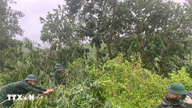



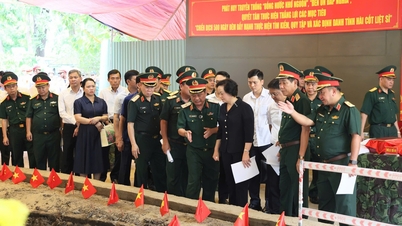
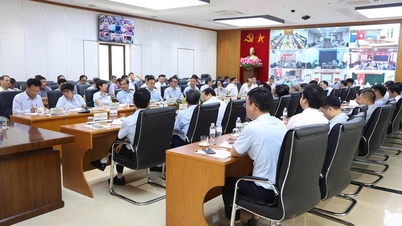
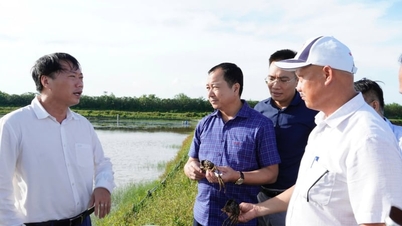
At the end of June 2026, a delegation from the Ministry of Ethnic Minorities and Religions inspected and surveyed the needs and solutions for clean water in ethnic minority and mountainous areas - Photo: Hung Dao
Clean water for the people: Don't just count the projects.
According to a report by the Ministry of Agriculture and Environment, there are currently more than 17,500 rural centralized water supply systems nationwide. However, only about 27% operate sustainably, over 27% operate relatively sustainably, nearly 30% operate inefficiently, and more than 16% have ceased operation. Many systems were built with government funding but subsequently lack operating units, maintenance funds, or effective water quality control.
From now until 2030, according to preliminary calculations by the Ministry of Agriculture and Environment, the investment needed for rural clean water supply will exceed 94 trillion VND. This is a very large resource, requiring a systematic and focused approach.

Mr. Ha Viet Quan, Chief of the National Office for Ethnic Minorities and Mountainous Areas (Ministry of Ethnic Minorities and Religions) - Photo: VGP
Discussing this issue, Mr. Ha Viet Quan, Chief of the National Office for Ethnic Minorities and Mountainous Areas (Ministry of Ethnic Minorities and Religion), stated that the clean water problem cannot be solved with a scattered investment approach.
"Such a large demand for resources requires focused investment in clean water supply, a phased approach, and specific targets for each stage. Priority should be given to ethnic minority areas, mountainous regions, border areas, islands, water-scarce areas, and areas heavily impacted by drought, saltwater intrusion, and climate change," Mr. Quan emphasized.
Each region needs a different solution, Mr. Quan shared: "In the midland and mountainous areas of the North, the important thing is water storage facilities, gravity-fed water systems, group household water supply, upgrading existing facilities, and protecting water sources. The Central Highlands and the South Central coastal region need drought adaptation solutions, community water reservoirs, and controlled groundwater exploitation. Meanwhile, the Mekong Delta must focus on storing freshwater during the rainy season and treating brackish and saltwater."
Investing in new infrastructure is just the beginning. More importantly, how does that infrastructure function? Who manages it? Who is responsible for maintenance? Who checks the water quality? Who handles repairs when the infrastructure fails? Without clear answers to these questions, it's difficult to talk about sustainability.
In the current management system, the Ministry of Construction plays a role in perfecting the general legal framework for water supply, drainage, technical infrastructure, clean water business operations, and ensuring safe water supply.
The Ministry of Agriculture and Environment plays a direct role in rural clean water supply, especially in remote areas, ethnic minority regions, and mountainous areas. This field is closely linked to irrigation, water resources, water storage facilities, drought, saltwater intrusion, protection of water sources, and adaptation to climate change.
The Ministry of Health plays a role in setting standards for the quality of water used for domestic purposes.

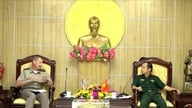
Local authorities are responsible for organizing the implementation within their jurisdiction, from allocating resources and assigning management units to inspecting operations, monitoring water quality, and promptly addressing issues such as damaged infrastructure or water shortages for residents.
According to Mr. Quan, the period from 2026 to 2030 requires the establishment of a more transparent management mechanism, reducing the fragmentation of responsibilities and placing the people at the center. Experience in implementing public policies in ethnic minority and mountainous areas shows that the role of local authorities is crucial.
Clean water is an essential public service; people need to be guaranteed access to stable, safe, and regularly monitored clean water. The ultimate goal is not how many facilities are built, but how many people actually have access to clean water every day.
On May 12, 2026, the Prime Minister issued Directive No. 19/CT-TTg on promoting the implementation of the Ethnic Affairs Strategy until 2030, with a vision to 2045. In this directive, the Ministry of Ethnic Minorities and Religions was assigned to lead and coordinate with relevant agencies and localities to monitor, supervise, and compile annual reports on the results of the implementation of the Ethnic Affairs Strategy; prioritizing the allocation of resources to effectively implement ethnic policies and address urgent issues such as land for housing, production land, electricity, clean water, and essential social infrastructure to stabilize the lives of ethnic minorities and people in mountainous areas.
Son Hao
Source: https://baochinhphu.vn/de-nuoc-sach-chay-ve-ban-102260701235321698.htm