 |
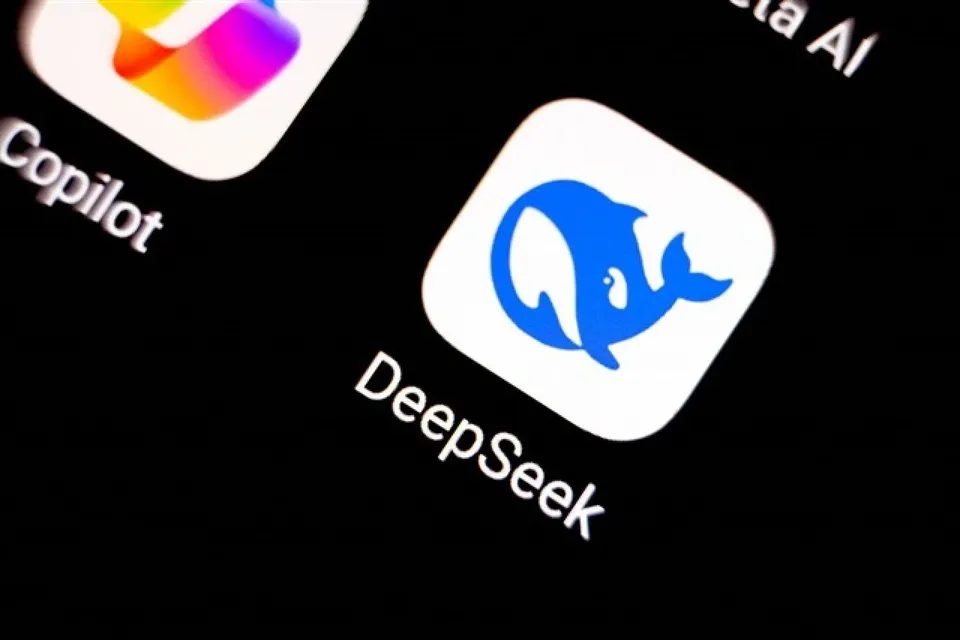
From a little-known Chinese startup, DeepSeek quickly made a name for itself with its innovative AI model in just over a year. This breakthrough dispelled doubts about China's ability to innovate amidst tightening US technological controls.
The tech world dubbed this event the "DeepSeek moment," similar to when the Soviet Union launched the Sputnik satellite. DeepSeek's release of the R1 model directly threatened America's position, prompting President Trump to acknowledge it as a "wake-up call" for the nation's technological ambitions.
“DeepSeek will always hold a very special place in China ’s AI development, thanks to its game-changing role in the competitive yet collaborative relationship between the U.S. and China,” said Kevin Xu, founder of the technology hedge fund Interconnected Capital.
Agreeing with that view, Chelsey Tam, senior equity analyst at investment consulting firm Morningstar, said DeepSeek has built a strong model with a limited budget and while under US sanctions. This confirms China's determination to overcome the technological barriers erected by the US.
Companies like OpenAI and Anthropic restrict access to their technology, classifying China along with Russia , North Korea, and Cuba as "unsupported" countries. While American companies like OpenAI block access to China and keep their technology secret, DeepSeek offers it for free to the whole world.



This strategy aimed to make more international companies dependent on the Chinese model. The pressure from the DeepSeek boom was so great that OpenAI CEO Sam Altman had to admit he was wrong and had to rethink the source code sharing strategy.
DeepSeek's success has opened opportunities for a host of other Chinese companies such as Alibaba, Moonshot AI, Zhipu AI, and MiniMax. These companies have all launched AI models that have attracted global attention over the past year.
Adina Yakef, a researcher at Hugging Face—the world's largest open-source AI community—says that many models are released with very lenient licenses. This makes it easy for other businesses to take them, modify them, and integrate them into commercial products without legal trouble.
According to recent research by OpenRouter, Chinese open-source AI systems have expanded from a weekly market share of just 1.2% to nearly one-third of total usage on the platform in some weeks.
Since becoming a focal point, DeepSeek has faced increasingly fierce competition from domestic rivals. A group of local companies have also launched advanced models, shared research, and actively engaged with the global community.
Despite possessing strong technical capabilities and contributing to the open-source community in many ways, DeepSeek is still underestimated compared to its competitors. According to Jordan Nanos, a researcher at the consulting firm Semianalysis, the company has been slow to produce fundamental research breakthroughs.

A year after its launch, DeepSeek is becoming the focus of attention in the global tech community. The market is waiting to see if this start-up can maintain its growth momentum and continue to introduce an AI model that will make a big impact.
According to Nanos, DeepSeek is likely to announce a new model around the Lunar New Year, similar to last year's launch, with improvements focused on the reasoning capabilities of artificial intelligence. Meanwhile, Kevin Xu suggests that DeepSeek's most notable upgrades will be in the area of multimodal AI.
Source: https://znews.vn/deepseek-gio-ra-sao-post1621090.html

![[Photo] General Secretary and President To Lam working with the Technical and Professional Center, Ministry of Public Security](https://vphoto.vietnam.vn/thumb/1200x675/vietnam/resource/IMAGE/2026/07/06/1783318005842_a1-bnd-1129-2263-jpg.webp)