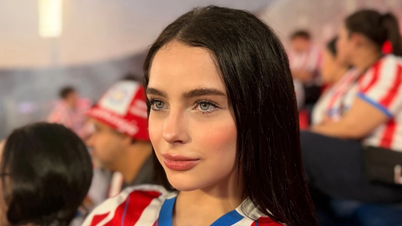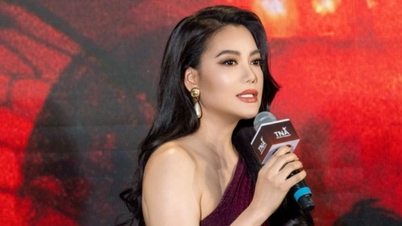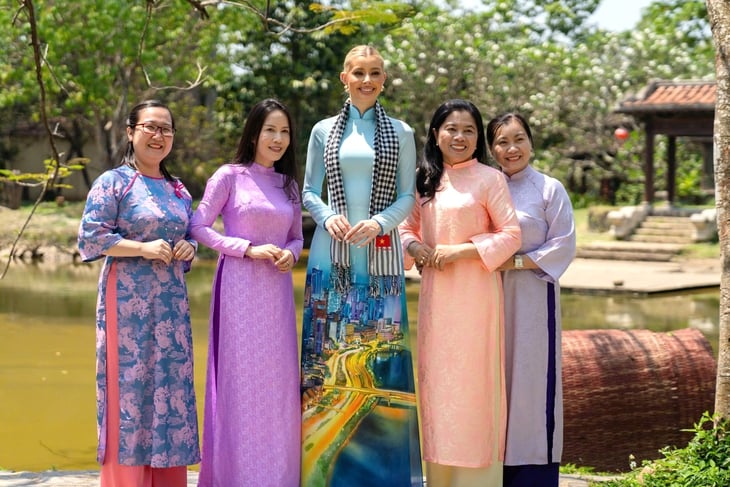
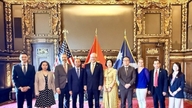
Miss Cosmo 2025 Yolina Lindquist poses for a commemorative photo with guests at the panel discussion.
On March 18th, a seminar titled "Vietnamese Ao Dai - Vietnamese National Heritage, International Integration" combined with a workshop titled "Ao Dai and Flowers" took place at the Ao Dai Museum (Ho Chi Minh City).
The event was attended by leaders, departments, and organizations of Ho Chi Minh City; consuls general and wives of consuls general from countries in the region residing in Ho Chi Minh City; ambassadors of the 2026 Ao Dai Festival; beauty queens, models, and international students in Vietnam.
International friends were surprised.
The seminar had three main topics: What makes the ao dai (Vietnamese traditional dress) sustainable, from its form, exquisite tailoring, materials, or embroidery art; The ao dai in the context of integration, not just as fashion but also as an image of Vietnam, integration without losing its identity; The wide-ranging applications of the ao dai, as not only Vietnamese women but also men choose to wear it at events, as well as consuls general and their wives, international students, etc.
Nowadays, it can be said that the ao dai (Vietnamese traditional dress) is an indispensable part of Vietnam's diplomatic activities. According to the organizers of the seminar, diplomacy does not only take place in official meetings but is also expressed through culture, art, and traditional symbols. The Vietnamese ao dai is playing such a special role.
Mr. Pang Te Cheng, the Singaporean Consul General in Ho Chi Minh City, said that after 20 years, he was surprised to see the ao dai (Vietnamese traditional dress) now appearing everywhere in daily life, with greater variety in styles and colors. During Tet (Vietnamese New Year), he saw many Vietnamese families wearing ao dai and taking photos together.
Singaporeans, like his family, often struggle to find traditional attire to wear together on special occasions, so when he saw Vietnamese families wearing ao dai, he found it a very beautiful cultural tradition.



Coming from Thailand, a country with its own traditional clothing, Mr. Napob Thongngamkam – the Thai consul in charge of cultural affairs – bought an ao dai (Vietnamese traditional dress) after two years in Vietnam. He has grown increasingly fond of the ao dai, which became his first image of Vietnam. For him, the ao dai is not only beautiful, elegant, and representative, but also highly practical.
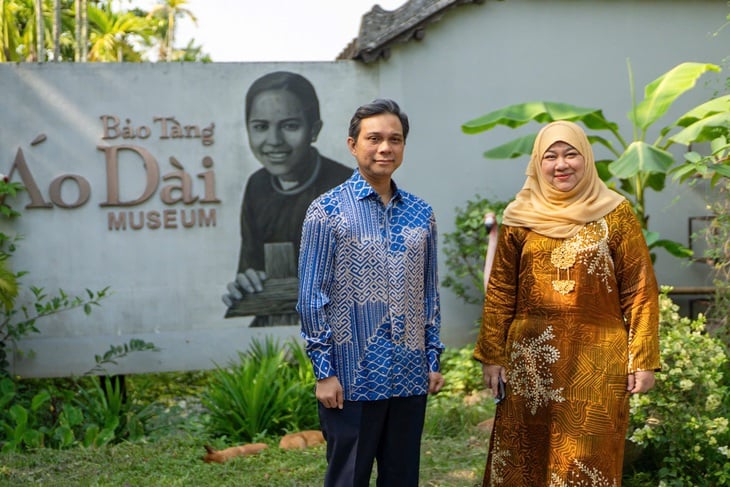
Mr. Firdauz Othman, Consul General of Malaysia in Ho Chi Minh City, and Ms. Amirah Nadiah Mazlan, Director of the Malaysia Tourism Promotion Board in Vietnam - Photo: VAN TRUNG
Vietnamese people bring the ao dai to the world.
Having taken the ao dai (Vietnamese traditional dress) to many places around the world, designer Lien Huong was moved to see that the ao dai was familiar from her childhood, as her mother was also a woman who loved wearing it.
Meanwhile, artisan and designer Trung Dinh comes from a farming family in Central Vietnam. He didn't receive support from his family when he applied to study fashion design. After graduating, he chose the ao dai (Vietnamese traditional dress) as a way to nurture his soul. He is delighted that each ao dai festival attracts hundreds of thousands of participants and followers on social media.
Designer Trung Dinh, along with the Ho Chi Minh City Ao Dai Heritage Club, led the workshop "Ao Dai and Flowers," where child models showcased the "Brilliant Brocade and Flowers - When Heritage Takes Flight" ao dai collection by designers Dexnol Tran and Tuan Huynh before delegates and international guests.

Workshop "Ao Dai and Flowers" within the framework of the Ao Dai seminar - Photo: VAN TRUNG
Also at the workshop, consuls general, foreign students, and guests practiced painting techniques on fabric and conical hats, thereby gaining a deeper understanding of the beauty of labor and art associated with the ao dai (Vietnamese traditional dress).


Ms. Trinh Thi Thanh - Permanent Vice President of the Ho Chi Minh City Women's Union, chairing the seminar - concluded: "Through the discussions above, we can see that the ao dai is not only a traditional garment but also a living cultural heritage of the Vietnamese people."
In this era of international integration, the ao dai (Vietnamese traditional dress) is increasingly becoming a cultural bridge between Vietnam and international friends. We hope that through exchange activities like today, the value of the ao dai will continue to spread even more widely."
Among the countries she has visited, Miss Cosmo 2025 Yolina Lindquist (from the US) said she was very impressed with how Vietnam preserves and integrates traditional culture into modern life, including the widespread use of the ao dai (traditional Vietnamese dress).
Source: https://tuoitre.vn/den-viet-nam-thay-ao-dai-khap-noi-20260319103620247.htm